What a South Dakota Nonresident Permit Requires
There's nothing quite like the open road, or in our case, the open trail, beckoning you to explore new landscapes with your ATV or UTV. But if you're planning a trip to the breathtaking Black Hills or the sprawling prairies of South Dakota with your off-road machine, you might quickly find yourself entangled in a web of permits and regulations that can feel incredibly confusing for an out-of-state visitor. This guide is here to unravel the mystery, detailing every requirement for a South Dakota nonresident ORV permit so you can hit the trails with confidence and leave the worry behind.
Unpacking the "Why" Behind the Nonresident ORV Permit
It’s completely understandable to feel a bit miffed when you hear about yet another permit you need to acquire, especially when you already have your machine legally registered in your home state. Many riders assume that if their ATV or UTV is street-legal or registered elsewhere, it should be good to go anywhere. South Dakota, however, has specific rules designed to manage off-road vehicle use within its borders, particularly on public lands and designated trail systems. These regulations help maintain trails, fund enforcement, and ensure everyone has a safe and enjoyable experience.
Think of it this way: just as you need a fishing license for a new state or sometimes a specific pass for a national park, your off-road vehicle often requires a localized permit to use certain facilities or areas. This isn't meant to be an obstacle; it's part of the system that keeps the trails open and maintained for all of us. Understanding this fundamental principle is the first step in smoothly navigating the requirements.
South Dakota's Approach to Off-Road Vehicle Use
South Dakota defines an Off-Road Vehicle (ORV) quite broadly, encompassing ATVs, UTVs, side-by-sides, and even some dirt bikes. The state places a high value on its natural resources and public lands, including the vast Black Hills National Forest, which boasts hundreds of miles of designated motorized trails. To manage the impact of these vehicles and ensure a sustainable riding environment, South Dakota implements a system of permits and regulations. This system helps collect funds for trail maintenance, signage, and the overall management of these cherished areas.
For residents, this often ties into their vehicle registration and titling process. For nonresidents, however, who aren't registering their vehicle in the state, a separate permit system is in place. This permit acts as your legal ticket to ride on authorized trails and public lands. It's an acknowledgment of your contribution to the upkeep of these resources and your commitment to following the state's rules, which are essential for preserving the riding experience for everyone.
The Distinction Between Titles, Plates, and Permits for Visitors
This is where a lot of confusion typically crops up. In your home state, you likely have a title proving ownership and possibly a license plate if your ORV is street-legal or registered for specific uses. Many riders mistakenly believe that their home state's "registration" or "street-legal" status automatically grants them permission to ride anywhere in South Dakota. Unfortunately, that's generally not the case for off-road trails.
A title proves you own the machine, and a license plate (if applicable) allows you to operate on public roads where permissible. The nonresident ORV permit, however, is specifically for using the designated trails and other public off-road areas. It's a user fee for the trail system itself, separate from any road-use registration. While a South Dakota license plate can sometimes exempt you from needing a separate trail permit, an out-of-state plate almost never does for the trail systems. You might have a perfectly legal, titled, and plated machine from Wyoming, but without that South Dakota nonresident ORV permit, you could be riding illegally on a Black Hills trail. [Does South Dakota Honor Out-of-State Registration?] is a great resource if you're still wondering about how your home state's paperwork carries over.
Avoiding the Dreaded Roadside Encounter
Nobody wants their dream riding trip interrupted by a law enforcement officer, especially when you're just trying to have fun. Riding without the proper nonresident ORV permit can lead to fines and, in some cases, having your trip cut short. Forest Rangers, local sheriffs, and state troopers are familiar with the regulations and will check for the permit decal when they encounter riders on trails or in staging areas. The frustration of receiving a citation for something that could have been easily avoided is a real downer, and it's a pain point we all want to steer clear of.
The fines for riding without a permit are not insignificant, and they can certainly add an unexpected cost to your vacation. Beyond the monetary penalty, there's the inconvenience and the sour taste it leaves in your mouth. By understanding [South Dakota Fines for No Trail Permit] and proactively obtaining your permit, you're not just adhering to the law; you're ensuring peace of mind, allowing you to focus on the spectacular scenery and thrilling rides that South Dakota has to offer.
Essential Documents and Information You'll Need to Gather
Alright, let's talk about the nitty-gritty: what do you actually need to have in hand to get this permit? It's not overly complicated, but like any official process, it requires a bit of preparation. Having everything organized before you start the application can save you time and prevent unnecessary headaches, ensuring a smoother transaction whether you're applying in person or by mail.
Gathering your documents ahead of time is like packing your gear before a long ride; it just makes everything easier once you're on your way. You wouldn't hit a challenging trail without your helmet and protective gear, so why would you tackle government paperwork without your essential documents? It’s all about being prepared.
Your Personal Identification and Vehicle Specifics
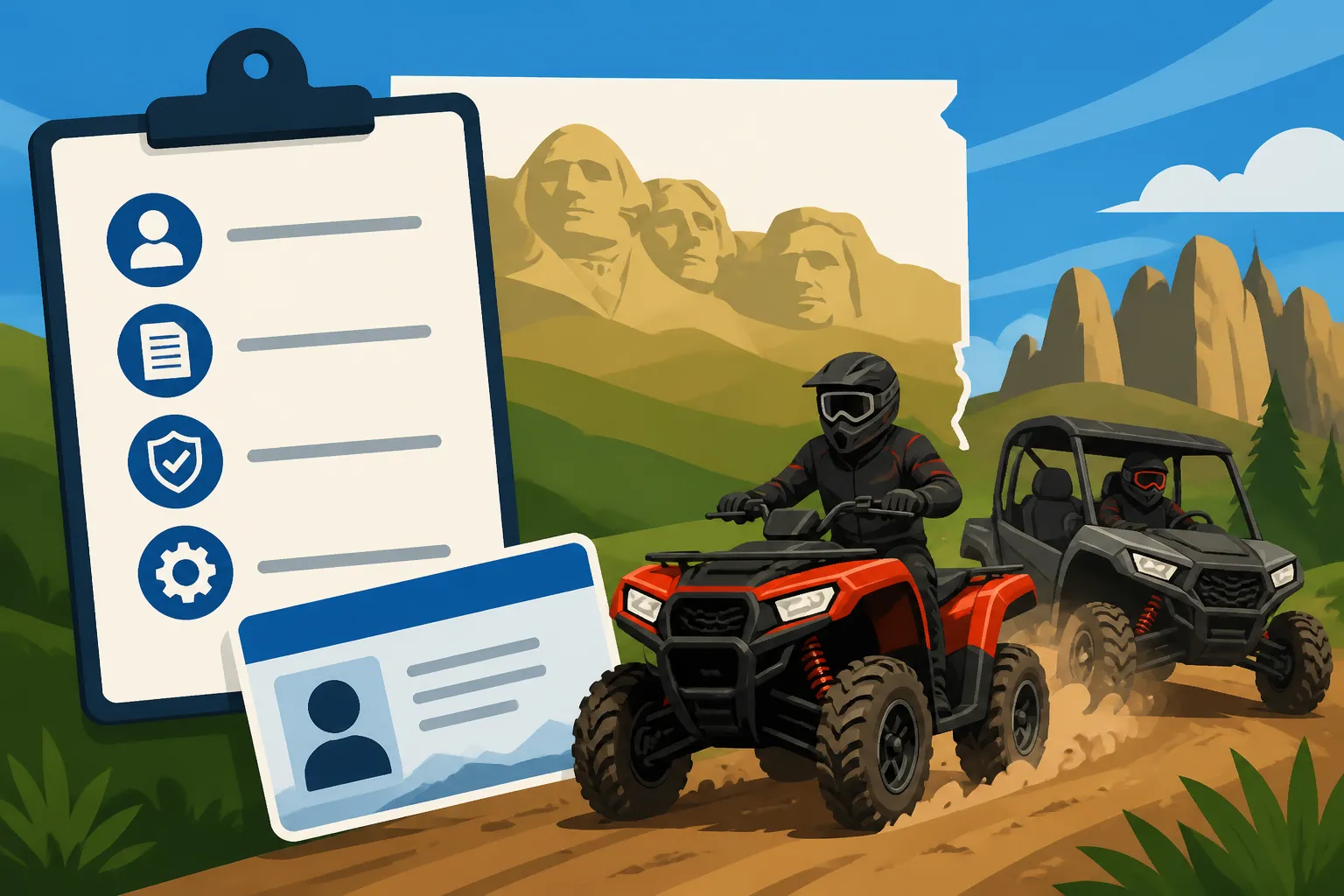
First and foremost, you'll need valid identification. This typically means a government-issued photo ID, such as your driver's license. This helps confirm who you are and establishes your nonresident status. Beyond your personal information, you'll need the specifics of the off-road vehicle you intend to ride. This includes the make, model, year, and most importantly, the Vehicle Identification Number (VIN). The VIN is crucial because the permit is issued for a specific machine, not just a rider.
You might also be asked for proof of ownership, such as your vehicle's title or registration from your home state. While the permit isn't a title transfer, showing you legally own or operate the machine helps the authorities ensure that the permit is being issued to the legitimate user of the vehicle. It's all part of making sure things are done by the book and that the right permit is affixed to the right machine.
Addressing Residency and Mail-Forwarding Concerns
One common area of confusion for nonresidents, especially those who spend extended periods in South Dakota or use mail-forwarding services, revolves around proving residency. For the purpose of the nonresident ORV permit, your official state of residency is what matters. South Dakota has systems in place to determine genuine residency, and simply having a P.O. box or a mail-forwarding address in the state is generally not enough to qualify you as a resident for vehicle-related matters.
The state wants to ensure that those benefitting from resident rates and privileges are indeed bona fide residents. If you maintain a primary residence elsewhere, hold a driver's license from another state, or file taxes as a nonresident, you will be considered a nonresident for the ORV permit. Trying to navigate this incorrectly can lead to delays or issues with your application. It's best to be upfront about your residency status. For more details, you might want to look into [Why a Mailbox Address Is Not Enough] as it pertains to various South Dakota vehicle processes.
What the Application Asks For (And Why)
The application form for the nonresident ORV permit, while straightforward, will ask for a few key pieces of information. Beyond your personal details and vehicle VIN, you'll provide contact information and acknowledge certain declarations. Sometimes, depending on how you apply, it might even ask for your Social Security Number, primarily for identification verification and to link the permit to a unique individual, much like other government forms. While this can sometimes make people uneasy, it's standard procedure for many state agencies to ensure accuracy and prevent fraud.
It's also worth noting that the application process isn't overly demanding when it comes to supporting documents for ownership, compared to, say, titling a vehicle. However, having your title or current home-state registration handy is always a good idea. Filling out forms like this might feel tedious, but tools like LawDepot can be helpful for general document management, even if not for the permit application itself. If you're managing various vehicle documents for multiple machines, keeping them organized with a reliable template system can save you stress.
Step-by-Step Through the Nonresident Permit Application Process
Okay, you've got your documents ready. Now, how do you actually get your hands on this permit? The process is designed to be accessible, though there are a few options and details to be aware of to ensure you get your permit in time for your adventure. It's not rocket science, but knowing the steps beforehand will make it a breeze.
Imagine you're plotting a trail route: you need to know where you're starting, the turns to take, and what your destination looks like. The permit application is no different. We'll map out the path to getting that precious decal on your machine.
Where to Purchase Your South Dakota Nonresident ORV Permit
You have a few convenient options when it comes to purchasing your South Dakota nonresident ORV permit. Many riders find it easiest to buy the permit online through the South Dakota Game, Fish and Parks (GFP) website. This allows you to apply from the comfort of your home and have the decal mailed to you. Keep in mind that mailing takes time, so plan accordingly.
Alternatively, you can often purchase permits in person at various locations throughout the state. This includes some GFP offices, certain visitor centers (especially around the Black Hills like Rapid City or Custer), and authorized vendor locations. Checking the GFP website for an updated list of sales agents is always a good idea. Purchasing in person means you get your decal immediately, which is great if you're already in the state or on a tight schedule. For specific locations, [Where to Buy a South Dakota Nonresident Permit] can provide detailed guidance.
Completing the Application Form with Precision
Whether you're applying online or filling out a physical form, accuracy is key. Double-check all personal information, especially your name and address, to ensure it matches your identification. Most importantly, carefully enter your vehicle's VIN. An incorrect VIN could lead to your permit being invalid for your machine, which defeats the whole purpose. Take your time, read each field, and don't rush through it.
If you're unsure about any part of the form, don't hesitate to ask a staff member if applying in person, or refer to instructions provided with the online application. It's far better to ask a question upfront than to discover you've made a mistake later. Remember, this permit is directly linked to your ability to legally ride on designated trails, so getting it right is important.
Understanding and Displaying Your Permit Decal
Once your application is processed and payment is made, you'll receive a physical decal. This isn't just a receipt; it's the actual permit that must be displayed on your off-road vehicle. The decal is usually a weather-resistant sticker designed to be affixed to a visible, non-removable part of your machine. Common locations include a fender, a permanent frame component, or even the windscreen if your machine has one. The idea is that it should be easily seen and identified by law enforcement.
It's crucial that you apply the decal securely and cleanly, following any instructions provided. Don't just toss it in your glove box or wallet; it must be physically attached to the ORV. [South Dakota ORV Permit Decal Mailing] explains that these decals are typically mailed separately if you apply online, highlighting the need for lead time. And when it comes to placement, you might find tips in resources like [Sticking a Permit to a Windscreen] to ensure it's both visible and adheres properly through all your adventures. Remember, the decal signifies that you're in compliance, so make sure it's doing its job!
Breaking Down the Costs and Fees for Nonresidents
Let's face it, nobody enjoys talking about money, especially when it comes to extra fees for something you already own. However, understanding the costs associated with the South Dakota nonresident ORV permit is a crucial part of budgeting for your trip. While I can't give you exact dollar figures (those change over time, and you should always check the official GFP website for the most current rates!), I can explain the structure of the costs and why they exist.
Knowing where your money goes often makes those fees feel a little less painful. These contributions are vital for maintaining the very trails you've traveled to enjoy, ensuring they remain in great shape for years to come.
The Permit Fee Itself and Any Associated Charges
The primary cost you'll encounter is the nonresident ORV permit fee. This is a set annual fee that covers your machine for a specific period, typically expiring on December 31st of the year it's purchased, regardless of when you buy it. So, whether you buy it in January or July, it generally expires at the end of the calendar year. [Why Every South Dakota Trail Permit Expires December 31] provides further context on this common expiration date.
Beyond the base permit fee, there might be a small processing fee if you apply online, or a mailing fee if the decal needs to be sent to you, as detailed in [South Dakota's $2.50 Decal Mailing Fee]. These are generally minor charges but are good to factor into your overall budget. There aren't usually many hidden fees; the cost is generally straightforward, but it's always wise to review the total breakdown during the application process.
Why Nonresidents Pay a Different Rate
This is often a point of contention and curiosity. Why do nonresidents typically pay more for this permit than residents? The answer lies in the principle of shared responsibility for state resources. Residents, through various taxes and fees, already contribute to the state's infrastructure and public services, which indirectly includes the development and maintenance of recreational lands. The higher nonresident fee is designed to more directly capture a fair contribution from visitors who utilize these state-maintained resources without contributing to the broader state tax base.
It's essentially a user fee for those who are primarily benefiting from the state's investment in its trail systems without being a part of its long-term tax-paying population. So, when you see the cost difference, remember that it's part of how the state balances funding for its popular off-road areas. [Why South Dakota Charges Nonresidents an Extra Hundred] delves deeper into the reasoning behind this specific aspect of nonresident fees, particularly for ORVs.
Budgeting for Your South Dakota ORV Adventure
When planning your trip, think of the nonresident ORV permit as a mandatory part of your travel budget, just like gas, lodging, or food. It's an investment in accessing the fantastic riding opportunities available in South Dakota. While the permit itself might be a relatively small line item compared to other travel expenses, it's a non-negotiable one if you plan to ride on public trails.
Consider the cost in the context of the overall experience. A permit grants you access to hundreds of miles of diverse terrain, from the rugged beauty of the Black Hills to potentially other state-managed riding areas. It’s a worthwhile investment for the peace of mind and the incredible memories you'll create. For detailed current figures, always check the official South Dakota Game, Fish and Parks website, as fees can fluctuate. [South Dakota Nonresident ORV Permit Cost] is a good search term to use on their site.
What Your Nonresident ORV Permit Does (and Doesn't) Allow
So, you've got your permit, it's proudly displayed on your machine, and you're ready to hit the dirt! But before you launch into full throttle, it's really important to understand the scope of what this permit covers, and perhaps more crucially, what it doesn't cover. Misunderstanding these limitations can lead to issues even with a valid permit in hand.
Think of it like a passport; it gets you into the country, but it doesn't automatically mean you can drive on every road or enter every private establishment. Every permit has its boundaries, and knowing them ensures you stay on the right side of the rules.
Navigating Road Use and Plating Exceptions
The nonresident ORV permit is primarily for riding on designated off-road trails and public lands. It generally does not authorize you to ride your ORV on public roads, highways, or city streets. South Dakota has very specific laws regarding the street legality of ATVs and UTVs, and in most cases, an ORV must meet strict equipment requirements and be properly titled and plated as a motorcycle to be ridden on public roads. Your home state's street-legal status or license plate typically does not automatically transfer to South Dakota's public road system for ORVs. [Riding South Dakota With an Out-of-State Plate] provides essential reading on this distinction.
There are limited exceptions, such as crossing a highway (often at a 90-degree angle, stopping beforehand), or riding on the shoulder of certain roads where explicitly permitted. However, cruising down a state highway or through a town on your unplated ATV with just an ORV permit is usually a no-go. Always assume public roads are off-limits unless specifically signed otherwise, or your machine is licensed as a motorcycle within South Dakota's rules. [What the Nonresident ORV Permit Lets You Ride] will give you a clearer picture of approved riding areas.
Age, Safety Training, and Supervision for Riders
Beyond the machine itself, there are rules that apply to the riders, especially younger ones. While South Dakota does not typically mandate an ATV safety course for all riders, it does have age restrictions and supervision requirements for minors operating off-road vehicles on public lands. Generally, riders under a certain age (often 12 or 16, depending on the specifics) may need to be supervised by an adult or ride only in specific circumstances.
This is a critical area for families traveling with young riders. Even if your home state has different rules, you must abide by South Dakota's regulations while riding within its borders. Ensure you understand [South Dakota Minimum Age to Ride Public Land] and [South Dakota Supervision Rules for Young Riders] to keep your whole family safe and legal on the trails. Always err on the side of caution when it comes to youth riders and ensure they have adequate training and supervision for the terrain they're on.
The Importance of Landowner Permission on Private Ground
The nonresident ORV permit grants you access to public lands and designated trail systems. It does not, however, give you free rein to ride on private property. Riding on private land without explicit permission from the landowner is considered trespassing and can lead to significant legal trouble, not to mention creating ill will towards the entire riding community.
If you plan to ride on a friend's ranch, a family member's property, or any other private acreage, you must secure permission first. A verbal agreement is a good start, but for larger tracts or more formal arrangements, having something in writing (perhaps using a simple template from a service like LawDepot for a land use agreement, if appropriate for your situation) can offer additional clarity and protection for both parties. Always be respectful of private property boundaries and leave gates as you found them. [South Dakota Rules for Riding Private Land] is an important read before venturing off public trails. Remember that [When Ranch-Only Riding Needs No Trail Permit] clarifies situations where the permit might not be needed, but landowner permission always is.
Common Questions and Ensuring a Smooth Riding Experience
Even after reading through all the requirements, it's natural to have lingering questions or encounter scenarios that aren't perfectly clear. Riding is meant to be fun and freeing, not a source of constant anxiety over regulations. Let's tackle some common misconceptions and offer practical advice to ensure your South Dakota ORV adventure is as smooth and enjoyable as possible.
Being prepared for the unexpected, whether it's a quick question or a lost decal, will contribute significantly to your overall enjoyment. A little foresight goes a long way when you’re exploring new terrain.
Debunking Myths About Out-of-State Plates and Registration
We've touched on this, but it bears repeating: your out-of-state license plate or registration, no matter how "street legal" it makes your machine in your home state, generally does not exempt you from needing a South Dakota nonresident ORV permit for trail use. This is perhaps the biggest myth that trips up visiting riders. Many states have reciprocal agreements for road vehicles, but ORV trail permits are often a separate category, designed as user fees for specific recreational systems.
The bottom line is simple: if you're a nonresident and you plan to ride an ORV on South Dakota's designated public trails (especially in the Black Hills), you will almost certainly need that nonresident ORV permit, even if your machine is fully registered in Montana, Minnesota, or anywhere else. Don't let this myth lead you into a situation where you face a fine or have to cut your ride short. Always verify your specific situation with the South Dakota GFP if you have any doubts. [Does South Dakota Honor Out-of-State Registration?] is a key resource for understanding this nuance.
Dealing with Lost or Damaged Permits
Life happens, and sometimes decals get lost, damaged, or simply peel off after a particularly rough ride or a thorough washing. What then? While you might be tempted to just keep riding, a missing or unreadable decal can put you back in the same position as not having one at all. Law enforcement needs to visually confirm your compliance.
If your permit decal is lost or damaged, you'll typically need to apply for a replacement. This often involves contacting the GFP and explaining the situation. There might be a small fee for a duplicate decal, and you'll likely need to provide proof of your original purchase. It's usually a straightforward process, but it does take time, especially if the replacement needs to be mailed. So, if you notice your decal is looking worse for wear before your trip, consider ordering a new one in advance. Remember, [South Dakota Rules for a Machine With No Decal] clarify the importance of proper display.
Planning Ahead for Trail Closures and Conditions
Finally, while the nonresident ORV permit grants you access, it doesn't guarantee that all trails will be open or passable. South Dakota's weather, particularly in the Black Hills, can be unpredictable. Trails can be closed due to snow, mud, fire danger, or maintenance. Showing up with your permit only to find your desired trail closed can be incredibly disappointing.
Always check the latest trail conditions and closure information before heading out. The Black Hills National Forest website and the South Dakota GFP site are excellent resources for this. Plan alternative routes or activities in case your first choice is unavailable. This proactive approach ensures that your permit doesn't go to waste and that you can make the most of your time exploring the beautiful landscapes of South Dakota.
| Requirement Category | Specific Details | Important Considerations |
|---|---|---|
| Personal ID | Government-issued photo ID (Driver's License) | Confirms identity and nonresident status. |
| Vehicle Information | Make, model, year, and VIN (Vehicle Identification Number) | Permit is machine-specific; double-check VIN for accuracy. |
| Proof of Ownership | Vehicle title or home-state registration | May be requested to verify legitimate ownership/operation. |
| Residency Status | Your primary, official state of residence | Mail-forwarding addresses are not sufficient to establish South Dakota residency for this purpose. |
| Application Form | Complete accurately, online or in-person | Errors in VIN or personal info can invalidate the permit. |
| Permit Fee | Varies; check current rates on the GFP website | Nonresidents pay a higher rate to contribute to state resources. |
| Processing/Mailing Fee | Small additional fee for online applications or decal mailing | Factor into your budget; mailing takes time. |
| Permit Decal | Physical sticker, must be affixed to the ORV | Must be visible, secure, and on a non-removable part of the machine. |
| Valid Through | Typically expires December 31st of the purchase year | Plan purchase timing; early year purchase maximizes use. |
Disclaimer
This article is for general informational purposes only and does not constitute professional advice. Laws, prices and regulations vary by location and change over time. Consult a qualified professional for guidance on your specific situation.