Where South Dakota Title Money Goes
It's a question many of us have asked when standing at the county treasurer's counter, checkbook in hand, ready to title our latest ATV or UTV: Where does all this money actually go? It can feel like a maze of fees, taxes, and penalties, and it's easy to wonder if it just vanishes into a big, anonymous pot. This guide aims to pull back the curtain and explain precisely where each dollar from your South Dakota off-road vehicle title and related fees is allocated, helping you understand the important services and infrastructure they support.
Breaking Down the Basic Title Fee
When you first apply for a title for your ATV or UTV in South Dakota, there's a fundamental fee involved that everyone pays, regardless of how much your machine cost or whether you're a resident. This isn't the big chunk, but it's the starting point for acknowledging your ownership with the state. This initial payment covers the administrative costs of processing your title application and recording your ownership.
The Administrative Core of Titling
Think of the basic title fee as the foundational charge for the state to officially recognize you as the owner of your off-road vehicle. This money primarily goes towards the operational expenses of the Department of Revenue, which oversees the titling process, and the individual county treasurer's offices, which handle the applications directly. It funds the staff, the systems, and the secure storage of these important records. When you're dealing with paperwork, whether you're doing it yourself or through a dealer, these fees keep the gears turning. Without them, the entire system for tracking ownership would grind to a halt. The state needs a way to manage millions of vehicles, and this fee is a small but crucial piece of that puzzle.
For example, when you walk into the [South Dakota's Lawrence County Treasurer] office in Deadwood, the staff there are dedicating their time and resources to help you with your application, verify your documents, and get your title processed. The basic fee helps cover the payroll and overhead for these vital local services. It ensures that when you need a duplicate title, or when a lien needs to be noted or cleared, the infrastructure is in place to handle your request efficiently.
What the Technology Fee Supports
You might also notice a smaller, separate technology fee tacked onto your title application. This isn't just an arbitrary charge; it's specifically earmarked for upgrading and maintaining the state's vehicle titling and registration systems. In today's digital age, keeping these systems secure, efficient, and user-friendly is a constant undertaking. This fee helps fund the software, hardware, and network infrastructure that allows county treasurers across the state to access your vehicle records, process transactions quickly, and ensure data integrity.
Consider a scenario where you're buying a used ATV and want to quickly [Checking a VIN Before a South Dakota Purchase]. The ability for the county treasurer to rapidly look up a vehicle's history or confirm a title's status relies heavily on these technological investments. Without dedicated funding like the technology fee, these systems could become outdated, leading to delays, errors, and more frustration for everyone involved. It's an investment in a smoother, more modern titling experience for all South Dakota residents and visitors alike.
Understanding the Excise Tax
After the basic title fee, the next, often much larger, component of your titling costs is the excise tax. This isn't just another fee; it's a tax on the privilege of ownership and it's calculated as a percentage of your off-road vehicle's purchase price or fair market value. This is where a significant amount of money is collected, and its allocation supports a broad range of state and local services.
Where Your 4 Percent Tax Goes
South Dakota assesses a [South Dakota's 4 Percent Excise Tax] on the purchase price of your ATV or UTV. This four percent excise tax, often referred to as a sales tax on vehicles, is a primary revenue stream for the state's general fund. What does the general fund support? Almost everything! It’s the state’s main bank account, funding education, public safety, healthcare, transportation projects, and numerous other state-level programs that benefit all citizens.
For instance, if you just purchased a shiny new side-by-side from a dealer in Rapid City, that four percent of what you paid doesn't just disappear. A substantial portion of it contributes directly to your local school district, helps maintain state highways, or even supports public health initiatives. It's a broad-based tax that allows the state government to provide essential services without having to rely solely on property or income taxes. Understanding [4 Percent of What You Paid] can give you a better appreciation for how your off-road adventures contribute to the overall well-being of the state.
The Role of County Apportionment
While the excise tax primarily flows into the state's general fund, a portion of these revenues may also be distributed back to the counties where the sales and titling took place. This county apportionment helps local governments fund their own operations and services. Counties have various responsibilities, from maintaining local roads to supporting sheriff's departments and libraries. By directing a share of the excise tax back to the local level, the state ensures that the economic activity generated by vehicle sales directly benefits the communities where those sales occur.
Imagine you're titling your machine at the county treasurer's office in Custer. The portion of that excise tax that cycles back to Custer County can help fund improvements to local park trails or contribute to emergency services in the Black Hills. This system creates a direct link between local commerce, like the sale of an ATV, and the funding of local public services, providing a tangible benefit to the community where you live and ride.
Diving into the Penalties and Their Destinations
Sometimes, life gets in the way, or perhaps you're simply unaware of the deadlines. South Dakota has specific rules about how quickly you need to title your new or used ATV or UTV. If you miss these deadlines, you'll face penalties, and these charges also have designated destinations, often serving to reinforce compliance and fund various state initiatives.
Why Late Fees Are Assessed
South Dakota gives you a grace period, typically [South Dakota's Forty-Five Day Title Deadline], to get your new machine titled. If you miss this deadline, penalties start to kick in. The first layer is often a [South Dakota's 1 Percent a Month Penalty] of the excise tax due, accumulating monthly. These penalties are designed to encourage timely compliance with titling requirements. Without them, there would be little incentive for people to title their vehicles promptly, leading to incomplete records and administrative chaos. The money collected from these late penalties helps cover the additional administrative burden created by delayed filings and can also flow into the general fund.
For example, if you bought a machine in June and didn't get around to titling it until September, you'd be looking at a few months of that 1 percent penalty. This penalty isn't meant to punish unnecessarily, but rather to ensure the state's vehicle records are current and accurate. It's a system designed to maintain order and accountability within the titling process, which is handled by your local [Titling at a South Dakota County Treasurer].
The Role of Increased Penalties
If the delay in titling becomes significant, for instance, past sixty days, the penalties can escalate. You might encounter a [South Dakota's 10 Percent Penalty at Sixty Days] of the excise tax due. This higher penalty serves as a stronger deterrent against prolonged non-compliance. These funds, like the earlier late fees, typically contribute to the state's general fund. This means they indirectly support a wide array of state services, from roads to schools, just like the initial excise tax.
While no one wants to pay extra, these increasing penalties play a part in maintaining the integrity of the state's vehicle ownership database. They ensure that all owners eventually come into compliance, allowing law enforcement, for example, to more easily track ownership in cases of theft or accidents. It's a mechanism to ensure fairness and efficiency across the board, making sure everyone contributes their part to keeping the system functioning. It's always a good idea to ensure you have all your paperwork, like a solid bill of sale (which you can draft using resources like LawDepot), ready to go to avoid these extra costs.
Unpacking the Special Purpose Fees
Beyond the basic title fee, the excise tax, and any penalties, South Dakota also includes a few smaller, specific fees that are earmarked for very particular purposes. These often go unnoticed, but they fund important programs that benefit communities and the environment across the state.
Solid Waste and Highway Patrol Dollars
Every time you title an off-road vehicle in South Dakota, a small portion of your fees is specifically allocated to two distinct funds: one for solid waste management and another for the Highway Patrol. The "solid waste dollars" are directed towards environmental initiatives, helping counties and municipalities manage landfills, promote recycling programs, and generally mitigate the impact of waste on the environment. This is a crucial area, especially in a state with such vast natural beauty, and it helps ensure that our riding areas and public lands remain clean.
Meanwhile, a small portion also goes directly to support the South Dakota Highway Patrol. While ATVs and UTVs are primarily off-road vehicles, they do interact with public roads, whether crossing them, operating on shoulders in designated areas, or being transported. The Highway Patrol plays a vital role in ensuring public safety on all roadways, enforcing traffic laws, and responding to incidents. Even though your machine might spend most of its time on trails, its presence in the broader transportation ecosystem means a small contribution to the forces that keep our roads safe is logical and necessary. So, when you pay your title fees, remember that a dollar here and a dollar there is going to keep our state clean and our roads secure.
Lien Notations and Duplicate Titles
Other specific fees come into play if you finance your ATV or UTV or if you ever lose your original title. If you take out a loan to purchase your machine, the lender will typically have their lien noted on your title. There's a small fee for this, [South Dakota's $10 Lien Notation], which covers the administrative cost of adding and, eventually, removing that lien information from the state's records. This ensures that the state's official documents accurately reflect who has a financial interest in your vehicle, which is important for both the owner and the lender.
Similarly, if your title gets lost, damaged, or stolen, you'll need to apply for a [South Dakota's $10 Duplicate Title]. This fee covers the cost of searching records, printing a new secure title document, and mailing it to you. While it's frustrating to lose important documents, having a clear process and a small fee for replacements ensures that the state can continue to provide this crucial service without burdening taxpayers unnecessarily. Both of these specific fees are direct payments for specific administrative actions, ensuring the integrity and accuracy of your vehicle's official record.
Why Nonresidents Pay More and Where It Goes
South Dakota is a popular destination for off-road enthusiasts from across the country, particularly the stunning Black Hills. While visitors are welcome, the state does have some specific charges for nonresidents titling vehicles here, and these additional funds serve particular purposes related to state infrastructure and services.
The Nonresident Titling Fee
If you're an out-of-state resident looking to title an ATV or UTV in South Dakota, you might notice an additional charge on top of the standard fees. This is the [Why South Dakota Charges Nonresidents an Extra Hundred] dollars, a specific fee for those who don't permanently reside in the state but choose to title their off-road vehicle here. This fee helps offset the costs associated with the increased demand on state services and infrastructure that comes with a growing number of nonresident vehicles in the system.
For instance, many people use a mail-forwarding service to establish a South Dakota address, but to the state, you're still primarily an out-of-state owner unless you can [Showing a License at the Treasurer's Window] with a South Dakota physical address. This extra fee contributes to the overall state budget, indirectly supporting everything from roads to emergency services that may be utilized by both residents and visitors alike. It's a way for nonresidents who are taking advantage of South Dakota's favorable titling environment to contribute a little more to the services they'll likely use while enjoying the state. You'll find this applies often when folks are [Titling an ATV in South Dakota] from another state.
Funds for Recreational Opportunities
Beyond the general contribution, the nonresident fee can also be seen as an additional investment in the state's recreational infrastructure. South Dakota boasts incredible riding opportunities, from the expansive Black Hills National Forest to specific OHV parks like Oahe Downstream. Maintaining and developing these areas requires significant resources. While residents contribute through various taxes and fees, the nonresident titling fee provides an extra layer of funding from those who specifically choose to bring their machines to South Dakota.
Think about the trails you might ride near Custer or Deadwood. These trails require ongoing maintenance, mapping, and sometimes even expansion. The additional funds collected from nonresident titling contribute to the broader pool of money that supports the Department of Game, Fish and Parks (GFP) and the Forest Service in their efforts to preserve and enhance these recreational experiences for everyone. It's an acknowledgment that while you might not live here year-round, your enjoyment of South Dakota's natural beauty does come with a responsibility to help maintain it.
The Big Picture: How it All Funds South Dakota
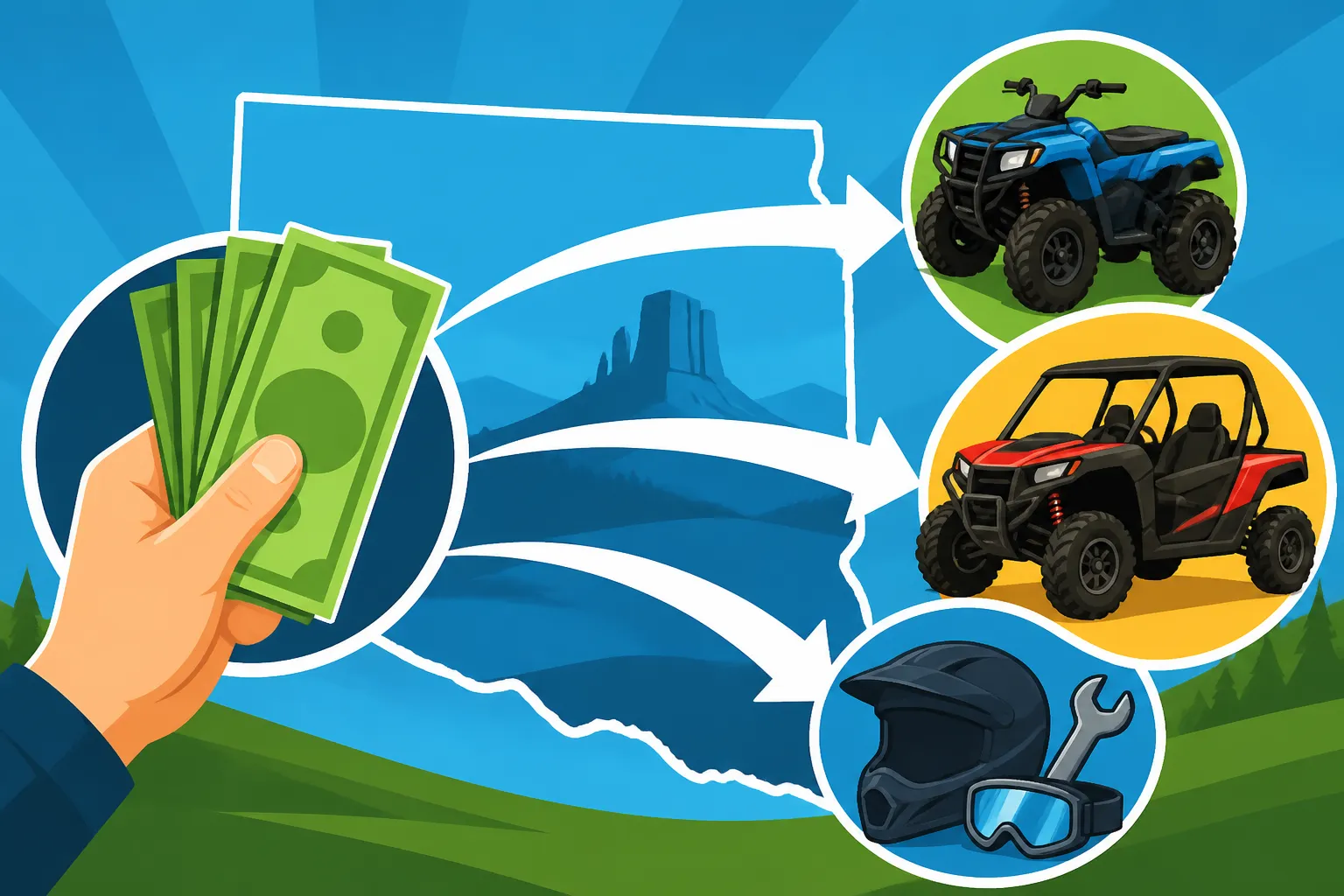
When you combine all the various components of your ATV or UTV titling costs – the basic fee, the excise tax, penalties, and special allocations – you see a comprehensive system designed to fund a wide array of state and local services. It’s not just about getting a piece of paper; it’s about contributing to the fabric of South Dakota.
Supporting a Wide Range of Services
Ultimately, the money collected from titling off-road vehicles in South Dakota is distributed across various state and local entities to support a vast range of public services. From the basic operational costs of the county treasurer's offices that process your paperwork, to the state's general fund that underpins education, public safety, and transportation, every dollar has a purpose. The dedicated solid waste fees contribute to environmental protection, while the Highway Patrol allocation helps keep our roads safe. Even the technology fees ensure that the systems handling your title are modern and efficient.
It’s easy to focus on the immediate cost at the counter, but looking at Where South Dakota Title Money Goes in its entirety reveals a thoughtful system of revenue generation that ties directly into the well-being of the state and its citizens. Your contribution helps ensure that the state can maintain its infrastructure, protect its natural resources, and provide essential services that benefit everyone, including those who enjoy off-road recreation.
Investing in the Future of Off-Roading
It's also worth noting that by participating in the official titling process, you're contributing to a system that helps validate and support the legitimacy of off-road vehicle use in South Dakota. When the state collects revenue from ATVs and UTVs, it acknowledges their presence and, in many ways, invests in their future. These funds, especially those allocated to recreational infrastructure, directly or indirectly improve the quality and accessibility of riding areas.
Whether it’s through supporting trail maintenance, funding enforcement to ensure responsible riding, or simply contributing to the overall economic health of the state, your title money plays a part. It helps cultivate an environment where off-road vehicle recreation can thrive responsibly. So, the next time you're handed that title or receipt, you can have a clearer picture of the many ways your contribution helps keep South Dakota moving, both on and off the trails.
Fees and Allocations at a Glance
To summarize the various fees and where they generally go, here's a quick overview. Keep in mind that specific percentages and allocations can be complex and may be subject to legislative changes. For precise, current figures, always consult the official South Dakota Department of Revenue or your local county treasurer's office.
| Fee/Tax Component | General Allocation / Purpose |
|---|---|
| Basic Title Fee | County Treasurer administrative costs, Department of Revenue operations |
| Technology Fee | Upgrading and maintaining state vehicle titling/registration systems |
| 4% Excise Tax | South Dakota General Fund (education, public safety, infrastructure), some county apportionment |
| 1% Monthly Late Penalty | South Dakota General Fund (administrative burden, compliance incentive) |
| 10% Sixty-Day Penalty | South Dakota General Fund (stronger compliance incentive) |
| Solid Waste Dollars | County/municipal solid waste management, environmental programs |
| Highway Patrol Dollars | South Dakota Highway Patrol operations, public safety on roads |
| Lien Notation Fee | Administrative cost of recording/releasing vehicle liens |
| Duplicate Title Fee | Administrative cost of issuing replacement title documents |
| Nonresident Fee | South Dakota General Fund, recreational infrastructure, offset demand on state services |
Disclaimer
This article is for general informational purposes only and does not constitute professional advice. Laws, prices and regulations vary by location and change over time. Consult a qualified professional for guidance on your specific situation.