Where to Buy a South Dakota Nonresident Permit
It can be incredibly frustrating to plan an exciting ATV or UTV trip to the beautiful Black Hills or the sprawling open prairies of South Dakota, only to realize there's a whole layer of paperwork and permits you weren't expecting. For out-of-state riders, navigating South Dakota's specific rules for off-road vehicles (ORVs) can feel like a maze, especially when it comes to getting the necessary permits to legally operate your machine. This guide is here to cut through the confusion and walk you step-by-step through exactly where and how to purchase your South Dakota Nonresident ORV Permit, ensuring your adventure is filled with open trails, not unexpected fines.
Understanding the South Dakota Nonresident ORV Permit
Before we dive into where to get one, let's talk about why this permit exists and what it actually covers. Many visitors assume their home state's registration is all they need, or they might confuse this with a trail permit. It's easy to get these things mixed up, but understanding the distinction is key to a smooth trip.
South Dakota requires this special [South Dakota's Nonresident ORV Permit] for any off-road vehicle that is primarily domiciled in another state but will be operated on public roads, streets, or highways (including the infamous ditch-riding) within South Dakota. This permit acts as South Dakota's way of acknowledging your out-of-state machine for certain types of public use, essentially granting it temporary permission to be on state-controlled rights-of-way that aren't specifically designated off-road trails.
Think of it this way: your home state's license plate might allow you to drive your car anywhere, but an ORV is a different beast. South Dakota has specific rules, and this permit ensures that even though you're a visitor, you're contributing to the state's ORV infrastructure and are recognized by local law enforcement. It's a fundamental step for many visitors who want to enjoy the flexibility of riding legally beyond private land or designated trail systems.
It’s crucial to understand that this permit is distinct from the [Black Hills Motorized Trail Permit], which is specifically required for riding within the Black Hills National Forest's designated motorized trail system. Many riders will actually need both if they plan to trailer their machine to a trailhead via public roads, ride some ditches, and then access the forest trails. The nonresident ORV permit addresses the "getting there" and "riding in between" public land segments, while the trail permit addresses the actual trail use within the forest. Don't fall into the trap of thinking one covers the other – they serve different purposes entirely.
The state charges nonresidents an additional fee for this permit. This extra charge helps offset the costs associated with maintaining public access for out-of-state machines and contributes to state funds, which can be frustrating to pay on top of what you already pay in your home state, but it's part of playing by South Dakota's rules. This fee, often referred to as [Why South Dakota Charges Nonresidents an Extra Hundred], is a straightforward part of the process.
Your Options for Purchasing the Nonresident ORV Permit
When it comes to actually getting your hands on this permit, South Dakota offers a few avenues. While convenience is always a factor, sometimes one option might suit your travel plans or personal preferences better than another.
Purchasing Online for Convenience
In today's digital age, many people prefer to handle paperwork online, and South Dakota's Department of Revenue understands this. The most common and often easiest way to acquire your [South Dakota's Nonresident ORV Permit] is through the South Dakota Department of Revenue's online portal. This method offers the benefit of completing the application from the comfort of your home, potentially weeks before your trip, reducing stress once you arrive.
To find the correct portal, you'll want to search specifically for the "South Dakota Department of Revenue" and look for their Motor Vehicles Division section. There, you'll typically find an option for ORV permits and registration. The online system will guide you through entering your vehicle information, personal details, and payment. Be prepared to provide specifics about your machine, including the VIN, make, model, and year, along with your personal identification information.
One important thing to remember with online purchases: [Why South Dakota Mails the Decals Separately]. Unlike some states where you might print a temporary permit, South Dakota will mail you a physical decal that must be affixed to your ORV. This means you need to allow sufficient time for the decal to arrive before you plan to ride. If you're planning a last-minute trip, this could be a significant hurdle. Many riders will want to factor in at least two weeks for mailing, though it can sometimes be quicker. Ordering well in advance of your departure date is always the safest bet to avoid any last-minute scrambling or having to delay your riding plans.
Visiting a South Dakota County Treasurer's Office
If you prefer a face-to-face interaction, have questions you want to ask in person, or simply find yourself in South Dakota and need a permit immediately, a [Titling at a South Dakota County Treasurer] is your next best option. Every county in South Dakota has a Treasurer's Office that handles vehicle titling and registration, and this includes ORV permits.
These offices are scattered across the state, from cities like Rapid City and Sioux Falls to smaller towns, so you're likely to find one relatively close to your destination or along your travel route. For example, if you're heading to the Black Hills, the Lawrence County Treasurer's office in Deadwood or the Pennington County Treasurer's office in Rapid City would be prime locations.
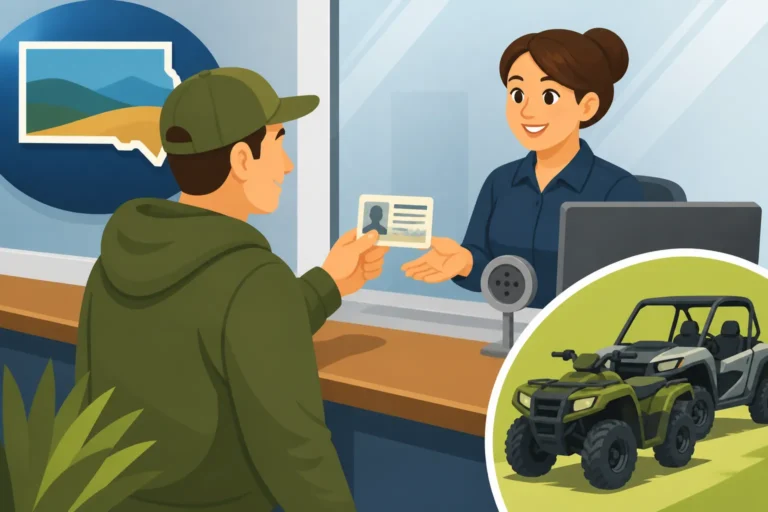
When you visit a County Treasurer's Office, you'll need to bring all your necessary documentation with you. This often includes your driver's license, proof of ownership for your ORV (such as a title or bill of sale), and payment for the permit. Being prepared will make the process much smoother. While you might not walk out with a physical decal immediately (due to the mailing process mentioned above), the office can issue you a temporary receipt that serves as proof of application, allowing you to ride legally while you wait for your decal to arrive. This can be a lifesaver for those spur-of-the-moment trips.
It's a good idea to check the specific hours of operation for the County Treasurer's Office you plan to visit, as they can vary, especially in smaller counties. A quick phone call or check of their county website before you head out can save you a wasted trip.
Other Potential Purchase Locations
While online and County Treasurer offices are the primary methods, sometimes other locations might offer permit services, especially for the Black Hills Motorized Trail Permit. However, for the specific [South Dakota's Nonresident ORV Permit], these two options remain the most reliable. Occasionally, larger recreational vehicle dealerships or visitor centers might have information or even facilitate some parts of the process, but direct purchase of the nonresident ORV permit itself usually funnels through the Department of Revenue online or the County Treasurer. Always confirm what type of permit they are assisting with to avoid confusion.
| Purchase Method | Key Advantages | What You'll Need | Estimated Time to Receive Decal |
|---|---|---|---|
| Online (SD Dept. of Revenue) | Convenience, 24/7 access, can do from home before trip | ORV info (VIN, make, model), personal ID info, payment | 1-2 weeks (mailed) |
| County Treasurer's Office | In-person assistance, immediate temporary proof, local access | ORV title/bill of sale, driver's license, payment | 1-2 weeks (mailed) |
Essential Documents and Information You'll Need
Regardless of whether you purchase your [South Dakota's Nonresident ORV Permit] online or in person, you'll need to gather some critical pieces of information and documentation. Having these ready will prevent delays and ensure a smooth application process.
Your Personal Identification
First and foremost, you'll need valid identification. This typically means your driver's license. The state needs to confirm who you are and where you reside, which is why they distinguish between resident and nonresident permits. Be prepared to provide your name, address, and other identifying details as requested on the application.
One point that often surprises nonresidents is that [Why the ORV Permit Application Asks for an SSN]. While it might seem intrusive for a permit, it's a standard identifier used by the state for various vehicle-related transactions, often to link you to other state systems or for tax purposes. If you're hesitant, rest assured it's a routine part of official state paperwork.
Your Off-Road Vehicle's Details
You'll need comprehensive information about your ATV or UTV. This includes:
- Vehicle Identification Number (VIN): This is paramount. The VIN is how the state identifies your specific machine. Make sure to have the correct VIN readily available.
- Make, Model, and Year: Standard information to categorize your ORV.
- Proof of Ownership: This is usually your vehicle's title from your home state. If you recently purchased the ORV and don't yet have a title in your name, a bill of sale might suffice in conjunction with the previous owner's title or registration. Make sure this document clearly shows you as the owner. If you're drawing up a bill of sale, resources like LawDepot can provide customizable templates to ensure all necessary details are included, helping you present a professional and complete ownership document if needed for your application. This is especially helpful if you're buying a used machine from a private party and want to ensure your paperwork is solid before heading to the Treasurer's window.
Payment for the Permit
The permit comes with a fee, and this is where [South Dakota Nonresident ORV Permit Cost] comes into play. As a nonresident, you'll generally pay a higher fee than a resident. Be prepared to pay this fee, which can be subject to change, so it's always wise to check the current rates on the South Dakota Department of Revenue website before you apply. You can typically pay with a credit card online or with cash, check, or card at a County Treasurer's Office.
Common Hurdles and How to Overcome Them
Even with all the right information, sometimes applying for a nonresident permit can hit a snag. Being aware of these potential issues can help you prepare and avoid unnecessary frustration.
The Mail-Forwarding Address Trap
Many out-of-state visitors to South Dakota utilize mail-forwarding services, especially those who spend extended periods traveling or use the state for residency purposes. However, when it comes to ORV permits, [Why a Mail-Forwarding Address Triggers South Dakota's Fee] is an important consideration. If you are applying for a resident permit or title in South Dakota, a mail-forwarding address alone might not be sufficient to prove residency for vehicle purposes. While this article is about the nonresident permit, it’s a common point of confusion. For the nonresident permit, your out-of-state residency is clear, but if you were to later try to convert to a South Dakota title and use a mail-forwarding service, you'd encounter this issue. The state typically requires a physical street address for titling and registration purposes, to prevent fraud and ensure proper taxation and identification of vehicle owners. For a nonresident permit, this isn't a direct issue, but it's a reminder of how precise South Dakota can be with addresses.
The Waiting Game for Your Decal
As mentioned, the physical permit decal is mailed to you. This "waiting game" can be a source of anxiety, especially if you're on a tight schedule. [How Long a Black Hills Permit Takes to Arrive] is a similar process, and the non-resident ORV permit follows a similar timeline. There's no way around the mailing time for the actual decal.
Solution: The best way to overcome this is simple: plan ahead. Apply for your permit at least two to three weeks before you intend to leave for South Dakota. If you find yourself in a bind and need to ride sooner, visit a County Treasurer's Office. They can issue you a temporary receipt that acts as legal proof of application, allowing you to operate your ORV while the decal is in transit. Just make sure to keep this receipt with you at all times when riding.
Incorrect or Incomplete Documentation
It's easy to overlook a small detail, but incomplete paperwork is a surefire way to get your application delayed or rejected. Perhaps you're missing a signature on a bill of sale or your VIN is miswritten.
Solution: Double-check everything. Before you submit your application online or head to the County Treasurer's Office, go over every field and every document. Compare the VIN on your physical machine to what's on your title and application. If you're using a bill of sale, ensure it includes all required information like buyer and seller names, addresses, date of sale, purchase price, and a clear description of the ORV. [A South Dakota Bill of Sale for an ORV] often requires specific details. Using a reliable template from a service like LawDepot can ensure you don't miss any critical components when preparing your ownership documents. This can be especially valuable if you are buying a used machine and want to be sure you have legally sound paperwork ready for the permit application.
Confusing the Nonresident ORV Permit with a Trail Permit
As we discussed earlier, it's common for riders to conflate the [South Dakota's Nonresident ORV Permit] with the [Black Hills Motorized Trail Permit]. This misunderstanding can lead to fines if you only have one when you need both.
Solution: Understand their distinct purposes. The nonresident ORV permit allows your out-of-state machine to operate on roads and ditches where permitted by law. The motorized trail permit is specifically for designated motorized trails in the Black Hills National Forest. If your plans include both types of riding, purchase both permits well in advance. Information on [Where to Buy a Black Hills Trail Permit] is available through Forest Service offices or online portals, often separate from the state Department of Revenue.
By understanding these requirements and preparing accordingly, you can ensure your South Dakota ATV or UTV adventure is spent enjoying the stunning scenery and thrilling rides, rather than dealing with unexpected paperwork hassles.
Disclaimer
This article is for general informational purposes only and does not constitute professional advice. Laws, prices and regulations vary by location and change over time. Consult a qualified professional for guidance on your specific situation.