Titling a Youth Machine in South Dakota
Getting a youth off-road vehicle titled in South Dakota can feel like navigating a maze, especially when you're trying to figure out who needs to sign what and what documents you actually need when it's for your son, daughter, or grandchild. This guide is here to walk you through the entire process, making sure you understand every step, from gathering the right paperwork to understanding the fees, so you can get that machine legally into their name (or at least legally associated with them) and ready for the trails.
Why Titling a Youth Machine Has Unique Considerations
When you're dealing with an off-road vehicle (ORV) intended for a minor, the titling process in South Dakota introduces a few extra layers compared to titling a machine for an adult. It's not just about the machine itself; it's about legal ownership, parental responsibility, and ensuring all parties are properly represented on the official documents. Many parents or guardians assume they can just put the child's name on the title, but the realities of legal age and contracts mean it's often more nuanced than that.
Understanding Legal Ownership for Minors
In South Dakota, like most places, minors generally can't legally enter into contracts, which includes buying or owning property like an ATV or UTV outright. This means that while the machine is for your child, the legal title will almost always need to be in an adult's name, or jointly with an adult. This isn't just a technicality; it's a protection for both the minor and the seller. Imagine trying to re-sell a machine if the legal owner is 12 years old and can't sign a bill of sale! The adult taking on the title is essentially the legal owner responsible for the vehicle, even if the primary operator is the youth. This is a crucial distinction to grasp from the outset, as it shapes how you fill out all subsequent paperwork. It's about acknowledging the machine's primary user while adhering to legal frameworks around property ownership.
Parental or Guardian Responsibility on Paperwork
Because a minor cannot hold the title independently, the adult (parent or legal guardian) will be the one signing the actual title application and taking legal ownership. This responsibility extends beyond just the initial purchase; it includes any future sale, reporting the machine as stolen, or even dealing with insurance claims. When you visit a county treasurer's office to title the machine, they will expect the adult listed on the title to be present and to provide their identification. Even if you consider it "your child's ATV," for all legal intents and purposes, it's your ATV (or jointly yours). This is a common point of confusion, and understanding this upfront can save a lot of headaches at the counter. The adult's signature is the legal bridge between the seller and the state for the ownership transfer.
Essential Paperwork for a Youth ORV Title
Gathering the correct paperwork is the cornerstone of a smooth titling experience. Without the right documents, signed correctly and presented completely, you’ll find yourself making multiple trips to the county treasurer's office. For a youth machine, some specific documents become even more critical to ensure a clear chain of ownership and proper legal representation.
The Bill of Sale: A Critical Document
Whether you're buying a brand-new quad from a dealer in Rapid City or a used side-by-side from a private seller near Deadwood, a solid bill of sale is absolutely non-negotiable. This document is your proof of purchase and establishes the transfer of ownership. For a youth machine, the bill of sale should clearly list the adult (parent or guardian) as the buyer, even if the seller knows it's ultimately for a child. This reinforces the legal ownership point we just discussed. Make sure the bill of sale includes:
- The full names and addresses of both the seller and the buyer (the adult).
- A complete description of the ORV, including its make, model, year, and crucially, the Vehicle Identification Number (VIN). Always double-check that the VIN on the bill of sale matches the VIN on the machine itself. [Checking a VIN Before a South Dakota Purchase] is a critical step here.
- The purchase price. This figure is important for calculating South Dakota's excise tax.
- The date of sale.
- The signatures of both the seller and the buyer. If you're using a template, ensure it covers all these points. Sometimes, you might need a formal, notarized bill of sale, especially if the previous title situation is murky, or if you simply want extra legal protection. Services like LawDepot offer customizable bill of sale templates that can help you ensure all necessary fields are covered, providing peace of mind.
Without an accurate and complete bill of sale, the county treasurer will have no way to verify the sale, the price, or who the machine was legally transferred to, halting your titling process dead in its tracks. A handwritten note won't cut it. You need something substantial. [A South Dakota Bill of Sale for an ORV] delves deeper into what makes a bill of sale acceptable.
Certificate of Origin or Previous Title
If you're buying a brand-new youth machine from a dealership, you'll receive a Manufacturer's Certificate of Origin (MCO) or Manufacturer's Statement of Origin (MSO). This is essentially the birth certificate for the ORV, proving it's never been titled before. If you're buying a used machine, you'll need the previous owner's original title, properly signed over to you (the adult buyer) in the designated areas. This is where many private sales run into trouble. Always insist on seeing the original title, free of any liens, and ensure the seller signs it in your presence. If the title is lost, the seller needs to obtain a duplicate before you can proceed. You cannot title a machine in South Dakota without a clear and properly transferred title or MCO. Don't accept a copy, a photograph, or any promises of a title "coming in the mail." [South Dakota ATV Title Paperwork] explains the nuances of these documents.
Identification and Proof of Residency
The adult who will be listed on the title must present a valid form of identification, typically a driver's license. This proves your identity to the county treasurer's office. If you're a South Dakota resident, your license usually serves as proof of residency. However, if you're a nonresident titling a machine in South Dakota (perhaps you own a cabin in the Black Hills where the machine is primarily kept), you'll have additional requirements, which often include a special form or even an additional fee. This is especially true if you're using a mail-forwarding service instead of a true physical address in the state. The treasurer needs to confirm you are who you say you are and that you meet the residency requirements for titling.
The Titling Process at the County Treasurer
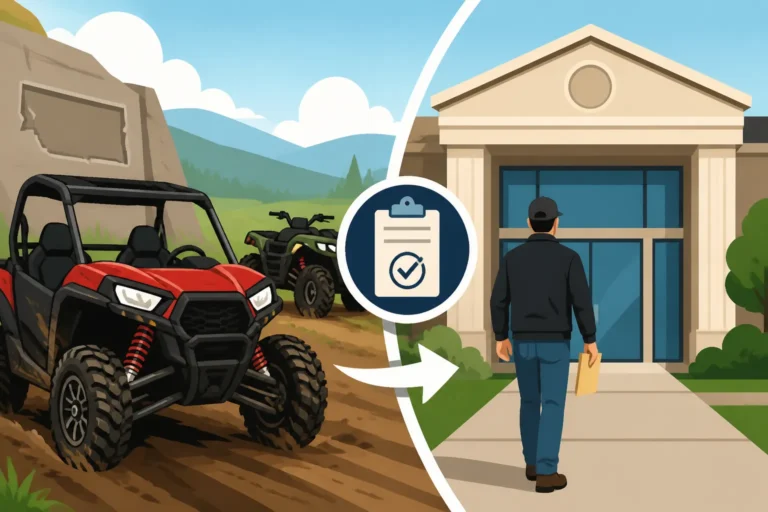
With all your paperwork in hand, the next step is to head to your local county treasurer's office. This is where the rubber meets the road, and you'll officially apply for the title. South Dakota handles ORV titling at the county level, not a central state agency, which means a personal visit is usually required.
Completing the Application
At the county treasurer's office, you'll fill out a South Dakota Title and Registration Application form. This form will ask for details about the ORV (VIN, make, model, year), the purchase information (date, price), and the owner's information (your name, address, etc.). Remember, the adult is the legal owner here. Double-check all spellings and numbers, especially the VIN. A single digit off can cause significant delays. If there's a lien on the machine (for example, you financed it through a bank), that information will also need to be noted on the application, and the lienholder will likely need to send the original title directly to the county treasurer after the lien is satisfied. This form acts as the formal request to the state to change the legal ownership record.
Understanding the Fees Involved
Titling a youth machine in South Dakota involves several fees, which are standard regardless of the owner's age, but knowing them upfront helps avoid surprises. The main costs include:
- The Title Fee: This is the base fee for issuing the actual title document.
- Excise Tax: South Dakota charges a 4% excise tax on the purchase price of the ORV. This is often the largest fee you'll pay. It's calculated on the purchase price listed on your bill of sale. If you paid very little or nothing (for example, if the machine was a gift), the treasurer might use a valuation guide to assess a fair market value for tax purposes. [South Dakota's 4 Percent Excise Tax] provides more details.
- Technology Fee: A relatively newer fee, this is a small charge applied to titling transactions. [South Dakota's $2 Technology Fee] explains its purpose.
- Lien Notation Fee (if applicable): If you financed the machine, there's a small fee to record the lien on the title. [South Dakota's $10 Lien Notation] covers this.
- Solid Waste and Patrol Dollars: A few dollars from your titling fees are directed towards solid waste management and highway patrol funding. These are part of the overall cost but are often bundled into the various fees you pay.
- Nonresident Fee (if applicable): If you are a nonresident applying for a South Dakota title, there's an additional fee. This is distinct from a [South Dakota Nonresident ORV Permit] which is for riding the trails, not for titling. [Why Out-of-State Owners Pay $100 Extra in South Dakota] explains this in detail.
It’s always a good idea to call your specific county treasurer's office ahead of time to confirm the exact fees and acceptable payment methods. Most accept cash, check, or card, but policies can vary. [South Dakota ATV Title Cost] breaks down all these potential charges.
| Fee Type | Description | Applies to Youth Machine Title? |
|---|---|---|
| Title Fee | Basic cost for processing and issuing the title document. | Yes |
| Excise Tax (4%) | Calculated on the purchase price or fair market value of the ORV. | Yes |
| Technology Fee | Small fee supporting state technology initiatives. | Yes |
| Lien Notation Fee | Charged if there's a loan/lien on the vehicle. | If financed |
| Solid Waste/Patrol | Portions of fees allocated to solid waste management and highway patrol. | Yes |
| Nonresident Fee ($100) | Additional fee for out-of-state residents applying for a South Dakota title. | If nonresident |
| Penalty Fees | Apply if you miss the [South Dakota's Forty-Five Day Title Deadline]. | If late |
The 45-Day Deadline and Penalties
South Dakota has a strict 45-day deadline from the date of purchase (as shown on your bill of sale) to title your ORV. Missing this deadline, even by a day, will result in penalties. The penalties start at 1% of the excise tax for each month or portion of a month past the deadline. If you get to 60 days past the sale date, a 10% penalty on the excise tax kicks in, on top of the monthly 1% charge. This can add up quickly, especially on a more expensive machine. It's crucial to prioritize getting to the county treasurer's office as soon as possible after purchasing the youth machine. Don't let the excitement of a new ride distract you from this important administrative task. [South Dakota ATV Late Title Penalty] explains how these charges accumulate.
Special Considerations and Common Hurdles
Titling a youth machine isn't always a straightforward cash-and-carry transaction. Sometimes, machines are gifted, inherited, or involve multiple owners, each adding a unique wrinkle to the titling process. Understanding these scenarios beforehand can help you navigate potential complications smoothly.
Titling a Gifted Youth Machine
It’s a common scenario: a grandparent buys a quad for their grandchild, or a parent gifts an older machine to their child. While it might feel like a simple transfer, South Dakota still requires a paper trail. Even if no money changes hands, you'll still need a bill of sale, often stating the purchase price as "gift" or "$0." The key here is that the excise tax will likely still be due, based on the ORV's fair market value. The county treasurer won't let you bypass the tax simply because it was a gift; they'll use valuation guides to determine what tax you owe. The adult receiving the gift (or the adult who will be the legal owner for the minor) will be listed as the recipient on the bill of sale and the title application. Don't try to be cute with the bill of sale for a gifted machine; be transparent, and be prepared for the excise tax based on fair market value. [Titling a Gifted Machine in South Dakota] offers more specific advice.
Inheriting an ORV for a Child
Inheriting an off-road vehicle after the passing of a family member can be a bittersweet experience, and titling it for a child adds another layer of complexity. If the ORV is part of an estate, you'll need documentation from the estate's executor or administrator, such as a certified copy of the will, letters of administration, or a small estate affidavit, depending on the value of the estate and how it's being handled. This paperwork proves your legal right to transfer ownership from the deceased individual to the adult who will then hold the title for the youth. The process ensures a proper legal chain of custody. It's best to contact the county treasurer's office directly in this situation, as the exact documents can vary slightly based on the specific circumstances of the estate. [Titling an Inherited Machine in South Dakota] goes into greater depth.
Two Owners on a Youth Title
Sometimes, parents, or a parent and another guardian, might want both their names on the title of a youth machine. South Dakota allows for multiple owners on a title. You'll typically list both individuals on the title application, and both will need to provide identification and sign the necessary documents. How the names are listed (e.g., "John Doe OR Jane Doe" vs. "John Doe AND Jane Doe") affects how the machine can be sold later. "OR" means either person can sell it independently, while "AND" requires both signatures for any future transaction. This is a vital distinction to understand, as it impacts future flexibility and control over the asset. Think carefully about how you want the ownership structured on the title, especially concerning future scenarios where one parent might need to act independently. [South Dakota ATV Title With Two Owners] details these ownership options.
It can feel like a lot of hoops to jump through, but ensuring your youth's machine is properly titled from the start will prevent future headaches, fines, and legal complications down the road. Take your time, gather your documents carefully, and don't hesitate to ask your county treasurer's office for clarification if you're unsure about any step of the process.
Disclaimer
This article is for general informational purposes only and does not constitute professional advice. Laws, prices and regulations vary by location and change over time. Consult a qualified professional for guidance on your specific situation.