Hauling a Machine In From Montana
Bringing an ATV or UTV into a new state, especially when you've just moved or purchased it across state lines, can feel like navigating a maze blindfolded. You've got your machine, you're excited to hit the trails or put it to work, but then the paperwork monster rears its head, leaving you wondering exactly what South Dakota wants from you, especially if it's coming from Big Sky Country. This guide is here to untangle the complexities of titling and registering your off-road vehicle (ORV) when you're hauling it in from Montana, ensuring a smooth transition so you can get back to riding.
Understanding South Dakota's Titling Basics for Out-of-State Machines
The moment your ATV or UTV crosses the South Dakota state line, even if it's just passing through, it technically falls under South Dakota's regulations if you plan to keep it here. This can be a point of confusion for many, especially if they're used to Montana's more relaxed approach to certain vehicle types or have just moved to the Mount Rushmore State. The key is understanding that South Dakota isn't just looking for a simple transfer; they have their own specific requirements to ensure ownership is properly documented and taxes are collected.
Why South Dakota Cares Where Your Machine Came From
South Dakota has a clear definition of what constitutes an off-road vehicle (ORV) and requires most of them to be titled. This includes ATVs, UTVs, side-by-sides, and even some dirt bikes. When you bring a machine in from Montana, even if it was titled there, South Dakota needs to establish a new record of ownership within its system. They want to ensure the machine isn't stolen, that all previous liens are properly released, and that any applicable taxes are paid. It's not about distrusting Montana's system; it's about maintaining their own clear chain of custody and revenue collection.
The process essentially starts fresh in South Dakota, meaning your Montana title becomes a crucial piece of the puzzle, but it's not the final piece. You'll essentially be applying for a new South Dakota title, using your Montana documents as proof of prior ownership. This might seem redundant, especially if you've owned the machine for a long time, but it's a necessary administrative step to get your ORV recognized here. Ignoring this step can lead to significant headaches down the road, from legal issues to difficulties if you ever decide to sell the machine in South Dakota.
The Core Documents You'll Need to Bring
When you head to the county treasurer's office, the most critical document you'll need from your Montana purchase or ownership is the original Montana title. I can't stress "original" enough here; copies, faxes, or photos typically won't cut it. This document proves you are the legal owner of the ATV or UTV. If you just purchased the machine in Montana, you'll also need a solid bill of sale. Even if the Montana title is signed over to you, a bill of sale provides a clear record of the purchase price, which is essential for calculating South Dakota's excise tax.
Think of it this way: the Montana title is your pedigree paper, and the bill of sale is your receipt. Both are vital. For a bill of sale, if you're ever in a private party transaction, consider using a reliable template from a service like LawDepot to ensure all the necessary information is included. This protects both the buyer and the seller and ensures you have all the fields South Dakota will be looking for. Beyond these, bring your valid driver's license or state-issued ID, and be prepared to provide details about the machine, such as its make, model, year, and vehicle identification number (VIN). It's always a good idea to have these details handy, perhaps even written down, to expedite the process.
Where to Go in South Dakota to Get Started
Unlike some states where you might visit a central Department of Motor Vehicles office for everything, South Dakota delegates the titling of ATVs and UTVs to the county level. This means you'll need to visit the county treasurer's office in the county where you reside or where the machine will be primarily stored. For example, if you live in Pennington County, you'll go to the Pennington County Treasurer's office. It's a local process that can sometimes feel a bit old-school, but it's efficient once you know where to go.
Before you make the trip, it’s always a smart move to check the specific county treasurer's website or give them a call. While the basic requirements are statewide, some counties might have slightly different operating hours, or they might prefer certain forms to be filled out in advance. They can also confirm any specific documents needed for an out-of-state transfer. You'll find that these offices are usually quite helpful, as they deal with these types of situations all the time. Just remember to bring all your original documents, including your Montana title and bill of sale, and be prepared to fill out the South Dakota Title and Registration Application. [Titling at a South Dakota County Treasurer] is a great resource if you want to learn more about the specific functions of this office.
Navigating Taxes and Fees When Importing from Montana
One of the biggest surprises for people bringing an ATV or UTV into South Dakota from Montana, or any other state for that matter, is the financial aspect. It's not just about the title fee; there's a specific tax and other smaller fees that can add up. Understanding these upfront can save you from a nasty surprise and potential penalties.
South Dakota's Excise Tax on Your Montana Machine
South Dakota levies a 4 percent excise tax on the purchase price of an ORV, regardless of whether you bought it in South Dakota or, in your case, in Montana. This is where things can get a little tricky for out-of-state purchases. If you paid sales tax in Montana, South Dakota may give you a credit for that amount, but it’s not always a dollar-for-dollar offset, and it often depends on whether Montana's tax was explicitly a sales tax and if you can provide clear proof of payment. It's crucial to bring documentation of any sales tax paid in Montana, such as a separate line item on your bill of sale or purchase agreement.
The excise tax is calculated on the net purchase price of the ORV. If you traded in another machine as part of the Montana deal, the tax is generally calculated on the difference, not the full retail value of the new machine. This tax is due at the time of titling, and remember, you have [Forty-Five Days to Get to the Window] from the date of purchase or the date you brought the machine into the state if you're a new resident. Missing this deadline can lead to additional financial penalties, which we'll cover shortly. It’s always best to be proactive and get this done promptly to avoid any extra costs. For a deeper dive into this topic, you can read more about [South Dakota's 4 Percent Excise Tax].
Other Fees You'll Encounter at the Treasurer's Window
Beyond the excise tax, there are several other fees that contribute to the overall cost of titling your Montana-sourced ORV in South Dakota. The base title fee itself is generally quite reasonable. However, you'll also encounter a [South Dakota's $2 Technology Fee], which helps fund the state's vehicle information system. This might seem small, but it's a mandatory part of the process.
If you have a loan on your ATV or UTV, and your lender wants to record their interest on the title, there will be a [South Dakota's $10 Lien Notation] fee. This ensures that when someone looks up the title, they can see that there's a financial interest held by a bank or credit union. All these fees stack up, so it's wise to be prepared for the total. It’s not just the title fee; it’s a collection of smaller charges that constitute the total titling cost. If you want a full breakdown, check out [What a South Dakota ORV Title Costs].
The Dreaded Late Penalties and How to Avoid Them
Life happens, and sometimes those deadlines sneak up on us. However, South Dakota is quite strict when it comes to timely titling, and the penalties for delays can quickly become significant. If you miss the initial 45-day window to title your machine, you'll start incurring a penalty of [South Dakota's 1 Percent a Month Penalty] on the excise tax due. This 1 percent penalty is applied for each month or part of a month that the titling is delayed.
But wait, there's more. If your delay stretches out to 60 days or more beyond that initial 45-day deadline, another penalty kicks in: [South Dakota's 10 Percent Penalty at Sixty Days]. This is an additional 10 percent of the excise tax amount, on top of the monthly 1 percent penalty. These penalties are designed to encourage prompt action, and they can really add up, turning an already necessary expense into a much larger one. The best way to avoid this is to gather all your documents immediately after purchase or moving to the state and make that trip to the county treasurer's office well within the 45-day window.
Specific Scenarios for Montana Imports
The circumstances surrounding your ATV or UTV's journey from Montana to South Dakota can influence the titling process, particularly concerning the excise tax. Whether you just bought it, have owned it for ages, or are relocating, there are nuances to consider.
What if You Just Bought It in Montana?
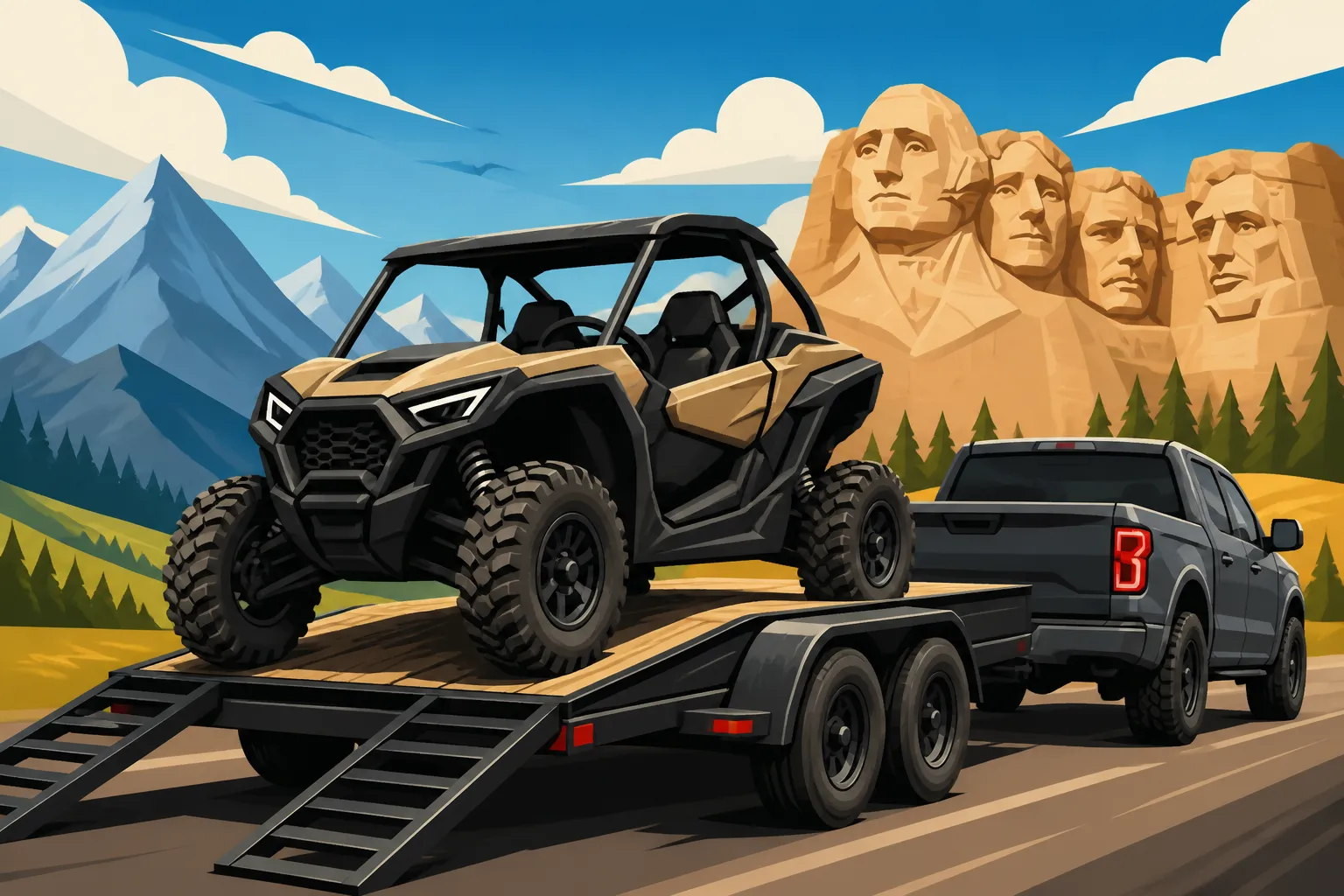
If you've just come back from a successful hunting trip to Montana, or perhaps a dealer in Missoula had the perfect side-by-side you couldn't pass up, and you're bringing it home to South Dakota, the process is pretty straightforward, but crucial. You'll need the original Montana title, signed over by the previous owner (or dealer if new), and a clear, detailed bill of sale. This bill of sale is paramount because it establishes the purchase price, which South Dakota will use to calculate its 4 percent excise tax.
Ensure the bill of sale clearly states the purchase date, the agreed-upon price, and includes the VIN of the machine. If you're dealing with a private seller, having a robust bill of sale from a source like LawDepot can prevent future disputes and ensure all necessary legal details are covered. Even if you paid sales tax in Montana, bring proof of that payment on the bill of sale. South Dakota might credit you for sales tax paid to another state, but it’s not guaranteed to cover the full 4 percent, and documentation is key. Remember that 45-day deadline starts from the date of purchase on your bill of sale, so don't delay your trip to the county treasurer's office.
Bringing a Machine You've Owned for Years
Perhaps you're moving to South Dakota after living in Montana for a decade, and your trusty ATV has been with you through countless adventures. In this scenario, you've likely owned the machine for so long that its value has depreciated significantly, and you probably paid sales tax on it years ago in Montana (if applicable there). When you move to South Dakota and title your long-owned machine, the 4 percent excise tax calculation is a little different. Instead of a recent purchase price, the state will assess the current market value of your ORV.
The county treasurer's office will typically use a standard valuation guide to determine the fair market value. While you might not be paying excise tax on the full price you paid ten years ago, you will still owe 4 percent on the assessed current value. If you can provide proof of sales tax paid in Montana when you originally purchased it, it's worth bringing, as it could potentially be credited against the South Dakota excise tax, depending on state reciprocity agreements. This credit, however, is not always substantial after years of depreciation, but every bit helps. Be prepared for a valuation and ensure your original Montana title is free of any outstanding liens.
If You're a Non-Resident Just Visiting or a New South Dakota Resident
The distinction between visiting and establishing residency in South Dakota with your ORV from Montana is critical for titling purposes. If you're a non-resident simply visiting South Dakota to enjoy the trails, and your machine is legally titled and/or registered in Montana, you typically do not need to title it in South Dakota. However, you will need a [South Dakota's Nonresident ORV Permit] if you plan to ride on designated public ORV trails, such as those in the Black Hills National Forest. This permit is separate from titling and is specifically for trail access.
If you are becoming a new resident of South Dakota, then the full titling process as described above applies to you. You are expected to title your ORV in South Dakota within that 45-day window of establishing residency. For new residents, the clock starts ticking when you formally establish your South Dakota address. If you're buying property or getting a new driver's license, be mindful of this. There's also a specific fee for non-residents titling a vehicle in South Dakota, which is separate from the excise tax and other fees. For more information on this, you can refer to [What an Out-of-State Owner Pays to Title in South Dakota]. This fee usually applies if you maintain residency elsewhere but are titling your machine here for specific reasons.
Beyond Titling: Riding and Operating in South Dakota
Getting your ATV or UTV titled in South Dakota is a huge step, but it's important to understand that titling doesn't automatically mean you can ride anywhere you please. There are separate rules for road use and trail access, especially for non-residents.
The Distinction Between Title and Registration for Road Use
It's a common misconception that once your ATV or UTV is titled, it's "registered" for all purposes, including street legal use. In South Dakota, titling simply establishes legal ownership. While some ORVs can be registered for road use, it's a completely separate process and comes with its own set of requirements. For an ATV or UTV to be considered street legal in South Dakota, it generally needs to meet specific criteria, including engine size (typically 200cc or more), and must be equipped with certain safety features like headlights, taillights, brake lights, a horn, and mirrors.
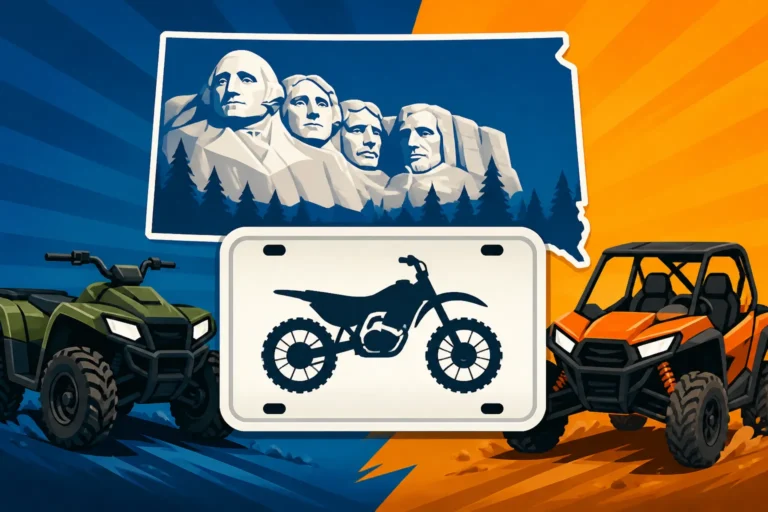
Even if your machine meets these requirements, it will receive a specific motorcycle plate, not a traditional car plate, and is generally restricted to secondary roads, ditches, and specific crossings. Interstates are usually off-limits. So, having a South Dakota title on your Montana import doesn't mean you can just drive it down Main Street. You'll need to go through the additional steps to obtain a motorcycle plate if you intend to use it on public roads. It's a complex topic, and you can delve deeper into [Are ATVs Street Legal in South Dakota?] to get the full picture.
Permitting for Non-Residents on South Dakota Trails
For those Montana riders who are simply visiting South Dakota and plan to hit the extensive trail systems, particularly in the Black Hills National Forest, a title isn't the only concern. Even if your ATV or UTV is legally titled and registered in Montana, you'll need to purchase a [South Dakota's Nonresident ORV Permit] to ride on designated public trails. This permit is an annual decal that helps fund the maintenance and development of these trails.
This is a critical point that many out-of-state visitors overlook, leading to potential fines if they are caught riding without the proper permit. The permit is distinct from your home state's registration and South Dakota's titling process; it's purely for access to specific public lands. You can purchase these permits at various locations, including some visitor centers, ranger district offices, or even online, though allow time for mailing if ordering online. Always check current regulations before you ride to ensure you have all the necessary decals and permits in place.
Common Pitfalls and How to Avoid Them
Bringing an ORV from Montana to South Dakota doesn't have to be a headache, but a few common mistakes can turn it into one. The first is delaying the titling process. That 45-day deadline for excise tax and titling is firm, and penalties add up quickly. Make it a priority to get to the county treasurer's office as soon as you've established residency or brought a newly purchased machine into the state.
Another pitfall is incomplete or incorrect paperwork. Always bring original documents, especially the Montana title, and ensure that any bill of sale is thoroughly filled out with accurate information, including the VIN and purchase price. Services like LawDepot can help ensure your bill of sale covers all bases. Lastly, not understanding the distinction between titling, road registration, and trail permits can lead to frustration or fines. Each serves a different purpose, and they are not interchangeable. Educate yourself on what you need for your specific use case, whether it's just trail riding, occasional road use, or simply long-term ownership in South Dakota. Being prepared and proactive is your best defense against any hiccups. It’s also wise to perform a [Checking a VIN Before a South Dakota Purchase] to avoid any issues with a stolen or previously damaged machine, no matter where you buy it.
Disclaimer
This article is for general informational purposes only and does not constitute professional advice. Laws, prices and regulations vary by location and change over time. Consult a qualified professional for guidance on your specific situation.