South Dakota Fines for Riding Without a Permit
Riding without the required permit in South Dakota can turn a trail outing into a citation, but the consequences depend on where you ride and which rule applies. A road plate, an out-of-state registration, and a motorized trail permit are not interchangeable. Here’s how to tell when a permit is needed, what may happen if you ride without one, and what to do if you receive a citation.
What can happen if you ride without a permit
If a route requires a motorized trail permit and your machine does not display the required permit, you may be cited. The exact penalty can depend on the location, the conduct involved, and the law or regulation applied. A citation may also involve court costs or other charges, so the amount printed on a ticket—or confirmed by the court—is more useful than relying on a general estimate.
There is no single “no permit” consequence that applies to every ride in South Dakota. A rider on a designated motorized trail, a rider on a public road, and a rider on private land may be subject to different requirements. The place matters, as does whether the machine is properly permitted, plated, or both.
It is also important to separate a permit violation from other possible violations. Riding without the required permit does not automatically mean you were also riding illegally on a closed trail, trespassing, or operating an improperly equipped machine. But if more than one rule was broken, an officer may address each issue separately. A permit does not give permission to ride wherever you choose.
| Situation | What to check | Why it matters |
|---|---|---|
| Designated motorized trail | Whether the machine has the required trail permit decal | A plate generally does not replace the trail permit |
| Public road | Whether the machine may legally use that road and has the required plate or permit | Road access has separate rules from trail access |
| State-managed riding area | The specific area’s access and permit rules | Some designated areas have different permit requirements |
| Private property | The owner’s permission and any applicable land-use rules | A trail permit is not a substitute for permission |
| Closed route or area | Current closure notices and route restrictions | A permit does not authorize riding through a closure |
If you receive a citation, read it carefully and follow its instructions. The citation should identify the alleged violation and provide information about how to respond. Do not assume that paying a ticket is the only option, or that ignoring it will make it go away. Contact the court or agency named on the citation if you need clarification about the process, deadline, or amount due.
For a broader overview of the permit system, see South Dakota Trail Permits Explained. If you are trying to understand the specific rules for visitors, South Dakota’s Nonresident Annual Permit and [South Dakota Rules for a Visiting Rider] may help you work out what applies to your machine and trip.
Where South Dakota requires a trail permit
The key question is not simply whether your ATV or UTV has a plate. It is where you plan to ride. South Dakota’s motorized trail permit applies to designated riding areas where the permit is required. The permit is generally tied to the individual machine, not to the person riding it, and the required decal must be displayed as directed.
A machine that is legal to use on a road may still need a trail permit before entering a motorized trail. Conversely, having a trail permit does not necessarily make a machine legal to operate on public roads. These are separate permissions with separate conditions.
Designated motorized trails
On designated motorized trails where the permit is required, the rider should have the correct permit for the machine and display the decal properly before riding. The rule is not limited to visitors: check the permit requirement even if you live in South Dakota or have a South Dakota plate.
Permitted routes, trail openings, and restrictions can change. Check the current information for the specific riding area before loading up. A route shown on an older map may be closed, seasonal, or limited to certain machine types. Riding without a permit and riding on a closed route are different problems, and one permit cannot cure either problem if the applicable rule is not followed.
For help understanding how the decal works, see How the Black Hills Motorized Trail Permit Works and Black Hills Trail Permit Decal Placement. If you are buying a permit close to departure, When You Order a Trail Permit Too Late explains why it is worth checking how the permit will be issued and when it needs to be displayed.
Roads and trails are different
A road plate or other recognized road authorization may allow a machine to use certain roads, subject to South Dakota’s road-use rules. It does not automatically serve as a trail permit on a designated motorized trail. Likewise, a trail permit does not automatically authorize road use.
This distinction matters to visitors with machines registered elsewhere. Out-of-state registration may be relevant to road use, but it does not necessarily meet South Dakota’s motorized trail permit requirement. Check both the machine’s road status and the riding area’s permit rules. Does South Dakota Honor Out-of-State Registration? and Riding South Dakota With an Out-of-State Plate cover the separate questions visitors should ask.
Areas with different access rules
Not every place where an ATV or UTV can be ridden uses the same permit system. Some designated state-managed riding areas may not require the same trail permit that applies on motorized trails. Private property is different again: the landowner’s permission is central, and a public-land permit does not grant access to private ground.
Do not assume that a permit is unnecessary just because a route is not a marked trail, or required simply because the ride takes place outdoors. Identify the land manager and location first. If you plan to ride on federal land, confirm the current route and permit requirements for that specific area. South Dakota Rules for Riding Federal Land and [South Dakota Rules for Riding Private Property] are useful starting points.
Reciprocity, plates, and common permit misunderstandings
Visitors often assume that registration from their home state covers every kind of riding in South Dakota. It is safer to treat road use and trail use as separate questions. A valid plate may be recognized for some road-use purposes, but it does not necessarily replace the South Dakota trail permit required on designated motorized trails.
The reverse assumption can also cause trouble. Buying a trail permit does not automatically legalize a machine for road use, remove equipment requirements, or allow a rider to use a route closed to that machine. Before setting out, check the rules for both the machine and the location.
A plate is not a trail permit
A plate identifies a machine for road-use purposes under the rules that apply to it. A motorized trail permit covers access to designated trails where that permit is required. These permissions serve different functions.
This distinction applies even when the machine is plated in South Dakota. It can also apply to an out-of-state machine whose home-state registration is otherwise accepted for road use. If your trip includes both public roads and motorized trails, plan to meet both sets of requirements. See Why a Plate Does Not Replace a Trail Permit for the practical difference.
A permit does not authorize every route
A permit is not an all-access pass. It does not override trail closures, machine-width restrictions, seasonal limits, posted signs, or other route rules. It also does not authorize riding off a designated route where off-route travel is prohibited.
Before riding, check the current map and notices for the area. Pay attention to signs at trailheads and junctions, and do not treat an open route on an old map as proof that it remains open. If a route is closed, riding it may lead to a separate citation even if your permit is valid. South Dakota Trail Closures to Check First and [South Dakota Rules for Riding Off a Route] explain why the route itself matters.
The permit belongs with the machine
Do not assume that one permit covers every ATV or UTV in a group. The permit requirement is generally handled per machine, so each machine should have the required permit and display its own decal. A rider switching machines should verify that the machine being ridden is properly covered.
If a rental machine is involved, ask the rental company whether the required permit is included and already displayed. Do not rely on the assumption that every rental comes with it. Confirm it before leaving the pickup location, and ask where the decal is mounted. For more on rental arrangements, see Do Rentals Arrive With the Trail Permit Already Paid?.
How to avoid a permit citation
The simplest way to avoid a permit problem is to sort out the route, land manager, and machine requirements before the ride. A permit purchase alone is not enough if the decal is missing, the route is closed, or the machine is not allowed on that route.
Use this process before heading out:
- Name the riding area. Identify the specific trail system or managed area, rather than relying on a broad destination such as the Black Hills.
- Identify who manages the land. The rules may differ between a designated motorized trail, a state-managed area, federal land, and private property.
- Check the current route information. Confirm that the route is open and appropriate for your machine. Look for seasonal closures, width limits, and other posted restrictions.
- Check permit requirements for that location. Do not infer trail requirements from road rules or from the machine’s home-state registration.
- Confirm that each machine is covered. If riding in a group, check every ATV and UTV individually.
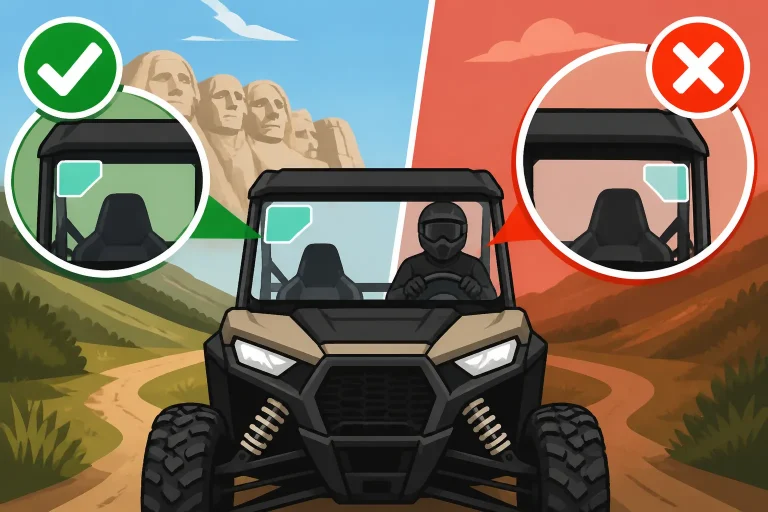
- Display the decal as directed. A valid permit that is not displayed as required may not solve the problem during a roadside or trail check.
- Keep proof of purchase available. Retain the receipt or confirmation in case you need to show that the permit was purchased, while remembering that proof of purchase may not replace a required displayed decal.
- Recheck conditions before riding. Closures and access information can change after you plan the trip.
If you are ordering a decal rather than buying one in person, allow enough time for delivery and confirm what you need to do before it arrives. A purchase confirmation is not necessarily permission to ride without the required decal. The details can depend on the permit process, so check the official instructions. How Long a Black Hills Permit Takes to Arrive and Why You Cannot Print One at Home address common questions about obtaining and displaying the permit.
For a visitor making a short trip, the permit option should fit the length and timing of the ride. For a rider who expects to return, compare the available permit types and their validity periods using current official information. Do not rely on an old fee chart or an online discussion that may describe a previous rule or price. A Seven-Day Permit for a Black Hills Trip and Who a South Dakota Annual Trail Permit Is For can help frame that choice.
If you are stopped or receive a citation
If an officer asks to see your permit, stay calm and provide the requested documents or information. If the decal is present but difficult to see, point it out without removing or altering it. If you believe you bought a permit but the decal was not delivered or was placed incorrectly, explain the situation honestly and keep any purchase records available.
If you receive a citation, take these steps:
- Read the citation from beginning to end, including the alleged offense, response instructions, and any deadline.
- Keep the citation, permit receipt, registration documents, photos, and relevant route information together.
- Write down where and when the stop occurred while the details are fresh.
- Contact the court or agency listed on the document if any instruction is unclear.
- Ask about the process for contesting the citation if you believe it is incorrect.
- Do not miss the stated response date while trying to resolve the issue informally.
A citation for lacking a permit is not the same as a final finding that the allegation is correct. The document explains how to respond; the court or agency can explain the procedure and any applicable payment or hearing options. Avoid relying on informal advice about what a citation “usually costs.” The exact amount and consequences should be confirmed with the authority handling the matter.
If several issues are listed, review each one separately. A missing trail permit, a closed route, a road-use violation, and a property-access dispute are not interchangeable allegations. The route, land manager, machine, and conduct may affect how each issue is handled.
If the situation involves a rental, contact the rental company as well, especially if the company represented that the machine came with a permit. Keep communications and contract documents, but do not assume that a dispute with the company automatically cancels a citation. The citation’s instructions still matter.
Frequently Asked Questions
Does an out-of-state plate replace a South Dakota trail permit?
Not necessarily. A plate may address road-use requirements, while a motorized trail permit applies to designated trails where it is required. Check both rules for the route and machine.
Is a trail permit required everywhere in South Dakota?
No single answer covers every riding location. Requirements depend on the land manager and the specific area. Confirm the rules for the trail, riding area, road, or private property you plan to use.
Does a valid permit let me ride a closed trail?
No. A permit does not override a closure, route restriction, or sign. Check current notices and stay on routes open to your machine.
How much is the fine for riding without a permit?
The exact amount can depend on the violation and the authority handling it. Check the citation and contact the court or agency named on it for the applicable amount and response process.
Disclaimer
This article is for general informational purposes only and does not constitute professional advice. Laws, prices and regulations vary by location and change over time. Consult a qualified professional for guidance on your specific situation.