Written Permission From a South Dakota Ranch Owner
Riding across a South Dakota ranch can look like a simple matter of asking the landowner, but vague permission can leave important questions unanswered. A clear written agreement helps everyone understand where you may ride, when access ends, and what conditions apply. It also helps you separate private-land permission from trail permits, public-land rules, and any requirements tied to your machine.
Why written permission matters on a South Dakota ranch
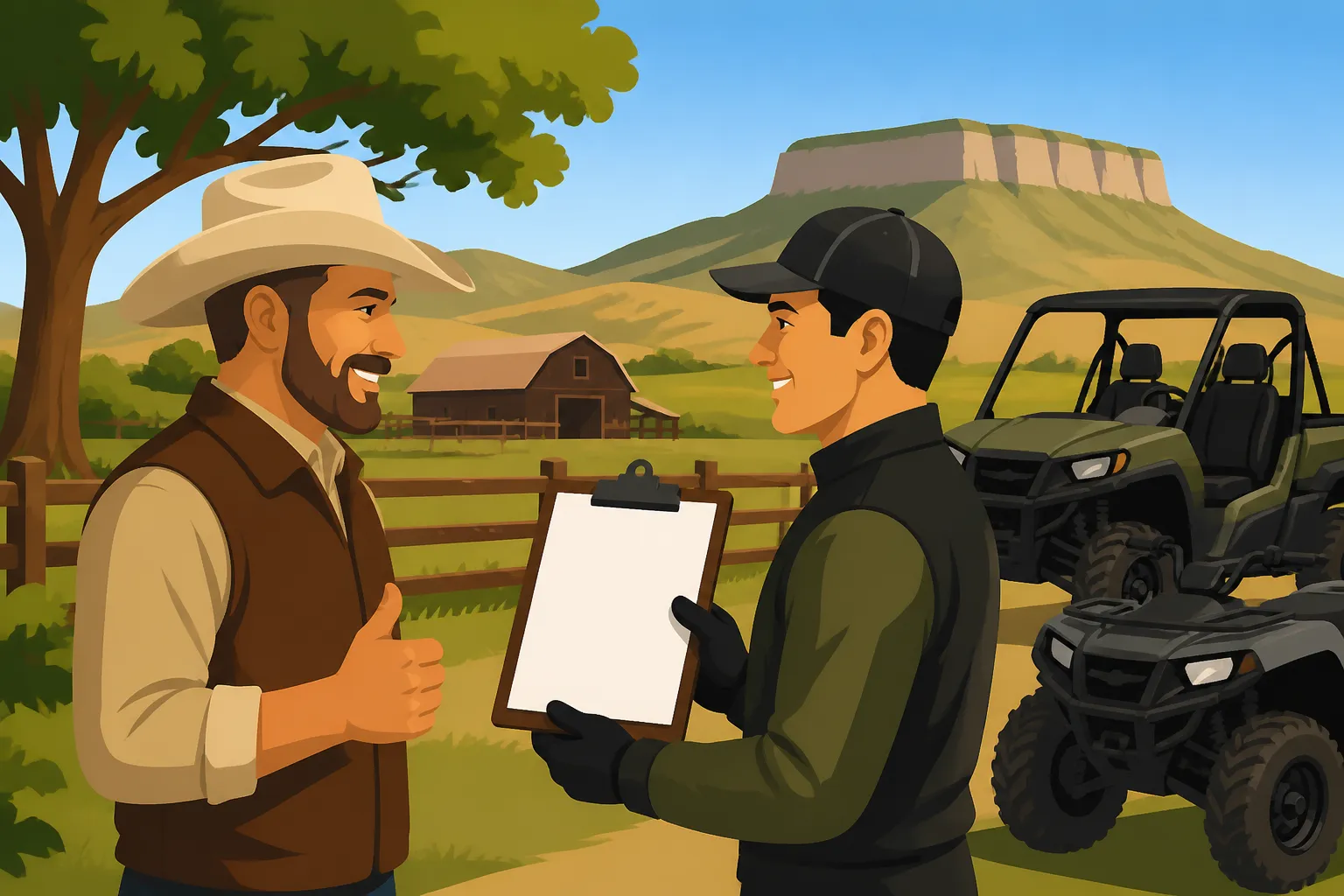
A ranch owner’s permission is about access to that person’s land. It can help prevent misunderstandings about whether you may ride, which routes are allowed, and whether you can bring guests. A conversation may be enough to start the discussion, but a written record is easier for both sides to refer to later.
This matters because “you can ride here” can mean different things. The owner might mean one pasture, a particular ranch road, or a route for one afternoon. The rider might understand it as access to the whole property for the season. Putting the boundaries and conditions in writing reduces the chance that either person relies on a different understanding.
Written permission is also not the same as ownership, a lease, or an unrestricted right to use the property. It does not automatically authorize riding across neighboring land, opening gates, driving through crops, or using a road beyond the ranch boundary. Permission applies only within the scope the owner or authorized person grants.
Before you ride, identify the land you have permission to use. A ranch may include multiple parcels, leased ground, or land with different owners. A route that appears continuous on a map may cross a property line or pass onto public land. Confirming the route directly with the person granting access is safer than assuming that nearby ground is included.
For a broader overview of the distinction between permission and access rules, see South Dakota Landowner Permission Requirements and South Dakota Rules for Riding Private Property. The practical point is straightforward: ask the right person, get clear consent, and stay within the area and conditions agreed upon.
| Situation | What written permission can clarify | What it does not establish by itself |
|---|---|---|
| Riding on a ranch owner’s private land | Approved area, dates, routes, riders, machines, and conditions | A right to cross neighboring or public land |
| Riding a ranch road that connects to another property | Whether the owner allows use of the road on their land | Permission from the next owner or authority |
| Riding near a grazing lease | Who controls the land and who can authorize access | That a lessee or ranch contact has authority to grant access |
| Riding a public motorized trail | Nothing about the trail’s public access requirements | Any permit, registration, or other requirement that applies |
| Riding only on private ranch ground | The owner’s consent and limits | A blanket exemption from unrelated laws or safety rules |
What to put in a written permission agreement
There may not be a single form that suits every private ranch arrangement. The goal is not to create a complicated contract for a casual ride; it is to record the terms clearly enough that the owner and rider understand them the same way. If the owner has a preferred form or needs to approve specific insurance terms, follow that process.
At a minimum, discuss and record the following:
- Who is granting permission. Identify the landowner or the person authorized to approve access. If someone manages the property on the owner’s behalf, confirm that they can grant permission.
- Who may ride. Name the riders or describe the group covered by the agreement. Do not assume permission for one person extends to friends, family, or an organized group.
- Which machines are allowed. Specify whether permission covers an ATV, UTV, or both, and whether passengers or additional machines are included.
- Where riding is allowed. Describe the property, approved roads or trails, and any areas to avoid. A map can help, but it should be clear which map version or marked route is being used.
- When permission applies. State the dates or period and any daily time limits. Include a process for checking whether access is still open if conditions change.
- What conditions apply. Note rules for gates, livestock, speed, dust, noise, parking, fires, firearms, dogs, or other concerns the owner raises.
- How to contact the owner. Agree on a way to reach the person granting access if a gate is locked, livestock is on the route, or a problem occurs.
- How permission can end. Clarify whether the owner can suspend or revoke access and how riders will be notified.
Avoid language so broad that it creates uncertainty. For example, “the ranch” may not identify which parcels are included, and “any time” may not account for calving, hunting, weather, or changing operations. Use recognizable boundaries and specific conditions instead.
A map is useful when the ranch has several roads or pastures. Mark the approved route, the entrance point, and any no-go areas. If the map is shared electronically, make sure riders can access it without cell service, and check that everyone is looking at the same version. A marked map should support the written terms, not replace the owner’s explanation of boundaries.
The agreement should also make clear that permission is personal and limited. If you want to bring another rider, lend your machine, or organize a group outing, ask first. A landowner may be comfortable with a small, known group but not with extra guests or a large ride.
Ranch permission, grazing leases, and permits are different
A ranch owner’s written permission does not automatically cover every route leading to the ranch or every kind of land along a ride. South Dakota riding can involve private ground, leased ground, public roads, designated motorized routes, and federal or state-managed areas. Each can have a different access authority and set of requirements.
A grazing lease deserves particular care. The person running livestock or managing a pasture may not own the land or have authority to authorize recreational riding. Ask who controls access and whether the person granting permission has the right to do so. The distinction is important enough to review South Dakota Rules for Riding a Grazing Lease and Who You Ask Before Riding a Grazing Lease.
Likewise, a route that begins on private ranch ground may connect to a public trail or cross public land. The ranch owner cannot grant permission on behalf of a public land manager simply by allowing you to ride up to the boundary. Check the rules for the public segment separately. South Dakota Rules for Riding Federal Land covers the separate question of riding on federal ground.
Keep these ideas distinct:
- Landowner permission answers whether you may enter and ride on the owner’s private property, within the stated limits.
- A trail permit or other riding credential applies where a particular public riding area requires it.
- Vehicle requirements concern the machine itself and may depend on where and how it is being used.
- Out-of-state registration or plates do not, by themselves, establish permission to use a private ranch or satisfy every local access rule.
If your ride stays entirely on private ranch land, the permit rules for a public motorized trail may not apply to that private-land portion. But do not treat that as a general exemption for a ride that also uses public routes. Check South Dakota Trail Permits Explained and confirm what applies to the specific public areas you plan to use. A permit is not a substitute for a landowner’s consent, and consent is not a substitute for a permit where one is required.
The same separation applies to reciprocity. A machine registered or plated in another state may be treated differently from an unregistered machine for certain public-road or trail purposes, but that has no power to grant access to private ranch land. Ask the landowner first, then verify any public-land or route requirements for the machine you will bring. For information about the permit question for visitors, see South Dakota Nonresident ORV Permit Requirements.
A practical process before you ride
A short check-in before the ride can prevent a long detour or a conflict with ranch work. Use a repeatable process, especially if you ride the same property more than once.
- Contact the person who controls access. Ask the owner or an authorized manager, not just someone who happens to be working nearby. If the property is leased or managed by someone else, confirm who can give permission.
- Explain the ride. Say how many riders and machines are involved, the proposed date, and whether you expect passengers or guests. Describe the route and purpose rather than asking for vague, open-ended access.
- Confirm the route and boundaries. Ask which entrance to use, where to park, and which roads or trails are approved. Clarify any boundary crossings and do not rely on a fence line or map alone if the owner gives different directions.
- Record the terms. Send a brief written summary and ask the owner to confirm that it reflects the agreement. Keep the owner’s response and any map or conditions with your ride information.
- Check again before departure. Ranch operations change. Call or message if weather, livestock, fire conditions, or other circumstances could affect access. Treat a closure or changed instruction as controlling.
- Ride within the agreement. Stay on the approved route, follow property rules, and do not add riders or machines without approval.
- Leave the property as agreed. Close gates exactly as instructed, avoid disturbing livestock, pack out rubbish, and report damage or problems promptly.
Do not treat silence as permission. If the owner has not replied or the person you contacted is unsure, wait for clear approval. A written record is most useful when it reflects an actual agreement, not when it is created after a disagreement.
If the owner gives permission verbally, send a polite message that summarizes what was agreed and ask whether you understood correctly. For example, you can restate the approved date, route, number of riders, and gate instructions in plain language. That is a practical record, not a guarantee that every legal or insurance issue has been resolved.
Common problems to avoid
The most frequent mistake is assuming that permission is broader than it is. A rancher who approves one route may not approve every road on the property. A person who invites you to ride may not have authority to grant access to an adjoining parcel or a public land segment. If anything is unclear, pause and ask.
Another common problem is treating permission as permanent. A landowner may need to close a route for livestock movement, maintenance, weather, hunting, or another ranch operation. Agree on how the owner will communicate a closure, and check before each ride if access could have changed.
Do not assume that a gate, trail, or tire track signals public access. A route can look established and still be private. Likewise, a fence opening or cattle guard does not tell you who owns the land or whether riding is allowed. Use the route the owner approved and turn around when the boundary or permission is uncertain.
Avoid passing permission along as if it were transferable. If a friend wants to ride, have the owner approve that person or group. The same goes for a rental machine, a club ride, or a gathering that is larger than the original plan. If you are using an out-of-state machine, sort out its public-use requirements separately; an owner’s consent addresses access, not reciprocity or permit eligibility.
Finally, do not assume that a written note protects you from every consequence of a crash, property damage, or injury. Permission records the access arrangement, but liability, insurance, and responsibility for damage can depend on the facts and applicable law. Discuss those issues with the owner before riding if they are important to either side. Riders looking for more detail about the boundary between private access and public requirements can also review Private Ground Access for South Dakota Riders.
A clear written agreement does not need to be elaborate. It should make it easy to answer the practical questions: who approved the ride, which land and route are included, who may ride, when access applies, and what conditions must be followed. Keep those answers in writing, confirm any separate permit or vehicle rules, and respect changes the ranch owner communicates.
Disclaimer
This article is for general informational purposes only and does not constitute professional advice. Laws, prices and regulations vary by location and change over time. Consult a qualified professional for guidance on your specific situation.