Carrying Fuel on a South Dakota Ride
A fuel stop can be a long way from a Black Hills trail, and a small machine’s range can shrink on steep climbs, loose surfaces or detours. Carrying extra fuel can prevent a stranded ride, but a poorly secured container adds fire, spill and handling risks. Plan your range first, choose the right container, and check the land manager’s current restrictions before you leave.
Decide whether extra fuel is worth carrying
Start with your route and your machine, not with a guess about how far a tank should take you. A loop that looks short on a map may involve sustained climbs, slow technical riding or a return leg with no convenient fuel stop. A side-by-side carrying passengers and gear may also use fuel differently from a lightly loaded ATV.
Use a full tank and a familiar route to estimate your machine’s real-world consumption. Record how much fuel you use over a known distance under similar conditions, then allow a generous reserve. Do not plan to arrive at a fuel stop with the tank nearly empty. Weather, detours, trail closures, low tire pressure, heavy loads and extended idling can all affect range.
If the route is unfamiliar, plan around the most demanding part rather than the easiest. A machine may use more fuel climbing loose or rocky terrain than it does on a firm road. A longer route around a closure can change the calculation as well. Check South Dakota Trail Conditions Before You Ride and South Dakota Trail Closures to Check First before setting out, and leave room in the plan for a change of route.
Use this checklist to decide whether carrying fuel makes sense:
| Question | Why it matters |
|---|---|
| Can the machine complete the route with a reserve? | The usable range may be less than the distance suggested by the tank size. |
| Is fuel available along the route or before departure? | A planned stop can be safer and simpler than carrying spare gasoline. |
| Will you travel remote roads or make a long loop? | Help may be farther away if the machine runs out or breaks down. |
| Can the machine carry a container securely? | A container that shifts, leaks or sits near heat creates extra risk. |
| Are there current fire or land-use restrictions? | Restrictions can affect where you ride, refuel or store fuel. |
When possible, fill the machine at a suitable fuel stop before entering a remote area. If you cannot confirm that a planned stop is open or accessible, do not treat it as guaranteed. Carry enough fuel for the route and a sensible reserve, or shorten the ride.
Extra fuel is not a substitute for route planning. A full spare container will not make a closed trail legal, extend your riding permission, or guarantee that the machine can safely reach a fuel station. Make sure you understand where the route is open and what authorization applies. South Dakota Rules for Riding Federal Land can help you think through the difference between riding access and fuel planning; check current land-manager notices for the specific area.
Choose and secure the right container
Use a container designed and labeled for gasoline. It should be in good condition, with a cap and seals that close properly. A container intended for water, a household jug, or an unmarked bottle is not an appropriate substitute. Avoid using a container that is cracked, swollen, leaking, badly dented or missing its cap.
A purpose-built portable fuel container is generally more practical than an improvised vessel because it is made for fuel handling and can be secured. Check its capacity, closure and instructions before buying. If you shop through Amazon or another retailer, confirm that the product is specifically intended for gasoline and suitable for the way you plan to transport it; a listing photo alone is not enough.
Choose the smallest amount that gives you a useful reserve. More fuel means more weight and a larger potential spill. It can also affect how a machine handles, especially if the load is uneven or placed high. Check the owner’s manual for cargo limits and approved storage locations. Do not place a container where it can interfere with steering, passenger space, access to controls, visibility or safe loading.
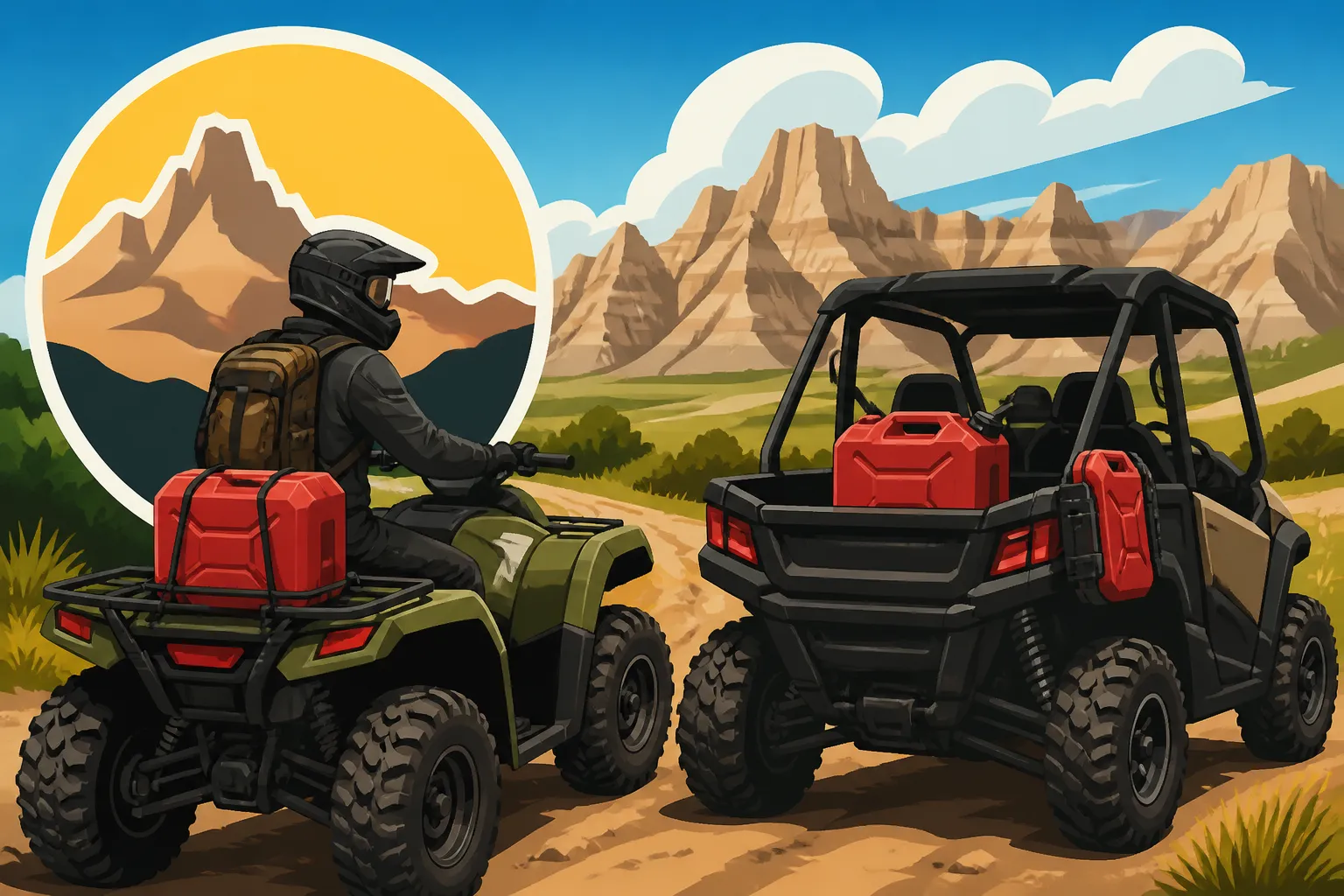
Secure the container so it cannot slide, tip, bounce out or rub against sharp edges. Use an appropriate restraint and check it before riding and at stops. Do not rely on a loose lid, a bungee cord stretched across a container, or the shape of the cargo area to keep it in place. A container should remain upright and away from hot parts, exhaust, electrical components and other sources of ignition.
Avoid carrying gasoline in the passenger compartment or in a place where fumes can collect. Do not leave it loose in a truck or trailer where it can shift during transport. For a machine with a cargo bed, follow the machine and container makers’ instructions for safe placement and restraint. If there is no safe way to carry the fuel, use a shorter route or refuel before the remote section rather than improvising.
Keep the container closed except when filling or dispensing. Do not fill it to the brim; leave the expansion space required by its instructions. Gasoline can expand with heat, and a full container may leak through its closure. Keep it out of direct sun as much as practical and do not leave it beside a campfire, grill or hot machine.
Inspect the container before each trip. Look for fuel odor, wet spots, worn seals, damaged threads or a cap that does not tighten correctly. If you find a leak, do not carry it. Replace the damaged container and clean up any spilled fuel safely before loading the machine.
Refuel carefully and handle a spill promptly
Refuel only when the machine is stopped on stable ground and the engine is off. Give hot components time to cool. Keep smoking, flames and other ignition sources away. Follow the machine and container instructions, and avoid rushing the transfer on an uneven slope or in a place where fuel could run toward a drain, stream or ignition source.
When transferring fuel from a portable container, keep control of the container and avoid overfilling the machine’s tank. A funnel or spout designed for the container can reduce spills, but it does not remove the need for careful handling. Close both caps securely after refueling and wipe up any small residue before restarting. If fuel spills onto the machine, clothing or ground, stop and deal with it before continuing. Do not start the engine or ride away while fuel is present on hot surfaces.
A spill that is more than a small, manageable amount needs a more cautious response. Keep people and ignition sources away, prevent the spill from spreading if you can do so safely, and follow local emergency or land-manager instructions. Do not wash gasoline into soil, a ditch or a waterway. If a spill reaches water or you cannot control it safely, contact the appropriate emergency service or land manager.
Keep fuel away from tents, sleeping areas and cooking equipment. At a campground, use only the storage and refueling practices the site allows. A machine’s spare fuel is not a reason to refuel beside a fire ring or in a crowded parking area. Rules can differ between private campgrounds, public campgrounds and dispersed sites, so ask the site operator or land manager if the rules are unclear.
In the Black Hills, dry conditions and changing fire restrictions can make a routine refueling plan inappropriate. A restriction may affect fires, fuel storage, equipment or activity in a particular area. Do not assume that a restriction applies only to campfires. Check current notices before departure and again if conditions change during a multi-day trip. South Dakota Spark Arrester Rules covers a separate equipment concern; meeting an equipment requirement does not replace checking current fire orders.
Match your fuel plan to the route and land rules
Before heading out, confirm your route, expected fuel use, access points and fallback options. Look at the land manager’s current map and notices rather than relying only on an old saved route or a track shared by another rider. If a road or trail closes, take an authorized alternative and recalculate the distance. Do not assume that a nearby road is open to your machine.
Fuel planning also depends on where you are riding. A fuel container does not provide permission to ride on a route, enter a closed area or travel beyond an approved boundary. Check whether the route is open to your machine type and width, and whether any permit or decal applies. South Dakota Trail Permits Explained is useful background on permits, but confirm the current rules for the specific area and machine.
For a longer ride, tell someone where you plan to go and when you expect to return. Carry a charged phone, but do not rely on reception throughout remote areas. Pack basic repair and first-aid supplies appropriate to the ride, and make sure every rider knows the plan if a machine develops a problem. If a route becomes more difficult or fuel use is higher than expected, turn back early rather than pressing on with little reserve.
A simple pre-ride fuel routine can prevent avoidable problems:
- Check the machine’s fuel level, tank condition and owner’s manual.
- Estimate consumption for the route and include a reserve for detours or difficult terrain.
- Confirm fuel availability rather than assuming a stop will be open.
- Inspect the spare container and its closure, then secure it upright and away from heat.
- Check current access notices, fire restrictions and any permit requirements.
- Tell someone your route and return plan.
- Recheck the load and container at stops, and refuel only in a safe, permitted location.
If you cannot carry fuel securely, choose a shorter loop, start with a full tank, or arrange a suitable fuel stop before entering a remote section. That may mean less time on the trail, but it is safer than carrying gasoline in an unsuitable container or pushing a machine beyond its reliable range. For planning a full loop, Planning Fuel Across a Hills Loop can help you think through distances and stops.
Disclaimer
This article is for general informational purposes only and does not constitute professional advice. Laws, prices and regulations vary by location and change over time. Consult a qualified professional for guidance on your specific situation.