Does South Dakota Honor Out-of-State Registration?
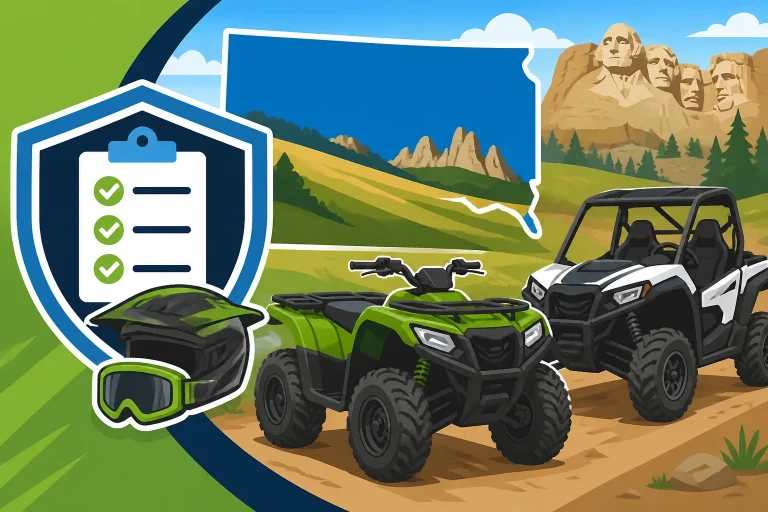
An out-of-state plate can help you ride legally in South Dakota, but it does not give an ATV or UTV automatic access to every road or trail. The answer depends on whether the machine is properly registered and street legal where it comes from, where you plan to ride, and whether that area requires a separate permit.
The short answer: registration may be recognized, but it is not a universal pass
South Dakota generally recognizes a valid out-of-state registration for a machine that is legally registered and plated in its home state. That recognition matters most when you are using a road where the machine is allowed to travel. It does not make an off-highway vehicle street legal if the home-state registration does not authorize road use, and it does not override South Dakota’s rules for the specific road or land.
A useful distinction is whether the machine has a plate and is approved for road use, rather than simply carrying an off-road registration sticker or document. A state may register an ATV for trails without treating it as a highway vehicle. That paperwork may establish that the machine is registered at home, but it may not give you permission to ride South Dakota roads.
| What you have | What it may help with in South Dakota | What it does not automatically provide |
|---|---|---|
| A current plate and road-use registration from your home state | Recognition of the machine’s road registration, subject to South Dakota rules | Permission to use every road, shoulder, ditch, or trail |
| An off-highway registration or trail sticker only | Evidence of home-state registration for certain riding contexts | Street-legal status or access to South Dakota roads |
| A South Dakota trail permit, where required | Access to the land or routes covered by that permit | Road registration or permission to ride closed routes |
| A private-land owner’s permission | Access to that person’s property, subject to applicable rules | Permission to ride public land or cross other property |
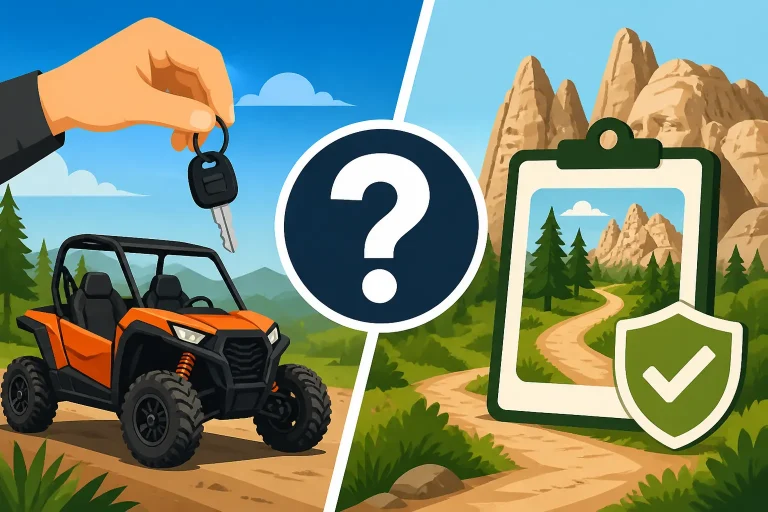
The practical takeaway is to check two separate things: whether your out-of-state registration is valid for the kind of road use you have in mind, and whether the destination requires its own permit. The distinction is covered in more detail in Does South Dakota Honor Out-of-State Registration? and Why South Dakota Honors Only a Plated Machine.
Even with a valid plate, a rider must obey South Dakota rules that apply to the road or area. A plate is not permission to ride wherever a full-size vehicle can go. Route restrictions, local rules, land-management signs, equipment requirements, and age or licensing rules may still apply. For a broader look at the road-use question, see Are ATVs Street Legal in South Dakota?.
What an out-of-state plate does and does not establish
A plate is useful because it indicates that the machine has been registered for the type of use authorized by the issuing state. But the details behind that registration matter. Before traveling, confirm that the registration is current, that the plate belongs to the machine you are bringing, and that your state’s registration actually permits road use—not just off-road riding.
This is particularly important if your home state issues different documents or decals for trail-only and road-legal machines. A trail sticker may satisfy a registration requirement in one place without qualifying as a road plate elsewhere. If you are unsure what your paperwork authorizes, ask your home-state motor vehicle or off-highway vehicle agency how the machine is classified.
South Dakota’s own road rules remain relevant. A road-legal machine may still need to meet applicable equipment standards, and some routes are off-limits to ATVs and UTVs regardless of registration. Riding on a road, crossing it, or using a right of way can each involve different rules. Review [South Dakota Rules for a Visiting Rider] and South Dakota Street Legal ATV Requirements before planning a route.
A useful way to avoid assumptions is to separate these questions:
- Is the machine registered for road use in its home state? Check the registration category, plate, and any restrictions attached to it.
- Does the South Dakota route allow this kind of machine? Confirm the route’s rules rather than relying on the plate alone.
- Does the land manager require a separate permit or decal? This is especially important for designated motorized trails.
- Does the rider meet any applicable requirements? A valid vehicle registration does not replace rider-related rules.
Keep the registration information accessible while traveling, along with any permit confirmation you need. Do not assume that a photo of a document will be accepted in every situation; when the form of proof matters, confirm it with the relevant agency or land manager ahead of time. Also check that the plate and decals are mounted where they can be seen and are not obscured by a trailer, cargo, or equipment.
Trail permits are separate from vehicle registration
A common source of confusion is treating a plate as a substitute for a trail permit. It usually is not. Registration is about the vehicle’s status; a trail permit is about access to particular public land or routes. A plated machine may still need a permit to use designated motorized trails.
In the Black Hills, riders should check the applicable motorized trail permit requirements before heading out. Do not assume your home-state plate, an off-highway decal, or a permit from another state will cover that requirement. The rules can differ between a public road, a Forest Service road, a designated motorized trail, and a managed riding area. See How the Black Hills Motorized Trail Permit Works and Why a Plate Does Not Replace a Trail Permit.
There may also be a separate South Dakota nonresident ORV permit to consider, depending on the machine and where you intend to ride. It is not the same thing as a home-state registration, and it is not interchangeable with every land-specific trail permit. Because the exact requirement depends on the machine and riding location, check the current instructions from the relevant state agency and land manager rather than buying a permit based only on the word “nonresident.”
A simple comparison helps keep the paperwork straight:
| Document or authorization | Main purpose | Check before riding |
|---|---|---|
| Home-state registration and plate | Shows how the vehicle is registered at home and may support road use | Whether it is current and authorizes road use |
| South Dakota nonresident ORV authorization, if applicable | Addresses applicable state requirements for a nonresident ORV | Whether your machine and riding location fall under the requirement |
| Black Hills motorized trail permit, when required | Provides access to covered motorized routes | Whether the route is covered and the permit is properly displayed |
| Route or property permission | Allows use of a specific road, trail, or private parcel | Whether the route is open and the permission applies to your planned ride |
If your trip includes more than one kind of riding area, make a short list of the routes and check them individually. A permit that covers one area may not apply to another. For details on the state permit question, see South Dakota Nonresident ORV Permit Requirements and South Dakota Rules for Riding Federal Land.
A pre-trip check for out-of-state ATV and UTV owners
A few checks before loading the machine can prevent a frustrating stop, a wasted trip to a trailhead, or a citation for using a route you thought was covered.
- Read the registration category. Confirm whether your paperwork is for road use, off-highway use, or both. If the category is unclear, ask the issuing agency rather than inferring it from the presence of a sticker or plate.
- Check your plate and registration dates. Make sure the plate is attached to the correct machine and the registration has not expired. Keep the required proof available.
- Plan routes, not just destinations. Identify the roads and trails you will actually use. A machine permitted on one road may not be allowed on a nearby trail or public right of way.
- Check permit requirements for each riding area. Confirm whether a South Dakota nonresident ORV authorization, a Black Hills motorized trail permit, or another area-specific permit applies. Do not assume one document replaces another.
- Review route signs and closures on arrival. A valid registration or permit does not authorize riding past a closure sign or outside an open route. Conditions and closures can change.
- Confirm rider and equipment rules. Check applicable age, license, helmet, protective eyewear, and equipment requirements for the road or area. Vehicle paperwork does not settle those questions.
- Keep proof organized. Carry your registration and any required permit information where you can access it. If a permit requires a decal, display it as directed.
For visitors planning to ride the Black Hills, start with the route and permit rules, then verify whether your machine’s home-state registration is suitable for any road travel in the itinerary. For other public areas, check with the agency managing that specific land. If you will ride on private property, get permission from the owner; public-land permits do not grant access across private land.
If your machine is registered only for off-road use, the safest approach is not to treat that registration as a road plate. Trailer the machine to a legal riding area and use only routes for which you have the required access. If it is plated for road use in your home state, that may help with road registration recognition, but you still need to follow South Dakota’s route and permit rules. The broader distinction between registration and riding access is explained in Does South Dakota Register ATVs?.
Disclaimer
This article is for general informational purposes only and does not constitute professional advice. Laws, prices and regulations vary by location and change over time. Consult a qualified professional for guidance on your specific situation.