Are ATVs Street Legal in South Dakota?
It's a common dilemma for anyone who owns an ATV or UTV in South Dakota: you want to zip down the highway to the trailhead, run to the store for supplies, or simply drive from your property line to the next pasture without trailering your machine. The question of whether these machines are "street legal" can be a frustrating tangle of rumors, partial truths, and county-level variations. This guide aims to cut through that confusion, giving you a clear, realistic understanding of where and how your off-road vehicle can legally travel on South Dakota roads.
The Nuance of South Dakota's "Street Legal" Rule for ATVs
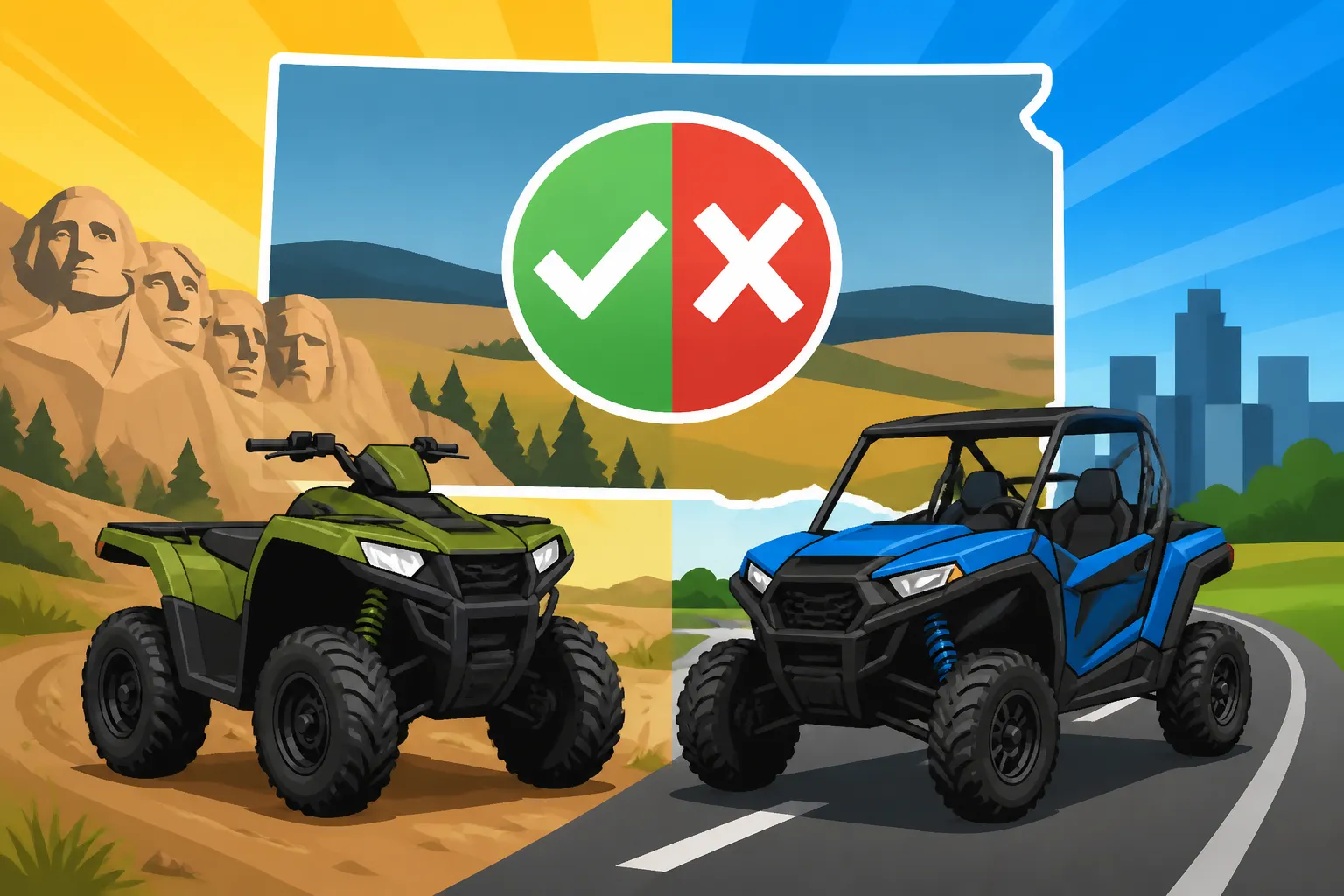
Let's address the big question right upfront: can you ride your ATV or UTV on South Dakota's public roads? The short answer is yes, with significant caveats and specific requirements. It's not a blanket "no," but it's also not a free-for-all. South Dakota recognizes that many residents, especially in rural areas, rely on ATVs and UTVs for practical transportation, whether for work or to access recreational areas. However, this flexibility comes with a stringent set of rules designed to ensure safety and integrate these vehicles into the existing traffic system responsibly. Ignoring these rules can lead to hefty fines and a ruined day out.
What South Dakota Considers an Off-Road Vehicle
First, it's essential to understand what South Dakota defines as an "off-road vehicle" (ORV) in the first place, as this definition directly impacts how your machine is treated under the law. Generally, an ORV is any motorized vehicle, other than a snowmobile, designed for or capable of travel over unimproved terrain. This typically includes the ATVs (all-terrain vehicles) and UTVs (utility terrain vehicles or side-by-sides) that most of us are familiar with.
The state's definition is crucial because it sets the baseline for all subsequent rules regarding titling, registration, and road use. It means your quad or side-by-side isn't just an unregistered toy; it's a vehicle with its own set of legal obligations, even if you only plan to ride it on private land. This foundational understanding helps explain why the state has such specific requirements when it comes to taking these machines onto paved or gravel roads.
The Special Case of Motorcycle Plating
Perhaps the most significant aspect of making an ATV or UTV "street legal" in South Dakota is the ability to license it as a motorcycle. Yes, you read that right – a motorcycle plate for a four-wheeled machine. This isn't just a quirky bureaucratic detail; it's the gateway to broader road access. Without this plate, your road-riding options are severely limited. The state allows ORVs that meet certain criteria to be titled and registered, essentially transforming their legal status from purely off-road to road-capable. This process is what differentiates South Dakota from many other states where ATVs simply cannot be legally driven on public roads, no matter what modifications you make. [Licensing an ATV as a Motorcycle in South Dakota] delves deeper into this unique approach.
This "motorcycle" designation isn't just a formality. It means your ATV or UTV must adhere to many of the same safety and equipment standards as a traditional motorcycle when on public roads, even if it has four wheels and a steering wheel. It's a pragmatic solution that allows for expanded use while still upholding safety standards for all road users.
Essential Requirements for Street Legal ATVs in South Dakota
Making your ATV or UTV truly street legal in South Dakota involves more than just getting a license plate. It requires specific equipment modifications and adherence to certain engine size rules. These aren't suggestions; they are mandates that a state trooper will check for during a roadside stop. Failing to meet these requirements can result in fines and the end of your ride.
Engine Size Thresholds for Road Use
One of the first hurdles you might encounter is the engine size requirement. South Dakota has specific displacement thresholds that determine if your ATV or UTV can even qualify for a street legal plate. For four-wheeled ATVs and UTVs, the engine must be 200 cubic centimeters (cc) or larger. If you're riding a dirt bike or a similar two-wheeled ORV, it needs to be 120cc or larger.
This rule often catches riders by surprise, especially those with smaller youth machines or older, less powerful ATVs. Imagine you just bought a fantastic 150cc quad for buzzing around your property and thought you could get it plated for a quick trip into town. You'd be out of luck. The state enacted this rule to ensure that machines on public roads have sufficient power to keep up with traffic (even on a gravel road) and are generally robust enough for road conditions. It's a safety measure, plain and simple, preventing underpowered machines from becoming hazards. [South Dakota ATV Engine Size for Plates] provides a complete breakdown.
The Mandatory Equipment Checklist
Once you meet the engine size requirement, your machine needs to be outfitted with specific safety equipment. Think of it like taking a standard off-road vehicle and equipping it to be a mini-car or motorcycle. These additions are non-negotiable for road use, and they cover everything from visibility to signaling. Many riders find it easier to find these parts from dedicated aftermarket suppliers. For example, companies like SuperATV offer a wide range of DOT-compliant accessories that can help you meet these specifications, from robust mirrors to street-legal lighting kits.
Here’s a breakdown of what you'll need:
- Headlights and Taillights: Your machine must have at least one headlight and one taillight, which need to be operational at all times while on a public road. This isn't just for night riding; it's for daytime visibility too.
- Brake Lights: An operational brake light that illuminates when you apply the brakes is crucial for signaling your intentions to traffic behind you.
- Horn: A functional horn is required. This isn't just for aggressive honking; it's a critical safety device for alerting other drivers or pedestrians to your presence.
- Rear-View Mirror: At least one rear-view mirror is mandatory, allowing you to see traffic approaching from behind. Given that many off-road machines don't come standard with mirrors, this is a common aftermarket addition.
- Tires: Your tires must be DOT (Department of Transportation) approved. This is where many off-road tires fall short, as they are often designed purely for grip in mud or loose terrain, not for durability and traction on pavement.
- Muffler/Exhaust System: Your machine needs a muffler to keep noise levels within legal limits. Excessive noise can be a nuisance and lead to a citation.
- Spark Arrester: A U.S. Forest Service approved spark arrester is also required, especially crucial for preventing wildfires when riding in dry conditions, common across South Dakota.
- License Plate Mount and Illumination: You'll need a visible place to mount your motorcycle license plate, and it must be illuminated at night.
Outfitting your machine can be an investment, but it's essential for legal and safe road use. Imagine riding your ATV out of Hill City onto a county road, only to be pulled over because you forgot a horn. It's not just a minor inconvenience; it's a violation that can stop your trip short. [Equipment a South Dakota Road Machine Needs] offers a detailed list.
Titling and Registering Your Road-Ready Machine
Once your ATV or UTV is properly equipped and meets the engine size requirements, the final step is to formally title and register it with the state. This process typically happens at your local county treasurer's office. You'll need to complete the necessary paperwork, often the [South Dakota's Title and Registration Application], and pay the applicable fees, which include sales tax (excise tax), title fees, and registration fees.
The county treasurer's office will review your application and, if everything is in order, issue you a South Dakota title and a motorcycle license plate. It’s important to remember that this process is for making your vehicle street legal. It doesn't mean you can automatically ride it on the road without a proper driver's license. That's a separate, but equally critical, requirement.
Navigating South Dakota Roads: Where You Can and Cannot Ride
Even with a street-legal plate, there are still rules about where your ATV or UTV can go. South Dakota's approach is designed to balance access with safety, acknowledging that these machines, while capable, are not traditional cars.
Understanding Ditch Riding Rules
One of the most common forms of "road use" for ATVs in South Dakota is ditch riding. Yes, it's generally legal, but it's far from unlimited. State law allows you to ride in the ditch bottom or back-slope of a public highway right-of-way, provided the county hasn't specifically opted out of ditch riding. This means that while the state allows it, individual counties have the power to ban it within their borders.
It's vital to check local county ordinances, as you don't want to be caught riding in a ditch that's been designated a "no-go" zone. Always look for regulatory signs that indicate whether ditch riding is permitted or prohibited. Generally, you must ride on the outer edge of the right-of-way, away from the traveled portion of the road. You also cannot ride in interstate ditches or snowmobile/bike trail ditches. This specific allowance for ditch riding is a huge benefit for many rural residents, but it demands careful attention to local rules. [South Dakota Ditch Riding Rules Explained] details the intricacies.
Crossing Highways and Roads
Even if you can't ride down a highway, a plated ATV or UTV is usually permitted to cross a highway or road at a right angle, after stopping and yielding to all traffic. This is a critical provision for connecting different sections of private land or accessing trails that might be on the other side of a paved road. However, just like any intersection, extreme caution is required. You're operating a smaller, less visible vehicle, and other drivers may not anticipate an ATV crossing their path. Always prioritize safety, and never assume you have the right of way.
The Driver's License and Age Factor
This is where many riders get tripped up. Just because your ATV is street legal doesn't mean any rider can hop on and drive it down the road. To operate a plated ATV or UTV on a public road in South Dakota, you must possess a valid driver's license. This means you need at least a Class 2 driver's license (the standard license for cars and light trucks). If you only have a learner's permit, you cannot legally operate an ATV on the road, even if it's plated.
Age also plays a role. While the state has specific age rules for riding ORVs off-road or in ditches, once a machine is plated for road use, the driver must meet the same licensing requirements as any other motor vehicle operator. For instance, a 16-year-old with a provisional license could drive a plated ATV, but a 12-year-old, even with adult supervision, could not on a public road. [South Dakota Driver's License Rules for ATVs] clarifies these points.
Exceptions for Farm and Utility Use
South Dakota recognizes the practicalities of rural life. Agricultural and utility vehicles, often ATVs or UTVs, are frequently exempted from some of the stricter road rules when used for legitimate farm or utility purposes. For example, a farmer moving their UTV from one field to another across a public road, or a utility worker inspecting power lines, might have different allowances.
However, these exemptions are specific to the purpose of the travel, not a blanket pass. You can't claim "farm use" if you're just joyriding or heading to a friend's house for a barbecue. These exemptions are designed to facilitate essential work, not casual recreation. If you are using your machine for agricultural purposes, be prepared to explain and demonstrate that use if stopped by law enforcement.
| Aspect | Off-Road (Trails/Private Land) | Ditch Riding (County Permitted) | Plated for Road Use (Street Legal) |
|---|---|---|---|
| Title Required | Yes | Yes | Yes |
| Registration/Plate | No (Permit for Federal Land) | No (Permit for Federal Land) | Yes (Motorcycle Plate) |
| Engine Size Limit | None | None | 200cc+ for 4-wheelers |
| Headlights/Taillights | Recommended | Recommended | Required |
| Brake Lights | Recommended | Recommended | Required |
| Horn | Optional | Optional | Required |
| Rear-View Mirror | Optional | Optional | Required |
| DOT Approved Tires | No | No | Required |
| Driver's License | Not always (age limits apply) | Not always (age limits apply) | Required |
| Helmet Requirement | Under 18 | Under 18 | Under 18 |
| Eye Protection | Under 18 | Under 18 | Required for all riders |
| Interstate Access | No | No | No |
Important Considerations for South Dakota Street Legal Riding
Beyond the basic requirements, there are several other critical points to keep in mind when venturing onto South Dakota's roads with your ATV or UTV. These cover everything from safety gear to potential penalties, ensuring you're fully informed and prepared for your ride.
Helmet and Eye Protection Rules
South Dakota has specific rules regarding helmets and eye protection, which are particularly relevant for ATV and UTV riders. For anyone under the age of 18, a helmet is generally required when operating an ORV on public lands or in ditches. However, for those 18 and older, helmets are not mandatory when operating a plated ATV or UTV on a public road.
Regardless of age, eye protection is a non-negotiable requirement for all riders of plated ATVs or UTVs on public roads. This could be a face shield on a helmet, goggles, or even an approved windscreen on your UTV, as long as it provides adequate protection from road debris, dust, and insects. Don't underestimate the importance of this rule; a stray rock from a passing vehicle can turn a pleasant ride into a serious hazard. [South Dakota Helmet Law for ATV Riders] and [South Dakota Eye Protection Requirement] cover these safety essentials.
Penalties for Non-Compliance
Operating an ATV or UTV on South Dakota roads without meeting all the legal requirements can lead to significant penalties. These aren't minor infractions. You could face fines for operating an unregistered vehicle, lacking the proper equipment, or driving without a valid license. These can quickly add up, turning an intended shortcut into a costly mistake.
Furthermore, if you're involved in an accident while operating an illegal or improperly equipped ATV on a public road, the legal ramifications can be far more severe. Your insurance might not cover you, and you could be held personally liable for damages. The state takes road safety seriously, and these rules are in place to protect all drivers. It's always better to take the time to ensure full compliance before hitting the pavement or gravel. [South Dakota Fines for an Untitled ATV] can give you a grim picture of potential costs.
Insurance and Liability
While South Dakota does not specifically mandate liability insurance for off-road vehicles that are only used off-road, once your ATV or UTV is titled and registered for street use, it falls under the same insurance requirements as any other motor vehicle. This means you must carry minimum liability insurance coverage to protect against property damage and bodily injury in the event of an accident.
Given the unique nature of ATVs and UTVs on public roads, it's wise to speak with your insurance provider to ensure you have adequate coverage. Standard auto policies might not fully cover an ORV, even if it's plated. Make sure your policy specifically includes coverage for your street-legal ATV or UTV for road use, as well as any medical payments or uninsured motorist coverage you might want. Operating without proper insurance is not only illegal but can leave you financially devastated in the event of an accident.
This understanding of South Dakota's street legal rules empowers you to make informed decisions about how and where you ride your ATV or UTV. It’s about more than just avoiding a ticket; it's about ensuring your safety and the safety of others on the road.
Disclaimer
This article is for general informational purposes only and does not constitute professional advice. Laws, prices and regulations vary by location and change over time. Consult a qualified professional for guidance on your specific situation.