Showing a License at the Treasurer’s Window
Navigating the ins and outs of titling an off-road vehicle in South Dakota can feel like a maze, especially when you're just trying to get your machine legal and ready for the trails. One of the often-overlooked, yet absolutely critical, steps in this process is simply presenting your driver's license at the county treasurer's office. This guide will walk you through why your license is so important, what the treasurer is looking for, and how to make this part of the titling process as smooth as possible, so you can stop worrying about paperwork and start riding.
Why Your Driver's License Is Crucial for Titling Your ORV
It might seem like a straightforward step, but handing over your driver's license at the county treasurer's window when you're titling your ATV or UTV is far more than a mere formality. It's a foundational element of the entire process, serving several vital purposes that protect both you and the state. Without it, you simply can't move forward, and understanding why makes the requirement a lot less frustrating.
Confirming Your Identity and Preventing Fraud
First and foremost, your driver's license is the primary way the state verifies your identity. Think about it: titles are legal documents establishing ownership of a valuable asset. The county treasurer's office needs to be absolutely certain they're issuing that title to the rightful owner. This isn't just about making sure you are who you say you are; it's a critical safeguard against fraud. Imagine if someone tried to title a stolen machine in their name, or if a dealer tried to process paperwork without proper identification from the buyer. Your driver's license, with its photo and unique identification number, acts as a cornerstone in preventing such illicit activities. It ensures that the paper trail is clean and legitimate, giving you peace of mind that your ownership is securely recorded. When you're dealing with something as important as an ORV title, skipping steps like this just isn't an option for anyone involved.
Establishing Residency and Ensuring Correct Fees
Another key role your driver's license plays is establishing your residency. South Dakota has specific rules and fees that can vary depending on whether you're a resident or an out-of-state owner. For example, while everyone pays the standard titling fees, non-residents often encounter an additional charge when titling their machines in South Dakota. [What an Out-of-State Owner Pays to Title in South Dakota] explains this more thoroughly. Your South Dakota driver's license serves as definitive proof that you reside within the state, ensuring that you're assessed the correct fees and that the process aligns with state regulations for residents. If you're an out-of-state owner, presenting your home state driver's license confirms your non-resident status, guiding the treasurer to apply the appropriate non-resident fees and requirements. This prevents misunderstandings and ensures fairness across the board, so you aren't paying more or less than you should be.
Connecting You to Other Official Records
Beyond identity and residency, your driver's license is a key that links your ORV title application to other official records. When you title an ATV or UTV, that machine's information is entered into a state database, associated with you, the owner. Your driver's license number often serves as a unique identifier that ties all these pieces together. This is crucial for things like future transfers, lien notations, or even if you ever need to apply for a [South Dakota ATV Duplicate Title Cost]. It creates a comprehensive record that tracks the vehicle's ownership history through official channels. This interconnectedness is part of why the process might seem detailed, but it’s designed for accuracy and accountability down the road. If you're ever involved in an incident or need to prove ownership, having all your records linked through your primary identification makes everything smoother.
What to Expect When Presenting Your License at the County Treasurer
When you finally make it to the county treasurer's office, clutching all your paperwork for titling your beloved ATV or UTV, showing your driver's license is one of the first things that will happen. It’s a pretty standard procedure, but knowing what to expect can help ease any anxiety and make the whole experience more efficient. The folks at the treasurer's office handle these transactions all day, every day, so they have a system in place.
The Initial Verification Process
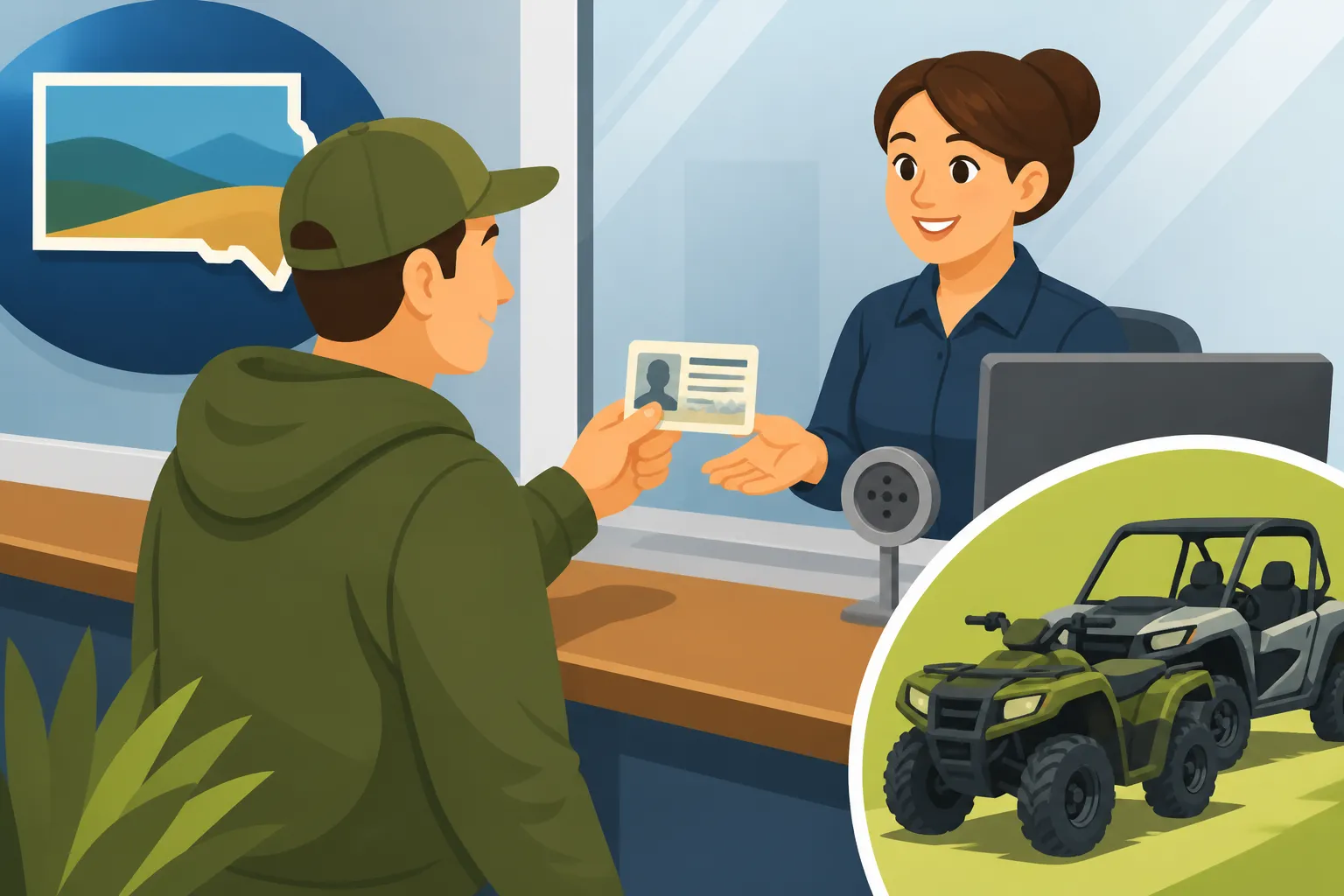
As soon as you step up to the counter, often the first thing the clerk will ask for, even before they start looking at your bill of sale or previous title, is your driver's license. They'll typically take it, check the name against your application form, and verify your photo. They might scan it into their system or manually enter your driver's license number. This step is quick but essential. They are confirming that the person physically present at the counter is indeed the individual whose name will go on the new title. It’s their way of making sure everything starts on the right foot, ensuring integrity from the get-go. Don't be surprised if they ask you to briefly remove your hat or sunglasses for a clearer look, just to match your face to the photo. It's all part of their routine verification.
What the Treasurer Looks For
Beyond just matching your face to the picture, the treasurer's clerk is looking for a few key pieces of information on your license:
- Expiration Date: They need to ensure your license is current and valid. An expired license isn't valid identification for official transactions.
- Residential Address: This confirms your South Dakota residency (or lack thereof), which dictates certain fees and how your title is processed. They will compare this to the address you provide on your [South Dakota ATV Title and Registration Application]. If there's a discrepancy, they might ask for additional proof of residency, like a utility bill or a lease agreement.
- Physical Condition: While less common, they'll check for any signs of tampering or damage that might compromise the license's authenticity. A heavily cracked or defaced license might raise questions, though usually, a worn but legitimate license is fine.
It’s about making sure your identification is legitimate and provides the necessary current information for their records. If you're a nonresident, they'll be looking at your out-of-state license to confirm your home address and state. For more on what documents are needed, check out [South Dakota ATV Title Paperwork].
What to Do If Your License Has Issues
Sometimes, life happens. Maybe your license is expired, lost, or your address has changed and you haven't updated it yet. If you arrive at the treasurer's office with an issue regarding your license, it's best to address it before you start the titling process. An expired license will likely halt your title application right then and there. If your address on the license doesn't match where you actually live, especially if you've recently moved, you might need to update it with the Department of Public Safety first or bring additional documentation to prove your current South Dakota residence. Don't worry, these aren't insurmountable problems, but they do require attention. It's always a good idea to double-check your license's validity and accuracy before heading to the county office. A quick check can save you a trip and the frustration of being turned away.
Beyond the License: Other Essential Documents for Titling Your ORV
While showing your driver's license is a critical first step at the county treasurer's window, it's just one piece of the puzzle when titling your ATV or UTV in South Dakota. To avoid multiple trips and ensure a smooth process, it's vital to have all your ducks in a row. The treasurer’s office will need more than just your ID to complete the title transfer, especially when it comes to proving ownership and the machine's details.
Proof of Ownership: The Core Document
The most important document you’ll bring, after your identification, is definite proof of ownership for your ORV. This typically comes in one of two forms, depending on whether you bought your machine new or used.
- Manufacturer's Statement of Origin (MSO): If you purchased a brand-new ATV or UTV from a dealership, the dealer should provide you with the MSO. This document is like a birth certificate for your machine, proving it's new and hasn't been titled before. It lists the manufacturer, the vehicle identification number (VIN), and often the initial dealer. The MSO will need to be properly assigned over to you by the dealer.
- Previous Title: For a used machine, you'll need the original title, properly assigned by the previous owner to you. This means the seller must have signed off on the back of the title in the designated spots, accurately recording the sale date and purchase price. Sometimes, if the previous owner had a lien on the machine, you’ll also need a lien release document from the lender, confirming the debt has been paid. You can learn more about this in [Titling a Machine With a Lien in South Dakota]. Without a properly assigned title or a clean MSO, you won't be able to establish legal ownership, and the titling process will grind to a halt.
The South Dakota Bill of Sale: Your Proof of Purchase
Even if you have the MSO or a previous title, a well-documented bill of sale is highly recommended, and sometimes even required, especially for private party sales. A bill of sale serves several key functions:
- Confirms Purchase Details: It clearly states the sale price, date of sale, buyer's name, seller's name, and the machine's description (including the VIN). This is vital for calculating the [South Dakota ATV Excise Tax Rate] and for documenting the transaction accurately.
- Protects Both Parties: It acts as a legal record of the transfer, protecting both the buyer and the seller. If you're buying privately, consider using a template from a reputable source. Online platforms like LawDepot offer various legal document templates, including comprehensive bills of sale that can help ensure you don't miss any critical details during your purchase. Having this extra layer of documentation can prevent disputes later on.
- Supports the Title Application: The information on the bill of sale should match the details on the title or MSO, and your [South Dakota ATV Title and Sales Tax] calculations will be based on the purchase price listed here.
Make sure it's signed by both the buyer and the seller. If you're buying a used machine without a clear title, a robust bill of sale might be one of your only initial proofs of purchase, though titling such a machine can be complicated.
Other Supporting Documents and Fees
Beyond your license and proof of ownership, be prepared for a few other things:
- Your Checkbook or Payment Method: Be ready to pay the various fees, including the title fee, excise tax, and potentially a technology fee or lien notation fee. [South Dakota ATV Title Cost] breaks down these expenses. The treasurer's office typically accepts cash, checks, or debit/credit cards, though some may have specific preferences or card processing fees.
- The Vehicle Identification Number (VIN): While it's on the title/MSO and bill of sale, the treasurer's office will often want to verify the VIN. It's a good idea to know where it's located on your machine in case they ask, or even bring a clear photo of it. [Checking a VIN Before a South Dakota Purchase] is a great resource if you're unsure.
- Title and Registration Application: Many counties will have you fill out the official South Dakota Title and Registration Application form right at the counter. Having all your information handy (including your driver's license details, of course) will make this quick work.
By gathering all these documents and being prepared, you'll find that showing your license at the treasurer's window is just one smooth step in a successful titling process.
| Document Type | Purpose | Key Details |
|---|---|---|
| Driver's License | Identity verification, residency proof, link to records | Photo ID, expiration date, current address |
| MSO / Previous Title | Primary proof of ownership (new vs. used machine) | Proper assignment, lien release if applicable |
| Bill of Sale | Purchase details, sales tax calculation, buyer/seller protection | Sale price, date, VIN, buyer/seller signatures (e.g., LawDepot template) |
| Payment | Covering title fee, excise tax, technology fee, etc. | Cash, check, debit/credit card |
| VIN | Vehicle identification number verification | Ensure it matches all documents |
| Application Form | Official request for title and registration (filled out at counter) | Your personal and vehicle information |
Common Pitfalls and How to Avoid Them
Even with all the right intentions, people sometimes run into unexpected snags when trying to title their ATVs or UTVs at the county treasurer's office. Many of these issues, especially those related to identity verification or documentation, can be easily avoided with a little foresight. Knowing what common pitfalls exist can save you a lot of time, frustration, and even potential penalties.
The Expired or Missing License Trap
One of the most frequent hangups is showing up with an expired driver's license, or worse, forgetting it entirely. As we've discussed, your valid driver's license is non-negotiable for identity verification. The county treasurer's office cannot process your title application without it. It's like trying to get on an airplane without your ID – it just won't happen.
How to Avoid It: Before you even leave your driveway, do a quick "license check." Pull out your wallet and make sure your driver's license is present, valid, and not expired. If it's expired or about to expire, make arrangements to renew it before you head to the treasurer. You might think it's just a few days, but those few days can mean a wasted trip.
Address Discrepancies on Your License
Another common issue arises when the address on your driver's license doesn't match your current residential address, especially if you've recently moved to a new home within South Dakota or from out of state. While your license might still be valid, this inconsistency can raise questions about your residency and whether you're subject to the correct fees.
How to Avoid It: If your address has changed, update it with the South Dakota Department of Public Safety as soon as possible. If you can't get a new license with the updated address immediately, bring additional proof of residency to the treasurer's office. This could include a current utility bill, a lease agreement, or a bank statement with your name and new address. Having these supplemental documents on hand can often smooth over any questions the clerk might have.
Incomplete or Incorrect Ownership Documents
While not directly tied to your license, issues with your proof of ownership (like an improperly signed title or missing MSO) are another major pitfall that can bring the entire process to a halt. You might have your license in hand, but if the ownership chain isn't clear, you can't title the machine. For instance, sometimes a private seller provides a bill of sale but doesn't properly sign over the existing title, or they forget to include the VIN.
How to Avoid It: Scrutinize all ownership documents before you complete the purchase. When buying a used machine, ensure the seller signs and dates the title in all the correct spots, and that the mileage and purchase price are accurately recorded. If there's a lien listed on the title, ensure you get a physical lien release document from the lender. For new machines, confirm the MSO is correctly assigned to you by the dealership. Using a robust bill of sale template, perhaps from a resource like LawDepot, can help ensure all necessary details are captured during the transaction, reducing the chances of missing information later on. Remember, you typically have [South Dakota's Forty-Five Day Title Deadline] to get this all done, so don't delay!
Missing the "Minor" Fees
Sometimes, people are prepared for the big costs like the excise tax, but forget about the smaller, statutory fees. Things like the [South Dakota Technology Fee on a Title], which contributes to system upgrades, or even a small mailing fee for decals. While these are minor, if you don't have enough to cover the total, you might have to make another trip.
How to Avoid It: Call your specific county treasurer's office ahead of time or check their website for a complete list of current fees. Don't just assume. Ask them what the total cost will be for titling your specific type of ORV, including all miscellaneous charges. This way, you can bring the exact amount or ensure your payment method covers it all. Being over-prepared with funds is always better than being under.
Disclaimer
This article is for general informational purposes only and does not constitute professional advice. Laws, prices and regulations vary by location and change over time. Consult a qualified professional for guidance on your specific situation.