4 Percent of What You Paid
Getting your shiny new (or new-to-you) ATV or UTV titled in South Dakota can feel like navigating a maze of fees and paperwork, especially when you encounter that "4 percent of what you paid" line item. Many folks get to the county treasurer's window and are caught off guard by the total, wondering exactly how that excise tax is calculated and what other costs are hiding in the mix. This guide will meticulously break down South Dakota's 4% excise tax, clarify how your purchase price impacts it, and walk you through all the additional fees you'll encounter during the titling process.
Unpacking South Dakota's 4% Excise Tax on ATVs and UTVs
When you purchase an off-road vehicle in South Dakota – whether it’s a rugged ATV ready for the Badlands or a UTV destined for the Black Hills trails – one of the most significant costs beyond the machine itself is the 4% excise tax. This isn't a sales tax in the traditional sense you might pay on groceries or clothes, but rather a specific tax levied on the purchase of certain vehicles. For many riders, this tax can feel like a surprise, especially if they're used to different systems in other states or if they've only previously registered smaller, non-taxable equipment.
The state mandates this tax to be paid on the sale price of your ATV or UTV. It’s a crucial revenue stream that helps fund various state services. What often catches people by surprise is understanding exactly what that 4% applies to. Is it just the sticker price? What about accessories? What if you traded something in? These are all incredibly valid questions that can lead to a lot of head-scratching and frustration when you're simply trying to get your new ride legal. The state wants to ensure everyone contributes their fair share, and this mechanism is how they achieve it for these types of vehicles. It’s not about singling out ATV and UTV owners, but rather applying a consistent rule to a category of recreational and utility vehicles.
Think of it this way: when you buy a new car, you expect to pay sales tax. For off-road vehicles like ATVs and UTVs in South Dakota, the 4% excise tax serves a similar purpose, making sure a portion of that transaction goes back into the state's coffers. It’s not just a trivial amount; on a machine costing many thousands of dollars, that 4% quickly adds up, which is why understanding its calculation is so vital before you even walk into the county treasurer's office. [South Dakota's 4 Percent Excise Tax] can be a significant part of your overall purchase cost, so budgeting for it is key.
Why South Dakota Levies an Excise Tax on ORVs
The rationale behind South Dakota's excise tax on off-road vehicles (ORVs) stems from a combination of state revenue needs and a desire for fair contribution from those who benefit from the state's infrastructure and services, including roads, law enforcement, and recreational lands. Unlike some states that might exempt certain types of recreational vehicles from sales tax, South Dakota has opted for this specific excise tax as a clear and consistent way to generate funds from these transactions. It ensures that every new acquisition of an ATV or UTV contributes to the state, regardless of whether it's bought from a dealer or a private seller.
This tax helps to cover the broader costs of maintaining public lands where ORVs are often ridden, as well as general state operations. While it might feel like an additional burden, it's a standardized practice designed to create a level playing field. It also helps to prevent tax evasion that could occur if transactions were less transparent. The state aims to capture a portion of the value exchanged when an ORV changes hands, acknowledging that these vehicles, while often used for recreation, also represent a significant investment and contribute to economic activity.
Without such a tax, the state would miss out on a substantial source of income from a growing segment of its economy. It's an established part of the financial landscape for anyone buying an ATV or UTV here. So, while you might grumble about paying it, understand that it's part of a larger system designed to keep the state running. It's a common feature in vehicle transactions, just applied specifically to ORVs in South Dakota.
What the 4% Tax Money Funds
It's natural to wonder where your hard-earned dollars go when you pay the 4% excise tax. This isn't just money disappearing into a black hole; these funds are allocated to various state programs and services that directly or indirectly benefit residents and visitors. While the specific breakdown can vary and be complex, generally, portions of vehicle-related taxes contribute to things like road maintenance, law enforcement, and general state funds. This means your tax dollars could indirectly help maintain the very roads you trailer your ATV on, or support the emergency services that might respond if an accident occurs.
Specifically for ORVs, it contributes to the overall pool of funds that the state Department of Revenue manages. While not exclusively earmarked for trails or specific ORV programs, it's part of the broader financial ecosystem that supports the state. For example, parts of vehicle taxes can sometimes contribute to highway patrol operations, which include patrolling roads where ATVs might occasionally cross or be transported. Furthermore, other small fees collected during the titling process, such as the [South Dakota's Solid Waste and Patrol Dollars] fee, have more direct allocations to specific funds, providing another layer of transparency for where your money goes.
Understanding that this tax feeds into the general well-being of the state can help ease the sting a little. It’s not always about direct, one-to-one funding for an ORV trail, but rather contributing to the larger infrastructure and services that make living and recreating in South Dakota possible and enjoyable for everyone. It’s about being a participant in the state's economy and supporting its collective needs.
Calculating "What You Paid" for Your ATV or UTV
The phrase "4 percent of what you paid" sounds straightforward, but its application can sometimes be a little murky, especially in the nuanced world of private sales, trade-ins, or machines purchased out-of-state. At its core, the state is looking for the actual purchase price, the true value of the transaction. This is the figure that will be scrutinized when you present your paperwork at the county treasurer's office. It's not uncommon for people to underestimate this or to be unsure how certain scenarios, like a significant trade-in, will affect the final taxable amount.
For most transactions, especially those through a licensed dealer, the purchase price is clearly laid out on the bill of sale. However, for private party sales, it's incredibly important to have a clear, documented value. If you're buying from a friend or through an online listing, the state still expects a fair representation of the machine's value. They're not just taking your word for it, nor should you rely on a handshake deal. A properly filled out bill of sale is your best friend here. Services like LawDepot can be incredibly helpful for drafting a robust and legally sound [A South Dakota Bill of Sale for an ORV], ensuring all the necessary details, including the agreed-upon price, are clearly stated and acknowledged by both parties. This protects both the buyer and the seller and provides the verifiable figure the state needs for tax calculation.
Remember, the state wants to assess the tax on the actual value changing hands. If you receive a discount, that lower price is typically what they'll tax. If you overpay for a beat-up machine, they'll still tax what you paid, provided it's documented. It's all about transparency and having a paper trail that clearly shows the transaction's financial reality.
The Role of a Bill of Sale in Tax Calculation
A well-documented bill of sale is not just a formality; it's the cornerstone of accurately calculating your 4% excise tax in South Dakota. This legal document serves as official proof of the transaction, detailing the buyer, seller, vehicle information (including VIN), and, most importantly, the agreed-upon purchase price. Without a clear, itemized bill of sale, the county treasurer's office might have to make assumptions about the value, which could lead to complications or delays.
Consider a scenario where you're buying an ATV from a private seller in a small town outside Rapid City. If you simply exchange cash and take the machine, you might struggle to prove the purchase price to the state. The county treasurer could then refer to industry guides or assess the value based on similar vehicles, which might not align with what you actually paid, potentially leading to a higher tax burden than expected. This is precisely why having a robust bill of sale is non-negotiable. It explicitly states the final agreed-upon price, which then forms the basis for the 4% calculation.
For private sales, where there isn't a dealer preparing all the paperwork, creating a comprehensive bill of sale is paramount. Resources like LawDepot offer templates that can guide you through the process, ensuring all the required fields are filled out correctly. This document will not only satisfy the state's requirements for tax assessment but also protect you as the buyer by confirming ownership and the terms of the sale. It’s your primary evidence for "what you paid."
Accounting for Trade-Ins and Dealer Discounts
One of the areas that often causes confusion when calculating the 4% excise tax is how trade-ins and dealer discounts are handled. The good news for buyers is that South Dakota typically taxes the net purchase price, meaning if you trade in an old ATV, UTV, or even a different type of vehicle, its trade-in value is usually deducted from the new machine's price before the 4% tax is calculated. This can result in significant savings on your tax bill.
Let's imagine you're at a dealership in Sioux Falls, looking to buy a new side-by-side that costs a specific amount. You decide to trade in your older quad, and the dealer gives you a credit towards the new purchase. Instead of paying 4% on the full price of the new side-by-side, you'll pay 4% on the price minus the trade-in value. This is a common practice designed to incentivize new purchases and acknowledges that a portion of the value of your trade-in is essentially being "re-invested" in your new purchase. It's an important detail to confirm with your dealer and to ensure it's clearly reflected on your bill of sale.
Similarly, if a dealer offers you a discount directly off the price of the machine, that lower, discounted price is what the 4% excise tax will apply to. They're not going to tax you on the original MSRP if you never paid it. The key takeaway is that the state taxes the actual monetary exchange for the vehicle. Always review your purchase agreement carefully to ensure the taxable amount is correct and reflects any trade-ins or discounts you received.
What if You Received the ORV as a Gift?
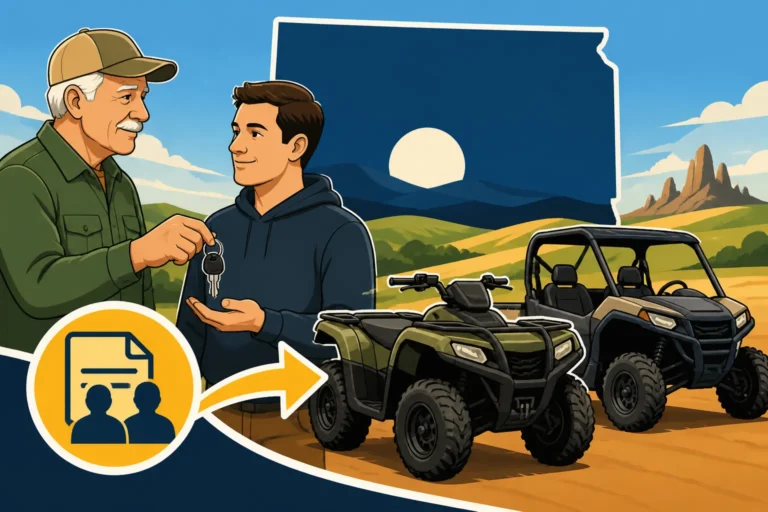
Receiving an ATV or UTV as a gift can be a wonderful surprise, but it often raises questions about the 4% excise tax. If no money changed hands – meaning it was a genuine gift with no "purchase price" – then there is generally no 4% excise tax due. The crucial element here is the absence of consideration, or payment, for the transfer of ownership. The state isn't looking to tax altruism.
However, proving it was a gift, especially for a higher-value machine, requires clear documentation. You can't just tell the county treasurer it was a gift; you need paperwork to back it up. A gift affidavit or a bill of sale stating "$0.00" as the purchase price, clearly marked as a gift, is often sufficient. This document should detail the donor, the recipient, and the specific vehicle being gifted. Again, platforms like LawDepot can be beneficial for creating these types of affidavits, ensuring all legal requirements are met and the intent of the transfer is unequivocally clear. This is vital to avoid any misunderstandings that could lead the state to assess the tax based on the vehicle's estimated fair market value.
If there was even a token amount exchanged, or if it was part of a larger transaction (like a partial trade for something else), the state might view it differently. The key is true gifting with no financial exchange for the ORV itself. Having the proper documentation is essential to demonstrate this, ensuring you don't inadvertently get hit with an excise tax bill on a machine you received freely. [Titling a Gifted Machine in South Dakota] requires careful attention to this documentation.
Beyond the 4%: Other Fees in Your Titling Bill
While the 4% excise tax is often the largest single fee you'll encounter when titling your ATV or UTV in South Dakota, it's certainly not the only one. Many owners arrive at the county treasurer's office expecting just the tax and are then surprised by a collection of smaller, but still mandatory, fees that add up to the total cost. These additional charges cover various administrative and service aspects of the titling process, and understanding them beforehand can prevent any unpleasant surprises.
These fees can include the basic title fee itself, which is a separate charge from the excise tax. There might also be a technology fee, which often goes towards modernizing state systems. If you have a lien on your machine – meaning you financed it and a bank holds the title until it's paid off – there will be a separate fee for noting that lien on the title. Even if you're just replacing a lost title or needing a duplicate, those have their own associated costs. It's a system of many small parts, each contributing to the overall process.
The total "bill" you receive at the counter is a summation of all these components. Don't be shy about asking for an itemized breakdown if you're unsure. The county treasurer's staff are usually very helpful in explaining each charge. Being prepared for these various fees is just as important as budgeting for the main excise tax.
The Standard South Dakota Title Fee
At the heart of the titling process is the standard South Dakota title fee. This is a fixed charge for the creation and issuance of your official vehicle title document. Unlike the excise tax, which fluctuates with the purchase price of your ATV or UTV, the title fee is a set amount that everyone pays, regardless of how much their machine cost. It's the administrative cost for the state to process your ownership change and produce the legal document that proves your ownership.
Think of it as the base fee for the service of transferring and recording your vehicle's title into the state's system. It's distinct from any taxes or penalties and is a necessary part of the bureaucratic process. This fee helps cover the costs associated with the Department of Revenue's motor vehicle division and the county treasurers who handle these transactions daily. It’s part of the reason why the process is handled at the county level, as explained in [Why a County Treasurer Handles South Dakota Titles].
While it might seem like just another small fee, it's fundamental. You won't get a title without paying it. It's usually a modest amount compared to the 4% excise tax, but it's a non-negotiable part of your total cost when you're [Titling an ATV in South Dakota].
Technology Fees and Lien Notations
Beyond the core title fee, you'll likely encounter a technology fee. This fee, often a small, fixed amount, is typically earmarked for maintaining and upgrading the state's motor vehicle and titling systems. In today's digital age, keeping these systems secure and efficient requires ongoing investment, and this fee helps ensure that the titling process remains smooth and accessible for everyone. It's a forward-looking charge that supports the infrastructure behind the scenes. This particular fee might be a newer addition, as detailed in [South Dakota's $2 Technology Fee].
Another common fee, if applicable, is the lien notation fee. If you've financed your ATV or UTV through a bank, credit union, or other lender, they will typically hold a lien on your title until the loan is fully paid off. The state charges a small fee to officially record this lien on the title document. This legal notation protects the lender by showing their interest in the vehicle. Once you pay off your loan, the lender will provide a lien release, and you can then apply for a clear title.
These fees, while minor individually, are essential for the integrity and functionality of the state's titling system. They ensure that records are accurate, systems are up-to-date, and all financial interests in a vehicle are properly documented. Understanding these specific charges helps you mentally prepare for the full cost of getting your ORV legally titled.
Other Potential Fees: Duplicate Titles and Penalties
Life happens, and sometimes titles get lost, damaged, or even stolen. If you ever find yourself in need of a replacement, there's a fee for a duplicate title. This charge covers the administrative cost of searching records, verifying ownership, and issuing a new physical title document. It’s an essential service that ensures you always have proof of ownership, even if the original is gone. The cost for this is typically a set, modest amount, as highlighted in [South Dakota's $10 Duplicate Title].
More significantly, and certainly something you want to avoid, are penalties for late titling. South Dakota has a firm deadline for titling your newly acquired ATV or UTV – usually within a specific number of days from the date of purchase. Missing this deadline can lead to accumulating penalties. These aren't just small fines; they can add up quickly, sometimes as a percentage of the excise tax for each month you're late, and can escalate further if the delay is prolonged. [South Dakota's Forty-Five Day Title Deadline] is crucial to remember.
These penalties are designed to encourage timely compliance with titling laws, ensuring that vehicle ownership records are updated promptly. Avoiding them is simple: get your paperwork in order and visit your county treasurer's office well before the deadline. Being proactive can save you a significant amount of money and hassle in the long run.
Navigating the Titling Process and Avoiding Penalties
The best way to avoid sticker shock and potential late penalties is to be fully prepared before you even step foot into the county treasurer's office. The process itself isn't inherently complicated, but it does require attention to detail and adherence to deadlines. Many people find themselves frustrated not by the rules themselves, but by being unaware of them until it's too late. Taking the time to gather all necessary documents and understand the timeline can make the experience smooth and straightforward, leaving you more time to actually enjoy your ATV or UTV.
A key piece of this preparation is understanding that the 45-day window for titling is strict. It's not a suggestion; it's a legal requirement designed to ensure prompt recording of ownership. If you buy a machine on a Friday afternoon, don't let the weekend lull you into complacency. Start gathering your documents on Monday. This proactive approach will save you from the stress and financial burden of late fees. Whether you're a seasoned rider or a first-time owner, approaching the titling process with a clear plan is always the smart move.
Remember, the goal of the state isn't to make things difficult, but to maintain accurate records of vehicle ownership and ensure everyone contributes fairly to state services. Your cooperation and preparedness make the system work efficiently for everyone involved.
The Forty-Five Day Deadline to Title Your ORV
South Dakota is quite clear about the timeline for titling your ATV or UTV: you have a specific number of days from the date of purchase to complete the titling process at your local county treasurer's office. This deadline, often referred to as the "45-day rule," is critical. It's not just a guideline; it's a legal requirement designed to ensure that vehicle ownership records are updated promptly and accurately. Missing this window can lead to penalties that quickly add up, turning an already mandatory expense into a significantly larger one.
Imagine you just bought a used quad from a private seller outside Pierre. You’re excited to hit the trails, but you put off the paperwork. Those 45 days can fly by faster than you think, especially if you have a busy work schedule or other commitments. Before you know it, you’ve passed the deadline, and now, in addition to the 4% excise tax and other fees, you're facing a penalty. This penalty isn't just a slap on the wrist; it can be a percentage of the excise tax for each month or portion of a month you're late. [South Dakota's Forty-Five Day Title Deadline] should be highlighted on your calendar.
The best advice is to not procrastinate. As soon as you complete the purchase, gather all your documents – the bill of sale, the previous owner's signed-over title, and any other required forms – and make a plan to visit your county treasurer. Doing it sooner rather than later will save you stress and money.
Penalties for Late Titling
The penalties for late titling in South Dakota are structured to incentivize prompt action, and they can be quite impactful if ignored. Once you miss that initial deadline, typically 45 days from the purchase date, the state begins to assess penalties. The first tier of penalties often involves an additional percentage of the 4% excise tax for each month, or part of a month, that the title is overdue. This means if you're even one day over the deadline, you could be on the hook for a full month's penalty.
For example, if you miss the 45-day mark, the state applies a penalty that continues to accumulate. [South Dakota's 1 Percent a Month Penalty] means that 1% of the excise tax is added for every month you're late. But it gets even more serious. If you go significantly over the deadline, say past 60 days, the penalties can increase substantially, possibly even jumping to a much higher percentage of the excise tax. This secondary escalation is outlined in [South Dakota's 10 Percent Penalty at Sixty Days]. These penalties are not just a nuisance; they are a real financial consequence of delayed action.
These increasing penalties are designed to ensure compliance and maintain accurate vehicle records for everyone's safety and legal clarity. The county treasurers are bound by these rules and cannot waive them. So, the only way to genuinely avoid these escalating costs is to act quickly and complete your titling within the mandated timeframe.
Required Documents for Titling
To successfully title your ATV or UTV in South Dakota, you'll need to arrive at the county treasurer's office with a complete set of documents. This isn't a situation where you can bring some papers and hope for the best; they will require specific items to process your title application. Missing even one crucial piece of paperwork can lead to delays and multiple trips, which nobody wants.
Here’s a general checklist of what you’ll likely need:
- The Original Title Certificate: This is perhaps the most important document. If you're buying a used machine, the seller must sign over their existing title to you. Make sure all necessary sections, including odometer readings (if applicable and required for the vehicle type), are completed correctly.
- A Bill of Sale: This document proves the purchase price, which is essential for calculating your 4% excise tax. As mentioned, for private sales, a detailed bill of sale is crucial. Tools like LawDepot can assist in creating a professional and legally compliant [A South Dakota Bill of Sale for an ORV] that includes all the necessary details for the state.
- South Dakota Title & Registration Application: This form gathers all your personal information and details about the vehicle. You can usually find this form on the South Dakota Department of Revenue website or get one at the county treasurer's office.
- Proof of Identity: A valid driver's license or state-issued ID is required.
- Proof of Residency (for residents): If you're a new resident or establishing residency, you might need documents like a utility bill or lease agreement. For non-residents, specific rules apply, which you can read about in [What an Out-of-State Owner Pays to Title in South Dakota].
- Check or Cash for Fees: Be prepared to pay the excise tax, title fee, technology fee, and any other applicable charges.
Table: Essential Documents for South Dakota ATV/UTV Titling
| Document Required | Purpose | Where to Obtain | Importance for Tax Calculation |
|---|---|---|---|
| Original Title Certificate | Proves previous ownership transfer | From the seller, signed over | Essential for ownership change |
| Bill of Sale | Confirms purchase price, buyer, seller, date | Created by buyer/seller (e.g., LawDepot template) | Directly used for 4% tax |
| SD Title & Registration Application | Official application for new title | SD Department of Revenue website or County Treasurer | Mandatory for processing |
| Proof of Identity | Verifies the applicant's identity | Driver's License/State ID | Mandatory for applicant |
| Proof of Residency | Confirms South Dakota residency (if applicable) | Utility bill, lease, etc. | If new resident |
| Payment for Fees | Covers all taxes and fees | Personal check, cash, card (check county policy) | Covers all costs |
Having everything in order before you go will prevent headaches and ensure a smooth transaction. Double-check all signatures, dates, and vehicle identification numbers (VINs) on your documents before you present them. [South Dakota ATV Title Paperwork] is something you want to get right the first time.
Disclaimer
This article is for general informational purposes only and does not constitute professional advice. Laws, prices and regulations vary by location and change over time. Consult a qualified professional for guidance on your specific situation.