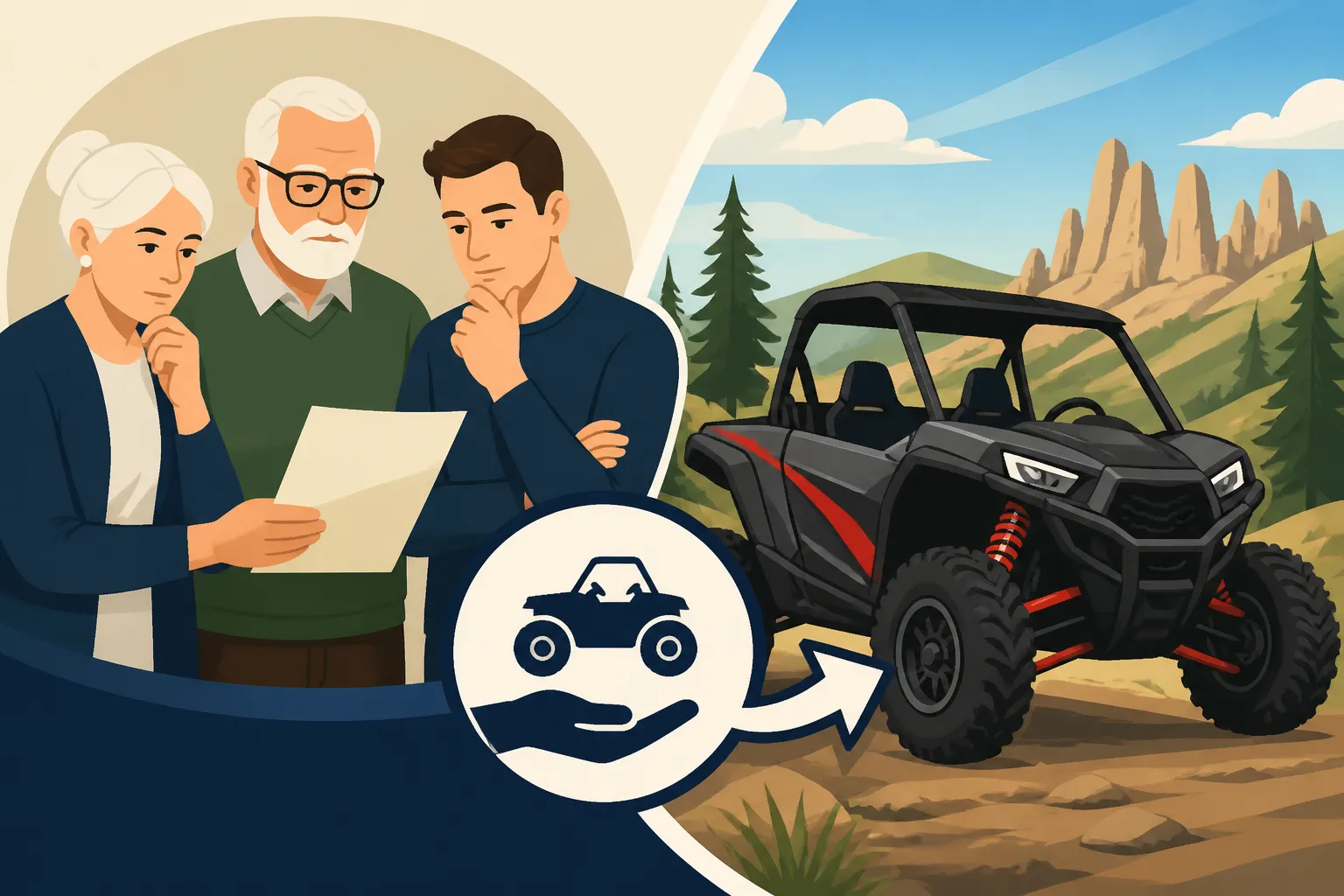
Settling an Estate That Includes a Black Hills Quad
Losing a loved one is undeniably one of life's toughest experiences, and when you're also tasked with settling their estate, the practicalities can feel overwhelming. If that estate happens to include a beloved off-road vehicle—maybe a quad they loved riding through the scenic Black Hills—you're likely wondering how to legally transfer or sell it. This guide aims to walk you through the often-confusing process of handling an ATV or UTV that's part of an estate in South Dakota, helping you understand the steps to ensure everything is handled correctly and compassionately.
Navigating the Initial Steps: Identifying and Securing the Inherited ORV
When grief is fresh, dealing with paperwork and practicalities can feel almost impossible. It's a huge emotional burden to manage, yet certain steps are time-sensitive and crucial for the security and legal standing of the estate's assets, including an off-road vehicle. Taking a deep breath and tackling these initial hurdles systematically can help alleviate some of the stress down the line.
The Immediate Aftermath: What to Do First
Your very first priority, once you're able to think clearly about the logistics, should be to secure the ATV or UTV. This means ensuring it's stored safely, ideally in a locked garage or secure facility, to prevent theft, damage, or unauthorized use by someone who might not understand the legal implications. You wouldn't want to compound the loss with the disappearance of a valuable asset.
Next, you'll need to start gathering any and all relevant documents pertaining to the vehicle. This includes the original certificate of title, any previous registration paperwork, insurance policies, and even maintenance records. These pieces of paper might seem insignificant amidst everything else, but they are absolutely critical for navigating the transfer process. Without key [South Dakota ATV Title Paperwork], you're starting from a significant disadvantage.
Finally, contact the deceased's attorney or the appointed executor of the estate if it's not you. They will be able to provide initial guidance specific to the estate's overall structure and the laws governing estate settlement in South Dakota. Getting professional advice early can prevent missteps and ensure you're aware of any deadlines or specific requirements that apply to your unique situation.
Understanding the Deceased's Estate Plan
The entire process of transferring or selling an inherited ATV or UTV hinges on whether the deceased had a valid will, a trust, or no estate plan at all (known as dying "intestate"). This distinction is paramount, as it dictates who has the legal authority to manage the estate and how assets are distributed. It's not uncommon for people to assume they know the plan, only to find surprises in the actual legal documents.
If the deceased had a will, it might explicitly state who is to inherit the specific off-road vehicle. For instance, the will could include a clause like, "I leave my Polaris RZR to my nephew, John." In such cases, the will acts as a clear directive. If the ATV/UTV isn't specifically mentioned, it typically becomes part of the "residuary estate," meaning it's distributed along with other assets not specifically bequeathed.
However, if there was no will, the situation becomes more complex, requiring the estate to go through probate according to South Dakota's laws of intestate succession. This means the court will determine who inherits based on statutory guidelines, which might not align with what you or the deceased would have wanted. It's a prime example of why estate planning is so important for everyone. LawDepot offers helpful resources and templates for creating wills and estate plans, which, while too late for the deceased, can certainly help you for your own planning.
The Probate Process and Transferring Ownership in South Dakota
Probate is a word that often causes a little bit of dread, conjuring images of lengthy court battles and endless paperwork. While it can be a detailed process, understanding its purpose and how it specifically impacts the transfer of an inherited off-road vehicle can make it feel less daunting.
When Probate is Necessary and What it Entails
At its core, probate is a court-supervised legal process that ensures the deceased's will is valid (if one exists), their debts are paid, and their remaining assets are properly distributed to the rightful heirs or beneficiaries. In South Dakota, as in most states, probate is generally required if the deceased owned assets solely in their name that exceed a certain value and don't have a designated beneficiary. An ATV or UTV, being a titled asset, almost always falls under this category unless it was part of a trust or jointly owned with rights of survivorship.
The impact of probate on your inherited ATV/UTV is significant: the vehicle is considered an asset of the estate. This means that, generally, it cannot be legally transferred or sold until the probate process has concluded, or unless a specific court order authorizes an earlier transfer. This is why you can't just bypass the legal steps and immediately start [Titling an ATV in South Dakota] at your local county treasurer's office. The court first needs to confirm who has the legal authority to make that transfer.
Navigating probate requires careful attention to detail and adherence to legal timelines. The court will appoint either an executor (if named in a will) or an administrator (if no will exists) to manage the estate. This personal representative is responsible for inventorying assets, paying creditors, and ultimately distributing the property.
Documents Required for an Inherited Vehicle
Once the probate court appoints a personal representative (executor or administrator) and grants them the authority to act on behalf of the estate, you can begin the specific process for transferring the vehicle. It's crucial to have the right paperwork in order, as the county treasurer's office will be meticulous in their requirements.
You'll definitely need a certified copy of the death certificate, which proves the individual has passed away. Beyond that, the court will issue "Letters Testamentary" if there was a will and an executor, or "Letters of Administration" if there was no will and an administrator was appointed. These letters are official court orders that legally empower the personal representative to manage and distribute the estate's assets, including signing over the title for the ATV or UTV. These are non-negotiable for transferring ownership.
Of course, you'll also need the original South Dakota title for the ATV/UTV itself. This is often where a hurdle arises, as titles can sometimes be lost or misplaced over the years. If the original title is nowhere to be found, don't panic, but understand you'll have an extra step to take. Finally, you'll complete a specific form for [South Dakota ATV Title for an Inherited Machine], which declares the transfer due to inheritance and provides all the necessary details.
Dealing with Joint Ownership or Beneficiary Designations
Not every inherited ATV or UTV needs to go through the full probate process. Sometimes, the way the vehicle was originally titled can bypass much of the complexity, offering a smoother path to transfer ownership. It's worth checking the existing title carefully.
If the ORV was jointly titled "with rights of survivorship," this is a game-changer. In such a scenario, upon the death of one owner, full ownership of the vehicle automatically transfers to the surviving owner. This type of ownership bypasses probate entirely, as the asset isn't technically part of the deceased's estate for distribution purposes. The surviving owner typically just needs to present the death certificate and the original title to the county treasurer to have a new title issued solely in their name.
However, if the title simply lists two names without the "rights of survivorship" language (often called "tenants in common"), the deceased's share of the vehicle's ownership still goes through probate. This means the surviving co-owner doesn't automatically get full ownership; the deceased's portion is distributed according to their will or South Dakota's intestate laws. Occasionally, an ATV or UTV might also be owned by a trust. If the vehicle was properly titled in the name of a trust, it generally avoids probate as well, with the trustee managing the transfer according to the trust's provisions. Discussing estate planning options with a legal professional, possibly using tools found on LawDepot, can clarify these distinctions and help ensure your assets are handled as you wish.
Titling the Inherited ORV at the County Treasurer's Office
Once you've navigated the complexities of probate and obtained all the necessary legal documents, you're ready for the practical step of changing the title. This process takes place at your local county treasurer's office, which acts as the official record-keeper for all vehicle titles in South Dakota.
The Specific Steps for Transferring an Inherited Title
With your certified death certificate, the Letters Testamentary or Letters of Administration, and the original ATV/UTV title in hand, your next destination is the county treasurer's office in South Dakota. They are the authorized entity responsible for processing these transfers and are the gatekeepers for [Titling at a South Dakota County Treasurer]. It's a good idea to call ahead and confirm their specific hours and any local requirements they might have.
At the treasurer's office, you'll be asked to complete an application for title. It's crucial that you clearly indicate that this is an inherited transfer. The personal representative (executor or administrator) will be the one signing the application as the "seller" or "transferor," effectively acting on behalf of the deceased's estate. This signature, backed by the court documents, officially transfers the legal interest.
Be mindful of deadlines. South Dakota has a firm 45-day deadline from the date of the vehicle's legal transfer to get the title into the new owner's name. It's easy for this to slip your mind during such a trying time, but missing this window can result in penalties. Familiarize yourself with [South Dakota's Forty-Five Day Title Deadline] to avoid additional costs. The treasurer's office will assess the necessary fees, including any applicable sales tax (though sometimes inherited vehicles are exempt, so confirm this with the treasurer).
What if the Original Title is Missing?
It's an all-too-common scenario: you've got everything else sorted, but the original ATV/UTV title is nowhere to be found. This can certainly add a layer of frustration and delay to an already emotionally taxing process. However, it's a hurdle that can be overcome with a clear understanding of the steps involved.
If the original title is missing, the executor or administrator of the estate will first need to apply for a duplicate title. This application is typically made in the name of the deceased's estate, using the Letters Testamentary or Administration as proof of authority. The fee for this process is usually minimal, such as [South Dakota's $10 Duplicate Title], but the time it takes for the duplicate title to be processed and mailed can add weeks to your timeline.
Once the duplicate title is issued to the estate, then and only then can you proceed with the actual transfer of ownership to the heir(s) or a buyer. This sequential process means that if you're working against a deadline, like the 45-day titling window, a lost title can make it very challenging to meet. It underscores the importance of trying to locate that original title early in the estate settlement process.
Addressing Multiple Heirs or Future Sales
Sometimes, an ATV or UTV isn't left to a single individual but is instead inherited by multiple beneficiaries, such as siblings or other family members. In such cases, the heirs have a few options for how to handle the vehicle's title, each with its own implications.
If multiple heirs wish to jointly own the ATV, they can apply to have [Two Names on a South Dakota Title]. This means both individuals will be listed as owners. It's important for all parties to understand the implications of co-ownership, especially regarding future decisions about selling the machine, insurance, and liability. Clear communication among co-owners is key to avoiding future disagreements.
Alternatively, the estate might decide to sell the inherited machine rather than transfer it to a specific heir. This is common if no one wants the vehicle, or if the estate needs liquid funds to pay debts or distribute assets evenly. In this scenario, the executor or administrator of the estate, using their Letters Testamentary or Administration as proof of authority, can sign as the seller on the title. The proceeds from the sale then become part of the estate's assets, subject to distribution according to the will or intestate laws. For any sale, whether from the estate or from an heir, a clear bill of sale, perhaps using a template from LawDepot, would be crucial for documenting the transaction properly.
Common Challenges and Practical Considerations
Settling an estate, particularly one that includes an off-road vehicle in a place like the Black Hills, often brings unique challenges. It's rare for the process to be entirely straightforward, and anticipating potential hurdles can help you prepare and react more effectively.
Out-of-State Executors or Heirs
If the executor or the primary heir resides outside of South Dakota, the logistics of titling an inherited ORV can become a bit more complicated, even though the fundamental South Dakota titling process remains the same. Distance can certainly add an extra layer of stress and administrative effort.
While some basic inquiries and forms might be handled through mail, for the initial transfer of an inherited title, an in-person visit by the executor or administrator to a South Dakota county treasurer's office is often required. This is because original documents, signatures, and identity verification are typically mandatory for such a significant change in ownership. Planning for this travel can be a significant consideration for out-of-state individuals.
In some situations, it might be possible to grant a power of attorney to a local individual to handle the titling on behalf of the executor. However, this introduces another layer of legal complexity, requiring correctly drafted and legally valid power of attorney documents. It's always best to consult with an attorney to ensure any such arrangement is legally sound and accepted by the county treasurer's office.
Financial Obligations: Debts, Taxes, and Fees
Inheriting an ATV or UTV isn't just about receiving a new machine; it also comes with potential financial obligations that must be addressed, usually by the estate itself before distribution to heirs. It's crucial to understand these costs to avoid unexpected surprises.
First and foremost, if there was an outstanding lien on the ATV/UTV (meaning the deceased still owed money on a loan for the vehicle), the estate is responsible for satisfying that debt. The lienholder will need to be paid off before a clear title can be issued to any new owner. This often means liquidating other estate assets or using funds already within the estate to clear the debt.
When an inherited machine is sold after being transferred into an heir's name, or if it's transferred to someone other than a direct heir as part of the estate's distribution, South Dakota's excise tax may apply. This tax is typically calculated on the purchase price or fair market value. Standard titling fees, a technology fee, and potential late penalties will also be assessed if the transfer isn't completed within the deadlines. All of these financial considerations are part of [Titling an Inherited Machine in South Dakota], so it’s wise to budget for them.
When Professional Help is Essential
While this guide aims to provide clear, actionable information, it's important to remember that every estate is unique. What might be a simple transfer in one situation could be incredibly complex in another. Knowing when to call in professional help can save significant time, stress, and potential legal pitfalls.
For complex estates—those with significant assets, numerous heirs, or substantial debts—the guidance of an attorney specializing in probate and estate law is almost always essential. They can navigate intricate legal statutes, mediate disputes among heirs, ensure all creditors are properly paid, and guarantee compliance with all South Dakota laws. Trying to manage a complex estate without legal counsel can lead to costly mistakes, delays, and even personal liability for the executor.
Even for seemingly straightforward situations, if you find yourself feeling overwhelmed, confused, or unsure about any step, don't hesitate to seek professional advice. An attorney can provide peace of mind and ensure everything is handled correctly, allowing you to focus on healing and remembering your loved one, rather than stressing over paperwork.
| Scenario | Key Document Required | Action Step | Potential Complication |
|---|---|---|---|
| Deceased had a Will, Executor Appointed | Certified Death Certificate, Original Will, Letters Testamentary, Original ORV Title | Executor signs title transfer to heir(s) at County Treasurer. | Missing original title; disputes among heirs; late penalties if past [South Dakota's Forty-Five Day Title Deadline]. |
| Deceased had No Will (Intestate) | Certified Death Certificate, Letters of Administration, Original ORV Title | Administrator signs title transfer based on court-ordered distribution to legal heir(s). | Determining legal heirs; lengthy probate process; need for [South Dakota ATV Title Paperwork]. |
| Original Title is Missing | Certified Death Certificate, Letters Testamentary/Administration | Executor/Administrator applies for [South Dakota's $10 Duplicate Title] first, then proceeds with ownership transfer. | Added time and cost; potential for title search delays. |
| Joint Ownership (Survivorship) | Certified Death Certificate, Original ORV Title | Surviving owner presents death certificate and original title to county treasurer for new title in their name alone. | If not explicitly "with survivorship," deceased's share still goes through probate, requiring the estate's personal representative to act. |
Disclaimer
This article is for general informational purposes only and does not constitute professional advice. Laws, prices and regulations vary by location and change over time. Consult a qualified professional for guidance on your specific situation.