Regulatory Signs a South Dakota County Must Post
It's incredibly frustrating when you're out exploring South Dakota's beautiful landscapes on your ATV or UTV, only to find yourself second-guessing whether you're even allowed to be on that particular road or in that ditch. The rules can feel like a moving target, especially when you cross county lines and suddenly the unspoken agreement you thought you had with the road vanishes. This guide is here to cut through that confusion, focusing specifically on the crucial role of regulatory signs a South Dakota county must post to keep you informed and legal on your rides.
The Confusion Around South Dakota Ditch Riding Rules
Navigating the rules for riding ATVs and UTVs in South Dakota can sometimes feel like trying to solve a riddle without all the clues. One of the biggest areas of head-scratching for riders, especially those visiting from out of state or new to the sport, revolves around ditch riding. It seems simple on the surface, but the nuances between counties can make all the difference between a great day on the trails and an unexpected conversation with law enforcement.
Why Ditch Riding is the Default, Not the Exception
Many people assume that riding an ATV or UTV in a road ditch is generally forbidden, a privilege that needs special permission. However, in South Dakota, the reality is quite the opposite. The state law actually presumes that ditch riding is allowed on county roads unless a specific county has taken action to explicitly prohibit it. This is a critical distinction and often the source of misunderstanding. You might be riding along, enjoying the scenery, only to suddenly encounter a sign that changes everything.
This default permission means that if you don't see any signs saying otherwise, you're generally within your rights to ride in the ditch of a county highway. It’s a common practice for many rural landowners and outdoor enthusiasts to use ditches as a way to get from point A to point B without having to venture onto busier paved roads or disturb private property. But relying solely on this default can be risky without understanding the full picture, because not all ditches are created equal in the eyes of the law. You see, the state leaves it up to individual counties to decide if they want to opt out of this general allowance.
The Local Control Dilemma: Why Counties Opt Out
So, if ditch riding is the default, why would a county bother to ban it? The reasons are varied and often stem from local concerns and public safety considerations. Imagine a county with a lot of residential areas bordering rural roads, or perhaps a county with extremely high traffic volumes even on its secondary routes. In such scenarios, the risk of accidents involving ATVs/UTVs in ditches, or the potential for noise complaints, might lead local officials to re-evaluate the default rule. They might worry about machines kicking up dust into homes, or the safety of riders encountering concealed culverts or unexpected obstacles at higher speeds.
Furthermore, some counties have significant agricultural operations, and ATVs/UTVs in ditches could potentially interfere with farm equipment entering and exiting fields, or even damage irrigation systems or fences running along the right-of-way. The decision to opt out isn't made lightly; it usually involves discussions within county commissions, public input, and a genuine effort to balance recreational access with community safety and agricultural needs. When a county does make this decision, that's when those regulatory signs become absolutely essential for riders like us. Without clear signs, a rider would have no way of knowing their usual permitted activity is now a violation.
Understanding What "Regulatory Signs" Mean for Riders
When it comes to ditch riding, those unassuming signs on the side of the road aren't just suggestions; they're legal directives. Understanding what they signify and why they're there is paramount to a lawful and enjoyable ride in South Dakota. These aren't just friendly notices; they are the county's way of formally communicating a change in the rules.
The Legal Mandate for Posting Signs
Here's the crucial part: if a South Dakota county decides to prohibit ATV or UTV use in the ditches of its county roads, it is legally required to post regulatory signs. This isn't an optional suggestion or a polite request; it's a mandate from the state legislature. This means that if you're riding in a ditch and you don't see any signs prohibiting it, you generally have a reasonable expectation that you're within the law. The burden is on the county to make those restrictions clear and visible.
Think about it from a rider's perspective: how would you ever know a rule has changed if it's not clearly communicated? You can't be expected to memorize the individual ordinances of every single county you might ride through. These signs are the official, on-the-ground notification system. If a county bans ditch riding but fails to post the required signs, it could create confusion and lead to situations where riders are unknowingly breaking rules. While ignorance of the law is generally not an excuse, the presence or absence of these legally mandated signs plays a significant role in how these regulations are enforced and understood.
What These Signs Actually Communicate
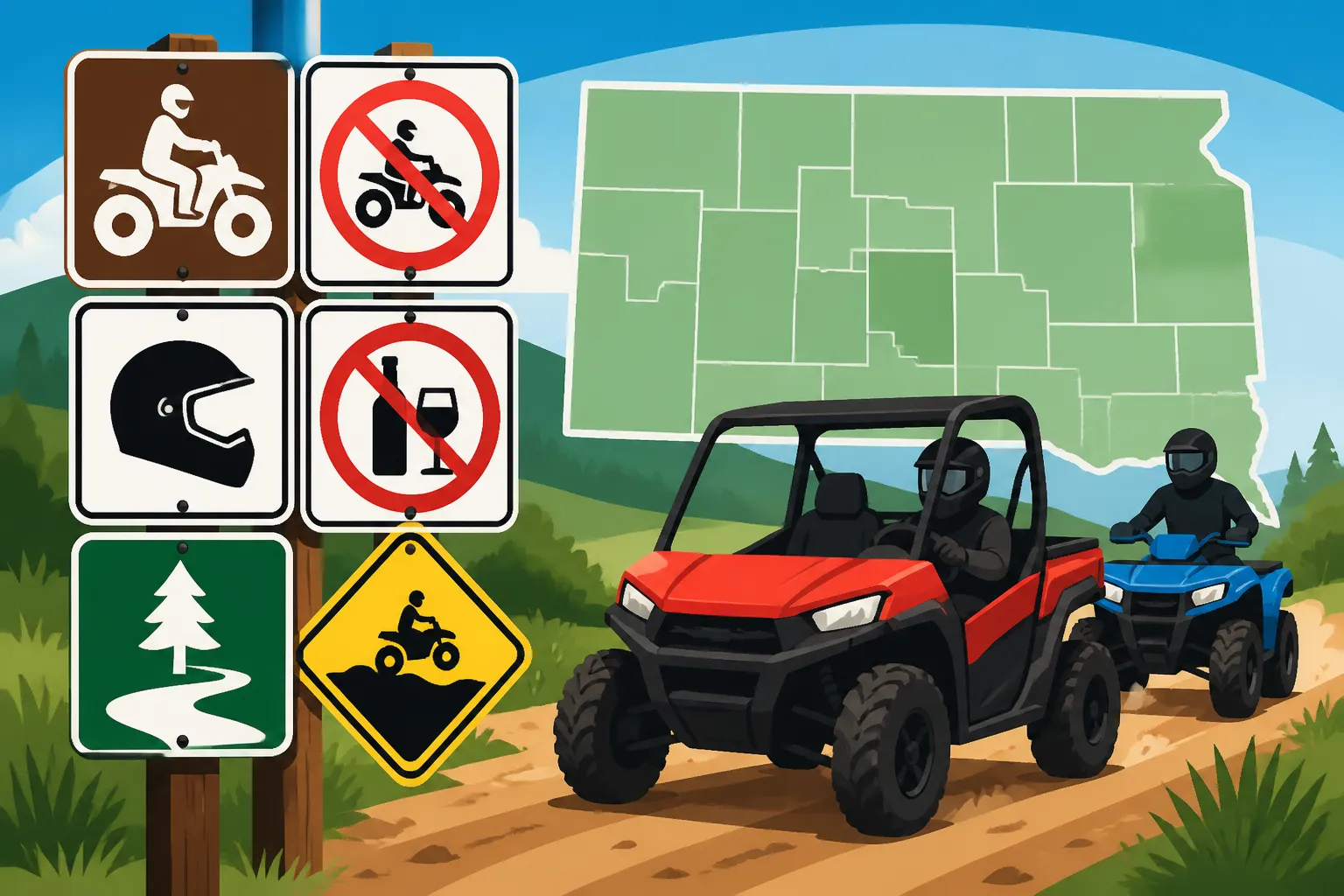
So, what do these regulatory signs look like and what information do they convey? Typically, they are official-looking signs, often white with black lettering or some variation that clearly indicates a prohibition. They won't be hand-painted or ambiguous. You might see phrases like "NO ATV/UTV DITCH RIDING" or "MOTORIZED VEHICLES PROHIBITED IN DITCHES." The wording is usually direct and leaves little room for misinterpretation. These signs are often placed at points where a county line begins, where a county's jurisdiction changes, or at significant intersections where riders might be entering a newly restricted area.
What they don't generally communicate are the reasons behind the ban. They're not there to explain the county commission's safety concerns or agricultural impact; they are simply there to state the rule. They also typically specify the prohibition applies to the "ditch" or "right-of-way" of the highway, rather than the highway itself, which operates under different rules for plated machines. Knowing what these signs specifically say helps you understand the boundaries of legal riding.
The Absence of a Sign as Permission
This is perhaps one of the most empowering pieces of information for ATV and UTV riders in South Dakota. Because counties are legally required to post signs if they prohibit ditch riding, the absence of such a sign generally implies permission. If you're riding along a county road and you don't see any official regulatory signs stating that ditch riding is prohibited, you can reasonably assume that it's allowed in that specific stretch of road.
This doesn't mean you should throw caution to the wind, of course. Always ride responsibly and be aware of your surroundings. But it does reinforce the default rule: ditch riding is permitted unless explicitly banned and marked as such. It places the onus on the county to inform you, rather than on you to find out where you can ride. This creates a more predictable environment for riders and helps reduce anxiety about inadvertently breaking local rules. You can find more details on this topic by exploring [Ditch Riding Is Legal Until a County Opts Out].
Where to Look for Regulatory Signs and What They Imply
Knowing that these signs exist and what they mean is one thing, but knowing where to expect them and how to interpret their placement is crucial for real-world riding. These signs aren't just randomly scattered; their placement is strategic and legally significant.
Entry Points and Intersections are Key
Regulatory signs prohibiting ditch riding are typically placed at key entry points into a restricted area. This often means you'll see them:
- At county lines: When you cross from a county that allows ditch riding into one that prohibits it, expect to see a sign marking the boundary.
- At town or city limits: As county roads transition into municipal areas, restrictions often change, and signs will be posted.
- At major intersections: Where a county road intersects with a state highway or another significant county road, signs might be present to clearly delineate the start of a restricted zone.
- On bridges or overpasses: Sometimes, specific structures or sensitive areas might have their own local rules, signaled by nearby signs.
The goal is to provide clear notice at the point of entry, so you have the opportunity to adjust your route or riding style before you accidentally enter a prohibited area. Always keep an eye out for these signs as you traverse different areas. They are your primary indicator of local ditch riding rules.
Distinguishing Between Ditch Riding and Highway Crossings
It's vital to understand that a county's decision to ban ditch riding does not prevent you from crossing a highway. These are two distinct actions governed by separate rules in South Dakota. Even in a county that has completely opted out of ditch riding, a rider on a properly equipped, road-legal ATV or UTV is still allowed to cross a public highway or road, provided they do so safely and directly. The rules for crossing are generally about minimizing time on the main roadway and yielding to traffic, not about the general permission to use ditches.
So, if you see a sign prohibiting ditch riding, it means you can't ride along the ditch, but it doesn't mean you're stranded. You can still use your machine to cross the highway to access a legal riding area or another part of your property. This distinction is important because confusing the two could lead to unnecessary frustration or even legal trouble if you mistakenly believe all road-related movements are banned. For more specific details, be sure to check out [Why No County May Bar a Crossing].
What Happens When You Encounter a Sign
When you encounter a regulatory sign prohibiting ATV/UTV ditch riding, the message is clear: do not proceed in the ditch. Your options at that point depend on your machine's legality for other road use and your destination:
- Turn Around: If you're solely relying on ditch riding, and your machine isn't plated for road use, your only option may be to turn around and find an alternate route where ditch riding is permitted.
- Move to the Roadway (If Plated): If your ATV/UTV is properly licensed and equipped to be street legal, you could transition from the ditch to the roadway itself, provided the road allows for plated ATV/UTV traffic. Remember, even on the roadway, you must follow all traffic laws.
- Cross the Highway: As mentioned, you can generally still cross the highway to reach a legal riding area on the other side, even if ditch riding is banned in that specific area.
Ignoring these signs can lead to fines and penalties. Law enforcement patrols these areas, and the signs are there for a reason. Taking a few moments to understand and respect these local ordinances will save you a lot of headache in the long run.
Beyond Ditch Riding: Other Signs Affecting ATV/UTV Use
While ditch riding rules and their associated signs are a major point of focus for ATV/UTV riders, it's important to remember that these aren't the only signs you'll encounter that impact your ride. General traffic laws and specific closures also play a significant role in determining where and how you can operate your machine. Being aware of these additional signs and their implications is part of being a responsible rider.
Speed Limits and General Traffic Laws
Even if you're on a county road or in a ditch where ATV/UTV use is permitted, you are not exempt from general traffic laws. This is a common misconception, especially for those accustomed to riding purely off-road. Speed limit signs, stop signs, yield signs, and traffic light signals all apply to you if you're operating on a public road or in a public right-of-way. Just because you're on a four-wheeler doesn't give you a free pass to ignore the rules that apply to cars and trucks.
A trooper checking a roadside stop, whether in Meade County or elsewhere, will be looking for compliance with these fundamental rules. Disregarding a stop sign, speeding, or operating recklessly can lead to citations, just as it would for any other vehicle. So, when you see a "SPEED LIMIT 45" sign on a gravel county road, that applies to your side-by-side too. It’s not just about what signs prohibit you; it's also about what signs instruct you on how to behave safely and legally. For more on law enforcement checks, you might want to read [What a South Dakota Trooper Checks Roadside].
Road Closures and Seasonal Restrictions
Beyond the permanent regulatory signs about ditch riding, you'll frequently encounter temporary or seasonal signs that impact your ability to ride. These can be particularly prevalent in areas like the Black Hills National Forest or other public lands. Signs indicating "ROAD CLOSED," "SEASONAL CLOSURE," or "FIRE DANGER EXTREME – AREA CLOSED" are critically important.
- Seasonal Closures: Many forest service roads and trails in South Dakota, particularly in the Black Hills, have seasonal closures to protect wildlife, prevent road damage during thaw, or manage hunting seasons. You might see signs indicating that roads are closed from December 15th to May 15th, for example. Ignoring these can lead to fines and environmental damage.
- Weather-Related Closures: During periods of heavy rain, flooding, or significant snow, roads and trails might be temporarily closed for safety reasons. Muddy conditions can quickly degrade trails, and deep snow can make roads impassable. These signs are there to protect you and the land.
- Fire Closures: In dry summer months, especially in forested areas, fire danger can escalate rapidly. Signs indicating closures due to high fire risk are non-negotiable. Violating these can have severe consequences, not just legally but also environmentally.
Always pay attention to these dynamic signs. They override any general permissions and are designed to keep you safe and preserve the natural resources you enjoy.
Private Property and Trespass Warnings
While this guide focuses on public land and county roads, it's impossible to discuss regulatory signs without mentioning those indicating private property. Signs like "PRIVATE PROPERTY," "NO TRESPASSING," "POSTED," or "NO MOTORIZED VEHICLES BEYOND THIS POINT" are legally binding. In South Dakota, landowners have the right to restrict access to their property.
Riding on private land without explicit permission from the landowner is trespassing, even if the land looks undeveloped or unfenced. Always respect these signs. If you're unsure if a road or trail is public or private, err on the side of caution. Attempting to ride through a "NO TRESPASSING" sign not only risks legal penalties but also damages the relationship between riders and landowners, potentially leading to more restrictions for everyone. Always seek [South Dakota Landowner Permission Rules] if you intend to ride on private ground.
The Rider's Responsibility and Navigating Local Ordinances
Even with clear signage, a rider's responsibility extends beyond simply reading what's in front of them. Proactive research and proper equipment are key to ensuring every ride is safe, enjoyable, and completely within the bounds of the law.
Researching County-Specific Rules Before You Ride
While regulatory signs are crucial, they are best seen as the final word on a specific stretch of road, not the entirety of a county's regulations. The smartest thing any ATV/UTV rider can do is to proactively research the rules of any county they plan to ride in before they even load up their machine. Many county websites will have ordinances listed, or you can often call the county auditor's office or even the local sheriff's department for clarification.
Imagine planning a weekend trip to the Black Hills. You wouldn't just show up and hope for the best, would you? The same applies to understanding local riding laws. Some counties might have specific nuances beyond just ditch riding bans, such as restrictions on engine size on certain roads or specific hours of operation. A quick call or an online search can save you a lot of trouble and prevent an unexpected citation from a forest officer or county deputy. [What a Black Hills Forest Officer Cites Riders For] highlights the importance of being informed.
Equipment for Safer Road and Ditch Use
If you plan to use your ATV or UTV on any public road, even if it's just in a ditch or for crossing, your machine needs to be properly equipped for safety and visibility. While some of these requirements are for plated, street-legal machines, many are just good practice for any road-adjacent riding:
- Mirrors: A rear-view mirror is essential for seeing traffic approaching from behind, whether you're in the ditch or on the road.
- Horn: A working horn is necessary for alerting others to your presence, a critical safety feature.
- Lights: Headlights, taillights, and brake lights are not just for night riding; they dramatically increase your visibility in all conditions, especially dust or low light.
- Spark Arrester: If you're riding on public lands, a USFS-approved spark arrester is almost always required to prevent wildfires.
- Tires: Ensure your tires are in good condition and suitable for mixed terrain.
- Helmets and Eye Protection: While adults typically don't need helmets for ditch riding in South Dakota, they are always a good idea for safety, as is eye protection.
Companies like SuperATV offer a wide range of accessories and upgrade kits that can help ensure your machine meets these requirements, from mirrors and turn signal kits to durable light bars and windshields that enhance both safety and compliance. Investing in the right equipment isn't just about avoiding a ticket; it's about protecting yourself and others.
The Importance of a Plate, Even for Ditch Riding
While ditch riding itself doesn't always require your machine to be street legal with a plate, understanding the broader context of titling and plating is important. If you do plan to transition from the ditch to the actual roadway, even for a short distance, or to cross a highway, your machine generally needs to be properly titled and licensed. This typically means having a valid South Dakota motorcycle plate on your ATV or UTV.
The plate signifies that your machine has met the state's requirements for on-road use, including often needing specific safety equipment. Without a plate, your options for leaving a ditch or making a crossing are severely limited, regardless of what the ditch riding signs say. For machines that are primarily off-road but might occasionally touch a county road, having the proper plate adds a layer of flexibility and legality. You can learn more about this by checking out [South Dakota ATV Plate Requirements].
Here's a quick comparison of hypothetical county rules regarding ditch riding:
| County Name | Ditch Riding Allowed? | Required Signage if Prohibited | Common Reasons for Prohibition (Hypothetical) |
|---|---|---|---|
| Blackwood County | No | "NO ATV/UTV DITCH RIDING" | High traffic volume, residential concerns |
| Prairie Creek Co. | Yes | None (default) | Mostly agricultural, low population density |
| Riverbend County | No (in certain areas) | "NO MOTORIZED VEHICLES" | Riverfront property, environmental concerns |
| Canyon View Co. | Yes | None (default) | Tourist routes, mixed use |
Disclaimer
This article is for general informational purposes only and does not constitute professional advice. Laws, prices and regulations vary by location and change over time. Consult a qualified professional for guidance on your specific situation.