South Dakota Rules for Riding a Town Street
Many ATV and UTV enthusiasts dream of riding their machine right from their driveway into town for a quick errand or to grab a bite. But the reality of navigating South Dakota's town streets on an off-road vehicle can be a tangled web of rules and regulations. This comprehensive guide will untangle the specifics, helping you understand what it takes to legally and safely ride your ATV or UTV on the paved and unpaved roads within South Dakota's municipalities.
The General Rule for ATVs and UTVs on South Dakota Town Streets
Taking your off-road vehicle onto a town street in South Dakota isn't as simple as just rolling out of your driveway. There's a fundamental framework that dictates whether your machine is even eligible for such use, and it often surprises riders who are used to wide-open trails or private land. The state provides a pathway for some machines, but it requires understanding specific classifications and prerequisites.
Understanding South Dakota's Street Legal Framework
South Dakota has specific definitions for what constitutes an "off-road vehicle" (ORV) and, crucially, what makes it eligible for street use. It's not as simple as slapping on a license plate; the machine itself needs to meet certain criteria before it can ever be considered street legal. Many riders get frustrated when they realize their beloved trail machine isn't automatically welcome on Main Street, even if they've added a few basic safety accessories. The state law provides a pathway for some machines, but it's a journey of conversions and checks, not a free pass.
The core idea is that if your ATV or UTV can be licensed as a motorcycle, it can operate on public roads, including most town streets. This classification as a "motorcycle" is key, and it's tied directly to engine size and wheel count. For four-wheeled machines, that critical threshold is generally 200 cubic centimeters. Below that, getting a plate for town street use becomes impossible under this particular path, severely limiting the options for smaller or less powerful machines. This specific requirement is detailed further in [South Dakota ATV Engine Size for Plates].
This means that many smaller youth models or older, less powerful machines simply won't make the cut for plating and therefore won't be legal for town street riding, no matter how many mirrors or signals you attach. It's a common misconception that all ATVs can eventually be made street legal. The first hurdle is often the machine's inherent specifications, long before you even consider adding accessories. Understanding this initial barrier is crucial for anyone hoping to ride their ATV or UTV on a South Dakota town street.
Differentiating State Law from Local Ordinances
While the state provides the overarching framework for street legality, individual towns and cities in South Dakota can, and often do, have their own specific ordinances that further regulate or restrict ATV and UTV use within their municipal limits. This can be incredibly confusing for riders, as what's perfectly legal on a county road or in one town might lead to a citation just a few miles down the road in another. You might be perfectly compliant with state law regarding your machine's setup, but if a city has opted to ban or severely restrict ORVs on its town streets, you could still be in violation.
It's not uncommon for towns to have specific roads or zones where ORVs are permitted, or to have blanket bans on all town streets. For example, a small, rural town might be more lenient, seeing ORVs as part of daily life and essential for local travel, while a larger city might view them purely as recreational vehicles and restrict them more heavily for safety, noise, or traffic flow concerns. Before you even think about firing up your machine on a town street, it's absolutely crucial to check with that specific municipality's law enforcement or city clerk's office.
This patchwork of regulations means that a general understanding of state law isn't enough; hyper-local research is essential. Many riders have learned this the hard way, pulling into a small town for gas or a quick bite only to be informed by a local officer that their plated machine isn't welcome there. Always assume that local rules might be more restrictive than state law. A quick call or visit to the town's website can save you a significant amount of hassle and potential fines when trying to navigate local [South Dakota Rules for Riding a Town Street].
Essential Equipment for Street Legality on Town Streets
Transforming an off-road beast into a street-legal machine capable of navigating town streets involves more than just a quick tune-up. It requires specific equipment modifications to ensure it meets safety standards comparable to other road vehicles. These aren't just suggestions; they are mandates designed to protect you and everyone else sharing the road.
Lights, Mirrors, and Horn
If your ATV or UTV is going to share the road with cars, trucks, and motorcycles, it needs to be equipped with the same fundamental safety features. This isn't just about meeting a checklist; it's about being seen, being able to react to traffic, and communicating your intentions. Headlights, taillights, and brake lights are non-negotiable. They must function correctly, providing adequate illumination forward and making your presence known from the rear, especially during dusk, dawn, or adverse weather conditions common in South Dakota.
Beyond lighting, mirrors are absolutely critical for safe road operation. You need to be able to see traffic approaching from behind without constantly turning your head, which can be dangerous, especially on a town street with multiple lanes or intersections. South Dakota typically requires at least one rearview mirror, but many experienced riders opt for two – one on each side – for better visibility and safety. Accessories from companies like SuperATV offer a variety of robust mirror options designed to withstand the rigors of both road and trail, ensuring you can keep an eye on your surroundings. A functioning horn is also essential for alerting pedestrians or other drivers to your presence, particularly in busy town traffic or parking lots where visibility can be limited. [South Dakota Mirror Requirement] provides further details.
Think about it: you wouldn't drive a car without these basics. An ATV or UTV, even on a slow town street, needs to communicate its intentions and be aware of its surroundings. These aren't optional upgrades; they are fundamental components for legally and safely mixing with street traffic. Many aftermarket kits, including those you might find through a SuperATV dealer, are designed to integrate these features seamlessly into your machine, helping you meet [South Dakota Lighting Requirements for ATVs] and [South Dakota Horn Requirement].
Tires, Brakes, and Fenders
The aggressive, knobby tires you rely on for traction in dirt, mud, and rocks on the trail are often not suitable, or legal, for prolonged street use. Off-road tires can wear quickly on pavement, compromise handling, reduce braking effectiveness, and may not provide adequate grip in wet street conditions. You'll need tires that are rated for highway use, or at least a multi-purpose tread that can handle both surfaces without being a hazard. This means checking the tire's DOT (Department of Transportation) rating to ensure it meets federal standards for road use.
Your braking system also needs to be in tip-top shape. On a town street, especially one with stop signs, traffic lights, or unexpected pedestrian crossings, you need reliable and responsive brakes that can bring your machine to a quick, controlled stop. All brakes must be fully functional and properly adjusted. Fenders are another often-overlooked requirement. They are there to prevent water, mud, or debris from being flung from your tires onto other vehicles or pedestrians, which is a common complaint and safety hazard in urban environments.
Ensuring your machine is mechanically sound from brakes to tires is paramount. These components directly impact your ability to control the vehicle and respond to road conditions, making them not just legal necessities but also critical safety features for any [South Dakota Street Legal ATV Requirements]. A complete assessment of your machine's mechanical readiness is vital before you consider taking it onto a town street.
Driver Requirements and Operational Considerations on Town Streets
Beyond the machine itself, the person operating it on South Dakota town streets must also meet specific criteria. This includes appropriate licensing and an understanding of general road rules, ensuring that ATVs and UTVs integrate safely with existing traffic.
Licensing, Age, and Helmet Rules
Just like driving a car or motorcycle, operating an ATV or UTV on South Dakota town streets requires a valid driver's license. This isn't a situation where a farm permit or an off-road safety course certificate suffices; you need a standard driver's license that allows you to operate a motor vehicle on public roads. This is a common point of confusion, particularly for younger riders who might be experienced off-road but don't yet hold a street license. Your off-road prowess doesn't automatically grant you privileges on paved roads.
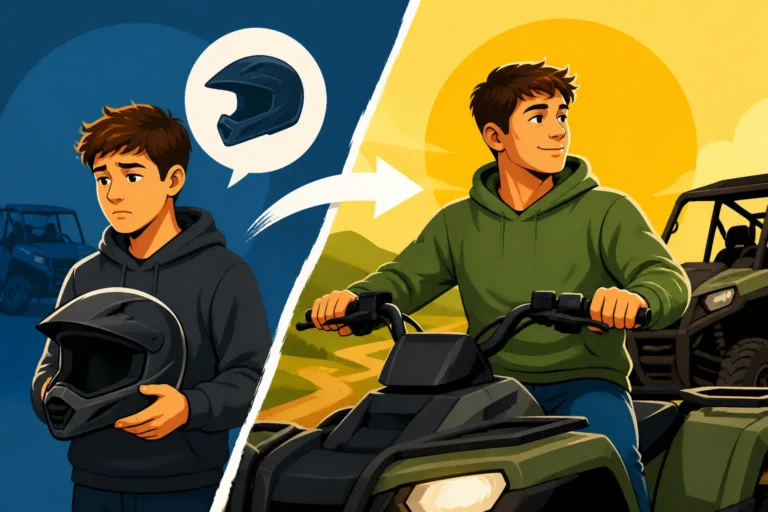
Regarding age, the rules often align with driver's licensing age, meaning you generally need to be at least 16 to hold a standard license and therefore operate a street-legal ORV on town streets. For helmet rules, South Dakota has specific requirements, but they are often tied to age. Generally, riders under the age of 18 are required to wear a helmet when operating a motorcycle or ORV on public roads. Once you turn 18, the helmet requirement typically drops for adults, though wearing a helmet is always strongly recommended for your personal safety, regardless of age. Eye protection, however, is a consistent requirement for all riders.
It's important to be aware of these age and licensing requirements before you even consider taking your machine out on a town street. Getting pulled over for an expired license or having a minor operate a street-legal ATV without meeting the age requirements can lead to fines and legal complications. Always prioritize safety and compliance. For more details, consult [South Dakota Driver's License Rules for ATVs] and [South Dakota Helmet Law for ATV Riders].
Rules of the Road and Speed Limits
Once your ATV or UTV is properly equipped and you meet the driver requirements, you're expected to follow all standard traffic laws that apply to any other motor vehicle on the road. This means adhering to posted speed limits, stopping at stop signs and traffic lights, using turn signals (if equipped and required, hand signals if not), and yielding the right-of-way. You are not exempt from these rules simply because you're on an ORV; you are a vehicle sharing the public right-of-way.
Town streets often have significantly lower speed limits than highways, and it's vital to respect these. Many ATVs and UTVs are capable of speeds far exceeding typical town limits, so maintaining appropriate speed is crucial for safety, especially with increased pedestrian and vehicular traffic. Furthermore, be mindful of traffic flow. While your machine might be street legal, it may not keep up with highway speeds, and being a slow-moving vehicle on a busy road can be a hazard. Be prepared to pull over safely if you are impeding traffic.
Respectful operation is key to maintaining positive perceptions of ORV use. You're sharing the road with various types of vehicles, pedestrians, and cyclists. Loud exhausts, aggressive driving, or kicking up excessive dust can create negative perceptions within the community and lead to increased restrictions. Operate defensively and courteously to ensure that ATVs and UTVs continue to be welcomed, where permissible, on town streets, whether you're heading to the post office or just out for a scenic cruise. You'll find that many of the same courtesies apply when transitioning to a [South Dakota Rules for Riding a Gravel Road].
Navigating Local Regulations and Obtaining Necessary Documentation
Successfully riding your ATV or UTV on South Dakota town streets means more than just outfitting your machine. It also involves diligent research into local rules and ensuring you have all the necessary paperwork on hand. Ignoring these crucial steps can quickly turn an enjoyable ride into a legal headache.
Checking with Your Local Municipality
As previously mentioned, state law provides the overarching framework, but local jurisdictions hold significant power in regulating ORV use on their town streets. This means that before you plan a ride through Spearfish, a quick trip to the store in Custer, or even just around your own neighborhood in Rapid City, you must verify the local rules. The best first step is to contact the local police department or the city clerk's office for the specific town you plan to visit or reside in. Ask them directly about their ordinances regarding ATVs and UTVs on public roads.
Some towns might have specific zones where ORV use is allowed or restricted. For instance, they might permit ORVs on unpaved roads within city limits but ban them from main thoroughfares, or vice versa. Others might require a separate local permit or sticker in addition to your state license plate. Imagine driving your fully street-legal machine into a new town, only to be pulled over because you missed a local ordinance. It's a frustrating but entirely avoidable situation with a quick phone call or visit to the city's official website. Being proactive here saves a lot of headaches, and potential fines.
Don't rely on assumptions or what you've heard from friends; laws change, and what applies in one county might be completely different in another. A simple, polite inquiry will get you the most accurate and up-to-date information for your specific riding plans. It shows you're a responsible rider, which can go a long way in how local authorities perceive ATV and UTV users in general. Always confirm before you ride on any municipal road.
Documentation and Display
Once your ATV or UTV meets all the equipment requirements and is registered and plated for street use, ensuring you have the correct documentation readily available is essential. This includes your valid driver's license, proof of registration (typically your vehicle's title or registration card), and proof of liability insurance. Just like any other motor vehicle, if you're riding on public roads, you need to be able to provide these documents if requested by law enforcement. Failure to do so can result in citations, even if your machine is otherwise compliant.
The license plate itself needs to be displayed clearly and legibly on the rear of your machine, just like a motorcycle plate. It shouldn't be obscured by cargo, mud, or aftermarket accessories. This is how law enforcement can quickly identify your vehicle as street-legal and verify its registration. Think about how visible a motorcycle plate is – your ORV plate needs to be just as visible and unobstructed from view. Investing in a sturdy, well-placed license plate mount, perhaps from SuperATV, can help ensure compliance and prevent damage to the plate itself.
Proper display of your plate and carrying the right documents aren't just technicalities; they are fundamental aspects of being a responsible road user. They demonstrate that your machine is legally allowed on the pavement and that you're prepared to prove it. A quick check of your wallet and your machine's rear before every town street ride can prevent unnecessary stops and explanations. For a detailed look at the paperwork involved, refer to [What South Dakota Requires to Plate an ATV]. It’s a crucial step in ensuring your machine is truly ready for any South Dakota town street.
South Dakota ATV/UTV Street Legal Requirements Checklist
Below is a comprehensive checklist of what's generally required to make your ATV or UTV street legal for use on South Dakota town streets. Remember to always confirm specific local ordinances for the municipality you plan to ride in.
| Requirement | Description | Importance |
|---|---|---|
| Engine Size | Generally 200cc or greater for 4-wheelers to be plated as motorcycles. | Fundamental for state-level street legal classification. |
| Headlights | Fully functional, with high/low beam capability, providing adequate illumination. | Essential for visibility, especially during low light or adverse weather. |
| Taillights | Fully functional, visible from the rear for safety. | Critical for being seen by trailing vehicles. |
| Brake Lights | Activate upon braking, clearly indicating deceleration to traffic behind you. | Prevents rear-end collisions and ensures safe stopping. |
| Rearview Mirror | At least one required, two recommended for optimal visibility of traffic. | Allows rider to monitor traffic behind them safely. |
| Horn | Audible warning device, loud enough to alert pedestrians and other drivers. | Alerts others to your presence; crucial in traffic situations. |
| Brakes | All braking systems (front and rear) must be in good working order and capable of stopping the machine safely. | Safety critical for stopping and control in varying conditions. |
| Tires | DOT-approved or multi-purpose tires suitable for pavement. Off-road only tires are not typically allowed. | Ensures safe handling and adequate grip on hard surfaces. |
| Fenders | Must be in place over all wheels to prevent debris from being thrown onto other vehicles or pedestrians. | Maintains road cleanliness and prevents hazards. |
| License Plate | Clearly displayed on the rear of the machine, legible, and unobscured by cargo or mud. | Legal identification of a street-legal vehicle. |
| Driver's License | Valid, appropriate class for motor vehicle operation (standard driver's license). | Legal requirement for operating any vehicle on public roads. |
| Insurance | Proof of liability insurance as required for all motor vehicles operating on public roads. | Protects against financial responsibility in case of an accident. |
| Eye Protection | Required for all riders. | Essential for safety against debris, wind, and insects. |
| Local Ordinances | Check specific town/city rules; may have additional restrictions, specific routes, or local permits required. | Crucial for compliance with hyper-local regulations. |
Understanding these requirements is the first step in ensuring your ATV or UTV is ready for South Dakota's town streets. Many riders overlook the intricate details of making an ATV or UTV street legal. It's more than just adding lights; it's about meeting a specific set of criteria that ensures safety for both the rider and other road users. For example, ensuring your turn signals, if required by local ordinance or desired for safety, are bright enough can sometimes mean upgrading from stock. You can find many of these necessary components listed in [South Dakota Equipment List for Road Use].
Disclaimer
This article is for general informational purposes only and does not constitute professional advice. Laws, prices and regulations vary by location and change over time. Consult a qualified professional for guidance on your specific situation.