South Dakota Rules for Riding to a Trailhead
Picture this: you've loaded up your ATV or UTV, the sun is shining, and you're ready for a fantastic day on the trails. But then you realize the trailhead isn't just right there. You've got to get from your campsite, cabin, or even your local gas station to the dirt, and suddenly you're asking, "Can I even drive this thing on the road in South Dakota?" It's a common dilemma, and one that can quickly turn a fun outing into a stressful one if you're not absolutely clear on the rules. This guide is here to untangle the complexities of South Dakota's laws regarding riding your off-road vehicle to a trailhead, ensuring you arrive safely and legally.
The Basics of South Dakota Road Use for ATVs and UTVs
One of the biggest hurdles riders face in South Dakota when trying to get to a trailhead is understanding that your shiny new ATV or UTV isn't automatically welcome on every paved or gravel road. Unlike some states with more lenient rules, South Dakota has specific requirements, and they largely hinge on whether your machine is legally plated for road use. Trying to skirt these rules can lead to serious fines and a ruined day, so it’s critical to get this right from the start.
Plating Your Machine for Road Legality
For most ATVs and UTVs to legally operate on public roads in South Dakota, they need to be titled and licensed just like a motorcycle or car. This isn't just about having the paperwork; it's about meeting a specific set of criteria that transform your off-road beast into a road-worthy machine in the eyes of the law. Without a proper plate, your road-use options become incredibly limited, mostly confining you to ditches or private property.
The process often starts with ensuring your vehicle meets certain engine displacement requirements. For a four-wheeled ATV to be registered and plated as a motorcycle, it typically needs an engine displacement of at least 200 cubic centimeters (cc). This is an important threshold, as anything smaller might not qualify for a full motorcycle plate, severely restricting your ability to ride on roads. For those considering turning their UTV into a street-legal vehicle, the same general principles apply, though the specific classification might vary slightly. It's not uncommon for people to purchase a machine and only later realize it won't qualify for a plate, leading to frustration. This is why it's so important to understand [What South Dakota Requires to Plate an ATV] before you even think about hitting the pavement. Once plated, your machine is treated much like any other motorcycle on the road, opening up many more possibilities for getting to those remote trailheads without needing a trailer every time. Remember, the goal is not just to have a title, but to have it designated as a road-legal vehicle with a valid license plate displayed. [South Dakota Motorcycle Plate for an ATV] delves deeper into this specific classification process.
Essential Equipment for Road-Legal Operation
Getting your machine plated is only half the battle. Once you've secured a license plate, you still need to ensure your ATV or UTV is equipped with all the necessary safety features to make it genuinely road-legal. This isn't just about ticking boxes; it’s about making sure you’re visible and able to safely navigate public roads alongside other traffic. Imagine trying to drive down a state highway without working brake lights – it's a recipe for disaster and certainly not something you want to encounter on your way to a fun day of riding.
The list of required equipment is pretty straightforward, mirroring many of the requirements for motorcycles. You'll need properly functioning headlights, brake lights, and a horn. Furthermore, at least one rear-view mirror is mandatory, and it's always a good idea to have two for better visibility, especially if you’re riding a wider UTV. Some riders also opt for turn signals, though depending on how your machine is classified (often as a motorcycle), they might not be strictly mandated by the state if hand signals suffice. However, for practicality and safety, they're a huge bonus. Tires must also be DOT-approved for road use, not just off-road knobbies. Many riders look to companies like SuperATV for their range of accessories and conversion kits, which can help ensure your machine meets these road-legal standards. Their products often simplify the process of adding the required lighting, mirrors, and other components. It’s worth taking the time to go through a checklist to ensure everything is up to snuff. Neglecting any of these items can lead to a roadside stop, a ticket, and potentially even being told to trailer your machine, which is the last thing you want when you’re just trying to get to the trailhead. For a full breakdown of what you need, refer to [South Dakota Equipment List for Road Use].
Navigating South Dakota's Ditch and Shoulder Rules
Even if your ATV or UTV isn't fully street-legal with a license plate, South Dakota offers some specific, albeit restricted, options for operating on public rights-of-way. This is where the concept of "ditch riding" comes into play – a practice unique to many Midwestern states that can be a lifesaver for getting to a trailhead just a short distance from your staging area. However, it's absolutely crucial to understand the limitations and potential pitfalls, as misinterpreting these rules can lead to significant trouble.
Understanding the Ditch Riding Exceptions
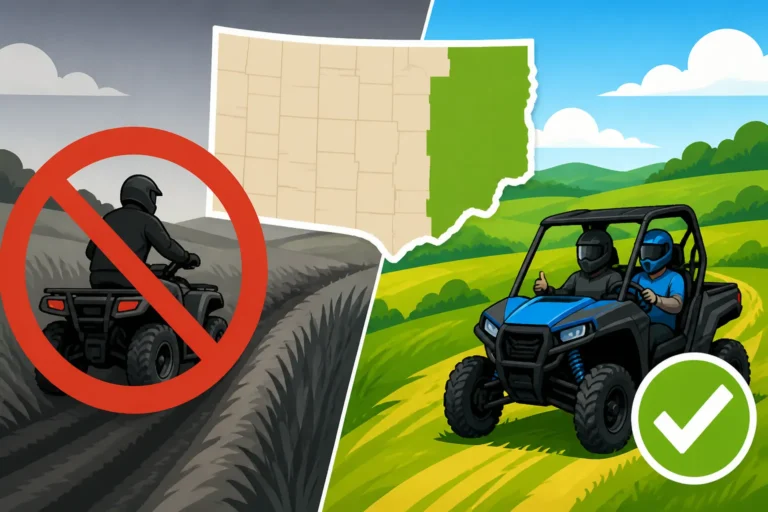
South Dakota law generally allows ATVs and UTVs to operate in the ditches or along the far outer edge of the right-of-way of public highways. This can be a huge relief if your desired trailhead is just a mile or two down a county road from where you've parked your trailer. However, it’s not a free-for-all. There are strict rules about where in the ditch you can ride, how fast you can go, and most importantly, which roads this applies to. Many counties in South Dakota have the authority to "opt out" of allowing ditch riding on county roads, and it’s your responsibility to know if the county you’re in has done so. You'll typically see regulatory signs posted if a county has banned ditch riding.
The "outer edge rule" is paramount: you must operate as far to the right as practicable, usually within the ditch itself or on the shoulder, not on the paved or main gravel portion of the road. There are also speed limits, typically much lower than the posted road speed, and restrictions on how close you can operate to private driveways or within municipal boundaries. Imagine a busy stretch of highway with no shoulder; attempting to ride your UTV in that ditch would be incredibly dangerous and almost certainly illegal. It's designed for low-traffic areas where you're truly just using the right-of-way to connect to a trail. Without careful attention to these specifics, what seems like a convenient shortcut can quickly become a legal headache. Make sure you understand [South Dakota Ditch Riding Rules] to avoid any unpleasant surprises.
Highway Crossings and Intersections
While ditch riding offers some flexibility, you'll inevitably encounter situations where you need to cross a road or navigate an intersection. Even if you're riding in the ditch, you cannot simply merge into traffic or cross a multi-lane highway without following specific protocols. This is where many riders get confused or take unnecessary risks, especially when trying to link up different ditch sections or access a trailhead on the opposite side of a paved road.
South Dakota law is quite clear that while a county can prohibit ditch riding, they cannot prevent you from crossing a highway. This is a crucial distinction. When crossing, you must yield to all oncoming traffic and make the crossing at a ninety-degree angle to the road, essentially treating it like a pedestrian crossing. You should not ride along the road to set up your crossing; you should approach the edge of the road, stop, look, and cross directly when it is safe to do so. This applies whether you're crossing a small county blacktop or a larger state highway. For example, if your trailhead is across a busy state route, you'll need to approach the road safely from the ditch, wait for a clear break in traffic, and then cross directly to the opposite ditch or access point. Attempting to drive even a short distance on the highway itself during this maneuver is generally illegal if your machine isn't plated. The key is to be predictable, visible, and to exercise extreme caution, remembering that you are sharing the road with vehicles that are much faster and larger than your off-road machine.
Practical Considerations for Trailhead Access
Getting your machine ready and understanding the general rules is a great start, but successful trailhead access in South Dakota also requires some practical planning and awareness of how permits and routes intersect. It's not enough to just know the laws; you need to apply them to your specific riding plans to ensure a smooth, enjoyable, and lawful trip.
The Permit and Plate Distinction for Trails vs. Roads
This is where things can get a little tricky for some riders, leading to confusion and sometimes costly mistakes. Many people assume that if their ATV or UTV is street-legal with a license plate, it automatically grants them access to all trails. Conversely, some believe that if they're only riding trails, they don't need to worry about road rules at all. In South Dakota, these are distinct layers of regulation, and you generally need both for comprehensive access.
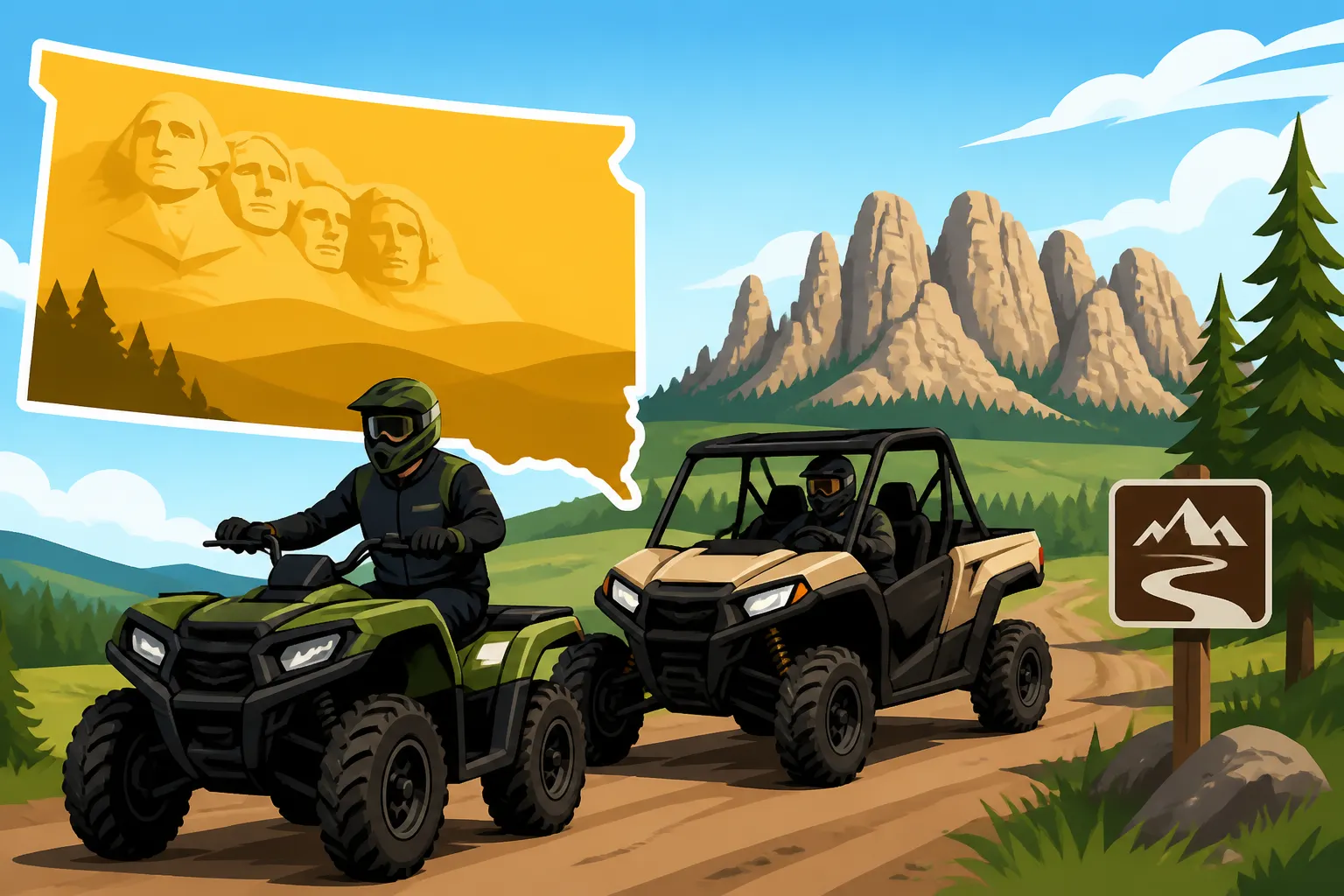
A license plate, as discussed, makes your machine legal for road use (within specified limits). However, the Black Hills National Forest, which boasts thousands of miles of incredible motorized trails and roads, often requires a separate [Black Hills Motorized Trail Permit]. This permit is specifically for accessing and riding on designated federal and state trails within the forest, regardless of whether your machine also has a license plate for road use. Think of it this way: your license plate allows you to get to the trailhead on public roads, but the trail permit allows you to ride on the trails themselves. Even if you've got a fully plated machine, if you venture onto a designated motorized trail in the Black Hills without that permit decal, you could still face a fine. It's an additional fee, but it directly supports the maintenance and development of those very trails you love to ride. Make sure to check the specific requirements for the area you plan to ride, as some private or smaller public riding areas might have different rules.
Planning Your Route to the Trailhead
With all the rules in mind, the final piece of the puzzle is laying out your actual route to the trailhead. This involves combining your knowledge of road-legal machines, ditch riding regulations, and trail permit requirements to craft a seamless journey from your starting point to the dirt. Trying to "wing it" can easily lead you down a closed road or an illegal ditch, so a little pre-planning goes a long way.
Start by consulting maps that show both public roads and designated motorized trails. Forest Service Motor Vehicle Use Maps (MVUMs) are invaluable for the Black Hills, as they clearly delineate which roads and trails are open to which types of vehicles. If your machine is plated, you have the flexibility to use many public roads directly to the trailhead, much like any other vehicle. However, if you're relying on ditch riding, you'll need to carefully identify stretches where it's permitted and look for signage that might indicate otherwise. For instance, if you're coming from a campground and need to travel two miles on a county road to reach a forest access point, you'll need to confirm that county allows ditch riding on that specific stretch. This might involve a quick call to the county sheriff's office or checking their website. Some riders find it helpful to outfit their machines with GPS units or smartphone apps that can display these MVUMs and legal routes, allowing for real-time navigation. Many high-quality accessories from brands like SuperATV can help improve your navigation and safety, such as durable phone mounts or even full GPS systems designed for off-road use. By meticulously planning your route, you can minimize surprises and ensure a stress-free transition from pavement to trail. If you're wondering [Where to Ride an ATV in South Dakota], comprehensive route planning is key to accessing those areas legally.
Common Pitfalls and Best Practices
Even with all the information, it's easy to make mistakes when you're excited to hit the trails. Knowing the common pitfalls can help you steer clear of trouble, and adopting best practices will ensure not just your legality, but also your safety and the longevity of your riding privileges in South Dakota. Nobody wants to deal with a fine or an accident when they're supposed to be having fun.
Avoiding Fines and Misunderstandings
One of the most frustrating experiences for an off-road rider is getting pulled over and fined, especially when you thought you were doing everything right. A lot of these incidents stem from honest misunderstandings of the complex and sometimes nuanced laws. The single biggest mistake riders make when riding to a trailhead in South Dakota is assuming that the rules are the same as in their home state, or worse, assuming that "everyone else does it" so it must be okay. This mentality is a fast track to a Class 2 Misdemeanor, which can carry significant penalties.
For instance, many riders mistakenly believe that because they have an ORV title, they can ride on the road. The title is proof of ownership, but it’s not the same as a license plate for road use. Another common error is not checking local county ordinances regarding ditch riding. While the state law allows for it, individual counties can opt out, and you might ride for miles in one county where it's legal, only to cross into another where it's expressly forbidden. Troopers and county sheriffs are aware of these variations, and ignorance of the law is never an excuse. Always verify the rules for the specific area you plan to ride, and if in doubt, err on the side of caution or trailer your machine. The fines for illegal operation can stack up quickly, including penalties for an untitled machine, no plate, and improper operation. Don't let your excitement overshadow your due diligence. You can learn more about specific financial consequences by checking out [South Dakota Fines for Illegal ATV Road Use].
Safety First for Road and Ditch Riding
Beyond legality, your personal safety and the safety of others should always be your top priority, especially when operating your ATV or UTV on or near public roads. The dynamics of riding an off-road vehicle on pavement, even for short distances, are very different from riding on a trail, and require a heightened level of awareness.
First and foremost, wear your safety gear. While South Dakota has specific helmet laws that exempt adults over 18 from mandatory helmet use on plated ATVs (when operating as a motorcycle), it is always, always a good idea to wear one. Riders under 18 are required to wear a helmet, regardless of whether the machine is plated or not, especially if riding in a ditch or on private land accessible to the public. Eye protection is also a must, whether through goggles or a face shield, to guard against dust, debris, and insects, particularly on gravel roads. Furthermore, ensure you have a valid driver's license. [South Dakota Driver's License Rules for ATVs] clarify that if your machine is plated and on the road, you need a valid license to operate it. Even when ditch riding, while a full driver's license might not be strictly mandated, possessing one demonstrates you understand the rules of the road. Ride defensively, be highly visible to other traffic (consider bright flags or reflective gear, especially if riding in a ditch), and always assume that other drivers might not see you. Maintain appropriate speeds, particularly on [South Dakota Rules for Riding a Gravel Road] where dust and loose material can affect visibility and traction. A small investment in high-visibility gear or upgraded lighting from companies like SuperATV can significantly enhance your safety and peace of mind when transitioning from trail to trailhead and back again. For detailed helmet requirements, refer to [South Dakota Helmet Rules for ATV Riders].
Disclaimer
This article is for general informational purposes only and does not constitute professional advice. Laws, prices and regulations vary by location and change over time. Consult a qualified professional for guidance on your specific situation.