Why Bike Trail Ditches Stay Closed
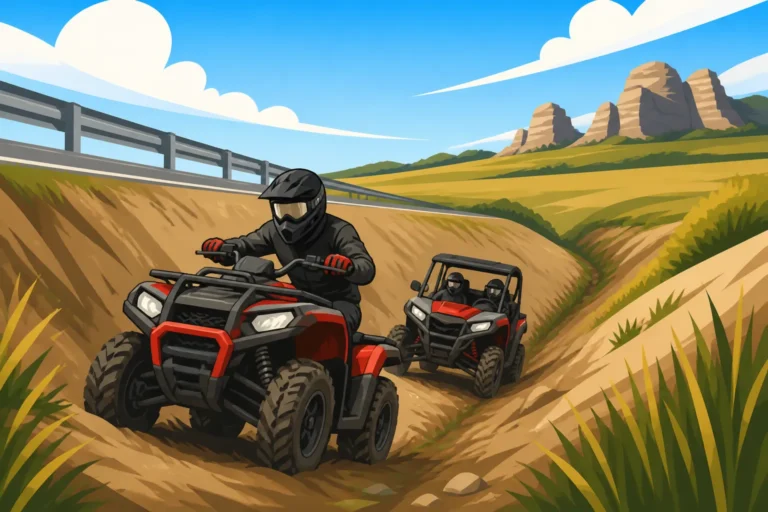
It’s a common frustration for ATV and UTV riders in South Dakota: you see a tempting ditch running alongside what looks like a perfectly good route, only to realize it's adjacent to a bike trail, and suddenly, it feels like all the usual ditch riding rules have gone out the window. This guide aims to clear up that confusion, explaining why ditches next to dedicated bike trails are almost always off-limits for motorized vehicles, even when other ditches might be fair game.
Understanding South Dakota's General Ditch Riding Rules
Navigating the rules for riding your ATV or UTV in South Dakota can feel like a maze, especially when it comes to roadside ditches. Many riders mistakenly assume that if it's a ditch, it's open, but the reality is much more nuanced. Before we dive into why bike trail ditches are a special case, it helps to understand the foundational principles of ditch riding in the state.
The General Rule for Ditch Riding
Generally speaking, South Dakota has a fairly progressive stance on ditch riding for off-road vehicles. In many rural areas, the ditches alongside public roads are considered legal territory for ATVs and UTVs. This isn't just a quirky local custom; it's often a practical necessity, especially for agricultural and utility purposes, and provides a designated space for off-road enthusiasts to travel without directly impeding road traffic. The intent behind this general rule is to offer a safe, albeit often dusty, alternative travel route in areas where paved roads are the only other option for getting from point A to point B.
However, "general" doesn't mean "universal." There are always conditions and exceptions. Riders are typically expected to operate safely, be mindful of private property boundaries, and yield to any vehicular or pedestrian traffic they might encounter. The freedom to ride in these ditches is a privilege, and it comes with the responsibility of understanding and adhering to the guidelines that keep everyone safe and preserve access for future use. For a deeper dive into the specific rules, check out [South Dakota Ditch Riding Rules Explained].
When a County Opts Out
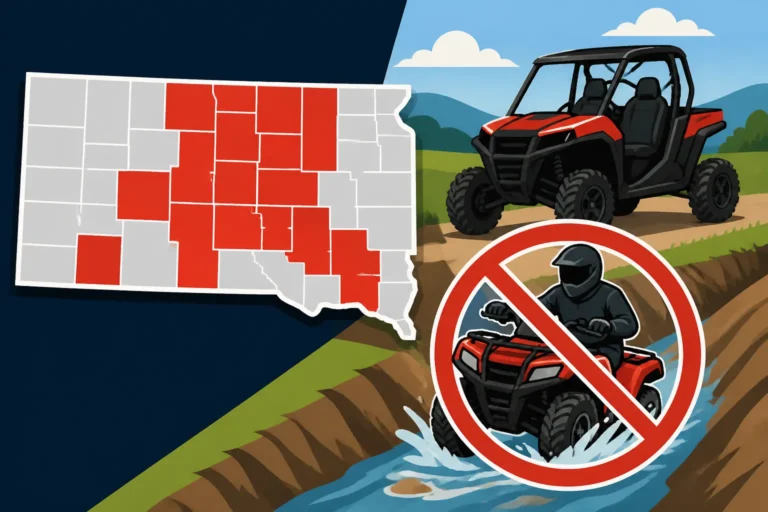
Here’s where things get tricky, and it’s a crucial detail that often catches riders off guard. While the state provides a general framework for ditch riding, it also empowers individual counties to opt out of allowing it entirely within their jurisdiction. This means that a ditch that's perfectly legal to ride in one county might be strictly forbidden just across the county line. Counties typically make these decisions based on local population density, traffic volume, safety concerns, or to protect specific types of infrastructure.
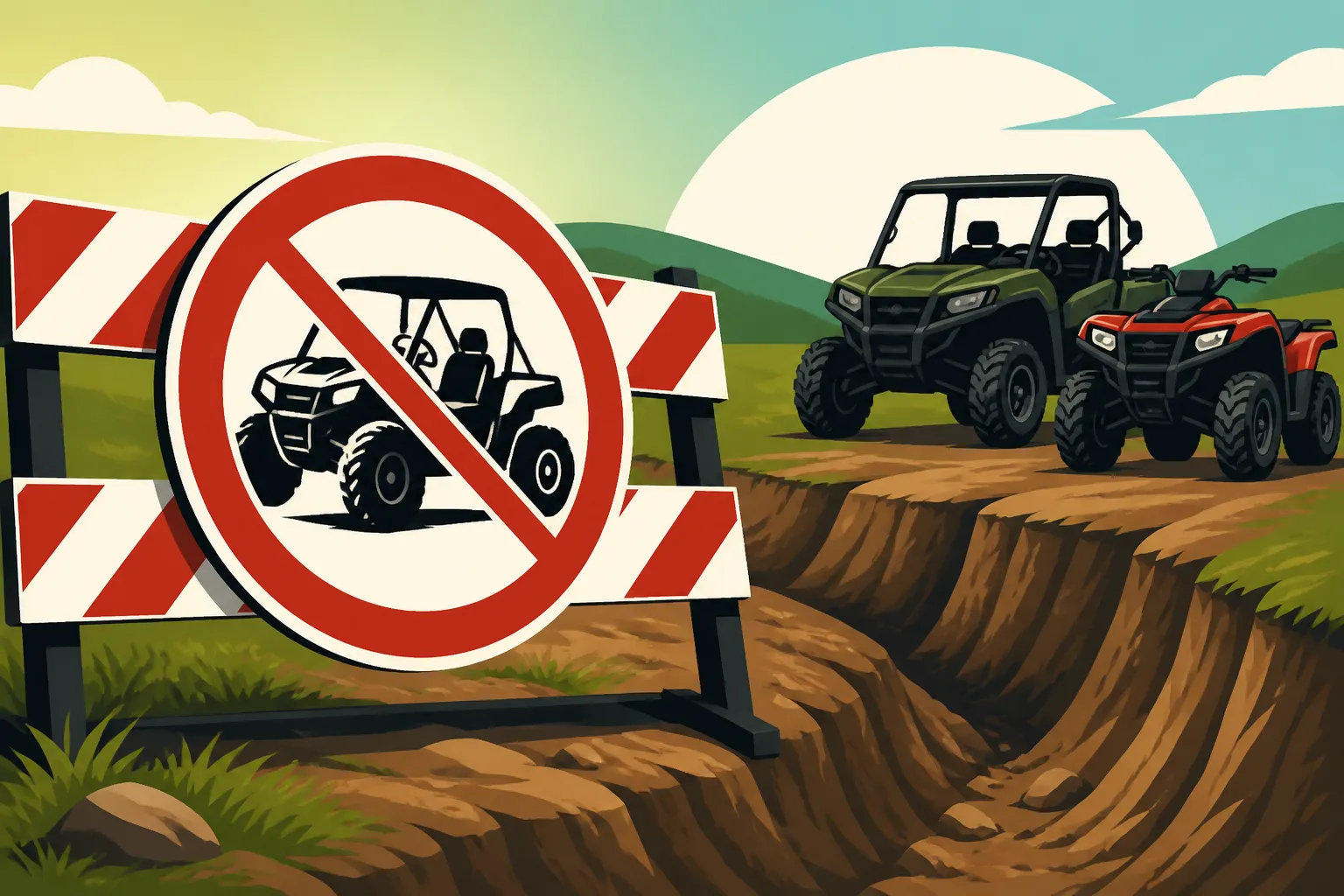
When a county decides to ban ditch riding, they are required to post regulatory signs clearly indicating the restriction. This isn't always foolproof, as signs can be missed or sometimes aren't as prominent as they should be, leading to genuine confusion for riders just passing through. It's always a good idea to research the specific county rules before you trailer your machine and head out. Ignorance of local ordinances is rarely an acceptable excuse if you're stopped by law enforcement. You can learn more about how counties manage these rules in [South Dakota Counties That Ban Ditch Riding].
Permitted Ditch Riding Behavior
Even in counties where ditch riding is permitted, there are rules of engagement. It’s not a free-for-all. For instance, you're generally expected to ride on the outer edge of the ditch, furthest from the paved road, to maintain maximum separation from vehicular traffic. Speed limits often apply, mirroring those of the adjacent roadway or a lower designated speed for off-road use. Safety equipment, like a helmet for younger riders or adequate lighting for evening travel, is still paramount.
One key aspect of permitted ditch riding is how you handle road crossings. You can usually cross a highway at a right angle after coming to a complete stop and yielding to traffic, but you can’t just ride on the highway itself, nor can you ride down the shoulder for any significant distance unless specific exceptions apply. Understanding these nuances is key to staying legal and safe, whether you're taking your machine out for a quick spin or embarking on a longer journey. Keep in mind that a road-legal machine is equipped with the necessary lights and mirrors, and a brand like SuperATV offers a wide range of accessories that can help you meet these equipment requirements for safer and more compliant riding.
Defining "Bike Trail" and Its Impact on Adjacent Ditches
The core of our discussion lies in understanding what constitutes a "bike trail" in South Dakota and why its designation directly affects the legality of riding in adjacent ditches. These aren't just informal paths; they are often officially recognized and managed recreational assets with a specific purpose.
What South Dakota Considers a "Bike Trail"
In South Dakota, a "bike trail" typically refers to a dedicated path designed and maintained primarily for non-motorized use, such as cycling, walking, jogging, and sometimes horseback riding. These trails are distinct from the shoulders or ditches of regular public roads. They are often built with specific surfacing – asphalt, packed gravel, or crushed limestone – and are frequently part of larger trail systems, sometimes spanning many miles and connecting communities or scenic areas.
A prime example is the George S. Mickelson Trail, a renowned multi-use rail-to-trail conversion that winds through the Black Hills. Trails like this are designed for a specific user experience: quiet enjoyment, immersion in nature, and physical recreation without the noise, dust, or speed of motorized vehicles. This foundational purpose is what drives the rules for any adjacent areas. You'll find more information about this specific trail in [Why the Mickelson Trail Bans Machines].
Why the Distinction Matters for Ditches
The crucial point here is that the purpose and user base of a bike trail are fundamentally different from those of a public road. Public roads are for vehicles; bike trails are for people and their non-motorized activities. When a ditch runs alongside a dedicated bike trail, allowing motorized use in that ditch would directly contradict the very essence of the trail. The noise, exhaust, and potential for dust and debris from ATVs and UTVs would significantly detract from the experience of cyclists and hikers seeking tranquility and fresh air.
Furthermore, the physical separation between a bike trail and its adjacent ditch might be minimal or poorly defined in some areas. Permitting motorized use in these ditches creates an elevated risk of accidental encroachment onto the bike trail itself, leading to dangerous encounters between fast-moving machines and vulnerable non-motorized users. This distinction isn't just a bureaucratic formality; it's about preserving the safety and intended use of these valuable recreational corridors.
The Principle of Non-Motorized Use
At its heart, the restriction on bike trail ditches upholds the principle of non-motorized use for these pathways. Imagine riding your bicycle peacefully, enjoying the scenery and the sounds of nature, only to have an ATV or UTV roaring past just a few feet away in the ditch. It would shatter the experience. The entire design and management philosophy behind bike trails is to create spaces free from the impacts of motor vehicles.
This principle extends to the adjacent land, including ditches, to create a buffer zone that protects the integrity of the trail experience. It's about respecting different user groups and ensuring that everyone has appropriate spaces to enjoy their chosen activity safely and without undue disturbance. The state (or managing authority) essentially extends the "non-motorized" boundary slightly beyond the paved or graveled surface of the trail to encompass its immediate surroundings, including the ditches, to maintain this serene environment.
Safety and Conflict Prevention as Core Reasons
When it comes to motor vehicle rules, safety is almost always at the forefront, and the restrictions on ditch riding near bike trails are no exception. These rules aren't designed to inconvenience riders but to prevent dangerous situations and ensure a harmonious environment for all outdoor enthusiasts.
Protecting Non-Motorized Users
The most significant concern is the safety of cyclists, pedestrians, and other non-motorized users. ATVs and UTVs, by their very nature, are faster, heavier, and louder than bicycles or people on foot. Placing these machines in close proximity, even in an adjacent ditch, introduces several serious risks. There's the obvious danger of collision, especially if a rider loses control, swerves, or misjudges the terrain and veers onto the trail. The speed differential between an ATV and a bicycle is immense, drastically reducing reaction time for both parties in an unexpected encounter.
Beyond direct collisions, there are issues like noise pollution, which can startle cyclists or pedestrians, potentially causing them to lose balance or swerve. Dust kicked up by off-road vehicles can obscure visibility for everyone and be irritating to breathe. This isn't an abstract concern; it's a practical safety measure designed to keep the trail a sanctuary for those moving at a human pace, free from the hazards and distractions of motorized traffic.
Maintaining the "Quiet Enjoyment" Experience
Dedicated bike trails are often chosen for their scenic beauty, natural setting, and the opportunity they provide for quiet contemplation and exercise. People seek these trails specifically to escape the roar of engines and the hustle of traffic. Allowing ATVs and UTVs, even in an adjacent ditch, directly undermines this "quiet enjoyment" experience. The engine noise, the smells of exhaust, and the visual presence of motorized vehicles contradict the very reason many people use these trails.
This aspect is about preserving the recreational value and quality of life that these trails offer. It's about respecting the atmosphere and peace that non-motorized users have come to expect. South Dakota recognizes the value of these different outdoor experiences and aims to designate specific areas for specific activities to minimize conflict and maximize enjoyment for everyone. This is part of the broader reason why trails like the Mickelson were developed with a clear non-motorized mandate; you can read more about it in [Why the Mickelson Was Built for Bicycles, Not Quads].
The Risk of Inadvertent Trail Access
Another critical reason for keeping motorized vehicles out of bike trail ditches is the inherent risk of inadvertent access to the trail itself. In many places, the physical boundary between a ditch and a bike trail might not be a robust fence or a deep gully. It could be a shallow swale, a line of trees, or even just a painted line that can be easily overlooked, especially by someone focused on riding.
If a rider is navigating a ditch, a momentary lapse in attention, an unexpected obstacle, or an attempt to bypass a rough patch could easily lead them to veer onto the actual bike trail. This isn't always intentional; sometimes, the terrain simply blurs the lines. From a regulatory perspective, it's far simpler and safer to implement a blanket ban on motorized use in these adjacent ditches to completely eliminate the possibility of such dangerous crossovers, rather than relying on riders to constantly discern potentially ambiguous boundaries under varying conditions.
Specific Examples and Common Misconceptions
Understanding the general rules and safety principles is one thing, but seeing how they apply in real-world scenarios, and dispelling common myths, is crucial for any rider. South Dakota has specific trails that exemplify these rules, and situations that often lead to misunderstandings.
The Mickelson Trail as a Prime Example
Perhaps the most famous example in South Dakota is the George S. Mickelson Trail. Winding for over 100 miles through the beautiful Black Hills, this trail is a jewel for cyclists, hikers, and horseback riders. It was built on a converted rail bed, specifically designed for non-motorized recreational use. The ditches alongside much of the Mickelson Trail are, unequivocally, off-limits to ATVs and UTVs. This isn't just an arbitrary rule; it's fundamental to the trail's identity and the experience it offers.
Even where the trail parallels a public road for a stretch, and that road's other ditch might be open to ATVs (if the county allows it), the ditch immediately adjacent to the Mickelson Trail remains closed. This strict interpretation reinforces the dedication to preserving the non-motorized character of the trail and protecting its users from the impacts of motorized vehicles. Trying to sneak a ride in these ditches, even for a short distance, can lead to fines and, more importantly, put other trail users at risk.
Ditches Alongside Roads with Bike Lanes
Here's a common point of confusion: what about ditches alongside regular roads that simply have a painted bike lane? This is a different scenario than a dedicated bike trail. If you're riding in a ditch alongside a standard public road, and that road happens to have a designated bike lane on its paved surface, the rules for that ditch will generally follow the county's standard ditch riding regulations, not the specific restrictions of a dedicated bike trail.
The key distinction is whether the adjacent pathway is a dedicated, separate recreational trail or simply a lane on a public road. In the case of a bike lane on a road, the entire road (including its shoulders and ditches) is still primarily a transportation corridor, albeit with a specific area designated for cyclists. The rules for ditches in those situations are typically less restrictive than those next to a full-fledged bike trail. Always look for specific signage, as [Reading the Regulatory Sign at a Ditch Entrance] can offer vital clues about what's allowed.
"Just for a Little Bit": Why Even Short Excursions Are Risky
It's tempting, especially if you see a nice, clear ditch next to a bike trail, to think, "What's the harm in just a little bit?" This mindset, however, is precisely what the rules are designed to counteract. Even a short ride in a prohibited ditch can set a dangerous precedent, encourage others to do the same, and, most importantly, still pose a risk to non-motorized users. A quick burst of noise, a cloud of dust, or a momentary appearance of a motorized vehicle can be just as disruptive and startling as a longer ride.
Law enforcement officers typically have little tolerance for the "just for a minute" argument, as the rules are in place for clear safety and environmental reasons. Furthermore, it contributes to the perception that ATV and UTV riders don't respect multi-use areas, which can unfortunately lead to stricter regulations for all riders in the long run. Adhering to the rules, even when they seem inconvenient, is crucial for the continued access and positive reputation of the off-road community.
What Riders Can Do Instead
While certain ditches are off-limits, South Dakota offers a wealth of incredible riding opportunities for ATVs and UTVs. The key is knowing where to go and how to prepare your machine for the adventure.
Finding Legal Riding Opportunities
Instead of focusing on where you cannot ride, shift your attention to the vast and varied landscapes where you can. South Dakota boasts numerous legal riding areas, especially within the Black Hills National Forest. Here, you'll find hundreds of miles of designated motorized trails and forest roads that are perfect for your ATV or UTV. These areas are specifically managed for off-road vehicle use, often with clear signage, trail maps, and proper infrastructure.
Beyond the Black Hills, areas like the Oahe Downstream OHV Area and Revheim Bay OHV Area offer different terrains and experiences. And of course, if you have permission, private land always remains an option. Many ranchers and landowners welcome respectful riders, especially if they understand the rules and help maintain the land. For a comprehensive overview of where to find these exciting destinations, check out [Where to Ride an ATV in South Dakota]. These official spots are not only legal but often provide a much more thrilling and appropriate riding experience than a roadside ditch.
Respecting Posted Signage and Rules
Before you even load up your machine, it's vital to do your homework. Always check official maps, such as the Motor Vehicle Use Maps (MVUMs) for national forests, which clearly indicate which trails and roads are open to motorized use and what class of vehicle is permitted. At trailheads or along roads, pay close attention to all posted signage. These signs are there for your safety and to guide you to legal riding areas while protecting sensitive ecosystems or specific user groups.
If you're unsure about a specific area, a quick call to the local county treasurer's office, a forest service ranger district, or the Game, Fish and Parks (GFP) department can save you a lot of trouble. Being an informed and responsible rider not only prevents fines but also contributes to positive relationships with landowners, authorities, and other outdoor enthusiasts. Understanding things like [Reading the Regulatory Sign at a Ditch Entrance] is a skill every rider needs.
Gear for a Safe and Legal Ride
Outfitting your ATV or UTV properly is crucial for a safe and enjoyable experience, especially when you're venturing into legal off-road areas. While ditches might be relatively flat, designated trails can be rugged and challenging. Consider investing in durable tires suitable for varied terrain, as well as a reliable winch for self-recovery or assisting others—a brand like SuperATV offers excellent winch options that can be a real lifesaver on remote trails. Robust skid plates are another smart addition to protect the underside of your machine from rocks and debris, ensuring your ride can handle the rough stuff without costly damage.
Additionally, always carry essential safety gear: a first-aid kit, tools for minor repairs, a communication device (recognizing that cell service can be spotty in remote areas), and plenty of water. Depending on where you ride, appropriate clothing for changing weather conditions is also key. Having the right equipment not only enhances your personal safety but also ensures your machine is ready to tackle the diverse and beautiful landscapes that South Dakota's legal riding areas have to offer.
South Dakota Ditch Riding Restrictions: A Quick Comparison
To help clarify the differences between various ditch scenarios, here's a quick comparison of typical rules.
| Ditch Location | Typical Motorized ATV/UTV Access | Primary Reason for Rule | Key Considerations |
|---|---|---|---|
| Alongside a Public Road (Rural) | Generally Permitted | Agricultural/Utility Access, Alternative Travel | County-specific opt-outs, safe operation, signage |
| Alongside a Public Road (Urban) | Generally Prohibited | Public Safety, High Traffic Volume, Property Lines | Local ordinances, increased enforcement |
| Alongside a Dedicated Bike Trail | Generally Prohibited | Non-Motorized User Safety, Quiet Enjoyment, Trail Integrity | Mickelson Trail example, risk of inadvertent access |
| Alongside a Snowmobile Trail | Generally Prohibited | Snowmobile-Specific Use, Conflict Prevention | Seasonal use, differing vehicle types, user safety |
| Private Land (with permission) | Permitted | Landowner Discretion | Written permission, respect for property, liability |
Disclaimer
This article is for general informational purposes only and does not constitute professional advice. Laws, prices and regulations vary by location and change over time. Consult a qualified professional for guidance on your specific situation.