Riding the Bottom of a Highway Ditch
So, you're looking at your ATV or UTV, eyeing that grassy strip alongside a South Dakota highway, and wondering: "Can I actually ride there?" It's a question that plagues many riders, especially those in our expansive rural areas where a quick trip down the ditch can save a long, inconvenient detour. The rules around riding the bottom of a highway ditch in South Dakota can feel like a tangled barbed-wire fence – confusing, full of hidden snags, and easy to get wrong if you don't know where the gaps are. This guide is here to untangle that wire, explaining what's allowed, what's not, and how to navigate these often-misunderstood regulations safely and legally.
What "Riding the Bottom of a Highway Ditch" Actually Means in South Dakota
When we talk about riding "the bottom of a highway ditch" in South Dakota, it's not some abstract concept. It refers to a very specific part of the road right-of-way, and understanding exactly what that entails is your first step to staying compliant. It's easy to assume, but the legal definition can be a bit more nuanced than what meets the eye from the driver's seat of your pickup.
Defining the "Ditch Bottom" and Its Boundaries
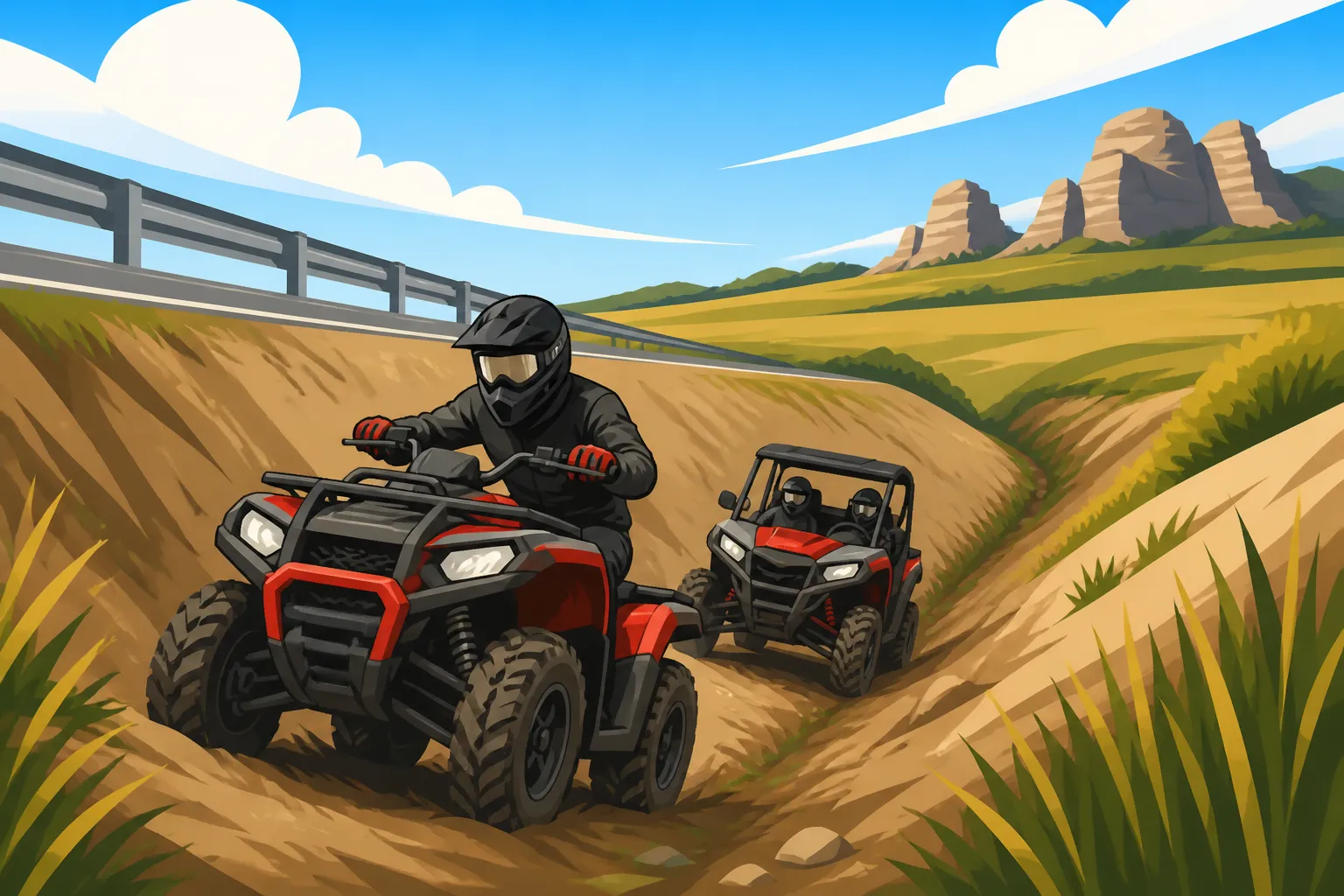
In South Dakota, the "ditch bottom" refers to the lowest point of the sloped area alongside a paved or gravel highway. Picture the roadway itself, then the shoulder, and then the graded slope that descends away from the road, designed to channel water. The very lowest part of that engineered slope, before the terrain starts to rise again (often towards a fence line or private property), is generally considered the ditch bottom. It's not the shoulder, which is typically flat and immediately adjacent to the travel lane, nor is it the "back-slope," which is the rise beyond the ditch's deepest point.
For instance, imagine you're on your side-by-side, heading to a neighbor's place just a mile down the highway. Instead of getting on the pavement, which is usually illegal for unplated machines, you drop down into the ditch. You're aiming to keep your tires in that low, usually grassy, channel. If you find yourself up on the shoulder, or climbing the other side towards a field, you've likely left the legal "ditch bottom" area. This distinction is really important, because straying out of the ditch bottom could put you in violation of the rules, even if you’re still technically off the paved road. Riding safely within these confines often means being mindful of the terrain and keeping your speed appropriate for the uneven ground. Some riders even add aftermarket suspensions, like those from SuperATV, to handle the varied terrain of ditch bottoms more comfortably and safely.
Why Ditch Riding Is Even a Thing in South Dakota
For many of us who live or recreate in South Dakota's vast rural landscapes, ditch riding isn't about thrill-seeking or flouting traffic laws; it's often a matter of practical necessity. Our state has hundreds of miles of highways running through agricultural land, connecting small communities and sprawling ranches. For farmers needing to access fields on the other side of a highway, or ranchers moving between pastures, using the ditch can be the most direct and safest way to travel a short distance without mixing slow-moving machinery with fast-moving highway traffic.
Think about a farmer needing to move a piece of equipment from one part of their land to another, perhaps across a state highway that divides their property. Instead of loading an ATV or UTV onto a trailer, driving it a few miles to an intersection, crossing, and unloading, they might opt for a short, permitted ditch ride. This common-sense approach acknowledges the unique geography and lifestyle of our state. Without such provisions, many daily tasks for rural residents would become far more time-consuming and complicated. It’s about utility, not necessarily recreation, though certainly, many folks enjoy the ride. It's crucial to remember this underlying intent of the law—it's designed to facilitate rural life, not to turn highways into off-road playgrounds.
The Legal Landscape of Ditch Riding for ATVs and UTVs in South Dakota
South Dakota has a relatively progressive stance on off-road vehicle use compared to some other states, especially concerning ditches. However, this flexibility comes with a rulebook you absolutely need to understand. It's not a free-for-all, and ignorance of the law is never an excuse if a state trooper pulls you over.
The General Rule: Ditch Riding Is Permitted… Until It Isn't
The overarching principle in South Dakota is that riding in the bottom of a highway ditch is generally allowed. This is outlined clearly in [South Dakota's Ditch Riding Rule]. This rule provides a vital lifeline for rural residents and recreational riders alike, allowing for limited travel along public rights-of-way without having to use the main traffic lanes. It's a privilege that most of us appreciate and strive to protect by adhering to the regulations.
However, this permission isn't universal or without conditions. The critical caveat is that counties have the power to "opt out" of this general allowance. This means that while ditch riding might be perfectly legal in Lawrence County, it could be strictly forbidden just over the county line in Meade County. This local control is why understanding the specific rules for the area you're riding in is so important. [Ditch Riding Is Legal Until a County Opts Out] is a concept every rider needs to internalize. You can't just assume it's okay everywhere. Furthermore, when you are in a ditch that is open, remember the [South Dakota's Outer Edge Rule] which dictates you must stay within the specific confines of the ditch and not venture onto the back-slope or beyond.
Age Restrictions and Supervision
Riding an ATV or UTV, even in a ditch, is not an activity without an age limit in South Dakota. The state is clear: there's a minimum age for operating these machines in public rights-of-way, including highway ditches. Specifically, [Twelve Years Old in a South Dakota Ditch] is the general benchmark. This means if you have a child who is younger than 12, they should not be operating an ATV or UTV in a highway ditch.
Beyond the age minimum, supervision is often a key component for younger riders. While the law might specify the minimum age, it's always prudent for adults to supervise teenagers and younger riders to ensure they are operating the machine safely and responsibly. The ditch, despite being off the main roadway, still presents hazards such as uneven ground, hidden culverts, and proximity to fast-moving highway traffic. Teaching good habits from a young age, like always wearing a helmet and respecting the boundaries of the ditch, is crucial. For machines ridden by youth, ensure they're adequately sized for the rider, and consider adding safety accessories, perhaps from SuperATV, to enhance protection.
Exemptions and Special Circumstances
Like many regulations, South Dakota's ditch riding rules come with specific exemptions, particularly for vehicles performing essential functions. The most prominent of these are [Agricultural and Utility Vehicles Exempted]. This means that if you're operating an ATV or UTV strictly for agricultural purposes on your ranch or farm, or if you're a utility worker using your machine to access infrastructure, you might fall under a different set of rules or have greater leeway.
For example, a rancher using their UTV to check fences along a highway might have more flexibility than someone riding for purely recreational purposes. These exemptions recognize the working nature of many ATVs and UTVs in South Dakota. However, it's vital to ensure your usage truly qualifies for these exemptions. Simply owning a piece of land doesn't automatically grant you carte blanche. The vehicle's use must genuinely be tied to agricultural or utility work. If you’re just taking your rig out for a spin, even if you own a farm, you'll likely be subject to the standard recreational ditch riding rules.
Navigating Local Ordinances and Exceptions
One of the biggest pitfalls for ATV and UTV riders in South Dakota is assuming that if ditch riding is allowed in one county, it's allowed in all of them. This is a dangerous assumption that can lead to fines and frustration. Local control is a significant factor here, and counties do exercise their right to set their own rules.
When a County Opts Out: The Local Ban
While South Dakota's state law generally permits ditch riding, it explicitly grants counties the authority to prohibit it within their borders. This means that [South Dakota Counties That Ban Ditch Riding] are a reality you must contend with. You cannot just ride across county lines oblivious to the local rules. If a county decides to ban ditch riding, they must follow a process. [How a South Dakota County Opts Out of Ditch Riding] involves official action, typically a resolution or ordinance passed by the county commission.
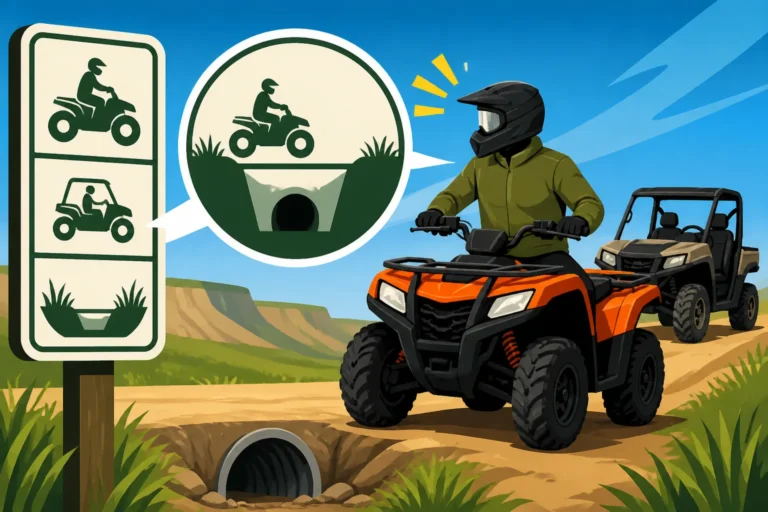
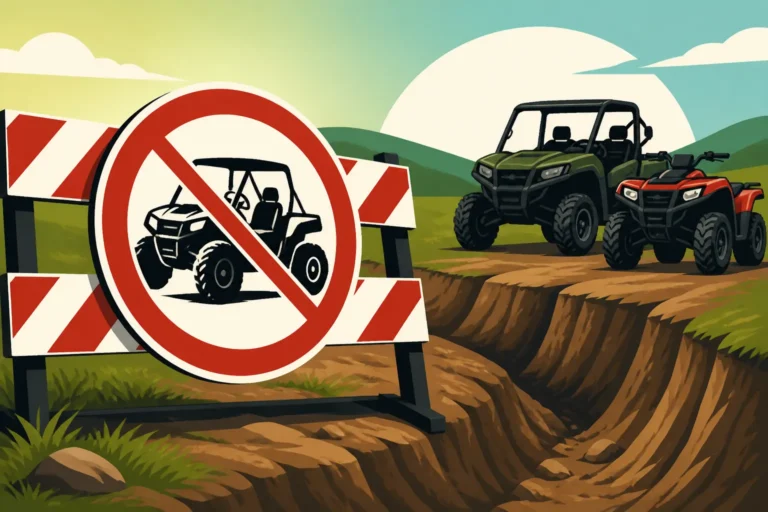
Once a county has opted out, the consequences for riders are clear: [What Happens When a South Dakota County Bans Ditch Riding] usually involves fines and citations if you're caught. The responsibility falls on you, the rider, to know the rules of the road—or, in this case, the ditch—in any given county. This is why paying attention to signage is so crucial. Counties that have banned ditch riding are required to post [Reading the Regulatory Sign at a Ditch Entrance] at access points or along the ditch line, clearly indicating the prohibition. Always look for these signs, especially when entering a new area.
Crossing Highways and Other Exceptions to the Ban
Even in counties where ditch riding is explicitly banned, there's a vital exception that often applies: crossing a highway. Generally, [Why No South Dakota County May Bar a Crossing] of a highway by an ATV or UTV is allowed, even if riding along the ditch is prohibited. This exception acknowledges the need for riders to get from one side of a road to another to access private property, trails, or other legal riding areas. However, this crossing must be done safely and directly, typically at a 90-degree angle to the roadway, and only when traffic permits. [South Dakota Rules for Crossing a Highway] are specific about this, and you shouldn't dawdle or ride parallel to the highway even for a moment during a crossing.
Another scenario where you might temporarily deviate from the strict "ditch bottom" rule is when facing an obstruction. If the ditch is blocked by a large culvert, a deep wash, or other impassable obstacle, [When an Obstruction Lets You Leave the Ditch Bottom] temporarily to navigate around it is generally understood, provided you do so safely and return to the ditch bottom as soon as practical. This isn't an excuse to ride on the shoulder or pavement for extended periods but a common-sense allowance for safety. When navigating such tricky spots, having good ground clearance and durable components, perhaps from SuperATV, can be a real advantage.
Here's a quick reference table to help clarify some of the key points for ditch riding in South Dakota:
| Aspect | General Rule in South Dakota | Important Nuances/Exceptions |
|---|---|---|
| Ditch Riding Status | Generally permitted for ATVs/UTVs. | Individual counties can "opt-out" and ban it. Always check local signs. |
| Definition of Ditch | The lowest point of the graded slope away from the road, not the shoulder or back-slope. | Must adhere to [South Dakota's Outer Edge Rule]. |
| Minimum Age | 12 years old for operation in public rights-of-way. | [Twelve Years Old in a South Dakota Ditch] is the standard; adult supervision is always recommended for young riders. |
| County Opt-Out | Counties must follow a process to ban ditch riding. | Look for [Reading the Regulatory Sign at a Ditch Entrance] when entering a new county or area. |
| Highway Crossings | Permitted even in counties that ban ditch riding along the ditch. | Must be done safely, directly (90-degree angle), and only when clear. [South Dakota Rules for Crossing a Highway] apply. |
| Obstruction Rule | Temporary deviation from ditch bottom allowed to bypass impassable obstacles. | Return to ditch bottom as soon as safe and practical. [When an Obstruction Lets You Leave the Ditch Bottom]. |
| Exempt Vehicles | [Agricultural and Utility Vehicles Exempted] often have different rules or greater flexibility. | Use must be genuinely tied to agricultural or utility work. |
Essential Gear and Safety Considerations for Ditch Riding
Even though you're not on the main highway, riding in the ditch still places you in proximity to fast-moving traffic and presents its own set of unique hazards. Proper equipment and a commitment to safe riding practices are paramount to ensure your ditch rides are both legal and free from incident.
Equipment Requirements for Safe Ditch Use
When you're out there, even just cruising the ditch bottom, visibility is your best friend. Imagine a semi-truck cresting a hill and needing to see you from a distance. Therefore, ensuring your machine is equipped with adequate lighting is non-negotiable. [Headlights and Brake Lights in South Dakota] are crucial, especially when conditions are overcast, at dusk, or when dust from a gravel shoulder is kicked up. Bright, functioning headlights can make all the difference, and taillights are vital for anyone approaching from behind.
Beyond lighting, mirrors are also extremely important. A [A Rear-View Mirror for South Dakota Road Use] (or two!) can help you keep an eye on highway traffic, other riders, or potential hazards behind you without having to constantly turn your head. This might not be strictly mandated for ditch-only use, but it's a huge safety booster. Many riders add aftermarket mirrors and auxiliary lighting, often from companies like SuperATV, to enhance their safety profile, especially since ditch terrain can be unpredictable. You want to be seen, and you want to see what's around you, always.
The Importance of a Plate and Proper Licensing
Here’s where it gets a little tricky. While you're in the ditch, you're not on the paved roadway. However, your proximity to public roads and the potential for crossing them means that legal identification for your machine and yourself is still very important. If you're riding an ATV or UTV that isn't plated for road use, you need to be very careful. [South Dakota Rules for a Machine With No Plate] are clear that operating such a machine on roadways is generally prohibited. While a ditch is distinct from the travel lane, law enforcement can and will stop you if they deem your operation unsafe or illegal.
If your intention is ever to cross a highway, or if you want the flexibility to use certain county roads where permitted, obtaining a [South Dakota Motorcycle Plate for an ATV] (for qualifying machines) can simplify things significantly. Even for ditch riding, carrying your machine's registration and proof of ownership is a good idea. As for the operator, [South Dakota Driver's License Rules for ATVs] generally require a valid driver's license if you're going to operate on public roadways, which includes ditch crossings. Even if you don't have a plate, you should always have your driver's license on you when operating on or near public thoroughfares.
Awareness and Responsible Riding
Ditch riding, while often legal, demands a heightened sense of awareness. You are operating in a dynamic environment, constantly interacting with variables that can change in an instant. The terrain itself can be unpredictable: hidden culverts, sudden drops, deep mud, or loose gravel can all lead to loss of control. Always be on the lookout for these natural hazards. Weather conditions can also rapidly change the ditch from a passable path to a treacherous bog.
Beyond the terrain, you must always be mindful of highway traffic. Even if you're in the ditch, noise from your machine or sudden movements could startle drivers or cause them to react unexpectedly. Similarly, other ditch users—like pedestrians, bicyclists, or even farm equipment—might be present. It's also important to remember where ditch riding is absolutely forbidden: [Why South Dakota Interstate Ditches Stay Closed], for instance. These areas are dangerous and strictly prohibited for ATVs and UTVs. The same often applies to dedicated multi-use paths; [Why Snowmobile Trail Ditches Stay Closed] and [Why Bike Trail Ditches Stay Closed] are common examples where the rules are designed to protect different user groups. Always exercise caution, maintain a safe speed, and yield to other users. Your responsible riding helps preserve the privilege for everyone.
Disclaimer
This article is for general informational purposes only and does not constitute professional advice. Laws, prices and regulations vary by location and change over time. Consult a qualified professional for guidance on your specific situation.