South Dakota Rules for Riding After Dark
There's a unique magic to riding your ATV or UTV after the sun dips below the horizon, especially in a place as vast and beautiful as South Dakota. The world takes on a different character, the air cools, and the stars come out in a way city dwellers rarely experience. But that magic also comes with its own set of challenges and, crucially, specific rules. It's easy to get caught up in the adventure and forget that safety and legal compliance are even more critical when visibility drops. This guide will help you understand South Dakota's rules for riding after dark, ensuring your nighttime excursions are both thrilling and safe.
The Legal Landscape: What South Dakota Says About Night Riding
Riding after dark isn't just about what you can see; it's also about being seen and adhering to the law. South Dakota has distinct expectations for machines operating at night, particularly whether they are street-legal and plated or strictly off-road vehicles. Ignoring these can lead to fines, or worse, put you in a dangerous situation. It's not uncommon for riders, especially those new to the state or new to night riding, to be a little fuzzy on these distinctions, which can cause real headaches if you encounter law enforcement.
Plated Machines and Road Use After Dark
If you've gone through the process of making your ATV or UTV street-legal in South Dakota, it means you've equipped it to meet the state's requirements for motorcycles. This is key, because when you're on a public road after dark, your machine is held to motorcycle standards, not just basic ORV standards. This typically means a rigorous set of requirements that ensure you're visible to other vehicles and can adequately see your path. You might be accustomed to just throwing on a helmet and going, but for night road use, the checklist gets a bit longer.
For instance, [South Dakota Equipment List for Road Use] outlines everything from proper headlights and taillights to brake lights and even a horn. Your headlight must project a certain distance to illuminate the road ahead, and your taillights and brake lights need to be clearly visible from behind, often requiring a specific intensity. This isn't just a suggestion; it's a legal mandate designed to prevent collisions. A single dim bulb could earn you a citation, or worse, contribute to an accident, which is a frustration no one wants after a long day of riding.
Furthermore, a plated machine also requires a rear-view mirror for road use, even at night. This isn't just for seeing what's behind you; it's part of the comprehensive safety system that allows you to safely operate alongside cars and trucks. For the full lowdown, understanding [South Dakota Rules for Riding a Gravel Road] or a section line after dark involves knowing these equipment requirements inside and out. It's all about making sure you blend safely into the traffic, even if you're the only vehicle on a remote stretch of pavement or gravel.
Unplated Machines on Trails and Private Land
Now, if your machine isn't plated, or if you're venturing off public roads onto designated trails or private property, the rules shift. South Dakota doesn't typically require unplated ORVs to meet the same stringent lighting standards as street-legal vehicles when they're solely operating on trails or private land. However, this doesn't mean you can just head out into the darkness without any lights at all. Common sense and personal safety should always be your guide.
While the letter of the law might be less prescriptive, the reality of riding a [South Dakota Trail With Rock] or navigating a winding forest path after sunset demands adequate illumination. Even if you're on your own ranch land in the Badlands, hitting a hidden wash or an unexpected rock in the dark can quickly turn a fun ride into a costly repair or injury. So, while you won't face a traffic ticket for lacking specific lumens on a private trail, you'll certainly face the consequences of not being able to see what's in front of you.
Many riders invest in robust aftermarket lighting for their unplated machines precisely for these nighttime adventures. Think about how deer or other wildlife often become more active at dusk and after dark. Without sufficient light, they can appear out of nowhere. The expectation, even on private land, is that you're operating safely and responsibly, and that always includes being able to see where you're going and what obstacles might lie in your path, whether it's a branch or a badger.
Ditch Riding at Night
Ditch riding is a common activity in many parts of South Dakota, offering access to vast stretches of land adjacent to public roads. However, riding in the ditch after dark brings its own unique set of considerations. While the ditch itself isn't technically the "road," it's certainly adjacent to it, and visibility becomes paramount for both your safety and that of passing motorists. The rules surrounding [South Dakota Ditch Riding Rules Explained] are already quite specific during the day, and they only become more critical at night.
When you're riding in a ditch after dark, especially if your machine is not street-legal, you're in a bit of a gray area. While your vehicle might not be subject to full motorcycle plating requirements within the ditch, you are still operating in close proximity to traffic that is subject to those rules. This means that while your ATV might not need a turn signal to ride in the ditch at night, having sufficient lighting to be visible from the road is a non-negotiable safety measure. A good set of bright headlights and a visible taillight are essential to prevent any close calls with vehicles on the pavement.
Local ordinances can sometimes add another layer of complexity. Some counties might have specific rules about ditch riding after dark, even if the state general statute is silent. It's always a good idea to check with the local sheriff's office or county treasurer's office if you're unsure about a specific area. Ultimately, the spirit of the law, even in the ditches, is about responsible operation. If you can't see, or if you can't be seen, you're creating a hazard that could lead to serious trouble, regardless of the precise legal interpretation.
Essential Equipment for Safe Night Riding
Riding after dark isn't just about following the rules; it's about making smart choices for your own safety and enjoyment. The right gear can transform a challenging, nerve-wracking night ride into an exhilarating experience. Many riders start with the basic factory lights and quickly realize they need more to truly tackle the darkness of South Dakota's trails and backroads. It's a bit like trying to navigate a dark basement with just a flashlight on your phone; it works in a pinch, but a proper floodlight makes all the difference.
Lighting Up Your Machine
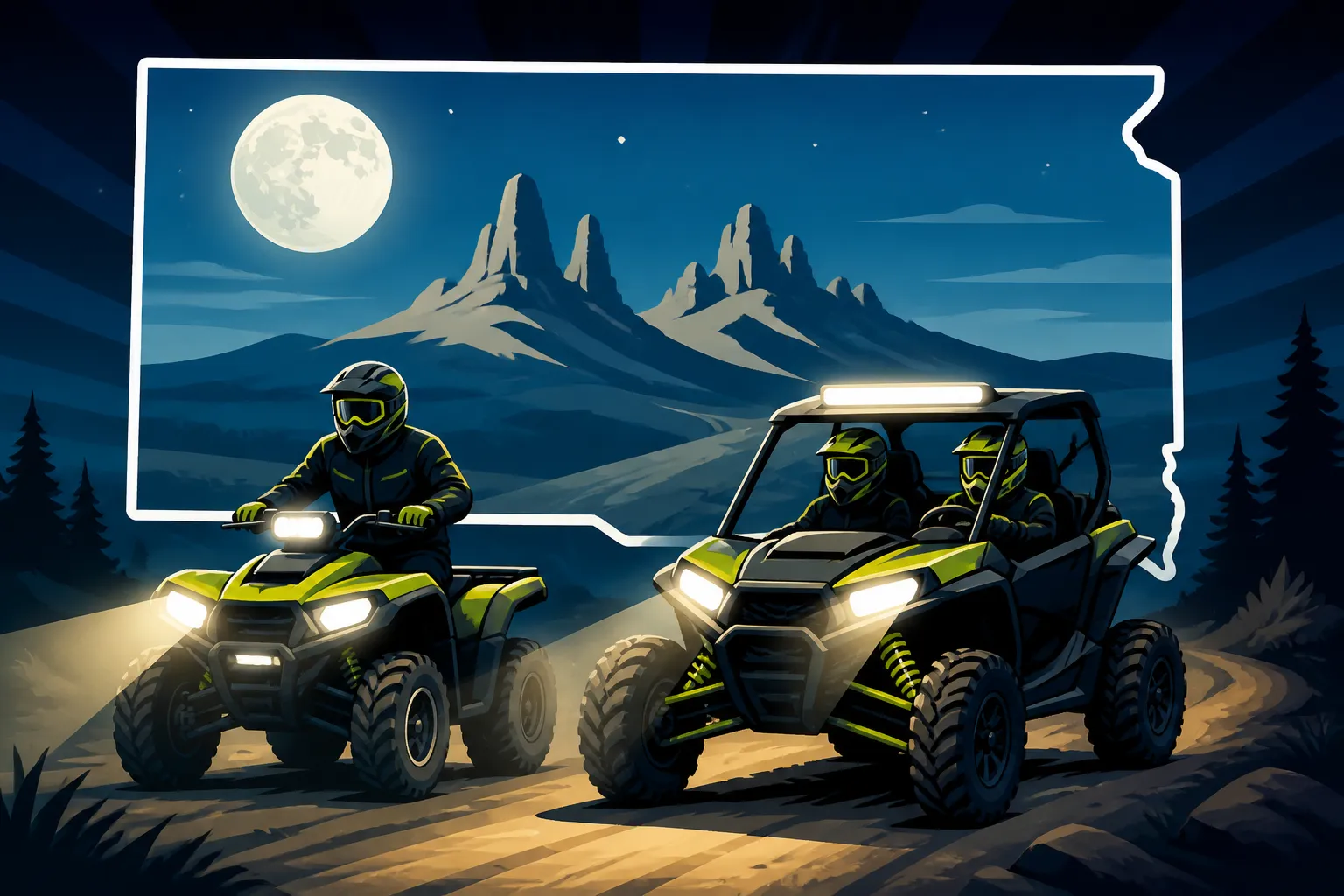
Your machine's lighting is your most critical tool for night riding. Factory headlights are often sufficient for daylight running or short twilight jaunts, but for serious nighttime excursions, you'll want to upgrade. Think of the immense darkness of the Black Hills National Forest, where tree canopies can block even moonlight. You need powerful, reliable illumination to cut through that gloom.
Many riders opt for aftermarket LED light bars. These come in various sizes and configurations, offering incredible brightness and a wide beam pattern. A combination of spot and flood beams can be incredibly effective: the spot beam cuts through the distance, letting you see far down a [South Dakota Forest Road], while the flood beam illuminates the immediate area to the sides, helping you spot hidden ruts or wildlife lurking off to the side. Brands like SuperATV offer a fantastic range of lighting solutions, from compact pods to massive light bars, designed to withstand the rugged conditions of off-road riding. When choosing, consider the power draw and how it integrates with your machine's electrical system, as you don't want to overtax your battery halfway through a remote night ride.
Don't forget about your taillights and brake lights. While forward lighting helps you see, rear lighting ensures others see you. Upgrading to brighter LED taillights can make a huge difference, especially if you're riding in a group. A properly functioning brake light is also crucial; it's a silent communicator that tells the rider behind you that you're slowing down, preventing potential rear-end collisions, particularly on dusty trails where visibility is already compromised.
Personal Visibility Gear
Beyond lighting up your machine, you need to make sure you are visible. This isn't just about seeing where you're going; it's about being detectable by other riders, hunters, or even emergency personnel if something goes awry. It's a basic principle of safety: if you can't be seen, you're at a higher risk. This is particularly true if you ever have to dismount your machine on a trail or roadside after dark.
Wearing reflective clothing or gear is a simple yet incredibly effective strategy. A reflective vest, strips on your helmet, or even reflective tape on your jacket can make you stand out when caught in a beam of light. Think about a remote prairie road with no ambient light whatsoever; anything that reflects light becomes a beacon. For [South Dakota Helmet Rules for ATV Riders], while adults aren't always mandated to wear helmets, a well-equipped helmet with a clear or tinted visor, or even an integrated light, can greatly enhance your personal visibility and comfort.
Goggles are another critical piece of personal gear, especially at night. Dust kicked up by other riders, insects, or even unexpected branches can obscure your vision. Clear goggles or a clear visor are paramount for optimal nighttime visibility, and [South Dakota Eye Protection Rules for Riders] apply day or night. While a dark tinted visor might be great for sunny days, it's a severe hazard at night, so always swap to clear or yellow-tinted lenses that enhance contrast in low light conditions.
Navigation and Communication
Venturing into South Dakota's vast landscapes after dark without reliable navigation and communication tools is a recipe for trouble. The Black Hills, for example, are notorious for patchy cell service, and what might be a clear trail in daylight can become a disorienting maze once shadows deepen and landmarks disappear. Relying solely on your memory or a single phone app is a gamble you shouldn't take.
A dedicated GPS unit loaded with detailed trail maps, such as the [Black Hills National Forest in South Dakota] maps, is invaluable. These devices are often more robust, have longer battery life, and are designed to function in areas where cell signals are non-existent. Familiarize yourself with how to use it before you head out, and always have a backup, whether it's a paper map and compass or a fully charged secondary GPS device. Knowing your general location and having a clear route planned is a huge confidence booster when the stars are your only ceiling.
For communication, cell phones are a given, but always assume they won't work everywhere. Carrying a satellite communicator or a two-way radio can be a lifesaver, especially if you're riding with a group or in truly remote areas. These devices allow you to call for help or coordinate with your party even when off the grid. Plus, always tell someone your planned route and expected return time. This simple step ensures that if you don't check in, someone knows to look for you, which is arguably the most important safety net you can have.
| Equipment Type | Daylight Use | Nighttime Use (Enhanced) |
|---|---|---|
| Machine Lighting | Factory headlights, taillights | High-output LED light bars (spot/flood), brighter LED taillights, auxiliary lights (SuperATV) |
| Personal Visibility | Standard riding gear | Reflective vest/gear, reflective helmet decals, clear or yellow goggles/visor |
| Navigation | Phone GPS, visual landmarks | Dedicated GPS with topographic maps, satellite communicator, paper map & compass |
| Communication | Cell phone | Satellite messenger/phone, two-way radios, backup cell phone, tell a contact your itinerary |
| Safety Gear | Basic first-aid, tool kit | Advanced first-aid kit, emergency blanket, fire starter, repair kit (flats) |
Navigating Specific Terrain After Dark
South Dakota offers a diverse range of riding terrains, from the dense forests of the Black Hills to the wide-open prairie and the unique challenges of river bottoms. Each presents its own set of difficulties when you attempt to navigate them after dark. What's a minor bump in daylight can become a major hazard in the absence of light, requiring a different approach and heightened awareness.
Forest Trails and Backroads
Riding through forest trails and backroads after dark is perhaps the most iconic, and often the most challenging, form of night riding in South Dakota. The tree canopy can create a tunnel of darkness, even on moonlit nights. Shadows become distorted, depth perception is compromised, and familiar landmarks disappear. A [South Dakota Forest Road] that you know like the back of your hand during the day can feel completely alien in the darkness.
One of the biggest concerns is wildlife. Deer, elk, and even smaller critters like raccoons and porcupines become much more active at night. They can dart out onto the trail with little warning. Your powerful headlights are your best defense, allowing you more time to react. Slowing down significantly is crucial; you simply cannot react as quickly to unexpected obstacles in the dark as you can in daylight. Look for eye shine reflecting back from your lights – it's often the first indicator of an animal's presence.
Another challenge is distinguishing the trail from the surrounding forest. Fallen trees, washouts, or even just deep ruts can be hidden until you're right on top of them. This is where a good flood beam on your light bar, perhaps from a SuperATV setup, can really help, illuminating the immediate trail edges. Riding with a partner and maintaining a safe distance allows each rider to spot hazards for the one behind them. The camaraderie of a night ride through the woods is fantastic, but it demands extra vigilance.
Open Prairie and Section Lines
The open prairie of South Dakota presents a very different, but equally challenging, night riding experience. Instead of dense tree cover, you contend with vast distances, a lack of prominent landmarks, and often, blinding dust. Riding a [South Dakota Prairie Two-Track] or an unmarked section line at night can be incredibly disorienting. What seems like a straight shot during the day can feel like an endless, featureless expanse under the stars, especially if you're not used to navigating by constellations.
Dust is a major factor, particularly if you're riding in a group or after a dry spell. The dust clouds kicked up by machines ahead of you can completely obscure your vision, making it feel like you're riding blind. Maintaining a much greater following distance than you would in daylight is paramount. If you find yourself in a thick dust cloud, it's often safer to pull over to the side, turn off your lights (so as not to illuminate the dust cloud for the rider behind you), and wait for it to settle. This patience can prevent a collision or an off-trail excursion.
Another consideration on the prairie is encountering fences, cattle guards, or unexpected washouts. These can be difficult to spot even with good lights because of the flat, uniform terrain. Again, slowing your speed is your best friend. Rely heavily on your GPS for navigation, as visual cues are minimal. A [South Dakota Rules for Riding a Section Line] ride at night requires meticulous planning and awareness of your route, as it's easy to stray off course without clear visual markers.
River Bottoms and Creek Beds
Exploring river bottoms and dry creek beds can be an adventurous way to ride during the day, but it becomes significantly more complex and potentially dangerous after dark. The terrain here is often unpredictable: soft sand, loose gravel, hidden rocks, and sudden drops or rises are common. Water crossings, which are manageable by day, become much more challenging when you can't clearly see the bottom or judge the depth and current.
The primary risk in river bottoms is misjudging the terrain. A patch of soft sand that looks firm in the daylight can become a bog in the shadows, potentially trapping your machine. Hidden rocks or submerged debris in water crossings can cause damage to your tires or suspension, or even throw you off balance. Your lights, especially those with good depth perception and side illumination, are critical here. You need to be able to pick out subtle changes in elevation and surface texture.
Another concern is the possibility of unexpected water levels or currents. Even if a creek bed was dry during the day, a sudden rain shower upriver could cause a flash flood, making an evening ride treacherous. Always check weather forecasts and local conditions before venturing into these areas after dark. If you're unsure about a water crossing, it's always better to scout it on foot with a strong flashlight before attempting to ride through it. This cautious approach will save you from a lot of trouble and potential recovery costs.
Safety Practices and Preparedness for Night Riding
Even with the best equipment and a thorough understanding of the rules, night riding inherently carries more risks than daytime excursions. The key to mitigating these risks and ensuring a safe, enjoyable experience lies in meticulous planning and adopting smart safety practices. You wouldn't climb a mountain without checking the weather, and you shouldn't embark on a night ride without similar foresight.
Pre-Ride Checks and Planning
Before your wheels even touch the trail after dark, a comprehensive pre-ride check and thorough planning are non-negotiable. This isn't just a quick glance at your tires; it's a deep dive into every aspect of your machine and your route. Think of it as preparing for a mini-expedition, because in the South Dakota wilderness, a breakdown at night can quickly become an emergency.
Start with your machine: check all your lights, including high beams, low beams, taillights, and brake lights. Ensure all bulbs are working and lenses are clean. Verify your battery is fully charged, and consider carrying a portable jump starter. Check tire pressure, fluid levels, and bring a small toolkit for basic repairs. A flat tire at night on a remote [South Dakota Prairie Two-Track] is a far more daunting prospect than one during the day.
Route planning is equally crucial. Study your maps, both digital and physical, and know your waypoints. [South Dakota Trail Maps and MVUMs] (Motor Vehicle Use Maps) are essential resources for the Black Hills and other federal lands, clearly showing what trails are open to your type of machine. Share your detailed itinerary with a responsible person who is not riding with you, including your expected return time and what to do if you don't check in. This simple step is an invaluable safety net.
Riding with a Group
Riding in a group offers significant safety advantages, especially after dark. There's comfort in numbers, and the collective resources of a group can often overcome challenges that might overwhelm a solo rider. However, group riding at night also requires specific protocols to ensure everyone stays safe and together. It's not just about following the leader; it's about mutual support and awareness.
Maintain appropriate spacing between machines. In daylight, you might ride closer, but at night, dust, shadows, and the need for a reaction buffer demand more space. This allows each rider to react to obstacles without jamming up the rider behind them. Communication is also vital. Two-way radios or helmet-mounted intercoms allow riders to quickly alert others to hazards, turns, or sudden stops. A simple hand signal can be lost in the darkness, so voice communication becomes paramount.
Always designate a lead rider and a sweep rider. The lead rider sets the pace and navigates, while the sweep rider ensures no one gets left behind. Conduct regular headcounts and ensure everyone is accounted for at turns or regrouping points. A buddy system, where each rider is responsible for keeping an eye on the machine immediately behind them, can prevent someone from inadvertently straying off course in the dark.
Wildlife Encounters and Unexpected Obstacles
South Dakota's natural beauty comes with abundant wildlife, and many animals are most active during dawn, dusk, and throughout the night. Encountering a deer, elk, or even a herd of cattle on a dark trail or road can be a sudden and dangerous event. Being prepared for these encounters is critical to avoiding collisions.
Slow down significantly. This is the single most effective strategy for dealing with wildlife at night. The faster you go, the less time you have to react. Use your high beams on open stretches to scan the road ahead for eye shine. If you spot an animal, slow down further and be prepared to stop. Animals can be unpredictable; they might bolt across your path or stand frozen in your lights. Never assume they will move out of the way.
Beyond wildlife, the night can conceal all sorts of unexpected obstacles: fallen trees, washed-out sections, deep ruts, or even discarded farm equipment on remote section lines. Even a familiar trail can change due to weather or recent activity. Maintain a constant scan of the terrain, looking beyond the immediate area illuminated by your headlights. If you encounter an obstacle that requires a sudden stop or maneuver, alert the riders behind you immediately. By combining powerful lighting with a cautious speed and heightened awareness, you can navigate the unique challenges of South Dakota's night.
Disclaimer
This article is for general informational purposes only and does not constitute professional advice. Laws, prices and regulations vary by location and change over time. Consult a qualified professional for guidance on your specific situation.