South Dakota Rules for a Machine With No Plate
It can be incredibly frustrating to have a powerful ATV or UTV sitting in your garage, ready for adventure, only to wonder where you can legally ride it in South Dakota without a license plate. You’ve likely heard conflicting stories or felt unsure about the rules, and it’s true that navigating the regulations for unplated machines can feel like trying to find your way through a prairie maze. This guide is here to clear up that confusion, helping you understand precisely where your unplated machine is welcome and, more importantly, where it absolutely is not, to keep you on the right side of the law.
The Harsh Reality of Riding Without a Plate on South Dakota Roads
Let's be blunt: if your ATV or UTV doesn't have a license plate in South Dakota, your options for riding on public roads are severely limited. This isn't just a suggestion; it's a fundamental aspect of vehicle classification and public safety. Many riders, especially those new to the state or new to the sport, assume that because an ATV or UTV looks capable of road travel, it is. Unfortunately, the law sees things very differently.
Why "No Plate" Often Means "No Road Use"
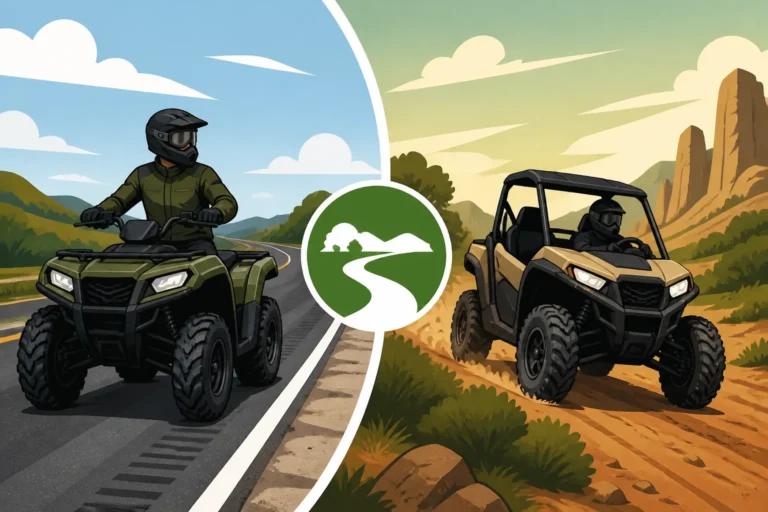
The core issue comes down to classification. Your typical ATV or UTV is designed and manufactured as an "Off-Road Vehicle" (ORV). These machines are built for rugged terrain, trails, and private land, not for the asphalt of state highways or county roads. Without a license plate, your ORV lacks the legal designation and the specific equipment required to share the road safely and lawfully with cars, trucks, and motorcycles. It simply hasn't met the criteria to be recognized as a street-legal vehicle by the state.
Imagine the confusion and potential danger if every off-road machine could simply merge into traffic without proper lighting, turn signals, mirrors, or the clear identification of a license plate. South Dakota, like most states, has regulations in place to prevent this. The moment an unplated ORV rolls onto a public road, it immediately becomes an illegal operation, subject to fines, citations, and even impoundment. This can be a tough pill to swallow, especially if you just need to get from your cabin to a nearby trail, but the rules are strict to maintain order and safety on our roads. The temptation to just "hop on" for a short distance is real, but the risks far outweigh any minor convenience.
Understanding South Dakota's Definition of an "Off-Road Vehicle"
South Dakota's legal framework clearly distinguishes between vehicles designed for highways and those designed for off-road use. An "Off-Road Vehicle" (ORV) is generally defined by its intended use, design, and certain physical characteristics. Typically, these are machines that are designed to travel over unimproved terrain and are not primarily intended for use on public highways. This includes common ATVs (all-terrain vehicles) and UTVs (utility task vehicles, often called side-by-sides).
These machines often feature wide, knobby tires, high ground clearance, and an open design that prioritizes maneuverability and power over comfort and enclosed safety features found in road vehicles. They might not have DOT-approved headlights, taillights, turn signals, or even a horn, all of which are standard requirements for street-legal vehicles. The state's definition is crucial because it dictates the regulations that apply to your machine. If your vehicle falls under the ORV definition, and it likely does if it's an ATV or UTV that isn't specifically designed and equipped for street use, then it is automatically restricted from public road use unless it undergoes specific modifications and is properly [Titling an ATV in South Dakota] and registered. You can dive deeper into [What South Dakota Counts as an Off-Road Vehicle] to truly understand the distinctions.
Where You Can Ride an Unplated Machine in South Dakota
While public roads are largely off-limits for unplated ATVs and UTVs, that doesn't mean your machine is confined to your driveway. There are still plenty of fantastic places in South Dakota where you can enjoy your ride without needing a plate. The key is knowing these approved areas and understanding their specific rules.
Private Property: The Most Common Sanctuary
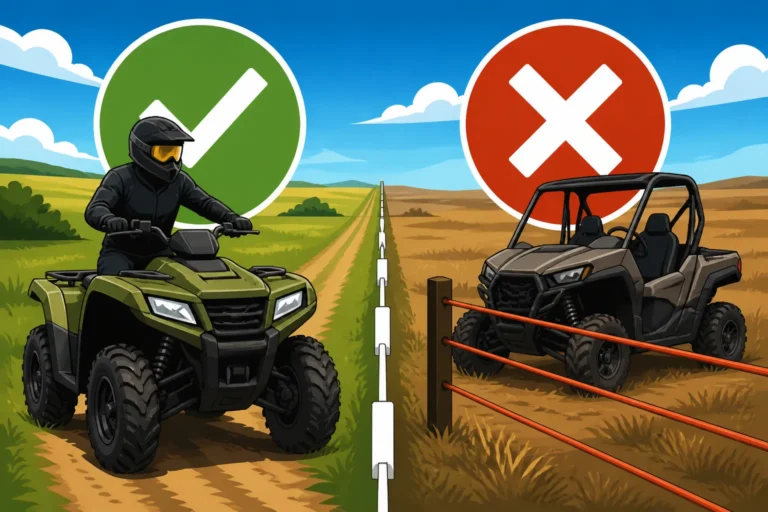
For many South Dakota ATV and UTV owners, private property is the primary playground for unplated machines. This is the simplest and often safest option, as long as you have explicit permission from the landowner. If you own the land, you're generally free to ride your unplated machine to your heart's content, provided you're following any local ordinances and not creating a public nuisance. This applies whether it's your own sprawling ranch, a friend's acreage, or a family farm.
However, if it's not your land, getting that permission is absolutely critical. Riding on someone else's property without their express consent is considered trespassing, which can lead to serious legal trouble, not to mention damaging relationships with neighbors and landowners. Always ask, and if possible, get that permission in writing. Even a verbal "yes" from a landowner is better than nothing, but a quick text or email confirming the details can save a lot of headaches later. Respecting private property rights is paramount for maintaining access and a good reputation for all riders. You can learn more about [South Dakota Rules for Riding Private Land] and [South Dakota Landowner Permission Rules] to ensure you're always riding responsibly.
Designated Off-Road Riding Areas
South Dakota does offer a few dedicated off-road riding areas where unplated ATVs and UTVs are not only permitted but encouraged. These are often managed by state parks, federal agencies, or local entities specifically for motorized recreation. These areas are designed with off-road machines in mind, offering trails, tracks, and open riding spaces away from public roads.
Examples include places like the [Oahe Downstream OHV Area in South Dakota] near Pierre, which boasts acres of bluff and shale for riders to explore. Another option is the [Revheim Bay OHV Area], offering a designated track for riding. These locations are fantastic because they remove the plate requirement (though they may have their own permit or entrance fees) and provide a controlled environment for all skill levels. When visiting these areas, always check their specific rules regarding helmets, age limits, and any required permits or passes. They often have kiosks or websites detailing everything you need to know before you unload your machine. These designated areas are a testament to the fact that you don't always need a plate to have a blast on your ORV in South Dakota.
The Nuance of Forest Service and BLM Land (and the Black Hills Permit)
The vast expanse of federal lands, particularly within the Black Hills National Forest, presents a unique situation for unplated machines. While these are public lands, they operate under their own set of rules, which can sometimes be confusing. On most designated motorized trails within the Black Hills National Forest, you won't need a state-issued license plate for your ATV or UTV. However, you will need a Black Hills Motorized Trail Permit. This permit is specifically for accessing and riding the extensive network of trails within the forest.
This permit is essentially your pass to ride the trails, but it's crucial to understand that it does not make your machine street-legal. It only authorizes your machine to be on the designated trails and forest roads where the permit is required. If you plan to ride from a trailhead into a town for lunch, your unplated, permit-bearing machine is still not allowed on the state or county highways leading there. The permit is trail-specific, not road-specific. Many riders confuse this, thinking the permit grants blanket access. It's a common misconception, so be clear on this distinction. The Black Hills National Forest offers hundreds of miles of trails, and a permit allows you to explore them legally with your unplated machine. Learn more about [South Dakota's Motorized Trail Permit] and [How the Black Hills Motorized Trail Permit Works] to plan your adventure.
The Exceptions: When an Unplated Machine Might Be on a Road (Briefly)
While the general rule is "no plate, no public road," South Dakota does acknowledge a few very specific, limited circumstances where an unplated ATV or UTV might briefly traverse a public roadway. These aren't loopholes for recreational riding; rather, they are narrow exemptions for essential functions or very brief transitions.
Agricultural and Utility Exemptions
One of the most common exceptions applies to machines used for bona fide agricultural purposes or by utility companies for essential services. If your ATV or UTV is actively being used for farming, ranching, or as an implement for a utility service, it may be exempt from standard plating requirements for short distances on public roads. Think of a farmer moving from one field to another that's bisected by a county road, or a utility worker needing to cross a highway to access power lines.
These exemptions are typically tied to the machine's primary purpose and operation. It means the vehicle is functioning as a piece of farm equipment or a utility service vehicle, not as a recreational ride. This is not an excuse to take your unplated weekend warrior out for a spin down the road because you "might" eventually use it to check fences. The use must be legitimate and directly related to the agricultural or utility task at hand. These are important distinctions that acknowledge the practical needs of these industries. For further clarification, you can check information on [Agricultural and Utility Vehicles Exempted].
Crossing Roads and Ditch Riding (with major caveats)
South Dakota has specific regulations regarding ditch riding and road crossings, but it’s crucial to understand how they apply to unplated machines. Generally, an unplated ATV or UTV is not permitted to use highway ditches for recreational travel, nor can it operate on the roadway itself.
However, there are very limited scenarios:
- Road Crossings: An unplated machine may be allowed to cross a public road, but only at a right angle, after coming to a complete stop, yielding to all traffic, and only when moving from one piece of private property to another, or from a trail segment to another trail segment where such crossing is explicitly permitted. This is strictly a transit operation, not a travel one, and it must be the shortest, most direct route possible.
- Ditch Riding: While South Dakota allows ditch riding in many areas, this privilege is typically (and increasingly) restricted to plated machines. Some counties have even opted out of ditch riding entirely. For an unplated machine, the general rule of no public road use extends to the ditches unless there is a very specific, localized exemption you've confirmed with local authorities. Relying on ditch riding for an unplated machine is a risky proposition and generally not advised for recreational purposes.
Always exercise extreme caution and verify local rules before attempting any road crossing or ditch travel with an unplated machine. The safest bet for an unplated machine is to avoid public rights-of-way unless absolutely certain of an explicit, legal exemption.
Loading and Unloading (Brief Transit)
There's a practical understanding that you need to get your unplated machine off your trailer and onto private property or into a designated staging area. This usually involves a very short, direct transit on a public road or shoulder, from your trailer to the private land or staging area, and vice-versa. This is not considered "riding" in the recreational sense, but rather a necessary maneuver for transport.
During this brief period, your machine should be moved directly and safely, with minimal interruption to traffic. It's not an invitation to drive down the block or cruise around the campground. This exemption is for the immediate act of loading or unloading, keeping the machine's time on public thoroughfares to an absolute minimum. Think of it as carefully driving a few feet to get it into its proper off-road domain. Even during these brief movements, safety should be your top priority, always being aware of your surroundings and any other vehicles.
The Path to Legitimate Road Use: Getting a Plate
If you're finding the restrictions on unplated machines too limiting, and you dream of expanding your riding opportunities to include legal road access in South Dakota, then getting a license plate is your best, and really, only option. It opens up a whole new world of connecting trails, accessing services in town, and exploring areas that are otherwise off-limits.
Meeting South Dakota's Street Legal Requirements
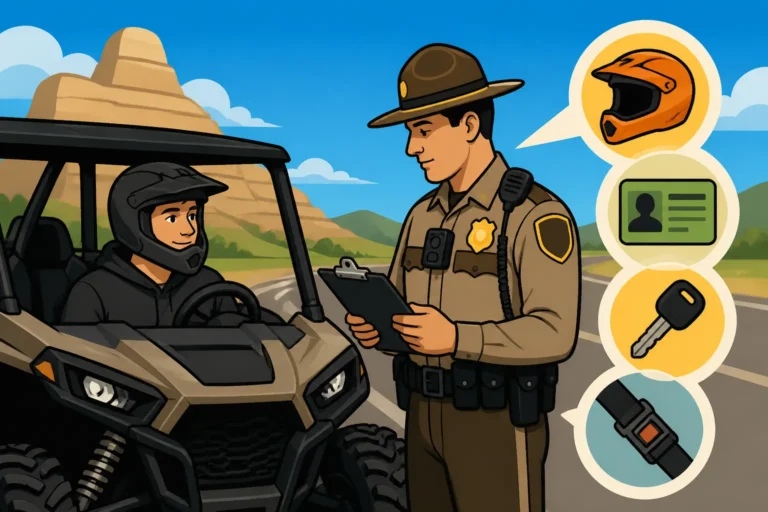
Transforming an ATV or UTV from a pure off-road machine into a street-legal one in South Dakota requires meeting specific equipment standards. It's not as simple as just slapping a plate on; your machine needs to be able to safely and effectively operate alongside other road vehicles. The primary requirements typically include:
- Headlights and Taillights: These must be DOT-approved and functioning correctly for visibility, especially during dawn, dusk, or adverse weather.
- Brake Lights: Essential for signaling stops to drivers behind you.
- Turn Signals: You'll need front and rear turn signals to indicate your intentions when turning or changing lanes.
- Horn: A working horn is necessary to alert others to your presence or to signal danger.
- Mirrors: At least one rearview mirror is usually required, often on the left side, though many riders opt for two. Brands like SuperATV offer a wide range of robust mirrors designed for ATVs and UTVs that can meet these requirements.
- Windshield: While not always explicitly required for all ATVs, some UTVs might need one, or at least eye protection is mandatory for the rider.
- Tires: Your tires must be DOT-approved for street use; knobby off-road tires might not pass inspection.
- Engine Size: For ATVs, there's typically a minimum engine size of 200cc (or equivalent for electric machines) to qualify for a street-legal plate.
These requirements ensure that your converted ORV is visible, can communicate its intentions, and can react safely in a road environment. Many aftermarket manufacturers, including reputable names like SuperATV, specialize in kits and individual components designed to help you meet these street-legal specifications without compromising your machine's off-road capabilities. Before you start buying parts, it's wise to review the full list of [What South Dakota Requires to Plate an ATV] to make sure you're covering all your bases.
The Titling and Registration Process
Once your machine is properly equipped to meet South Dakota's street-legal requirements, the next step is the actual titling and registration process. This is where your machine formally becomes a legal road-worthy vehicle.
- Titling: You'll need to have a clear title for your ATV or UTV. If it's a new machine, the dealer will typically handle this. If it's used, you'll need the properly signed-over title from the previous owner. You'll then apply for a South Dakota title at your county treasurer's office. This involves filling out the necessary paperwork and paying any applicable fees. More details can be found under [Titling an ATV in South Dakota].
- Excise Tax: South Dakota levies a 4 percent excise tax on the purchase price (or fair market value, if no purchase price is available) of your ATV or UTV when you title it. This tax must be paid at the time of titling. It's an important part of the cost, so be prepared for it. For a comprehensive breakdown, refer to [South Dakota's 4 Percent Excise Tax].
- Registration and Plate: After your machine is titled and the excise tax is paid, you'll complete the registration process. This involves paying a registration fee, which varies based on the machine's age and weight, and you'll then be issued a license plate, typically a motorcycle plate, and a registration decal. This plate and decal must be displayed prominently on your machine.
The entire process, from getting your machine compliant with equipment rules (potentially with parts from SuperATV) to receiving your plate, ensures that your ATV or UTV is fully recognized and legally authorized for public road use in South Dakota. It's an investment in freedom and expanded adventure.
Where Can an Unplated ATV/UTV Ride in South Dakota?
To help clarify the various scenarios, here’s a quick overview of where an unplated ATV or UTV can generally ride, and where it definitely cannot. This table provides a useful summary, but always remember to check specific local rules and landowner permissions.
| Location Type | Permitted for Unplated? | Key Conditions & Notes |
|---|---|---|
| Private Property | Yes | Must have explicit landowner permission. |
| Designated OHV Areas | Yes | Specific OHV parks (e.g., Oahe Downstream, Revheim Bay); may require park permits. |
| Black Hills Trails | Yes | Requires a Black Hills Motorized Trail Permit; does NOT make it street-legal. |
| Federal Land (Other) | Generally Yes | Check specific Forest Service or BLM rules; may have permit or use restrictions. |
| Public Roads/Highways | NO | Absolutely prohibited for recreational use without a license plate. |
| Highway Ditches | Generally NO | Most ditch riding requires a plated machine; exceptions are rare and localized. |
| Road Crossings | Limited Yes | Only at right angles, yielding to traffic, for shortest distance between legal areas. |
| Agricultural/Utility Use | Limited Yes | Only when actively performing farm/utility work, not for recreational transport. |
| Loading/Unloading | Limited Yes | Very brief, direct transit from trailer to legal riding/storage area. |
In conclusion, understanding the rules for an unplated machine in South Dakota boils down to this: public roads are largely off-limits. Your adventures with an unplated ATV or UTV will primarily be confined to private property with permission, or designated off-road riding areas and federal trails where specific permits (like the Black Hills Motorized Trail Permit) allow access. If you truly want the freedom to use your machine on the vast network of South Dakota's roads, investing the time and effort to make it street-legal and get it plated is your only viable path. Until then, ride responsibly and within the boundaries of these important regulations.
Disclaimer
This article is for general informational purposes only and does not constitute professional advice. Laws, prices and regulations vary by location and change over time. Consult a qualified professional for guidance on your specific situation.