What a South Dakota Trooper Checks Roadside
It's a moment many of us dread when we're out enjoying the open roads or even just crossing a section line on our ATV or UTV in South Dakota: seeing those flashing lights in the rearview mirror. Suddenly, the fun takes a backseat to a wave of questions. What exactly is that trooper looking for? This comprehensive guide will walk you through the typical checks and requirements a South Dakota Highway Patrol officer will perform during a roadside stop, helping you understand the rules and ride with confidence.
The Initial Encounter: Why You Might Be Stopped
That sinking feeling when you see the patrol car behind you can be jarring, especially when you think you're just enjoying a casual ride. It's important to remember that troopers are out there to ensure everyone's safety and that the rules of the road – and off-road – are being followed. They’re not usually trying to ruin your day, but they are looking for specific things that keep our trails and roads safe for everyone.
Common Reasons for an ATV/UTV Roadside Stop
When a South Dakota Highway Patrol trooper pulls over an ATV or UTV, it's typically not random. There are usually clear indicators that prompt the stop. One of the most common reasons is operating a machine on a road or highway without a visible license plate. South Dakota has specific rules for [What South Dakota Requires to Plate an ATV], and if your machine isn't displaying one when it should be, that's an immediate flag. Another frequent reason is being in an area where ATVs or UTVs are simply not permitted, such as certain highway shoulders or closed trails.
Sometimes, a stop might be initiated due to observed behavior, such as erratic driving, excessive speed, or even what appears to be an overloaded machine. Troopers are also keen observers of equipment. If your headlights aren't on after dark, or if a brake light isn't functioning, it can draw attention. They're looking for any violation of the state's vehicle code or observed safety issues that could pose a risk to you, your passengers, or other motorists. Don't forget that even if you're just ditch riding, there are specific rules about how and where you can do that, and veering too far into the roadway or riding in a prohibited ditch can also prompt a stop.
The Trooper's Authority and Your Rights
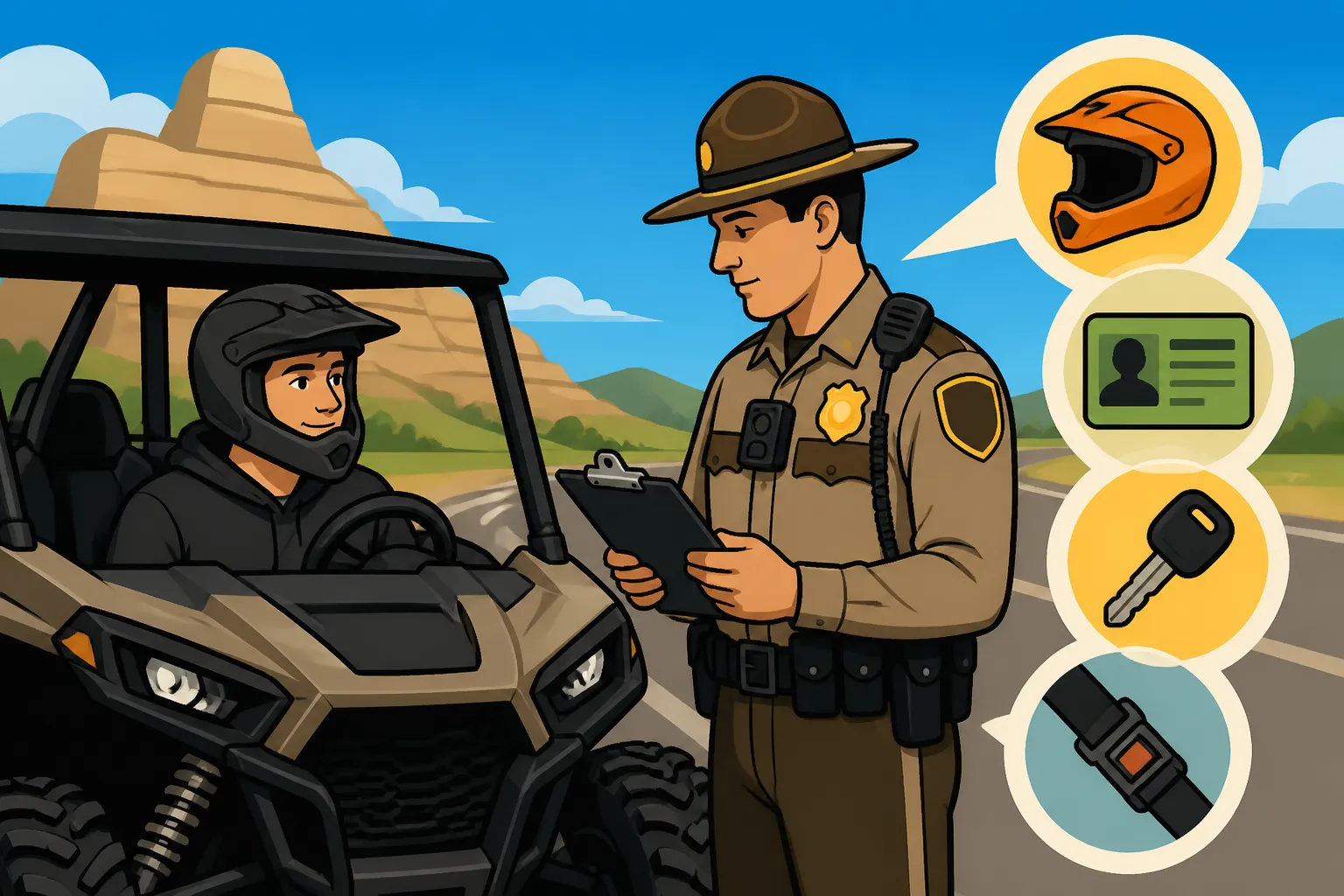
When a trooper signals for you to pull over, the first thing to do is comply safely. Find a safe place to pull to the side of the road or trail, turn off your engine, and keep your hands visible. A trooper has the authority to stop any vehicle, including ATVs and UTVs, if they have a reasonable suspicion that a law has been violated or if they believe the driver is impaired. They can ask for your driver's license, vehicle registration, and proof of insurance, and they can check for proper equipment.
It's natural to feel a bit nervous, but remember you have rights. You have the right to remain silent, and you don't have to answer questions beyond providing identification and vehicle documents. However, being respectful and cooperative can often make the interaction go more smoothly. Troopers are looking for compliance with the law, and if you present yourself as a responsible rider who understands the rules, it can make a positive impression. Knowing the regulations yourself, like the fact that [South Dakota's Ditch Riding Rule] varies by county, demonstrates you're a prepared rider.
Documentation You Must Have Handy
One of the quickest ways to ease a roadside stop is to have all your necessary paperwork in order and easily accessible. Fumbling around for documents can prolong the interaction and make things more stressful than they need to be. Think of your documents as your riding passport – essential for any journey.
Driver's License and Proof of Identity
Just like driving a car, operating an ATV or UTV on public roads or rights-of-way in South Dakota requires a valid driver's license. The trooper will almost certainly ask for this first. This isn't just about proving who you are; it's about confirming you have the legal privilege to operate a motorized vehicle. If you're riding with a permit, like a learner's permit, you'll need to adhere to the specific restrictions that come with it, such as supervision requirements.
For those who are [Riding a Plated ATV Without a Driver's License], be aware that this can lead to significant consequences. South Dakota’s laws are pretty clear on this. Even if you're just riding on certain designated trails within the Black Hills National Forest, having proper identification is always a good idea. Make sure your license isn't expired and that it's the physical card, not just a photo on your phone; [Why the Treasurer Will Only Take the Original Title] for vehicle transactions shows the state's preference for original documentation.
Vehicle Title and Registration
If your ATV or UTV is being operated on public roads or within certain public areas, it needs to be properly titled and, if applicable, registered for road use. The trooper will want to see proof of ownership, which means your vehicle's title or a copy of your registration. South Dakota is unique in how it handles ATVs and UTVs, often referring to them as "off-road vehicles" for titling purposes, even if they can be made street legal. [Titling an ATV in South Dakota] requires a visit to your county treasurer's office.
Even if you're a nonresident, if your machine is plated from your home state, the trooper will check that documentation. However, it's crucial to understand that [Does South Dakota Honor Out-of-State Registration] for road use is complex. Simply having an out-of-state plate might not be enough to satisfy South Dakota's requirements for operating on its roads. It's always best to be thoroughly familiar with South Dakota's specific rules before heading out, especially if you're just visiting the beautiful Black Hills area for a ride.
South Dakota Motorized Trail Permits
For those planning to ride on the extensive network of motorized trails in places like the Black Hills National Forest, a separate motorized trail permit is required. This is different from your vehicle registration for road use. A trooper or Forest Service ranger might ask to see this permit, which is typically a decal affixed to your machine. [How the Black Hills Motorized Trail Permit Works] is important for any rider.
While a license plate allows you to operate on approved roads, it doesn't automatically grant you access to designated trails without this additional permit. [Do You Need a Permit on a Black Hills Trail?] The answer is yes. This permit helps fund the maintenance and management of these trails, ensuring they remain open and safe for everyone. Make sure the decal is clearly visible on your machine, as required, because if it's not present or is improperly affixed, it can lead to a citation.
Essential Equipment for Street Legality
South Dakota has specific equipment requirements for ATVs and UTVs that are operated on public roads. These rules are in place for safety, ensuring that your machine is visible and controllable, and that you can signal your intentions to other drivers. This is where an officer's inspection often becomes more detailed.
Proper Lighting and Reflectors
One of the first things a trooper will check, especially if you're pulled over near dusk or after dark, is your machine's lighting. This includes functional headlights, taillights, and brake lights. [Headlights and Brake Lights in South Dakota] are non-negotiable for road use. If your machine is equipped with turn signals, they must also be in working order. Even during the day, having your headlights on can improve your visibility, which is always a good practice.
Reflectors are also important, particularly if your machine doesn't have active lighting on all sides or if you're operating in low-light conditions. These small, often overlooked, pieces of equipment make a big difference in how well other drivers can see you, especially from the side. A burnt-out bulb or a missing reflector isn't just a minor issue; it's a safety hazard and a direct violation of equipment laws, which a trooper will certainly note.
Mirrors, Horns, and Braking Systems
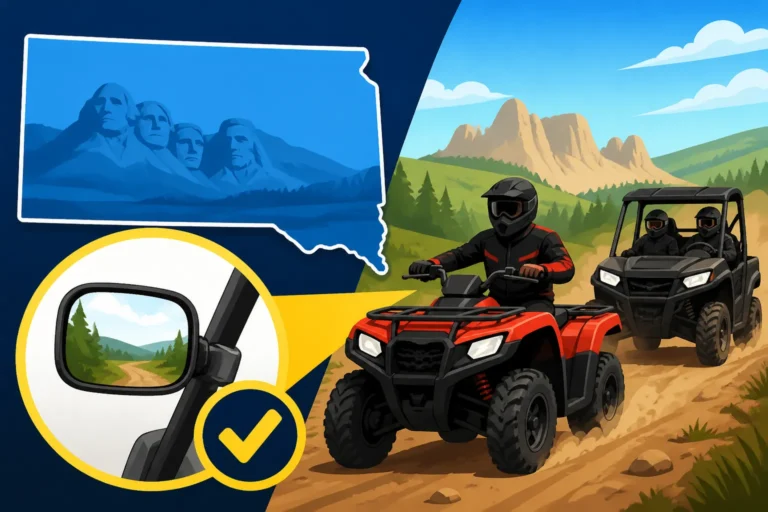
Beyond lighting, South Dakota law mandates other essential safety equipment for ATVs and UTVs operating on roads. A rearview mirror is crucial for situational awareness, allowing you to see traffic approaching from behind without constantly turning your head. [A Rear-View Mirror for South Dakota Road Use] is a requirement, not an option. Similarly, a functional horn is necessary to alert others to your presence or to warn of potential hazards. These seem like small details, but they are critical for safe road operation and are definite items on a trooper's checklist.
Your braking system is another key area of inspection. Both front and rear brakes must be fully operational and capable of bringing your machine to a safe, controlled stop. If a trooper notices a problem with your brakes, it's an immediate safety concern. Machines like those from SuperATV often come with excellent braking systems, but if you've done aftermarket modifications, always double-check that your brakes meet all legal requirements and are performing optimally. Always ensure your machine is in peak mechanical condition before hitting any public road.
Modifying Your Machine for Compliance
Many riders love to customize their ATVs and UTVs, adding accessories and making performance enhancements. While this is part of the fun of owning a machine, it's vital to ensure any modifications don't compromise your road legality or safety. For example, lift kits can affect handling and headlight alignment. If your machine is lifted significantly, you might need to adjust your headlights to ensure they don't blind oncoming traffic, which is a consideration a trooper might observe.
Companies like SuperATV offer a wide range of accessories, from full windshields to turn signal kits, that can help bring your machine into compliance for street use. When installing such components, always refer to South Dakota's specific vehicle equipment laws to confirm you're meeting all the requirements. It’s not just about having the part; it’s about it being installed correctly and functioning as legally required. A street-legal kit is a great start, but proper installation and regular maintenance are key to passing a roadside inspection.
Rider and Passenger Safety Requirements
The safety of the rider and any passengers is paramount, and South Dakota has specific rules to protect everyone on an ATV or UTV, especially when operating on public lands or roads. A trooper will definitely be looking at who is riding and how.
Helmet and Eye Protection Laws
South Dakota has a nuanced helmet law for ATV riders. While adults over a certain age (typically 18) are generally not required to wear a helmet when operating an ATV, it's still a smart safety practice. However, [South Dakota Helmet Rules for ATV Riders] do apply to younger riders. If you have a passenger, their age will also factor into the helmet requirement. When a trooper pulls you over, they will assess the age of all occupants and whether they are complying with the helmet mandate.
Eye protection is another crucial element. Whether it's goggles, a face shield on a helmet, or a full windshield on a UTV, some form of eye protection is required to shield your eyes from debris, dust, and insects. [South Dakota Eye Protection Rules for Riders] are in place for a good reason – to prevent injuries that could impair your vision and lead to an accident. A trooper will confirm that both the operator and any passengers are using appropriate eye protection.
Minimum Age and Supervision Rules
Operating an ATV or UTV on public roads or even certain rights-of-way has age restrictions in South Dakota. While there isn't a single universal minimum age for all riding scenarios, specific rules apply to public road operation and ditch riding. For instance, [Twelve Years Old in a South Dakota Ditch] is the minimum age for riding in the ditch if a county allows it. A trooper will verify the age of the operator and, if applicable, confirm that a minor rider is adequately supervised according to state law.
These age and supervision rules are designed to prevent accidents involving inexperienced young riders. If a minor is operating a machine in violation of these rules, not only could the rider face consequences, but the supervising adult or machine owner could also be held responsible. It's a serious matter, and troopers are vigilant about ensuring these protective measures are upheld. Always be sure to know the specific regulations before allowing anyone under age to operate your machine on public access routes.
Carrying Passengers Safely
Not all ATVs are designed to carry passengers, and South Dakota law dictates how and where passengers can be carried. A single-rider ATV, for instance, is just that – for a single rider. Carrying a passenger on a machine not explicitly designed for two or more occupants can be a safety hazard and a violation. [South Dakota Rules for a Passenger on a Road] specify that your machine must have a designated passenger seat and handholds.
UTVs are generally designed for multiple passengers, but even then, limits apply. You can only carry as many passengers as there are designated seating positions with seatbelts. Overloading a UTV is not only illegal but extremely dangerous, affecting handling and stability. A trooper will quickly check the number of occupants against the machine's design and available safety restraints. If you’ve added aftermarket seats, ensure they are secured correctly and meet any legal requirements; reputable parts from companies like SuperATV will often specify their intended use for safe passenger transport.
Navigating South Dakota's Road Rules
Understanding where you can and cannot ride your ATV or UTV is perhaps one of the most confusing aspects of South Dakota law. A trooper will always be checking your location and ensuring you're not in an unauthorized area.
Understanding Ditch Riding Regulations
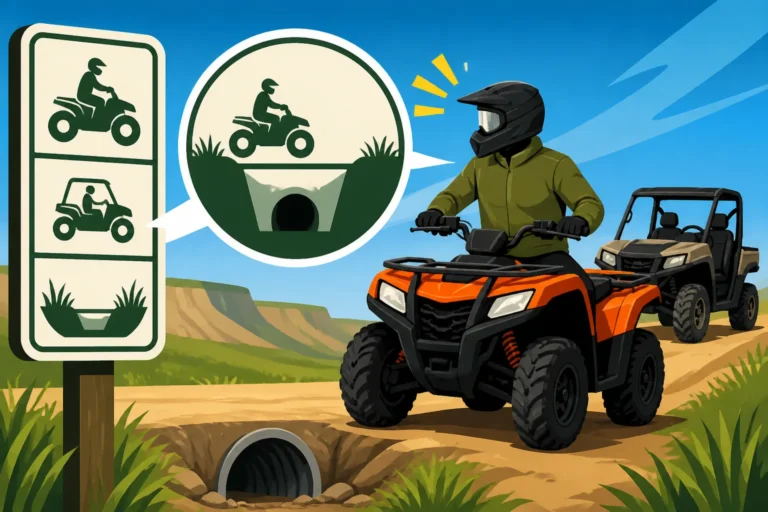
South Dakota has a somewhat unique approach to ditch riding, which allows ATVs and UTVs to operate in the right-of-way ditches alongside many public roads. However, this isn't a free-for-all. [South Dakota Ditch Riding Rules Explained] that counties have the option to "opt out" and ban ditch riding within their borders. A trooper will know which counties have enacted such bans. Riding in a prohibited ditch is a clear violation.
Even in counties where ditch riding is permitted, there are strict rules. You generally must stay within the unpaved ditch bottom or back-slope, and you cannot ride on the paved shoulder or the main travel lanes. [South Dakota's Outer Edge Rule] helps define these boundaries. There are also rules about crossing highways, which are permitted in most places, but the manner of crossing is specific. If you're observed riding carelessly or outside the designated ditch area, expect a stop.
Crossing Highways and Designated Routes
While ditch riding is allowed in many areas, crossing a highway requires precision and adherence to specific rules. You can't just casually merge into traffic. Typically, you must come to a complete stop, yield to all traffic, and cross the highway at a 90-degree angle to minimize your time in the roadway. [South Dakota Rules for Crossing a Highway] are in place to prevent collisions.
Troopers are particularly attentive to these crossings, especially on busier routes or near blind curves. They want to ensure you're making a safe, deliberate crossing without impeding the flow of traffic or creating a dangerous situation. It's also important to know that while ditch riding might be permitted, riding on the highway itself (outside of crossing) with an ATV or UTV that isn't properly plated as a motorcycle is generally not allowed, except in very specific, limited circumstances.
What Happens If You're Found in Violation
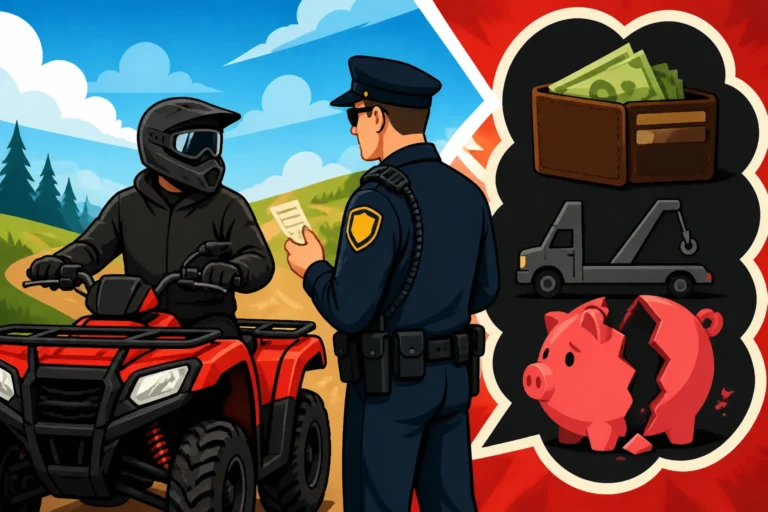
If a trooper finds you in violation of any of these rules – whether it's for lacking proper documentation, having faulty equipment, violating age restrictions, or riding in a prohibited area – there will be consequences. These can range from a warning to a citation and fine, and in more serious cases, your machine could even be impounded. [What a Class 2 Misdemeanor Costs a Rider] can be substantial, and accumulating multiple violations can lead to more severe penalties.
It’s always better to be proactive than reactive. Before you even leave your driveway, do a quick checklist: license in wallet, registration handy, lights working, horn beeping, and mirrors adjusted. If you're venturing onto trails, ensure your [Black Hills Motorized Trail Permit Cost] has been paid and the decal is affixed. Knowing the local rules for the area you're riding in, especially about ditch riding, can save you a lot of hassle and expense.
Avoiding Common Pitfalls
Many roadside stops could be avoided with a little preparation and awareness. One common pitfall is assuming that because your ATV is registered in another state, it automatically complies with South Dakota's road rules. This is often not the case. Another is not realizing that ditch riding isn't universally permitted and can be banned by individual counties. Always check local ordinances.
An officer might also check for specific equipment that is easily overlooked, such as a spark arrester on your exhaust if you're riding on federal lands like the Black Hills National Forest. [South Dakota Spark Arrester Rules] are in place to prevent wildfires, a major concern in dry conditions. Ensuring your machine is always in top working order and legally equipped, perhaps with durable, compliant parts from SuperATV, will make any roadside interaction a breeze.
| Check Category | Specific Item | South Dakota Requirement | Common Violation Risk |
|---|---|---|---|
| Documents | Driver's License | Required for road/ditch use. | Expired license, no license, minor riding without supervision. |
| Vehicle Title/Registration | Title required for ownership; registration/plate for road use (if applicable). | No title, no road plate when required, invalid out-of-state plate for SD roads. | |
| Trail Permit (e.g., Black Hills) | Required for designated motorized trails. | No permit decal affixed, riding without having purchased one. | |
| Equipment | Headlights | Required (on after dark). | Burnt out bulb, not turned on, improperly aimed. |
| Taillights/Brake Lights | Required (on after dark, functional brake light). | Burnt out bulb, not functioning. | |
| Rearview Mirror | Required for road use. | Missing, broken, obstructed. | |
| Horn | Required for road use. | Non-functional, too quiet. | |
| Spark Arrester | Required on federal lands (e.g., Black Hills NF). | Missing, non-compliant. | |
| Rider/Passenger | Helmets | Required for riders under 18; recommended for all. | Minor riding without helmet, passenger without helmet (if applicable by age). |
| Eye Protection | Required for all riders. | No goggles/shield, tinted visor too dark ([South Dakota's 35 Percent Tint Rule]). | |
| Designated Seating | Passengers only on machines designed for multiple riders with proper seats/seatbelts. | Overloaded machine, passenger on single-rider ATV, no seatbelt. | |
| Location/Operation | Ditch Riding Rules | Must be in designated ditches, certain counties may opt out, specific rules for crossing highways. | Riding in a banned county, riding on paved shoulder, improper highway crossing. |
| Prohibited Areas | No riding on interstates, certain highways, or closed trails/roads. | Riding in a clearly marked "no OHV" area, entering a closed trail. | |
| Observed Behavior | No reckless driving, excessive speed, or operating under influence. | Impaired driving, erratic behavior, loud exhaust. |
Conclusion
Getting pulled over by a South Dakota Trooper can certainly put a damper on your ride, but by understanding the rules and being prepared, you can make the experience quick and painless. From having your [South Dakota ATV Title Paperwork] in order to ensuring your machine has all the [South Dakota Equipment List for Road Use] requirements, every step you take to be compliant helps. Troopers are ultimately there to keep everyone safe, and a prepared, responsible rider makes their job – and your ride – much smoother. So, before you hit the road or trail, take a few minutes to check your machine, your documents, and your knowledge of the local laws. Happy and safe riding!
Disclaimer
This article is for general informational purposes only and does not constitute professional advice. Laws, prices and regulations vary by location and change over time. Consult a qualified professional for guidance on your specific situation.