South Dakota DUI Rules for ATV Riders
It’s a common misconception among ATV and UTV enthusiasts that the rules of the road somehow vanish when you hit the dirt or venture into the backcountry. Many folks believe that because an off-road vehicle isn't a car, the same stringent DUI laws don't apply. This simply isn't true, and misunderstanding South Dakota’s DUI rules for ATV riders can lead to serious consequences. This guide will walk you through what you need to know to stay safe and legal.
Understanding South Dakota's Broad DUI Laws
South Dakota takes impaired driving very seriously, and the laws are designed to be quite encompassing. It's not just about cars on paved highways; it's about operating any motor vehicle while under the influence. This broad definition is where many ATV riders can get into trouble, assuming their off-road machine is somehow exempt from these critical safety regulations.
The core idea behind these laws is public safety. An impaired operator, regardless of the vehicle type, poses a risk to themselves, their passengers, and anyone else around them. Whether you're navigating a tight trail in the Black Hills or cruising a gravel section line, your ability to react quickly and make sound judgments is paramount.
What Constitutes "Operating" an ATV Under Influence?
When we talk about "operating" an ATV under the influence in South Dakota, it's not always as straightforward as just riding down a trail. The law often considers "actual physical control" to be enough. This means you don't necessarily have to be actively driving the machine for it to count as operating it while impaired.
Imagine this scenario: you're out camping with friends, enjoying a few beverages around the fire, and decide it's time to head back to your tent. You hop on your ATV, insert the key, and maybe even start the engine, but you don't actually move. Even if you're just sitting there, with the intent to drive or the capability to do so, law enforcement could consider you to be in actual physical control. This exact situation has caught many folks by surprise.
Another common situation might involve someone who has had too much to drink, tries to "sleep it off" in their side-by-side, but has the keys in the ignition and the engine running for heat or air conditioning. While it might seem like a responsible choice not to drive, legally, if you're impaired and in control of the vehicle, you could still be charged with a DUI. The courts have interpreted "operating" quite broadly to cover these kinds of circumstances, prioritizing safety over perceived technicalities.
The Legal Definition of Impairment
South Dakota's legal definition of impairment is pretty clear-cut, aligning with most states. For adults 21 and over, a blood alcohol content (BAC) of 0.08% or higher is considered legally intoxicated. If you're under 21, the rules are even stricter, with a zero-tolerance policy in many cases, meaning even a small amount of alcohol could lead to charges. For commercial drivers, the limit is often lower, though this typically applies more to trucks and buses than ATVs.
It's not just alcohol, either. Impairment by drugs, whether prescription, over-the-counter, or illegal substances, falls under the same DUI umbrella. If a substance affects your ability to safely operate your ATV, you can be charged. This includes medications that might make you drowsy or affect your coordination, even if you have a valid prescription. Always check the warning labels on any medication before you plan to ride.
The challenge with drug impairment is that there isn't always a specific "level" like BAC. Instead, it often comes down to an officer's observation of your driving, your physical coordination, and your performance on field sobriety tests. If it's clear you're impaired by any substance to the degree that your normal faculties are compromised, you're at risk. Even certain legal substances like cannabis, where legal for recreational use elsewhere, are still subject to impairment laws if they affect your ability to drive safely in South Dakota.
Specific DUI Rules for ATV Riders in South Dakota
Many folks believe that because an ATV is an "off-road" vehicle, it somehow exists in a legal gray area when it comes to alcohol and drug impairment. It’s easy to think a remote trail is fair game for a couple of beers or a celebratory drink, but that's a dangerous trap, both legally and for your personal safety. South Dakota's laws are designed to prevent just that kind of thinking, treating ATVs with the same seriousness as any other motor vehicle when it comes to DUIs.
The penalties for an ATV DUI can be just as severe, if not more so, than those for driving a car while impaired. This can be a harsh reality check for riders who might have assumed a minor infraction on a quad wouldn't carry the same weight. Understanding these specific rules is crucial for anyone who enjoys the incredible trails and open spaces South Dakota has to offer, especially in areas like the Black Hills National Forest where motorized use is popular.
Why ATVs Aren't Exempt from DUI Laws
One of the biggest misconceptions we see is that ATV riding is purely recreational and therefore outside the realm of serious motor vehicle laws. People think, "I'm not on a public road, so it doesn't count." However, in South Dakota, an ATV or UTV is legally defined as a "motor vehicle." This classification means that all the laws pertaining to operating a motor vehicle, including those regarding driving under the influence of alcohol or drugs, apply to your machine, regardless of where you're riding.
This isn't just about riding on paved roads, which some ATVs can be licensed for. Even if you're deep in the forest, on a designated trail, or cruising along a section line, those areas are still considered public access points where motor vehicle laws are enforced. Law enforcement officers, whether local sheriffs, state troopers, or even Forest Service rangers, have the authority to pull you over and administer sobriety tests if they suspect impairment. Your powerful SuperATV winch might get you unstuck, but it won't get you out of a DUI.
The logic is simple: an impaired rider on an ATV can cause accidents, serious injuries, or even fatalities, just like an impaired driver in a car. The speed, weight, and sometimes unpredictable nature of an ATV means that impaired judgment can have devastating consequences. The law is designed to protect everyone, and that protection extends to the trails and ditches where you ride.
Penalties and Consequences for ATV DUIs
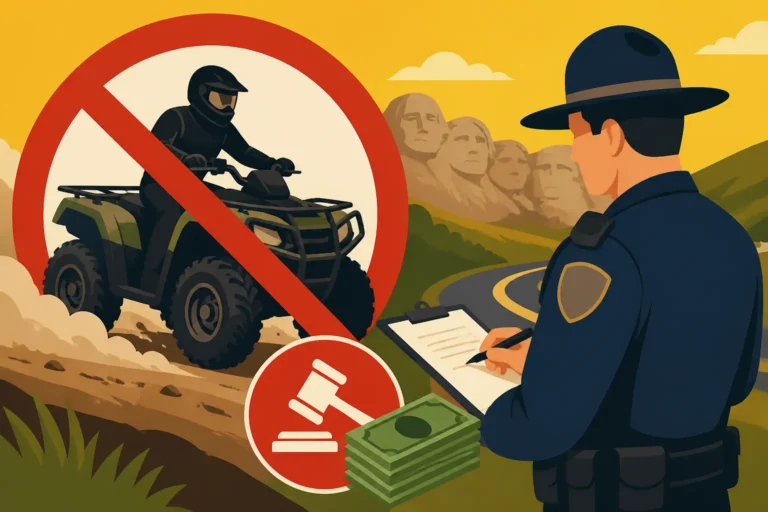
The penalties for an ATV DUI in South Dakota are substantial and mirror those for car DUIs. You're looking at a range of serious consequences that can impact your life for years. These often include significant fines, potential jail time, and mandatory alcohol education programs. Perhaps most impactful for many riders, you will almost certainly face a suspension of your regular driver's license, even if you weren't operating a car at the time of the offense.
Beyond the immediate legal repercussions, an ATV DUI can have long-term effects. Your insurance rates for all your vehicles will likely skyrocket, if your policy isn't canceled altogether. You could face difficulties with employment, especially if your job requires a clean driving record or involves operating vehicles. Repeat offenses bring even harsher penalties, including longer jail sentences and extended license suspensions, demonstrating South Dakota's commitment to cracking down on impaired driving. For more information on fines related to off-road vehicle infractions, you might want to read [South Dakota Fines for Illegal ATV Road Use].
It’s not just about the legal system either; an ATV DUI also carries a heavy social and personal cost. The embarrassment, stress, and potential loss of trust from family and friends can be immense. Nobody wants to be the person who put themselves or others at risk because they made a poor decision to ride while impaired. These are serious charges that extend far beyond just your off-road adventures, affecting your entire driving record and personal reputation.
Navigating Common Scenarios and Misconceptions
When it comes to ATV riding, there are specific scenarios and popular beliefs that often lead people astray regarding DUI laws. It’s not always black and white, and understanding these nuances can be the difference between a fun day on the trails and a very unwelcome encounter with law enforcement. We often hear things like, "It's my land, so I can do what I want," or "Ditch riding isn't really 'driving' a vehicle." Let's clear up some of these common misunderstandings to keep you on the right side of the law.
The key takeaway here is that South Dakota's legal framework for impaired driving is robust and covers a wide array of situations, even those you might not immediately associate with a traditional DUI. It's about public safety and ensuring everyone who operates a motor vehicle, regardless of its type or location, does so responsibly.
The "Private Land" Question
This is perhaps one of the most persistent myths surrounding ATV DUIs. Many riders firmly believe that if they are on their own private property, or private land with permission from the owner, they are immune to DUI laws. While generally, laws governing public roadways might not apply in the same way, the issue of impaired driving on private land is more complex than it appears.
If your private land is accessible to the public, even implicitly—say, a ranch that hosts hunting parties or allows casual visitors—then DUI laws can still come into play. Law enforcement could argue that the public nature of the access makes it subject to public safety laws. Moreover, if an accident occurs on private land involving an impaired rider, especially one that results in injury or property damage to another party, prosecutors will often pursue charges regardless of the land ownership. In such cases, the local sheriff's department or state patrol will likely get involved, making your "private property" argument much harder to maintain. You can find more specific rules about property access in [Riding Private Ground in South Dakota].
The critical difference often lies in whether the private property is truly inaccessible and isolated from public use. A fully fenced-off, locked private residence with no public access is one thing. A large open ranch, a farm field during harvest, or even a private trail system used by multiple individuals, might be viewed differently in the eyes of the law. Always err on the side of caution: if you're going to operate a motor vehicle, even on land you own, do so sober.
Riding on South Dakota's Ditch Roads and Trails
South Dakota is known for its ditch riding—the practice of riding ATVs and other off-road vehicles in the ditches alongside public roads. For many, this feels like an "off-road" activity, separate from typical driving. However, these ditches are considered part of the public right-of-way. This means that all motor vehicle laws, including DUI statutes, apply fully when you are riding in a ditch.
Similarly, riding on designated trails, such as those within the Black Hills National Forest or other state-managed areas, also falls under DUI regulations. Even though these are recreational trails, they are public lands and subject to state and federal laws. Forest Service rangers, state park personnel, and local law enforcement are often present in these areas and are fully authorized to enforce impaired driving laws. Getting caught riding impaired on a popular trail could lead to severe consequences, including vehicle impoundment and significant legal fees. For more details on where you can ride, refer to [Where to Ride an ATV in South Dakota] and [South Dakota Ditch Riding Rules].
The takeaway here is that if it's public land or a public access area, whether paved, gravel, dirt, or grass ditch, assume that DUI laws apply. Law enforcement is trained to identify impaired drivers and riders, and they won't hesitate to intervene if they suspect you're operating your ATV under the influence. It’s simply not worth the risk to yourself or others to assume these areas are exempt from serious legal oversight.
Consequences Beyond the ATV
One of the most sobering realities of an ATV DUI is that the consequences are not confined to your off-road vehicle. A DUI conviction, regardless of what type of motor vehicle you were operating, is typically recorded on your standard driving record. This means that your regular driver's license for a car, truck, or motorcycle is directly at risk. Many people are shocked to learn that an ATV DUI can lead to the suspension or revocation of their driver's license for all vehicle types.
This isn't just an "ATV ticket" or a minor infraction. It's a full-fledged DUI that will appear on background checks, impact your insurance rates, and potentially affect your employment prospects. Imagine being unable to drive your car to work because of a mistake made on a side-by-side in the forest. It's a very real and often devastating consequence. For specific information regarding licenses and ATVs, consult [South Dakota Driver's License Rules for ATVs].
Furthermore, the legal process itself can be lengthy, expensive, and stressful. You'll likely face court appearances, legal fees, and potentially supervised probation. The long-term implications for your personal freedom and financial well-being are significant. It's a stark reminder that responsible riding means being sober every time you put a key in the ignition, no matter the machine.
Avoiding an ATV DUI and Staying Safe
Nobody ever plans to get a DUI, especially not when they're heading out for a fun day of ATV riding. Yet, far too many people find themselves in that difficult situation because of poor planning or a misunderstanding of the rules. The good news is that avoiding an ATV DUI is entirely within your control. It boils down to making responsible choices before you even think about starting your machine.
Riding an ATV or UTV in South Dakota is an incredible experience, offering access to breathtaking landscapes and thrilling adventures. But these machines are powerful, and they demand respect and a clear head. Prioritizing safety, both your own and that of those around you, should always be your number one concern.
Plan Ahead: Designate a Sober Rider
Just like you would for a night out in town, if there's any chance alcohol will be involved in your ATV outing, make a plan beforehand. The simplest and most effective strategy is to designate a sober rider. This person commits to not drinking any alcohol or consuming any impairing substances and is responsible for operating the ATV or UTV.
This isn't just about avoiding a DUI; it's about making sure everyone gets home safely. An accident caused by impaired riding can have far worse consequences than a legal penalty. By having a designated sober rider, you ensure that someone is always thinking clearly and can handle any unexpected situations that might arise on the trail or road. Perhaps you’re out on a long ride in the Black Hills, relying on SuperATV aftermarket parts for their rugged durability, but even the best equipment can't compensate for impaired judgment.
Consider rotating the role of the sober rider among your group, or if it's a family outing, have an adult who commits to staying completely sober. If you're planning a multi-day trip where alcohol might be consumed at camp, ensure that no one operates their machine after drinking, even just to move it a short distance. It’s always better to be overly cautious than to face the devastating consequences of an impaired riding incident.
Understanding the Risks Beyond Legal Penalties
While the legal penalties for an ATV DUI are severe, the risks extend far beyond fines and license suspensions. Operating an ATV under the influence dramatically increases your chances of being involved in a serious accident. Your reaction time is slowed, your judgment is impaired, and your coordination is compromised. This can lead to rollovers, collisions with obstacles, or losing control on challenging terrain.
The physical injuries from an ATV accident can be life-altering, ranging from broken bones and concussions to spinal injuries or worse. These injuries can result in massive medical bills, long-term rehabilitation, and a significant impact on your quality of life. Even if you've invested in top-of-the-line protective gear, like a sturdy helmet and reinforced chassis, nothing can fully protect you from the consequences of an impaired decision behind the handlebars.
Beyond the physical and legal repercussions, there's the emotional toll. An accident caused by impaired riding can damage relationships with friends and family, create lasting guilt, and ruin your enjoyment of a hobby you love. No amount of fun from drinking and riding is worth the potential for tragedy. Always remember, the thrill of the ride should never come at the cost of your safety or the safety of others.
Resources and Further Information
Staying informed is one of the best ways to stay safe. If you have questions about specific regulations, permit requirements, or where you can ride legally, it's always best to consult official sources. The South Dakota Department of Game, Fish and Parks (GFP) website is an excellent resource for information on trail rules, safety guidelines, and permitting. While we can't link directly or provide specific contact info, a quick search for "South Dakota GFP ATV rules" will usually get you to the right place.
Additionally, many local county treasurers or sheriff's offices can provide clarity on local ordinances or specific rules that might apply in their jurisdiction. Some counties might have unique regulations concerning ditch riding or access to certain areas, so it never hurts to check before you go. Remember, ignorance of the law is never an excuse. Staying proactive in your education about ATV rules, including those related to safety courses like [South Dakota ATV Safety Course Requirements], can keep you out of trouble.
Finally, consider joining local ATV clubs or online forums for South Dakota riders. These communities are often a wealth of practical information, local knowledge, and shared experiences that can help you understand the nuances of riding responsibly in the state. Just be sure to always verify critical legal information with official sources to ensure it's accurate and up-to-date.
| DUI Offense (ATV/UTV) | Typical Penalties (General) | Impact on Driver's License | Other Potential Consequences |
|---|---|---|---|
| First Offense | Fines, Jail Time (minimal or none for first), Alcohol Education | Suspension (e.g., 30-365 days) | Increased Insurance, Vehicle Impoundment, SR-22 Filing |
| Second Offense | Higher Fines, Mandatory Jail Time, Extended Education | Longer Suspension (e.g., 1 year+) | Ignition Interlock Device, Community Service, Higher Insurance |
| Third Offense | Significant Fines, Longer Mandatory Jail, Intensive Education | Revocation (e.g., multiple years) | Felony Charge, Permanent Record, Loss of Privileges |
Disclaimer
This article is for general informational purposes only and does not constitute professional advice. Laws, prices and regulations vary by location and change over time. Consult a qualified professional for guidance on your specific situation.