South Dakota Fines for Illegal ATV Road Use
It's a common dilemma for ATV and UTV enthusiasts in South Dakota: you want to explore the incredible landscapes, maybe even just get down the road to the gas station or a friend's house, but there's a nagging worry about whether you're breaking the law. The rules for riding off-road vehicles on public roads here can feel like a tangled mess, and the last thing anyone wants is to encounter law enforcement and face a hefty fine or worse. This guide is here to untangle that knot, explaining the penalties you could face for illegal ATV road use in South Dakota and how to navigate the legal landscape safely.
Understanding South Dakota's Road Rules for Off-Road Vehicles
The world of ATVs and UTVs is fantastic for hitting the trails, exploring vast open spaces, and getting some serious work done on the ranch. However, when those wheels touch pavement, especially public roads, the rules change dramatically. Many riders, especially those new to South Dakota or coming from states with different regulations, often find themselves caught off guard by just how restrictive things can be. It’s not about stifling fun, but ensuring safety for everyone on the road.
Why Most ATVs Aren't Road Legal by Default
At their core, off-road vehicles (ORVs) like ATVs and UTVs are designed for rough terrain, mud, rocks, and dirt – not the smooth, high-speed environment of public roads. This fundamental design difference means they often lack the safety features and specifications required for on-road vehicles. Think about it: a nimble ATV built for tight trails might not handle as predictably at highway speeds, and its smaller lights might not be as visible as a car's.
South Dakota's laws reflect this distinction. To be legally ridden on most public roads, an ATV or UTV generally needs to be plated as a motorcycle. This isn't a simple rubber stamp; it comes with specific requirements, such as meeting a minimum engine size of [South Dakota's 200cc Motorcycle Licensing Rule] and being equipped with essential road-safety components. Most stock ATVs, fresh off the dealer floor, simply don't come set up this way, which can be a real headache if you just want to take a quick spin into town.
The intent behind these regulations is clear: to protect both the ATV rider and other motorists. Operating an ORV on a public road, where cars, trucks, and motorcycles travel at much higher speeds, presents unique hazards. The state wants to ensure that any vehicle sharing that space can maintain proper speeds, is highly visible, and can signal its intentions clearly. It’s not just about avoiding a ticket; it's about minimizing the risk of serious accidents for everyone on the road.
This can be a frustrating reality for many riders. You might have friends in neighboring states where a simple permit or a wink and a nod gets you on many rural roads. Coming to South Dakota, or even just moving here, means adjusting to a stricter interpretation of what's allowed. It’s easy to feel like the rules are overly complicated, especially when all you want to do is move your machine from point A to point B without trailering it.
Ditch Riding and Designated Exemptions
One of the most frequently misunderstood aspects of South Dakota law for ATVs and UTVs is "ditch riding." Many folks believe that riding in the ditch beside a road is always permissible, a kind of unspoken agreement. While there are provisions for ditch riding, it's far from a free-for-all, and misunderstanding the nuances can quickly lead to a hefty fine.
The law generally allows for ditch riding, but only under very specific conditions. You must remain on the "outer edge" of the right-of-way, meaning the portion furthest from the traveled portion of the road, and only if the county you're in hasn't explicitly chosen to ban it. Yes, counties have the power to "opt out" of ditch riding, and many have done so, especially in more populated areas or where safety concerns are paramount. Imagine being pulled over in a county where you thought it was legal, only to find out you're facing a fine because they opted out! [South Dakota Counties That Ban Ditch Riding] is a good resource to check before heading out.
Furthermore, there are strict rules about how you interact with highways and other roads. You can't just cross a four-lane highway wherever you please; there are specific guidelines for intersections and crossings. [South Dakota Rules for Crossing a Highway] dictate how these maneuvers must be performed safely and legally. The intent of ditch riding is often tied to allowing limited access for agricultural purposes or connecting to legitimate trail systems, not to serve as a recreational extension of the road system.
It's crucial to understand that ditch riding, even where permitted, is not a license to ride carelessly or without regard for other vehicles. Riding on the paved shoulder, for instance, is almost universally illegal, as is weaving in and out of the ditch onto the roadway. If you're on the back slope of the ditch, or any part that isn't the outer edge of the right-of-way, you could also be in violation. These are the kinds of subtle distinctions that can catch riders off guard and lead to tickets, even when they think they're playing by the rules.
The Equipment List for Legal Road Use
Let's say you've gone through the trouble of getting your ATV or UTV plated as a motorcycle, which is quite an undertaking for many stock machines. You might think you're home free and ready to hit the pavement. Not so fast! Having a plate is only one piece of the puzzle. Your machine also needs to be outfitted with specific equipment to be truly road legal in South Dakota. This isn't just about what looks good; it's about what makes your machine safe and visible to other drivers.
Key items on this mandatory equipment list include a working headlight, taillight, and brake light. Just like any motorcycle, your ATV needs to clearly signal its presence and intentions. Beyond lighting, you'll need at least one rear-view mirror [South Dakota Mirror Requirement] to see traffic behind you, and a functional horn [South Dakota Horn Requirement] for signaling warnings. Some machines may also require turn signals and a windscreen, depending on the specific interpretation and type of plating. Many riders turn to reputable aftermarket brands like SuperATV to find compliant lights, mirrors, and horn kits that integrate well with their machine.
Missing even one of these crucial components can render your otherwise legally plated ATV illegal for road use, leading to potential fines and hassle. Imagine having your machine plated, thinking you're doing everything right, and then getting pulled over because your brake light is out, or you forgot to install that second mirror. These are not suggestions; they are requirements designed to ensure that your ATV functions like any other road-legal vehicle, capable of safely sharing the asphalt with cars and trucks.
It's easy to overlook these details, especially if you're excited to finally get your machine on the road. But these aren't just bureaucratic hoops; they're essential safety features. A mirror helps you be aware of your surroundings, a horn can prevent an accident, and proper lighting makes you visible in low light. Taking the time to properly equip your machine is an investment in your safety and a way to avoid costly surprises from law enforcement. You'll find a more comprehensive breakdown in [South Dakota Equipment List for Road Use].
Common Violations and the Shape of the Penalties
So, what exactly happens if you're caught riding illegally on South Dakota roads? The fines and penalties aren't just minor annoyances; they can range from significant monetary hits to more serious legal ramifications. It's not a situation you want to find yourself in, and understanding the common pitfalls can help you avoid them.
Operating an Unplated or Unregistered ATV on a Road
This is arguably the most common and clear-cut violation when it comes to ATVs and UTVs on public roads. If your off-road vehicle does not have a valid motorcycle license plate issued by South Dakota, and it's not operating under a specific, rare agricultural exemption directly associated with farm work (and often only on secondary roads or to cross a highway), it simply should not be on the asphalt or even many gravel county roads. This applies to main highways, paved county roads, and often even the shoulders of these roads.
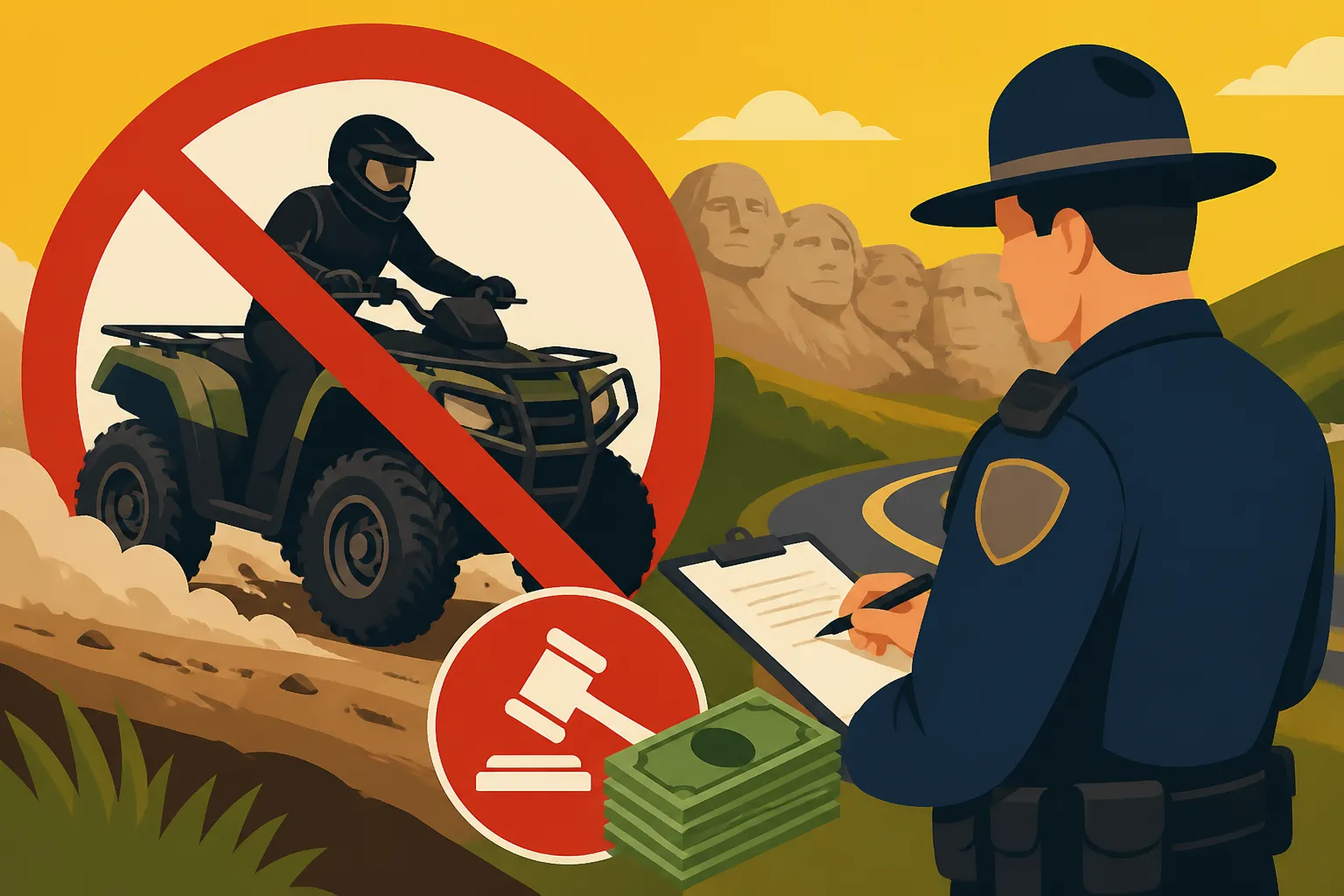
The general nature of the penalty for this type of offense is significant. Operating an unplated vehicle on a public roadway typically falls under the category of a Class 2 Misdemeanor in South Dakota. While I can't give specific dollar figures, Class 2 Misdemeanors generally involve substantial monetary penalties, court costs, and potentially other fees. It's not just a parking ticket; it's a criminal offense that will stay on your record. For a rider, [What a Class 2 Misdemeanor Costs a Rider] can be a rude awakening, far more than just a slap on the wrist.
It's vital to understand that a misdemeanor carries more weight than a simple traffic infraction. It can have implications beyond the immediate financial burden, potentially affecting your driving record, future insurance rates, and even background checks for employment. Imagine you're riding your brand new UTV near Rapid City, taking a shortcut down a county road to get to a new trail system, confident no one will bother you. A South Dakota Trooper, perhaps checking for compliance, observes you. Suddenly, your fun ride turns into a serious legal problem with lasting consequences.
The law is designed to ensure that only vehicles meeting specific safety and registration standards are on the public roadways, contributing to overall road safety. Ignoring the plating requirements is seen as a direct challenge to that system, and the penalties reflect the seriousness with which the state views such non-compliance.
Violating Ditch Riding Rules
Even where ditch riding is technically allowed, there are numerous ways riders can inadvertently (or intentionally) violate the specific regulations, leading to fines. It's not enough to be in the ditch; you have to be in the right part of the ditch, under the right conditions.
Common violations include riding in a county that has passed an ordinance prohibiting ditch riding, assuming it's legal everywhere. Another frequent misstep is riding on the paved shoulder or even too close to the traveled portion of the road, rather than the "outer edge" of the right-of-way. Riders might also be cited for improperly crossing a highway, not yielding to traffic, or failing to stop at stop signs or traffic signals when exiting a ditch to cross. Operating an ATV in a ditch at night without the appropriate lighting also falls under these violations [South Dakota Rules for Riding After Dark], as many recreational machines aren't equipped for night-time road conditions.
These violations, like operating an unplated machine, often result in misdemeanor charges, carrying similar substantial monetary fines and court costs. Law enforcement officers, especially in areas with high ATV traffic, are often keenly aware of these specific rules and will enforce them to ensure public safety and respect for local ordinances. For instance, a group of riders exploring near the Black Hills might decide to cut across a paved highway between two sections of ditch, or ride a few hundred yards on the paved shoulder to bypass a tricky spot, only to find a patrol vehicle waiting at the next intersection.
The intent here is to manage the interaction between off-road vehicles and public infrastructure. While South Dakota offers more flexibility than some states regarding ditch use, that flexibility comes with strict boundaries. Crossing those boundaries, whether through ignorance or deliberate action, can result in penalties that quickly outweigh the perceived convenience of breaking the rules.
Equipment and Driver's License Violations
Beyond simply having a plate, or attempting to ditch ride, fines can also be issued for shortcomings in equipment or driver qualifications. These details are often what distinguish a truly road-legal machine from one that merely looks the part, and a responsible driver from one who is cutting corners.
Specific equipment violations can include things like a non-functional headlight, taillight, or brake light, especially if riding at dusk or after dark. Missing or improperly installed mirrors, or a non-working horn, are also common points of citation. Even if you've gone to the trouble of adding compliant components from companies like SuperATV, if they're not maintained or functioning properly, you're still at risk. These are often considered less severe than operating an unplated vehicle but can still result in monetary fines.
| Violation Type | Typical Penalty (Shape) | Key Risk Factors |
|---|---|---|
| Operating Unplated/Unregistered | Class 2 Misdemeanor, significant monetary fine, court costs | Lack of state-issued plate |
| Violating Ditch Riding Rules | Class 2 Misdemeanor, significant monetary fine, court costs | Riding in restricted counties, on paved shoulder, improper crossing, night riding without lights |
| Missing/Non-functional Equipment | Monetary fine (often lower than misdemeanor for single item) | Broken headlights, taillights, brake lights, no mirrors, no horn |
| Driving Without Valid License | Class 2 Misdemeanor, significant monetary fine, court costs | No valid driver's license, underage operation |
| Underage Operation (Ditch Riding) | Monetary fine, parental responsibility, potential loss of privileges | Rider under [South Dakota Minimum Age for Ditch Riding] |
The driver's license aspect is equally critical. Even if your ATV is legally plated and fully equipped, you must possess a valid driver's license to operate it on any public road, just as you would for a car or motorcycle. [South Dakota Driver's License Rules for ATVs] are clear on this. For younger riders, there are age restrictions even for ditch riding, and operating a machine on public roads without meeting these age and licensing requirements can lead to serious fines for both the rider and potentially the supervising adult.
What makes these violations particularly frustrating is that they often stack up. You might have a plated machine, but if you're pulled over for a broken taillight and the officer discovers your driver's license is expired, you could face multiple citations. It's a reminder that every aspect of road legality, from the machine itself to the operator, must be in order to avoid fines and ensure a smooth, legal ride.
Beyond the Immediate Fine: Broader Consequences
While the immediate monetary fine for illegal ATV road use is certainly a deterrent, the potential consequences can extend far beyond a simple ticket. Ignoring South Dakota's regulations can lead to a cascade of problems, impacting your wallet, your legal standing, and even the future of ATV access for everyone.
Vehicle Impoundment and Recovery Costs
One of the most immediate and distressing consequences of illegal road use, especially for repeat offenders or in cases of dangerous operation, is the impoundment of your ATV or UTV. When law enforcement has your machine towed away, it's not just an inconvenience; it's a significant financial and logistical headache that quickly compounds.
The costs associated with vehicle impoundment can escalate rapidly. First, there are the towing fees, which can be substantial, especially if your machine is picked up from a rural or remote area. On top of that, you'll face daily storage fees at the impound lot. These fees can quickly accumulate, sometimes reaching hundreds or even thousands of dollars, easily eclipsing the original fine itself. You can't just walk in and pick it up; you'll typically need to pay all outstanding fines, towing fees, and storage costs before your machine is released.
Retrieving an impounded vehicle is also a logistical nightmare. It often involves dealing with multiple agencies, proving ownership, and navigating bureaucratic hurdles. This can eat up valuable time, especially if you're on a vacation or far from home. Imagine your UTV, which you rely on for ranch work, being towed away, leaving you stranded and scrambling to get it back while facing an ever-growing bill. The frustration and stress can be immense, proving that an illegal shortcut was anything but convenient.
The emotional toll of having your prized machine seized is also not to be underestimated. The anger, helplessness, and worry about its condition while impounded can ruin your day, your weekend, or even your entire trip. It's a stark reminder that the financial burden of fines is just the beginning when your vehicle is taken out of your hands.
Increased Insurance Premiums and Legal Record
A conviction for illegal ATV road use, particularly if it's classified as a misdemeanor, can cast a long shadow over your financial and legal future. Just like a serious moving violation in your car, these incidents don't just disappear once the fine is paid; they become part of your record.
Such convictions can significantly impact your insurance rates. Insurers view these incidents as indicators of higher risk. You might see your premiums increase on any vehicle insurance you carry, including any specific ATV/UTV policy. In some cases, repeated or severe violations could even lead to your insurance company refusing to renew your policy or dropping you altogether, making it much harder and more expensive to obtain coverage in the future. This isn't just a concern for your immediate ride; it impacts your overall financial planning.
Furthermore, a Class 2 Misdemeanor, as described earlier, is a criminal offense, not just a traffic ticket. This means it goes on your criminal record. While less severe than a felony, it can still appear on background checks conducted by potential employers, landlords, or educational institutions. Imagine applying for a new job and having to explain why you have a misdemeanor on your record for riding your ATV somewhere you shouldn't have been. It can be an embarrassing and limiting experience that far outweighs the thrill of a quick, illegal ride.
The long-term implications for your reputation and financial stability are very real. A careless decision to operate your ATV illegally on a road could follow you for years, affecting opportunities and costing you more money in the form of higher insurance rates. It’s a sobering thought that highlights the importance of adhering to the rules.
Loss of Riding Privileges and Public Perception
While less common than fines or impoundment, egregious or repeated violations of ATV road use laws could potentially lead to a suspension of your driving privileges. If you are operating a plated ATV and commit a serious moving violation, it could very well impact your ability to legally drive other vehicles as well. For younger riders, it could lead to the loss of future licensing opportunities or permits.
Beyond personal consequences, illegal road use by a few riders unfortunately reflects poorly on the entire ATV/UTV community. Every time a rider is caught illegally operating on a highway, disturbing residents in a ditch, or causing an accident, it reinforces negative stereotypes. This often leads to increased scrutiny from law enforcement, more restrictive laws being proposed, and a reduction in public access to trails and riding areas. Communities and landowners become more hesitant to allow access, fearing damage or nuisance.
It's a collective responsibility. Every responsible rider who adheres to the rules, even when they seem inconvenient, contributes to a positive image of the sport and helps preserve access for everyone. Conversely, every illegal act chips away at that goodwill. Think about the bigger picture: what message are we sending to state legislators, conservation groups, and the general public when we flout the rules? Often, it closes doors that are hard to reopen.
The South Dakota landscape offers so much for ATV and UTV enthusiasts. Respecting the laws, even the challenging ones, is crucial for maintaining that access. It means working with the system, advocating for change through proper channels, and demonstrating responsible stewardship. Otherwise, a few bad apples can indeed spoil the bunch, leading to losses for the entire community.
Staying Safe and Legal on South Dakota Roads
The best way to avoid fines, impoundment, and the myriad other headaches associated with illegal ATV road use in South Dakota is proactive prevention. It comes down to knowledge, preparation, and a healthy dose of caution. Being informed and making responsible choices will ensure your rides are memorable for all the right reasons, not for a costly run-in with the law.
Know Before You Go: Researching Local Rules
The single most effective defense against fines and legal trouble is thorough knowledge of the rules. Before you even think about putting a wheel on a public road or ditch, you absolutely must understand the specific regulations for the area you'll be riding in. This isn't a "one size fits all" situation across South Dakota.
Stress checking county ordinances. As mentioned, ditch riding rules can vary significantly from one county to the next; what might be perfectly acceptable in one rural county near the Missouri River might be strictly prohibited in a more populated area like Lawrence County or near Sturgis. Don't rely on assumptions, old information, or what a friend of a friend told you. Always consult official sources.
The South Dakota Department of Revenue website, local county treasurer offices, or the South Dakota Department of Game, Fish and Parks (GFP) websites are excellent places to start for the most current and accurate information. If you have specific questions, calling these offices can provide clarity. [What a South Dakota Trooper Checks Roadside] can give you an idea of what officers are looking for.
It's also a smart idea to carry a printed copy of the relevant ordinances or have them readily accessible on your smartphone. Being able to reference the law directly if questioned by law enforcement can often de-escalate a situation and demonstrate your commitment to compliance. Being informed doesn't just protect you; it shows respect for the law and the community.
Equipping Your Machine for Any Eventuality
If there's even the slightest chance your ATV or UTV might touch a public road or ditch where legal requirements apply, it’s always better to be over-prepared. Ensuring your machine meets all minimum equipment standards is a non-negotiable step for staying legal and safe.
Reiterate the importance of working headlights, taillights, and brake lights. Check these before every ride. Make sure your rear-view mirrors are properly installed and adjusted, and that your horn is functional. If your machine is plated for road use, ensure you also have functional turn signals. Many aftermarket suppliers, including companies like SuperATV, offer a wide range of compliant lighting kits, mirrors, and horns that are designed to meet these legal requirements and enhance your safety on mixed terrain.
Beyond the strictly legal requirements, basic maintenance is also crucial. Ensure your tires are in good condition, brakes are fully functional, and all components are securely attached. A breakdown on the side of a highway or even a county road can quickly draw unwanted attention from law enforcement, potentially leading to questions about your machine's legality.
Even if you primarily ride off-road, carrying a basic safety kit, including a first aid kit, tire repair tools, and a reliable communication device, can be invaluable. If an unexpected situation forces you onto a road shoulder or leads to a breakdown, being prepared can prevent further complications and ensure you can get help quickly and safely.
When in Doubt, Trailer It
This is the golden rule, the ultimate safety net for any ATV or UTV rider in South Dakota: if you are at all unsure about the legality of riding your machine on a specific road, ditch, or section of public land, err on the side of caution and trailer it.
The peace of mind that comes with trailering your machine to a designated legal riding area is immeasurable. You completely eliminate the risk of fines, potential vehicle impoundment, and the stress of a roadside encounter with law enforcement. While trailering might seem like an extra step, it saves you money, time, and immense hassle in the long run. [Trailering Into the Black Hills] is a common practice for this very reason.
A trailer provides the freedom to access remote trailheads, cross areas where riding is strictly prohibited, and move your machine between locations without breaking any laws. It allows you to fully enjoy your off-road experience, knowing you're operating within the legal framework, which ultimately enhances the overall enjoyment of your ride.
Consider the trade-off: a few extra minutes (or even an hour) of trailering versus the potential for a Class 2 Misdemeanor, significant fines, towing fees, storage costs, and a blemished record. When you weigh the inconvenience against the potential consequences, the decision to trailer your machine becomes an easy one. It’s a small price to pay for legal compliance, a stress-free experience, and ensuring you get to keep riding another day.
Disclaimer
This article is for general informational purposes only and does not constitute professional advice. Laws, prices and regulations vary by location and change over time. Consult a qualified professional for guidance on your specific situation.