South Dakota Rules for Riding a Snow-Covered Road
It's a common thought for many ATV and UTV enthusiasts when the snow starts to fall across South Dakota: "Now's my chance to hit the roads!" The fresh blanket of white often conjures images of unhindered winter exploration, but the truth is, riding your off-road vehicle on a snow-covered public road in the Mount Rushmore State comes with its own set of very specific rules and requirements. This guide will clarify what you need to know to stay safe and legal when the flakes start flying and you want to take your machine out for a spin on the pavement.
Understanding South Dakota's Core Road Rules for ATVs
Before we even get to the snow, it's absolutely crucial to understand the fundamental laws governing ATV and UTV use on public roads in South Dakota. Many riders mistakenly believe that because their machine is "off-road," it's inherently forbidden from any paved or gravel public thoroughfare. While there's a strong emphasis on keeping off-road vehicles off the main travel lanes, there are specific circumstances where it's permitted, and snow doesn't change those underlying rules.
When Your ATV is "Street Legal" in South Dakota
The concept of a "street legal" ATV or UTV in South Dakota hinges on a few key components, primarily the engine size and the safety equipment. It’s not just about slapping a license plate on your quad and calling it good. The state has clear definitions for what constitutes an eligible machine for road use.
To begin with, your ATV or UTV needs to meet a minimum engine displacement of 200 cubic centimeters if it's a four-wheel machine. For two-wheeled dirt bikes, that threshold is 120cc. This is a hard and fast rule; if your machine falls under this size, it simply won't qualify for a motorcycle plate in South Dakota, regardless of any other modifications you make. This means that many smaller youth models or older, less powerful machines are automatically out of the running for road use. Beyond engine size, your machine needs to be equipped with specific safety features that are standard on motorcycles or other road-legal vehicles. This includes things like a rearview mirror, a working horn, headlamps, and taillights. These aren't just suggestions; they are mandatory safety components designed to make your machine visible and audibly noticeable to other drivers, significantly reducing the risk of accidents.
Once your machine meets these criteria, you can apply for a motorcycle plate, effectively making it "street legal." This process usually involves visiting your local county treasurer's office, much like you would to title a car or truck. You'll need to present proof of ownership, complete the necessary paperwork, and pay any applicable fees, including the [South Dakota Technology Fee on a Title]. This plate then grants you the privilege to operate on public roads, subject to all the same traffic laws as any other motor vehicle. For many riders, ensuring their machine is properly equipped and plated opens up a whole new world of riding opportunities, from connecting trails to running quick errands.
Ditch Riding vs. Road Riding
Another significant point of confusion for many riders, especially those new to South Dakota or visiting from out of state, is the distinction between "ditch riding" and "road riding." While both involve operating alongside a public road, the rules and implications are very different, and it's essential to understand these nuances to avoid fines or accidents. [South Dakota Ditch Riding Rules] are not the same as road rules.
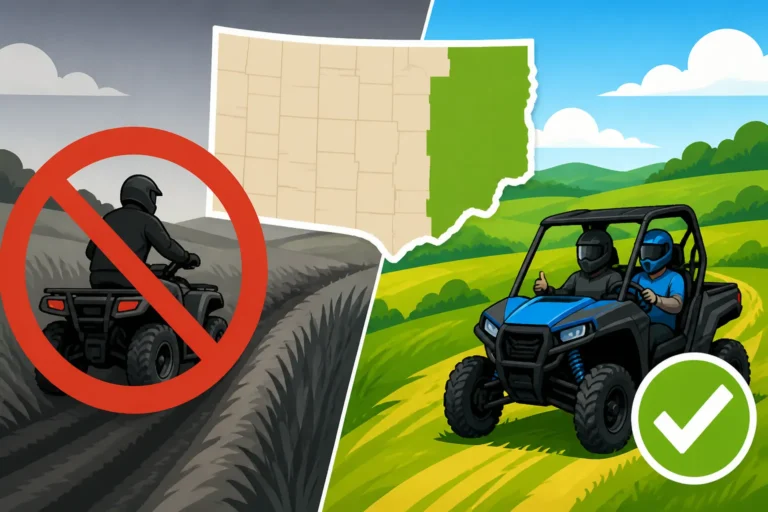
Ditch riding, sometimes referred to as riding the "right of way," generally refers to operating your off-road vehicle in the unpaved area immediately adjacent to a public road, typically the ditch. South Dakota law allows this in many areas, but it's not a carte blanche permission to ride anywhere. Counties in South Dakota have the authority to "opt out" of ditch riding, meaning they can ban it within their borders. It's always your responsibility to check local ordinances for the specific county you're in. Even where it's allowed, there are often restrictions on age for operators and specific rules about how you can cross a highway. You can ride in the bottom of a ditch, and in some cases, on the back-slope, but never in the travel lanes or on the paved shoulder of the road itself, unless you're making a direct, perpendicular crossing to continue ditch riding on the other side.
Road riding, on the other hand, refers to actually operating your plated ATV or UTV on the paved or gravel surface of the public roadway, in the lane of traffic. This is only permissible if your machine is fully "street legal" with a valid motorcycle plate, as discussed earlier. When you're on the road, you are considered a motor vehicle operator and must obey all traffic laws, including speed limits, stop signs, and signals. You cannot simply ride in the ditch when it's convenient and then hop onto the road. The distinction is critical: ditch riding is for off-road vehicles in designated unpaved areas, while road riding is for properly plated machines integrated into regular traffic flow. The penalties for riding an unplated machine on the road or violating ditch riding rules can be substantial, so know before you go.
Navigating South Dakota's Snow-Covered Roads with Your ATV
So, you've got your ATV or UTV, it's properly plated and equipped, and the first significant snowfall of the season has arrived. Now what? The allure of fresh powder and an open road for your off-road machine is strong, but the presence of snow doesn't magically change the fundamental rules of the road in South Dakota.
How General Road Rules Apply to Snow-Covered Conditions
It's a common misconception that a snow-covered road somehow transforms into an "off-road" area, granting ATVs and UTVs free rein. This couldn't be further from the truth. In South Dakota, if a road is designated as a public roadway, whether it's paved, gravel, or dirt, its legal status for vehicle operation remains the same regardless of whether it's bare, wet, or covered in a foot of snow. This means that the rules for [South Dakota Street Legal ATV Requirements] still apply.
If your ATV or UTV is properly plated and equipped for road use, it can be operated on a snow-covered public road just as it would on a dry road. You're expected to follow all traffic laws, respect speed limits, and operate your machine safely and responsibly. The snow simply becomes another environmental factor to navigate, not an exemption from the law. Conversely, if your machine is not street legal – meaning it lacks the proper engine size, equipment, or a valid motorcycle plate – then it is still illegal to operate it on a snow-covered public road, just as it would be illegal on a dry one. A thick blanket of snow might obscure the road surface, making it feel more like an open field, but it doesn't change its legal classification. Law enforcement officers are well aware of this distinction, and assuming otherwise could lead to a citation for illegal road use.
The best way to think about it is this: snow adds a layer of complexity and a need for increased caution, but it doesn't alter the legal framework. Your machine must meet all the requirements for road use, including having a valid driver's license for the operator, regardless of the weather conditions. This means if you're planning a winter ride on public thoroughfares, ensure your paperwork and equipment are in order before you ever turn the key.
Safety Considerations and Equipment for Winter Riding
While snow doesn't change the legal definition of a road, it certainly changes the dynamics of riding on one. Safety becomes paramount when you're dealing with reduced traction, colder temperatures, and often, diminished visibility. Preparing your ATV or UTV for winter road conditions goes beyond just the legal requirements; it's about practical measures to keep you safe and your machine running smoothly.
One of the most critical considerations for snow-covered roads is traction. Standard ATV tires, while excellent off-road, may struggle on packed snow and especially on ice. Many riders opt for specialized winter tires or even studded tires for better grip. [Studded Tires on a Frozen Ditch] are a real game-changer for control and braking in icy conditions. Beyond tires, your own personal gear is vital. Dressing in layers, with waterproof and windproof outer shells, is essential to prevent hypothermia. Heated grips or thumb warmers can make a significant difference in rider comfort and control. Visibility is another major concern. Short winter days and falling snow can drastically reduce sightlines for both you and other drivers. Ensuring your headlights, taillights, and brake lights are clean and fully functional is a must. Adding auxiliary lighting, especially on the front, can also improve your ability to see and be seen.
Finally, consider what you might need if you get stuck or break down. Winter conditions can turn a minor issue into a major problem very quickly. Carrying essential tools, a small shovel, a tow strap, and perhaps a recovery winch (many riders trust robust options from brands like SuperATV) can be invaluable. Even a simple change of dry gloves or a thermos of hot coffee can be a lifesaver. Preparing for the worst not only ensures your safety but also allows you to truly enjoy the unique experience of winter riding in South Dakota. Companies like SuperATV specialize in durable accessories like plows and winches that can turn your UTV into a truly formidable winter workhorse or adventure machine, greatly enhancing both capability and safety.
Restrictions and Exceptions for Snow-Covered Roads
While a plated ATV can legally traverse a snow-covered public road, it's important to remember that not all "snow-covered roads" are created equal, and some areas have specific rules that supersede general road use laws. Ignoring these nuances can lead to unexpected fines or even dangerous situations.
When a Snow-Covered Road Isn't Just a Road
The idea that "if it's covered in snow, it's fair game" for off-road vehicles is a dangerous generalization in South Dakota. While your plated machine might be legal on a snow-covered county road, this doesn't extend to all types of snow-covered pathways. For instance, many forest service roads within areas like the Black Hills National Forest have specific opening and closing dates, often closing to motorized vehicles after December 15th and not reopening until May 15th, regardless of snow depth. [South Dakota Trails Open in Winter] are often a separate category from roads.
A snow-covered road within a state park, wildlife management area (WMA), or other designated public land might have completely different rules, often prohibiting ATV or UTV use altogether, or requiring specific permits. For example, some snow-covered routes might be designated as snowmobile trails during winter months, and ATVs or UTVs could be strictly prohibited to prevent conflicts or damage to groomed surfaces. Furthermore, severe weather closures can temporarily shut down any road, snow-covered or not, and operating an ATV on a closed road is illegal and extremely risky. These closures are typically due to blizzard conditions, whiteouts, or impassable drifts, and they apply to all vehicles. Always check with local authorities, the Forest Service, or the South Dakota Game, Fish and Parks (GFP) before heading out, especially if you're unsure about a specific route.
Local Ordinances and Winter Riding
Just as counties can opt out of ditch riding, local municipalities, towns, and even cities in South Dakota can have their own specific ordinances regarding ATV and UTV use on their roads, regardless of whether they're snow-covered. While state law provides a general framework, local governments have the authority to impose stricter rules within their corporate limits.
This means that even if your ATV is fully street legal and plated, you might not be allowed to ride it on certain snow-covered streets within a town like Deadwood or Custer. Some towns might prohibit ATV use entirely, while others might restrict it to specific routes or during certain hours. These local rules are often put in place due to concerns about noise, safety in denser traffic, or to avoid conflicts with snow removal operations. For instance, imagine a town trying to clear its main street after a heavy snowfall; an ATV weaving through snowplows would not only be a hazard but likely a violation of local ordinances.
It is always advisable to check the specific municipal code or contact the local law enforcement agency if you plan to ride your ATV or UTV on snow-covered roads within city or town limits. Assuming that statewide regulations are the only ones you need to follow could lead to an unexpected ticket or even the impoundment of your machine. This is particularly true if you’re utilizing accessories like a plow from SuperATV to help clear your own driveway or a neighbor’s, and then decide to take a spin down the public street – the plow doesn't change the underlying road use rules.
| Feature / Condition | Dry Public Road (Plated ATV/UTV) | Snow-Covered Public Road (Plated ATV/UTV) | Unplated ATV/UTV (Dry or Snow) |
|---|---|---|---|
| Legal Status | Legal with motorcycle plate, proper equipment, and driver's license | Legal with motorcycle plate, proper equipment, and driver's license | Illegal on public roads |
| Required Equipment | Rearview mirror, horn, headlights, taillights, brake lights | Rearview mirror, horn, headlights, taillights, brake lights (all functional) | Not applicable for legal road use |
| Driver's License | Required | Required | Not applicable for legal road use |
| Traffic Laws | All standard traffic laws apply | All standard traffic laws apply (including increased caution) | Not applicable for legal road use |
| Ditch Riding | Allowed where counties haven't opted out, with specific rules | Allowed where counties haven't opted out, with specific rules | Allowed where counties haven't opted out, with specific rules |
| Traction Considerations | Standard tires generally sufficient | Specialized winter or [Studded Tires on a Frozen Ditch] highly recommended | Not applicable for legal road use |
| Visibility | Generally good | Often reduced (snow, shorter days, whiteouts) | Not applicable for legal road use |
| Personal Gear | Appropriate for weather | Layers, waterproof, windproof, heated gear for comfort and safety | Appropriate for off-road conditions |
| Local Ordinances | Must be checked | Must be checked, especially in towns/cities | Must be checked, especially for ditch riding restrictions |
| Potential Hazards | Traffic, road conditions | Ice, deep snow, reduced visibility, hidden obstacles, extreme cold | Off-road terrain, natural obstacles |
Navigating South Dakota's roads, whether dry or covered in snow, with your ATV or UTV requires a solid understanding of the law and a commitment to safe practices. The beauty of winter riding is undeniable, but it's a privilege that comes with significant responsibility. Always ensure your machine is legally equipped, your paperwork is in order, and you're prepared for the unique challenges that snow and ice present. By doing so, you can enjoy the vast winter landscapes South Dakota has to offer, safely and within the bounds of the law.
Disclaimer
This article is for general informational purposes only and does not constitute professional advice. Laws, prices and regulations vary by location and change over time. Consult a qualified professional for guidance on your specific situation.