Riding GFP Land on a Machine
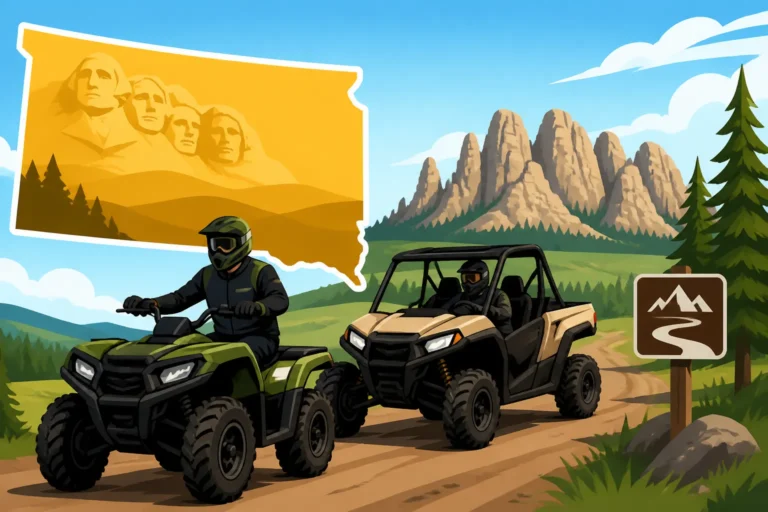
You've got your ATV or UTV loaded up, ready for an adventure in South Dakota's incredible outdoors, but then a question pops into your head: "Can I actually ride this thing on that beautiful piece of Game, Fish and Parks land I just passed?" It's a common dilemma, and the answer isn't always as simple as a straightforward yes or no. Navigating the rules for motorized vehicles on South Dakota Game, Fish and Parks (GFP) land can feel a bit like trying to read a map in the dark, with different types of land, varying regulations, and permits that might or might not apply. This guide is here to shed some light on the subject, walking you through what GFP land is, what the general rules are for your machine, and how to ensure your adventure stays legal and respectful of the landscape.
Understanding South Dakota's GFP Land
South Dakota's Game, Fish and Parks manages a vast and diverse array of lands across the state, all dedicated to conserving natural resources and providing public recreational opportunities. It's not just one type of property; it encompasses everything from sprawling wildlife management areas to smaller public access points. Each parcel is managed with specific conservation and recreation goals in mind, which often dictate what activities, including motorized vehicle use, are permitted.
Defining Game, Fish and Parks Areas
When we talk about GFP land, we're generally referring to areas managed by the South Dakota Department of Game, Fish and Parks. These lands are primarily established for wildlife habitat, fishing access, hunting opportunities, and various forms of outdoor recreation. Unlike national forests or Bureau of Land Management (BLM) lands, which often have a broader multi-use mandate, GFP lands are typically managed with a stronger emphasis on wildlife and ecological preservation. This difference in primary objective is a crucial factor in understanding why motorized vehicle rules can be quite strict.
For example, a Wildlife Management Area (WMA) purchased with hunter and angler license dollars is explicitly set aside to provide critical habitat for game species, foster biodiversity, and offer public hunting access. The very nature of this purpose means that unrestricted motorized travel would be detrimental to the animals and their environment. You might find parking areas for vehicle access, but the idea of driving your ATV or UTV through prime nesting grounds or wintering areas simply doesn't align with the land's core mission. It's about finding that balance between public access and environmental stewardship, and for ATVs and UTVs, that balance almost always leans towards highly restricted use.
Types of GFP Land You Might Encounter
South Dakota GFP oversees several categories of land, each with its own nuances regarding motorized access:
- Wildlife Management Areas (WMAs): These are perhaps the most common type of GFP land you'll encounter. WMAs are typically managed for wildlife habitat and public hunting/fishing. Motorized vehicle access is usually extremely limited, often only to designated parking areas or specific access roads, and almost never on interior trails unless explicitly marked for such use. Most of the time, once you're off the main access road, you're on foot.
- Game Production Areas (GPAs): Similar to WMAs, GPAs are acquired and managed primarily for wildlife production and public hunting. The rules for motorized vehicles here mirror those for WMAs – expect very strict limitations to designated parking and access routes.
- Public Shooting Areas: These are often smaller parcels designated for target shooting. While you might drive your vehicle to a parking area, there's generally no expectation of off-road vehicle use within the shooting area itself.
- Walk-In Areas (WIAs): As the name suggests, these are specifically for non-motorized access. No ATVs or UTVs are permitted beyond the designated parking.
- State Parks and Recreation Areas: While still under GFP management, these areas often have slightly different rules than WMAs or GPAs due to their emphasis on broader recreation, including camping, hiking, and picnicking. However, for ATVs and UTVs, access is typically limited to paved roads or dedicated parking lots, much like a regular passenger vehicle. [Riding Custer State Park With a Plate] or similar parks will have distinct rules that need to be checked directly.
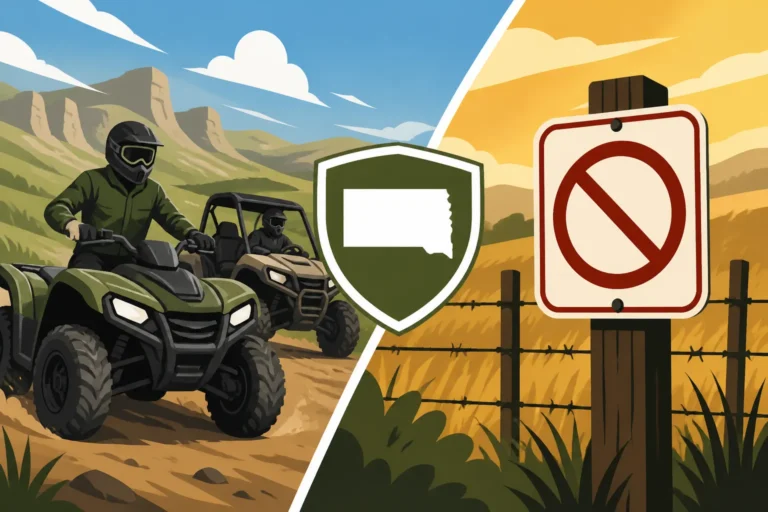
It's vital to remember that regardless of the specific type of GFP land, the general assumption should always be that motorized off-road vehicle use is prohibited unless a sign or official map explicitly states otherwise. This "assume closed unless marked open" philosophy is a good rule of thumb for protecting both the land and yourself from potential legal issues.
General Rules for Motorized Vehicles on GFP Land
The overarching principle for riding ATVs and UTVs on South Dakota GFP lands is quite simple, though often frustrating for riders looking for open trails: if it's not specifically designated and marked for motorized use, it's off-limits. This isn't just a suggestion; it's a firm regulation designed to protect habitats, prevent soil erosion, and minimize disturbance to wildlife.
The Core Principle: Designated Trails Only
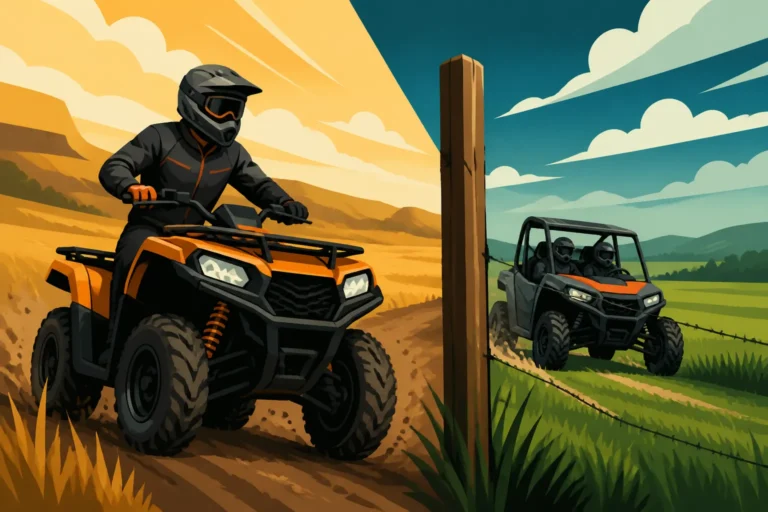
Imagine pulling up to a beautiful stretch of WMA with winding game trails disappearing into the tree line. It's incredibly tempting to unload your machine and explore. However, on GFP land, that temptation must be resisted unless you see clear, official signage or maps indicating a specific trail is open to ATVs or UTVs. The core principle is "designated trails only," and often, these "designated trails" are incredibly rare or non-existent for off-road vehicles within the interior of WMAs and GPAs.
The primary reason for this strict policy is habitat protection. ATVs and UTVs, even with responsible riding, can compact soil, create ruts, spread invasive species, and disturb wildlife, particularly during sensitive nesting or breeding seasons. The noise alone can stress animals, causing them to abandon critical areas. Unlike federal lands like the Black Hills National Forest, which has thousands of miles of multi-use trails, GFP lands are designed with a more focused conservation objective. So, while you might be able to drive your pickup truck to a parking area on GFP land, the expectation is that your journey into the wild begins on foot. Always check official GFP maps, which are often available online or at local ranger stations, to confirm any authorized routes. Without explicit designation, assume your machine needs to stay put.
Understanding South Dakota's ORV Permit and Plate Rules
It's easy to get confused about permits and plates when thinking about riding on various public lands. South Dakota has specific requirements for operating off-road vehicles (ORVs), but these don't automatically grant you access to all public lands, particularly GFP areas.
First, let's talk about the [South Dakota's Motorized Trail Permit]. This permit is primarily required for riding on designated motorized trails within the Black Hills National Forest and other federal lands. It's a critical permit for most out-of-state riders and even residents who don't have a street-legal ATV. However, possessing this permit does not automatically allow you to ride on GFP land. The permit applies to the specific trail systems it's designed for, which are generally separate from the limited (or non-existent) motorized access points on most GFP properties. Think of it this way: having a fishing license allows you to fish, but it doesn't give you permission to fish in a private pond without the owner's consent.
Secondly, if your ATV or UTV is licensed as a motorcycle for street-legal use in South Dakota, that plate allows you to ride on public roads as defined by law. However, being street-legal means you're treated like any other vehicle on the road. It does not grant you permission to leave the road and ride off-trail or on undesignated routes within GFP lands. Just like a car can't drive across a WMA, neither can a street-legal ATV or UTV if there are no designated off-road routes. The distinction between a "road" (where a plated machine might be allowed) and an "off-road trail" (which is highly restricted on GFP land) is absolutely critical. For detailed information on what South Dakota defines as an ORV and its titling process, you can explore resources like [What South Dakota Counts as an Off-Road Vehicle].
Equipment Requirements for Machines on GFP Land
Even on the rare occasion that a GFP area has a designated motorized trail, your machine still needs to meet South Dakota's general equipment requirements for off-road vehicles. This isn't unique to GFP land but applies whenever you're operating an ORV in the state.
Crucially, your ATV or UTV must be equipped with a spark arrester. This device, designed to prevent hot carbon particles from escaping the exhaust and potentially starting wildfires, is a non-negotiable item for riding on public lands, including any GFP areas where motorized use is allowed. Without a functioning, approved spark arrester, you're not only risking environmental damage but also significant fines. Companies like SuperATV offer a range of exhaust systems and spark arresters that can help ensure your machine is compliant with these regulations, providing peace of mind when venturing out.
Beyond the spark arrester, other essential safety equipment generally includes adequate brakes, a functional muffler (to keep noise levels down and minimize disturbance to wildlife and other users), and proper lighting if you plan to operate during dawn, dusk, or nighttime hours – though night riding on GFP lands is also often highly restricted or prohibited. While not always legally mandated for off-road use, wearing a helmet and eye protection is always a wise choice for rider safety. Always ensure your machine is in good working order before heading out, as breakdowns in remote areas can be dangerous and costly.
Specific Scenarios and Restrictions on GFP Land
Beyond the general rule of "designated trails only," there are several specific scenarios and additional restrictions that often come into play when considering ATV or UTV use on South Dakota GFP land. These details can often be the difference between an enjoyable, legal outing and an unexpected citation.
Age Restrictions and Supervision on GFP Land
South Dakota has specific age requirements and supervision rules for ATV and UTV riders, particularly for minors. These apply broadly across the state, including any areas of GFP land where motorized use might be permitted. Generally, a rider needs to be at least 12 years old to operate an ATV on public land, and even then, often requires direct adult supervision. For UTVs, the rules can be slightly different, sometimes aligning more closely with passenger vehicle driving laws if the UTV is street-legal.
On GFP lands, these age restrictions are often enforced with extra vigilance due to the sensitive nature of the habitats. It's not just about the child's safety, but also about ensuring that young riders fully understand and adhere to the "designated trails only" policy and other environmental regulations. A parent allowing an unsupervised child to venture off a marked route, even accidentally, could face penalties. If you're planning a family outing, always confirm the specific age and supervision requirements for the type of machine and the particular GFP area you intend to visit. Familiarize yourself with resources like [South Dakota Minimum Age to Ride Public Land] to avoid any issues.
Hunting and Fishing Access with ATVs/UTVs
This is where the nuances of GFP land rules can get particularly tricky and often lead to misunderstandings. Many hunters and anglers use ATVs or UTVs to access remote hunting or fishing spots, but the rules for how and where you can use them on GFP land for these purposes are very strict.
Generally, you can use your ATV or UTV to access parking areas or designated staging points on GFP land that lead to hunting or fishing spots. However, once you leave these designated parking areas, motorized travel is almost universally prohibited within the WMA or GPA itself, even if you are hunting or fishing. This means you must often park your machine and proceed on foot into the field, marsh, or fishing access point.
There are very few exceptions, and they are usually highly specific, such as for individuals with mobility impairments who obtain a special permit. Even then, the access is typically limited to specific routes. You cannot use your ATV or UTV to "scout" an area off-trail, chase game, or often even to retrieve downed game from off-trail locations. The emphasis is on fair chase and minimizing disturbance. Always consult the current South Dakota Hunting and Fishing Handbook and the specific regulations for the WMA or GPA you plan to visit. Relying on past practices or assumptions can lead to hefty fines and loss of hunting privileges.
Special Events or Organized Rides
Occasionally, a special event or organized ride might be approved for a specific route on GFP land. These are extremely rare and require extensive planning, permitting, and oversight from the Department of Game, Fish and Parks. They are not spontaneous events. If you hear about an organized ride, always verify its legitimacy and whether it has indeed received official GFP approval.
For the average rider, the opportunity to participate in such an event on GFP land is very limited. Do not assume that because a group is riding, it's automatically sanctioned or that you can join in without specific authorization. Any such event would be clearly advertised through official GFP channels and would come with its own set of rules and guidelines. Attempting to organize your own group ride on GFP land without explicit permission would almost certainly lead to citations for illegal off-road vehicle use and potential environmental damage.
| Aspect | General GFP Land Rule (WMAs, GPAs) | Black Hills National Forest (Designated Trails) |
|---|---|---|
| Motorized Trail Access | Highly Restricted; "Designated Only" (Rare) | Extensive Designated Trail Systems |
| Permit Required | No specific GFP ORV permit (unless for mobility impaired) | [South Dakota's Motorized Trail Permit] (for ORVs) |
| Street-Legal ATV/UTV | Can use public roads/parking only; no off-road | Can use public roads, plus designated OHV trails with permit |
| Spark Arrester | Required if motorized use is allowed | Required |
| Hunting/Fishing Access | Parking access only; no off-trail machine use for hunting/retrieval | Parking access; some areas allow machine use on designated routes for retrieval |
| Wildlife Disturbance | Primary concern; minimal tolerance for deviation | Managed through trail planning and seasonal closures |
| Maps & Signage | Crucial for identifying rare open routes | Crucial for navigating extensive trail networks |
Planning Your Ride on GFP Land
Given the strict regulations, successfully planning a ride that incorporates South Dakota GFP land usually means planning around it, or using it strictly for designated access. If you truly want to ride off-road, you'll likely need to focus your attention on other public lands or private property where motorized use is explicitly permitted.
Checking Maps and Current Conditions
Before you even load your machine, the most crucial step is to thoroughly research the specific GFP area you intend to visit. The South Dakota GFP website is your best friend here. Look for detailed maps of the WMA or GPA, often labeled "public access maps." These maps will clearly show parking areas, public roads, and any very rare designated motorized trails. If a trail isn't explicitly marked for motorized use, assume it's closed to ATVs and UTVs. Don't rely on anecdotal information or old maps. Conditions can change, and closures can be implemented due to weather, fire danger, or wildlife management needs.
In addition to GFP's own resources, consider cross-referencing with other mapping tools. While not official authorizations, apps like OnX Offroad or similar GPS platforms can help you visualize land ownership and designated routes, though always prioritize official GFP maps for regulatory information. A great piece of advice is to actually call the local GFP office or a conservation officer in the area you plan to visit. A quick phone call can clear up a lot of confusion and prevent a frustrating (or expensive) mistake.
Essential Gear for GFP Land Riding
If you've confirmed a rare instance of an approved motorized route on GFP land, or if you're simply using your machine to access a parking area before proceeding on foot, certain gear is always essential. Your machine itself needs to be in top shape; a breakdown miles from anywhere is never fun. This means checking tires, fluids, and ensuring all safety equipment (like brakes and lights) is fully functional. Many riders trust brands like SuperATV for robust upgrades such as heavy-duty axles or winch systems, which can be invaluable for navigating challenging access roads or self-recovery.
Beyond the machine, carry a well-stocked first-aid kit, plenty of water, snacks, and appropriate clothing for changing South Dakota weather. A reliable GPS device or a physical map and compass are also critical, even if you think you know the area. Cell service can be spotty, especially in remote WMAs. If you are going into an area to hunt or fish, ensure you have all relevant licenses and permits readily accessible. Remember, even if you're only using your machine for access, you're still responsible for all the gear and readiness for your non-motorized portion of the journey.
Respecting Wildlife and Other Users
This is paramount on GFP land, regardless of whether you're on a machine or on foot. GFP lands are managed for wildlife, and their well-being is a top priority. Keep your speeds low on access roads, avoid making excessive noise, and always be on the lookout for animals, especially at dawn and dusk. Give wildlife a wide berth; never harass or pursue animals with your machine.
You'll also be sharing these lands with hikers, bird watchers, photographers, hunters, and anglers. Maintain a courteous attitude. Slow down and move to the side for pedestrians or horseback riders. Avoid kicking up dust on dry days, and make eye contact to acknowledge others. Many people visit GFP lands specifically for the peace and quiet, and motorized vehicles, even when legal, can disrupt that. Your actions reflect on the entire ATV/UTV community, so set a good example of responsible outdoor recreation.
Distinctions: GFP Land vs. Other Public Lands
One of the biggest sources of confusion for ATV and UTV riders in South Dakota is the varying rules across different types of public land. It's crucial to understand that a permit or registration valid for one type of land doesn't automatically grant access to another. South Dakota's outdoor landscape is a patchwork of federal, state, and local jurisdictions, each with its own set of regulations.
How GFP Rules Differ from National Forest Land
The difference between South Dakota GFP lands and federal lands like the Black Hills National Forest is stark when it comes to motorized vehicle use. The Black Hills National Forest operates under a "designated route" system, which means there are thousands of miles of roads and trails specifically open to ATVs and UTVs, as long as you have the appropriate [South Dakota's Motorized Trail Permit]. These trails are mapped, signed, and managed for multi-use recreation, including motorized access. You can explore a vast network of forest roads and trails, ranging from easy scenic drives to challenging technical routes.
On the other hand, GFP lands generally do not have this extensive network of motorized trails. As discussed, their primary mission of wildlife management and habitat conservation often means that motorized access is confined to parking lots and main access roads, with very few, if any, interior trails open to ATVs or UTVs. The philosophy is fundamentally different: National Forests accommodate motorized recreation as part of their multi-use mandate, whereas GFP lands restrict it to minimize impact on wildlife and habitat. This is why you might see signs for "motorized trails" deep within the Black Hills, but rarely on a South Dakota WMA. For more on federal lands, consult [South Dakota Rules for Riding Federal Land].
Comparing with State Parks and Recreation Areas
While State Parks and Recreation Areas in South Dakota are also managed by GFP, their specific rules for motorized vehicles can sometimes vary slightly from WMAs or GPAs due to their emphasis on broader public recreation, including camping, swimming, and picnicking. However, for ATVs and UTVs, the general rule remains consistent: motorized access is typically limited to paved roads, parking lots, and designated campgrounds, much like a regular car or truck.
You won't find off-road ATV or UTV trails within most South Dakota State Parks. The focus is on traditional park activities, and allowing ATVs or UTVs on unpaved trails would disrupt the experience for other visitors, damage sensitive ecosystems, and conflict with the park's aesthetic. There are specific exceptions, such as the [Oahe Downstream OHV Area in South Dakota] or [Revheim Bay OHV Area], which are designated for off-highway vehicle use and managed by GFP. These are specific purpose-built riding areas, not typical State Parks, and they have their own set of rules and often don't require the Black Hills Motorized Trail Permit as they are state-managed areas, not federal. But for the vast majority of GFP-managed State Parks, your ATV or UTV is best kept on the trailer or only on paved access roads.
Potential Fines and Enforcement on GFP Land
Ignoring the rules for motorized vehicles on South Dakota GFP land isn't just a minor infraction; it can lead to significant penalties, including fines, impoundment of your machine, and even the loss of hunting or fishing privileges. Conservation officers are highly vigilant in these areas, and they take violations seriously.
Common Violations and Penalties
The most common violation for ATV and UTV riders on GFP land is operating a motorized vehicle off a designated road or in an area closed to such use. This can happen innocently by simply following an unmarked game trail, or deliberately by attempting to access a remote hunting spot. Regardless of intent, the consequences can be severe. Penalties typically start with fines, which can be substantial, and may also include court costs. Repeat offenders or those causing significant environmental damage could face much harsher penalties.
Another violation might be operating a machine without proper registration or a required permit, though as we've discussed, specific ORV permits for GFP lands are rare outside of special circumstances. Lack of a required spark arrester, excessive noise, or operating in a manner that harasses wildlife are also serious offenses. If you are cited, it's a good idea to understand your rights and the appeal process, though the best course of action is always prevention. Understanding [South Dakota Fines for Riding Without a Permit] can give you an idea of the costs involved, even if the specific permit might differ for GFP land versus federal land.
Who Enforces the Rules on GFP Land
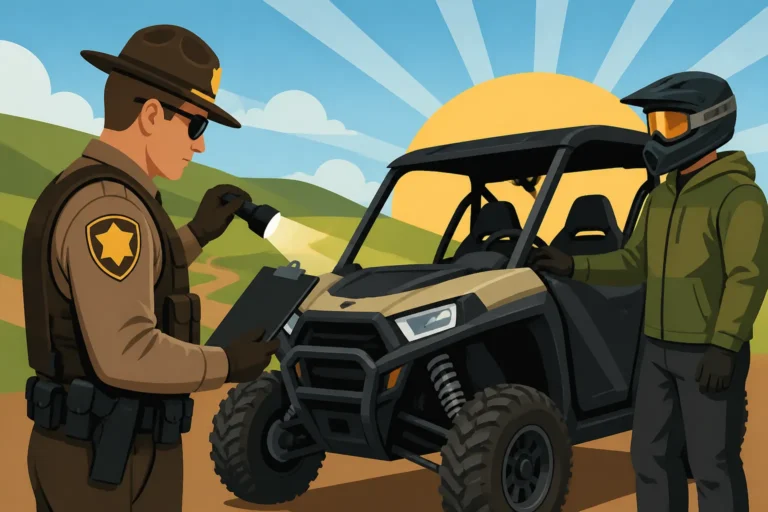
The primary enforcers of regulations on South Dakota GFP land are Game, Fish and Parks Conservation Officers. These officers are highly trained law enforcement professionals with full authority to issue citations, investigate violations, and ensure compliance with all state wildlife and park laws. They spend a significant amount of time patrolling these lands, often using their own ATVs or UTVs to access remote areas. They know these lands intimately and can quickly identify unauthorized vehicle tracks or disturbances.
In addition to GFP Conservation Officers, local county sheriffs and state troopers may also have jurisdiction, especially on public roads that traverse or border GFP properties. However, for interior land management, the GFP officers are the most active. They are approachable and often happy to answer questions about specific areas, so don't hesitate to contact your local GFP office or a conservation officer directly if you have doubts about where you can and cannot ride your ATV or UTV. Their goal is to ensure public safety and resource protection, and they'd much rather help you understand the rules beforehand than issue a citation after a violation.
Remember, the goal of GFP land is to preserve South Dakota's natural beauty and wildlife. By understanding and respecting the rules, you help ensure these vital areas remain healthy and accessible for future generations to enjoy. If your passion is off-road riding, focus on the areas explicitly designated for it, like those within the Black Hills National Forest or specific OHV parks. Otherwise, plan to enjoy GFP lands on foot, truly immersing yourself in the wild.
Disclaimer
This article is for general informational purposes only and does not constitute professional advice. Laws, prices and regulations vary by location and change over time. Consult a qualified professional for guidance on your specific situation.