What a Trooper Checks at a Meade County Stop
It's incredibly frustrating to be out enjoying the vast beauty of South Dakota's landscapes on your ATV or UTV, only to see those flashing lights in your rearview. Whether you're cruising a gravel road near Sturgis or navigating a section line in rural Meade County, knowing what a South Dakota Highway Patrol trooper is looking for during a stop can save you a lot of hassle and potential fines. This guide will walk you through the common checks, so you can ride with confidence and stay on the right side of the law.
The Initial Encounter: What Triggers a Stop in Meade County
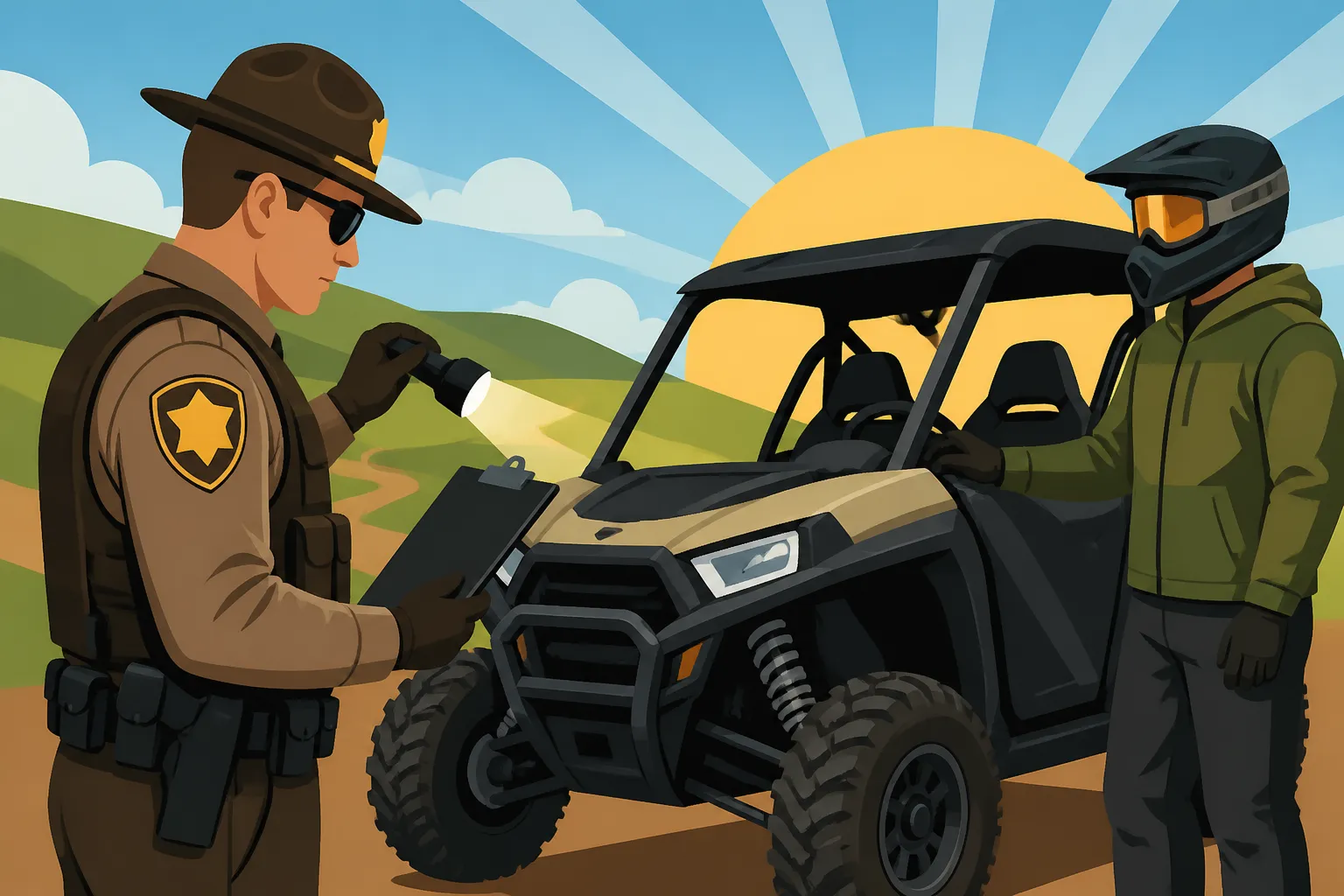
Seeing a trooper pull up behind you can make anyone's heart race, especially when you're on an off-highway vehicle (OHV). It's easy to jump to conclusions, but understanding why they might initiate a stop and how to handle it can make a big difference in the outcome.
Why a Trooper Might Pull You Over
Troopers in Meade County, just like anywhere else, are focused on ensuring public safety. While it might feel like you're being singled out, there's usually a reason for a stop. It could be something as simple as a visible equipment issue – perhaps a headlight out, or your tail light isn't functioning properly, especially if you're out near dark. They might also be looking for specific violations related to road use, such as riding in an unauthorized area, improper ditch riding, or appearing to operate your machine in a manner that suggests impairment. Sometimes, it's just a routine check, especially in areas with high ATV/UTV traffic, like during peak riding seasons or events around the Black Hills. Maybe your machine's plate wasn't clearly visible, or they observed a passenger who appeared to be underage without proper supervision. They might even be responding to a report from a concerned citizen about riders causing a disturbance or trespassing.
The Importance of a Calm and Cooperative Demeanor
When a trooper signals you to pull over, the very first thing to do is to find a safe spot to stop your machine. Turn off your engine, remove your helmet if you're wearing one, and keep your hands visible. This immediate cooperation sets a positive tone. Remember, the trooper's job is to enforce the law, and your calm demeanor can go a long way. They're looking for compliance and safety. Being respectful, answering questions clearly, and providing requested documentation promptly helps the encounter proceed smoothly. Trying to argue or becoming defensive right from the start usually prolongs the stop and rarely improves the situation. You might be asked about your route, where you're headed, or where you started from. Just be honest and straightforward.
Road and Ditch Riding Compliance: What They’ll Scrutinize First
Many ATV and UTV riders in South Dakota, particularly in areas like Meade County that have extensive gravel roads and section lines, utilize these routes to get from one trail to another, or to access private land. However, road use for OHVs comes with specific rules, and these are often the first things a trooper will check.
Checking Your Machine's Plate and Decal
If you're riding on any public road, including county roads and the ditches alongside state highways (where permitted), your ATV or UTV generally needs to be licensed as a motorcycle. This means it needs a valid South Dakota motorcycle plate. A trooper will certainly be looking for this. They'll check to see if the plate is current, securely mounted, and clearly visible. They'll also check the registration decal to ensure it's up to date. This is a critical point, as many riders mistakenly believe that merely owning the machine is enough. If your machine is registered out of state, there are still rules about what allows it on South Dakota roads. Ensure your home state's registration is current and that you understand [South Dakota Rules for a Visiting Rider]. A missing or expired plate is a quick way to earn a citation.
Your Driver's License and Age Requirements
Just like driving a car, operating a plated ATV or UTV on a public road in South Dakota requires a valid driver's license. The trooper will ask to see your license to verify you're legally permitted to drive. This isn't just about having the plastic card; it's about being licensed for the type of vehicle you're operating. While an ATV licensed as a motorcycle escapes the typical motorcycle endorsement test if it's over 200cc, you still need a standard driver's license. For younger riders, the rules are very specific. While a twelve-year-old can operate an ATV in a ditch under certain conditions, riding on the road with a plate has different age and licensing requirements. The trooper will confirm that the operator meets the minimum age and licensing criteria for the specific type of riding being performed. Understanding [South Dakota Driver's License Rules for ATVs] is paramount for anyone planning to hit the roads.
Essential Equipment for Road-Legal Machines
When a trooper pulls you over, they aren't just looking for your paperwork; they're also visually inspecting your machine for mandatory equipment if you're on a public road. A road-legal ATV or UTV in South Dakota must meet certain criteria to ensure it's safe for shared use. This includes:
- A rearview mirror: This isn't just a suggestion; it's a requirement for road use. The trooper will check to make sure you have at least one mirror that provides a clear view of the road behind you. Many riders opt for aftermarket mirrors, like those from SuperATV, that are designed to be durable for off-road use but still provide the necessary visibility on pavement or gravel.
- A horn: You need an audible warning device to signal other drivers or pedestrians. A simple horn that functions properly is typically sufficient.
- Headlights and taillights: These are absolutely essential, especially if you're riding anywhere near dawn, dusk, or night. Your headlights need to be working, and your taillights must be illuminated and clearly visible from the rear. Brake lights are also critical, signaling when you're slowing down.
- Tires: While not always a primary stop factor, tires must be in good condition without excessive wear or damage that could compromise safety.
These equipment checks are about ensuring your machine is safe for everyone on the road, not just you. Understanding [South Dakota Equipment List for Road Use] can prevent unexpected issues.
Adhering to Ditch Riding Rules
Ditch riding is a unique aspect of South Dakota law that allows ATVs and UTVs to operate in the right-of-way adjacent to certain public roads. However, it's not a free-for-all, and troopers are keenly aware of the rules. During a stop, a trooper will assess if you are correctly adhering to these guidelines, which include:
- Staying within the ditch: You must remain on the extreme outer edge of the highway right-of-way, meaning in the ditch bottom or on the back-slope, not on the shoulder or actual travel lanes. Crossing a highway is usually permitted, but riding on it is not.
- County specific bans: While ditch riding is generally allowed statewide, counties have the option to ban it. The trooper will know if you're in an area where ditch riding is prohibited and if appropriate regulatory signs are posted.
- Age restrictions: Riders must be at least 12 years old to operate an ATV or UTV in a ditch. The trooper will verify the age of the operator.
- Crossing at 90 degrees: When you cross a highway, it must be done as close to a 90-degree angle as possible, and only after yielding to all traffic.
Violations of ditch riding rules are common reasons for stops in Meade County, especially given the popularity of the area for riding. Familiarize yourself with [South Dakota Ditch Riding Rules Explained] to avoid issues.
Trail Permit and Off-Road Area Specifics
Beyond road use, South Dakota offers fantastic designated motorized trails, particularly in the Black Hills National Forest. When you're riding in these areas, different rules apply, and troopers (or Forest Service rangers) will be checking for specific compliance.
The Black Hills Motorized Trail Permit
If you're enjoying the hundreds of miles of designated motorized trails in the Black Hills National Forest, you absolutely need a Black Hills Motorized Trail Permit. This is a separate permit from your vehicle registration and is required for every machine, not every rider. During a stop on a trail or at a trailhead, a trooper or Forest Service official will be looking for this permit decal, which must be clearly affixed to your machine. It's a small but mighty sticker that signifies you've paid your share to maintain those incredible trails. If you're visiting from out of state, the same rules apply. There's no resident discount, and everyone contributes. Many local businesses, including visitor centers and ranger district offices, sell these permits, or you can buy them online. Just remember, they take time to arrive if ordered by mail. [How the Black Hills Motorized Trail Permit Works] covers all the details.
Other Permitted Riding Areas and Their Rules
While the Black Hills is the most well-known area for motorized recreation, South Dakota also has other designated OHV areas, such as Oahe Downstream OHV Area and Revheim Bay OHV Area, both managed by the Game, Fish and Parks (GFP). If you're riding in one of these areas, a trooper or GFP officer will be checking for compliance with their specific rules. These areas often don't require the Black Hills trail permit, but they might have their own entry fees or regulations regarding machine types, speed limits, or operating hours. For instance, in a GFP area, you generally don't need a road plate for your machine to ride within the designated boundaries, but you might need a park entrance license depending on the specific location and your activities. It's always crucial to check the rules for the specific area you plan to ride in, as they can vary greatly.
Sound Limits and Spark Arresters
For both road-legal machines and those strictly used on trails, noise levels and spark arresters are critical checks, especially in sensitive environments like the Black Hills National Forest or near residential areas in Meade County.
- Spark Arresters: All ATVs and UTVs operating on federal lands (like the Black Hills National Forest) or state-managed recreation areas are required to have a U.S. Forest Service-approved spark arrester. This device is designed to prevent hot carbon particles from escaping your exhaust and potentially starting a wildfire, which is a significant concern in dry conditions. A trooper or ranger will often do a visual check to confirm its presence. Aftermarket exhausts, such as those sometimes installed from SuperATV, typically come with spark arresters or have options for them, but it’s always wise to confirm compliance.
- Sound Limits: While South Dakota doesn't have a specific statewide decibel limit for ATVs/UTVs, excessive noise can still draw attention and lead to a stop. Local ordinances, particularly in towns bordering riding areas, might have noise restrictions. On federal lands, there are often implied expectations for reasonable noise levels. If your machine is excessively loud, it could be considered a nuisance, and a trooper might investigate further, especially if responding to a complaint.
It's about being a good neighbor and protecting the environment. Ensuring your machine is properly equipped and not overly loud helps maintain access for everyone.
Impairment and Safety Concerns
Beyond paperwork and equipment, a trooper's primary concern during any stop is safety. This encompasses everything from the physical condition of the operator to how passengers are being transported.
Impaired Operation (DUI) Checks
Operating an ATV or UTV while under the influence of alcohol or drugs is just as illegal and dangerous as driving a car in that condition. South Dakota's DUI laws apply to any motorized vehicle, and that absolutely includes ATVs and UTVs, whether you're on a road, in a ditch, or on a trail. If a trooper suspects impairment during a stop, they will conduct a DUI investigation, which can involve field sobriety tests and breathalyzer tests. The consequences for an ATV/UTV DUI are severe, mirroring those for a car, and can include fines, loss of driving privileges, and even jail time. The safest approach is always to ride sober.
Helmet and Eye Protection Requirements
Helmet laws for ATV and UTV riders in South Dakota have specific age requirements, and a trooper will verify compliance.
- Under 18: If you are under 18 years old, you must wear an approved helmet when operating or riding as a passenger on an ATV or UTV. This applies to roads, ditches, and trails.
- 18 and Over: For adults 18 and older, helmets are not legally required for ATV/UTV operation in South Dakota. However, many riders still choose to wear them for their own safety, especially when tackling challenging trails or riding at higher speeds.
Regardless of age, eye protection is crucial. South Dakota law requires all ATV/UTV operators and passengers to wear eye protection unless the machine is equipped with a windscreen. Goggles or a face shield on a helmet are generally acceptable. This rule protects riders from dust, debris, and insects, enhancing safety and visibility. A trooper will certainly check for this, as it's a simple, effective safety measure. [South Dakota Helmet Law for ATV Riders] provides more detail on these requirements.
General Safety and Passenger Rules
Troopers also look for general safety practices. This includes:
- Passenger Limits: ATVs are typically designed for one rider, though some are built for two. UTVs, or side-by-sides, can carry multiple passengers, but only up to the manufacturer's rated capacity, and everyone should be seated with a seatbelt if available. Overloading a machine or having passengers riding in unsafe positions (e.g., standing up, on the fenders) is a red flag.
- Safe Operation: Reckless or dangerous riding, such as excessive speed for conditions, doing wheelies on public roads, or riding in a manner that endangers others, will definitely attract a trooper's attention. Even on trails, unsafe operation can lead to citations.
- Children on Machines: Beyond helmet laws, there are rules about supervision for young riders. If a minor is operating a machine, the trooper may ask about their experience level and whether they are being adequately supervised by an adult.
Riding safely and responsibly not only prevents accidents but also helps ensure positive interactions with law enforcement.
Here's a quick summary of what a trooper in Meade County might check during an ATV/UTV stop:
| Category | Check Point | Applies When |
|---|---|---|
| Operator Credentials | Valid Driver's License | Operating a plated machine on public roads/ditches |
| Age Compliance | All riding, especially ditch use (12+), road use (licensed) | |
| Machine Registration/Permit | Current South Dakota Motorcycle Plate | Operating on public roads/ditches |
| Valid Trail Permit Decal | Operating on designated Black Hills National Forest trails | |
| Safety Equipment (Operator) | Helmet (if under 18) | All riding |
| Eye Protection (unless windscreen) | All riding | |
| Machine Equipment (Road Use) | Rearview Mirror | Operating on public roads/ditches |
| Working Horn | Operating on public roads/ditches | |
| Functional Headlights/Taillights/Brake Lights | Operating on public roads/ditches, especially after dark | |
| Machine Equipment (Trails) | USFS-Approved Spark Arrester | Operating on federal lands (e.g., Black Hills NF) |
| Reasonable Sound Levels | All riding | |
| Operation Legality | Adherence to Ditch Riding Rules | Operating in highway ditches |
| No Impairment (DUI) | All riding | |
| Safe Passenger Limits | All riding |
Disclaimer
This article is for general informational purposes only and does not constitute professional advice. Laws, prices and regulations vary by location and change over time. Consult a qualified professional for guidance on your specific situation.