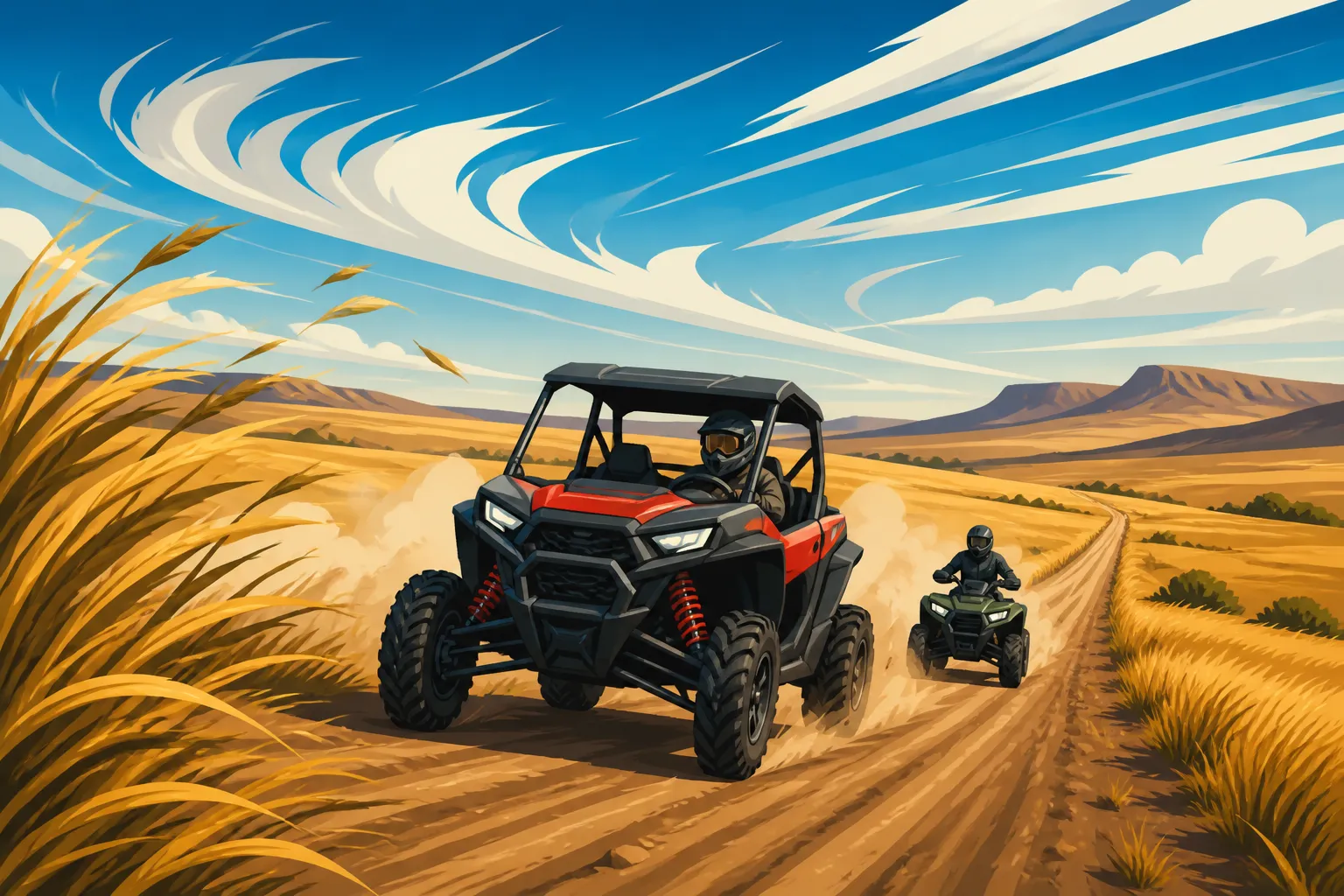
Wind on an Open Prairie Road
Riding an ATV or UTV across the wide-open prairie roads of South Dakota can be an incredibly exhilarating experience, offering breathtaking views and a sense of freedom that's hard to match. However, anyone who has spent time out on those long, often unpaved, stretches knows that the open expanse often comes with an uninvited, powerful companion: the wind. It's not just a minor inconvenience; a strong prairie wind can significantly impact your machine's stability, your visibility, and even your body temperature, turning an enjoyable ride into a real struggle for control and comfort. This guide is here to help you understand the unique challenges posed by South Dakota's prairie winds and equip you with the knowledge and strategies to tackle them safely and confidently, ensuring your next adventure is memorable for all the right reasons.
Understanding South Dakota's Prairie Wind and Your ATV/UTV
South Dakota is known for its vast, treeless plains, especially as you head east of the Black Hills. While this landscape offers incredible vistas, it also means there's nothing to break the wind. What might feel like a gentle breeze in a city can transform into a relentless, gusting force across miles of open prairie. This isn't just about feeling a chill; it's a dynamic force that directly interacts with your ATV or UTV, affecting everything from handling to comfort.
The Unseen Force: How Prairie Wind Affects Your Ride
Imagine you're cruising along a gravel section line, the sun warm on your face, when suddenly a powerful crosswind hits. Your machine, especially a lighter ATV, can feel like it's being pushed sideways, requiring constant input to stay on track. This isn't just unsettling; it's a genuine safety concern. The larger surface area of a UTV can act like a sail, making it even more susceptible to strong crosswinds, which can cause the vehicle to drift or even become unstable at higher speeds. You'll find yourself wrestling the handlebars or steering wheel, constantly correcting to maintain a straight line.
Beyond just the physical push, wind creates drag, forcing your engine to work harder to maintain speed. This means you might burn through fuel faster than expected, a crucial consideration when you're many miles from the nearest gas station. And let's not forget the "unseen" elements the wind carries: dust, grit, and sometimes even small debris. These can quickly turn a clear view into a hazy, irritating experience, impacting your ability to see hazards or other traffic. The constant buffeting also takes a toll on the rider, leading to increased fatigue and a greater risk of making a mistake. Understanding these subtle yet significant impacts is the first step in preparing for a truly South Dakota-style ride.
Identifying Wind-Prone Roads and Conditions
Not all South Dakota roads are equally windy, but many of the most scenic and appealing routes for ATVs and UTVs are indeed the most exposed. Think about those long, straight [South Dakota Rules for Riding a Gravel Road] or the less-traveled [South Dakota Rules for Riding a Section Line] that crisscross the agricultural heartland. These roads often lack tree lines, buildings, or significant elevation changes to block the wind. East of the Missouri River, where the terrain flattens significantly, the wind has an unobstructed path to build speed and intensity.
Even in areas with some hills, like parts of the western prairie, the wind can funnel through draws and valleys, creating localized gusts that catch riders by surprise. Always be aware of weather patterns; a cold front moving through, or even just a typical spring or fall day, can bring winds well over 20-30 miles per hour, making riding challenging. Checking the local weather forecast specifically for wind speed and direction before you head out is perhaps the most crucial pre-ride step. If the forecast calls for sustained high winds, it might be a day to stick to more sheltered routes or postpone your ride entirely.
Preparing Your Machine and Yourself for Windy Prairie Rides
Knowing the wind is coming is one thing; preparing for it is another. A little foresight and preparation, both for yourself and your machine, can make a world of difference in transforming a potentially miserable ride into a manageable, even enjoyable, experience.
Gear Up for the Gusts: Rider Preparation
When the wind is whipping across the prairie, your personal gear becomes your first line of defense. First and foremost, protect your eyes. Goggles or a full-face helmet with a clear visor are essential to shield your eyes from dust, grit, and the drying effects of the wind. Even if you're riding a UTV with a windshield, side gusts can still sneak in and cause irritation. Consider different lens tints for varying light conditions; a clear lens might be better on an overcast, dusty day, while a tinted one helps with bright sun glare. [South Dakota Eye Protection Rules for Riders] are certainly something to keep in mind, and the wind only amplifies their importance.
Next, focus on layering your clothing. Even on a warm day, the wind can create a significant wind chill, especially at speed. A windproof outer layer is invaluable. Think about a good riding jacket and pants that block the wind, and consider a balaclava or neck gaiter to protect exposed skin. These items also help keep dust and debris off your skin. Hydration is also key; the drying effect of the wind can quickly dehydrate you, so carry plenty of water. While South Dakota has [South Dakota Helmet Rules for ATV Riders], choosing a helmet that fits snugly and doesn't catch too much wind is also important for comfort and safety. A poorly fitting helmet can be constantly tugged by gusts, adding to rider fatigue.
Machine Maintenance and Modifications for Wind Stability
Your ATV or UTV's setup can greatly influence how it handles wind. Start with your tires. Ensure they are properly inflated to the manufacturer's recommendations. Over-inflated tires can reduce your contact patch with the ground, making your machine feel "floaty" and less stable in crosswinds, while under-inflated tires can lead to sluggish handling. Experimenting with slightly lower tire pressure (within safe limits) might offer a bit more stability on extremely windy days, but always check your owner's manual.
Suspension settings can also play a role. A stiffer suspension might help reduce body roll in strong gusts, but don't overdo it to the point of making the ride uncomfortable or losing traction. Consider adding weight if your machine feels particularly light or top-heavy; however, be mindful of your vehicle's weight limits. For UTVs, a full windshield is a game-changer for wind protection. Brands like SuperATV offer a range of windshields, from full enclosures that virtually eliminate wind and dust to half-windshields that still offer significant protection while allowing some airflow. A full cab enclosure, also available from outfitters like SuperATV, provides the ultimate protection from the elements, including wind-driven dust and cold. While a roof won't block the wind directly, it can offer some relief from the sun and, combined with a windshield, create a more comfortable cabin.
Safe Riding Strategies for Windy Conditions
Even with the best gear and a well-prepped machine, you still need to adjust your riding style when battling the South Dakota wind. It's about being proactive and maintaining control in challenging, dynamic conditions.
Navigating Open Roads with Crosswinds and Headwinds
When riding into a strong headwind, your machine will naturally feel slower and less powerful. Don't fight it by trying to maintain your usual speed; reduce your throttle and accept a slower pace. Pushing your engine too hard against a headwind can lead to overheating and unnecessary strain. With crosswinds, the real challenge begins. You'll likely need to "lean into" the wind, much like a motorcyclist does in a turn, to counteract the lateral force. This means subtly shifting your weight or applying counter-steering (turning the handlebars slightly into the wind) to keep your machine tracking straight.
Avoid sudden steering inputs, especially at higher speeds, as these can destabilize your machine. A gradual, controlled correction is always better. Keep both hands firmly on the handlebars or steering wheel at all times. If you're riding in a group, maintain a greater [South Dakota Rules for Riding a Gravel Road] distance than usual. The lead rider might kick up dust that quickly obscures the view for those behind, and gusty conditions only make this worse. Also, be particularly cautious when passing large vehicles like hay trucks; the sudden loss of a wind block can create a powerful, unexpected gust that could throw you off balance. This is especially true when riding the [South Dakota Ditch Riding Rules Explained] where you might be close to highway traffic.
Dealing with Environmental Challenges: Dust, Debris, and Visibility
Prairie winds are notorious for kicking up dust, turning clear skies hazy in a matter of seconds. This significantly reduces visibility, not just for you but for other vehicles on the road. Always assume limited visibility and slow down. Increase your following distance to give yourself more time to react to hazards. If you find yourself in a full-blown dust storm, pull over to a safe location, turn on your headlights and taillights, and wait for conditions to improve. Never try to push through zero visibility; it's simply too dangerous.
Debris, from small stones to tumbleweeds, can also become projectiles in high winds. Always scan the road ahead for unexpected objects. If you're running a UTV, consider full doors or a full cab enclosure, perhaps an aftermarket option from SuperATV, to keep dust and debris out of the cabin. For those on ATVs, a good set of handguards can protect your hands from flying grit. Be particularly vigilant when riding through areas with active agriculture, as plowed fields can release huge amounts of dust. Checking a [South Dakota Trail Conditions Before You Ride] report can sometimes provide insights into localized dust issues.
| Factor | Impact of Wind | Mitigation Strategy (Rider) | Mitigation Strategy (Machine) |
|---|---|---|---|
| Stability | Lateral push, drift, potential instability | Lean into crosswinds, steady steering inputs | Check tire pressure, adjust suspension slightly |
| Visibility | Dust, flying debris, reduced clarity | Goggles/visor, dust mask, slow down | Windshield (full), cab enclosure, handguards |
| Comfort | Wind chill, drying skin, fatigue | Layered, windproof clothing, balaclava, hydrate | Windshield (full), cab enclosure |
| Performance | Increased drag, higher fuel consumption | Reduce speed, avoid fighting the wind | Ensure engine is well-maintained |
| Safety | Loss of control, crashes, hitting debris | Maintain distance, scan road, pull over if severe | Proper maintenance, suitable modifications |
Riding through the South Dakota prairie can be a magical experience, but it demands respect for the elements. The wind, though often unseen, is a powerful force that can challenge even experienced riders. By understanding its effects, preparing yourself and your machine with the right gear and modifications (like a durable windshield from SuperATV), and adopting smart riding strategies, you can safely navigate those iconic open roads. Always be realistic about conditions, listen to your instincts, and prioritize safety above all else. Your next prairie adventure will be all the more rewarding for it.
Disclaimer
This article is for general informational purposes only and does not constitute professional advice. Laws, prices and regulations vary by location and change over time. Consult a qualified professional for guidance on your specific situation.