Reading the Regulatory Sign at a Ditch Entrance
It's incredibly frustrating to be out enjoying South Dakota's beautiful open spaces on your ATV or UTV, only to hit a stretch of road and be unsure if you can legally ride in the ditch. This constant uncertainty about whether you're allowed to keep rolling or if you need to pull onto the shoulder (or worse, load up) can really put a damper on your ride. This comprehensive guide is here to demystify the regulatory signs you'll encounter at ditch entrances, empowering you to confidently understand where you can and cannot ride, keeping your adventures legal and worry-free.
Understanding South Dakota's Ditch Riding Rules
Before we dive into decoding those signs, it's crucial to grasp the foundational rules governing ditch riding in South Dakota. Many riders assume a blanket ban or free-for-all, but the reality is more nuanced, involving a blend of state-level allowances and county-level restrictions. Navigating these rules successfully is key to an enjoyable and legal ride.
The General Rule: Ditch Riding is Permitted Unless Posted
Here's the good news that often surprises riders: by default, riding your ATV or UTV in the ditch of a public road in South Dakota is generally permitted. Yes, you read that right! The state leans towards allowing this activity, recognizing the practicalities and recreational opportunities it provides. However, and this is a big "however," this permission isn't absolute. It's an "unless posted otherwise" situation. This means that while the baseline is permission, individual counties have the authority to override this default rule within their borders.
You can often find yourself riding along, comfortably in the ditch, only to suddenly realize you've crossed an invisible county line, and the rules might have subtly changed. This is precisely why paying attention to signage is paramount. Without clear guidance, it's easy to inadvertently violate a local ordinance, even with the best intentions. Think of it like a universal speed limit: it's 55 MPH unless a sign tells you otherwise for a specific stretch of road. The ditch riding rules operate similarly. It's a fundamental aspect of [South Dakota Ditch Riding Rules].
What Constitutes a "Ditch" in South Dakota?
When we talk about "ditch riding" in South Dakota, we're not talking about riding on the paved or graveled travel portion of the road, nor are we referring to riding on the shoulder. Instead, we're talking about the unpaved area immediately adjacent to the road, typically designed to manage water runoff. This area falls within what's legally known as the "right-of-way" for that road. This right-of-way extends beyond the paved surface, encompassing the shoulder, the ditch bottom, and even the back-slope of the ditch up to the fence line or property boundary.
Most commonly, riders utilize the bottom of the ditch or the gentle slope of the back-slope. It's about staying off the main thoroughfare, reducing conflict with other vehicles, and often navigating more forgiving terrain. However, there are nuances to this definition. For example, some rules might refer to the "outer edge rule," meaning you should generally stay as far away from the traffic lane as safely possible. Understanding this distinction is vital because riding on the shoulder or actual roadway, even for a short distance, can carry different penalties and risks than staying within the designated ditch area. This specific definition is crucial for adherence to [South Dakota's Ditch Riding Rule].
Why Counties Opt Out and How They Signal It
So, if the state generally permits ditch riding, why do some counties choose to prohibit it? There are several legitimate reasons. Safety is a primary concern; increased traffic, narrow ditches, or dangerous intersections might prompt a county to ban recreational ORV use for public safety. Property damage can also be a factor, especially in agricultural areas where ditches might abut fields and concerns about erosion or trespassing arise. Environmental considerations, like protecting delicate ecosystems or water quality in certain areas, could also play a role.
When a county decides to "opt out" of the state's general permission, they are legally required to notify riders through clear, conspicuous regulatory signs. This isn't something they can do by simply passing a resolution and expecting everyone to know. The burden is on the county to erect visible signs at key entry points into the restricted areas. These signs are your primary indicator that the rules have changed. Understanding that [Why South Dakota Counties May Only Opt Out] is important, as it explains their legal framework for doing so. Without proper signage, a prohibition can be difficult to enforce effectively.
Decoding the Regulatory Signs
Now that we understand the framework, let's get down to the brass tacks: what do those signs actually look like, and what are they telling you? Knowing how to interpret them quickly and accurately can save you from a potential citation and ensure your ride stays on the right side of the law.
Common Signage You'll Encounter
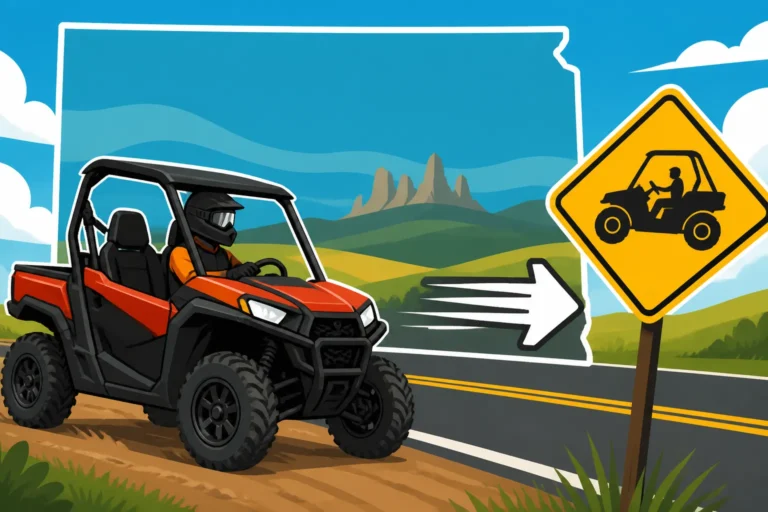
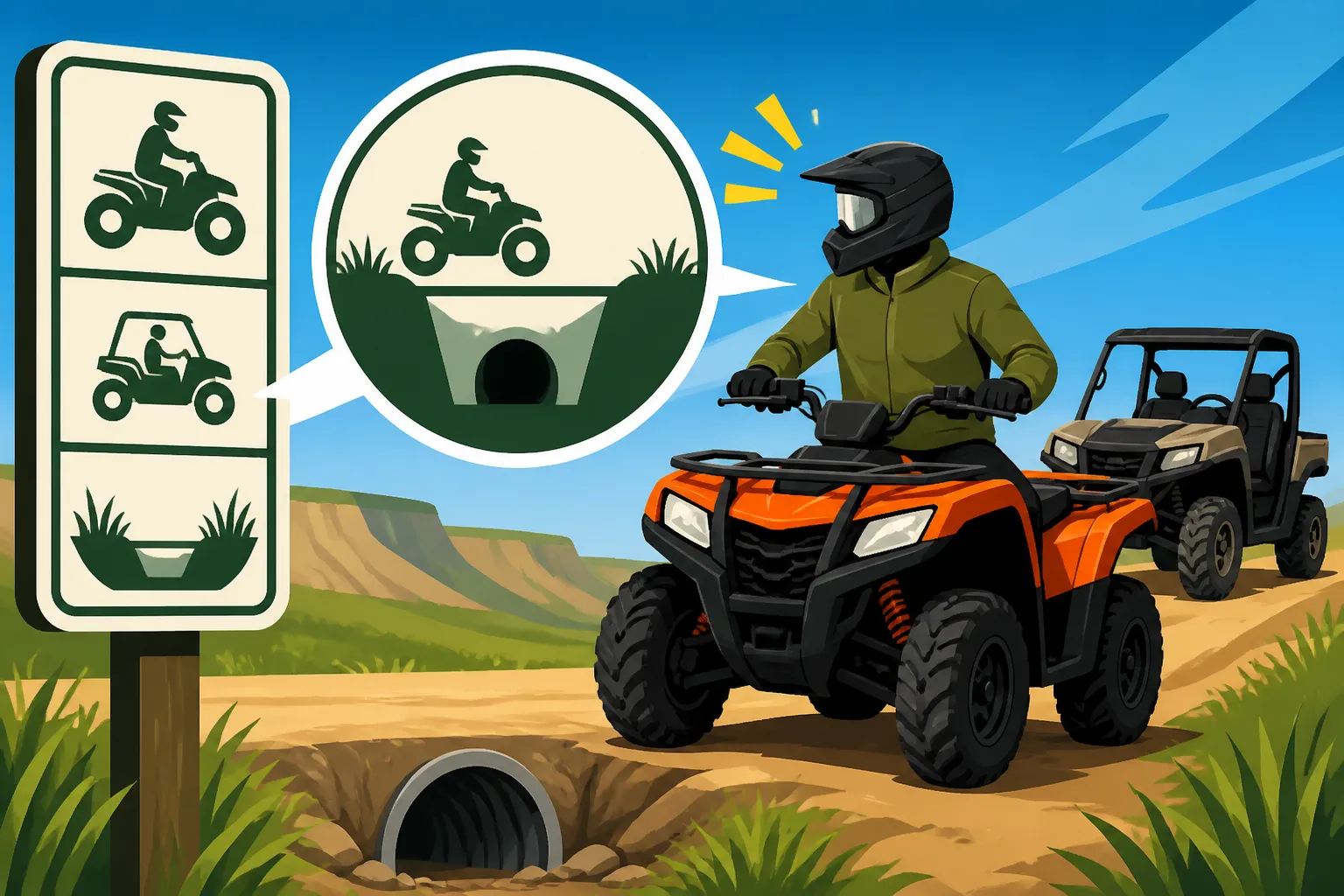
The signs you'll see are generally designed to be straightforward, though sometimes local variations can add a layer of confusion. Typically, a regulatory sign prohibiting ditch riding will feature a clear symbol or text. You might see a white rectangular sign with black lettering, similar to other traffic control signs. Common phrases include "NO ORV ACCESS," "DITCH RIDING PROHIBITED," or "ATV/UTV USE PROHIBITED IN RIGHT-OF-WAY." Sometimes, you'll see a pictorial sign: a silhouette of an ATV or UTV with a red circle and a diagonal line through it, indicating "no entry" or "prohibited."
It's important to distinguish these from less formal or unofficial warnings. While a property owner might put up a "No Trespassing" sign, that's different from a county-posted regulatory sign for public ditches. The official signs are usually consistent in appearance within a county and are placed at logical points where riders might enter the ditch. They're not hidden away; they're meant to be seen. If you're riding with aftermarket accessories from a company like SuperATV, which enhance your vehicle's capability, you'll want to ensure you're using those capabilities in permissible areas.
What to Look For and What It Means
When you approach a ditch entrance or a new stretch of road, make it a habit to scan for signs. Look for any official-looking signage posted at the fence line, near a culvert, or at an intersection.
Here’s a breakdown of what to look for and what it signifies:
- Explicit Prohibition: Signs stating "NO ORV ACCESS" or "DITCH RIDING PROHIBITED" are unambiguous. They mean exactly what they say: do not ride your off-road vehicle in the ditch beyond this point. If you see this, it's time to either find an alternative route, stay on the permitted road if your vehicle is street legal, or turn around.
- Pictorial Symbols: A universal symbol for "prohibited" (red circle with a diagonal line) over an ATV or UTV icon is equally clear. It's a visual shorthand for the same message.
- No Sign Present: This is where the default rule comes into play. If there is no regulatory sign present specifically prohibiting ditch riding, then generally, it is permitted. This doesn't mean you should ride recklessly or assume all conditions are safe, but legally, the path is open.
- Contextual Information: Sometimes, a sign might provide additional context, such as "No ORV Access For Next 5 Miles" or "Designated Trail Access Only." Always read the full text if available to understand the scope of the restriction or allowance.
The critical takeaway here is that the absence of a prohibitory sign is usually your green light, but an explicit prohibitory sign is a definite red light. These signs must be present to enforce a ban, making them critical for [Regulatory Signs a South Dakota County Must Post].
Here’s a quick reference table for common scenarios:
| Sign Type / Indication | Meaning | Action for Rider |
|---|---|---|
| "No ORV Access" | Ditch riding prohibited for off-road vehicles in this area. | Do not enter or ride in the ditch; find an alternative route or stay on pavement if legal. |
| "Ditch Riding Prohibited" | Explicitly bans riding in the ditch. | Stay out of the ditch. Seek other permitted riding areas. |
| ORV Icon with Red Slash | Visual prohibition of off-road vehicles in the ditch. | Treat it the same as a "No ORV Access" sign. |
| No Sign Present | Ditch riding is generally permitted by state law, unless other rules apply. | Proceed with caution, follow all other state and local laws, and use good judgment. |
| "Road Crossing Permitted" | Explicitly states highway crossings are allowed, even if ditch riding is not. | Cross the highway directly and safely; do not linger in the ditch. |
| "Agricultural Use Only" | Ditch use limited to agricultural/utility vehicles. | Recreational ORV use is prohibited. |
The Critical Information a Sign Must Convey
For a regulatory sign to be legally binding and enforceable, it must convey critical information clearly and unambiguously. This isn't just a courtesy; it's a legal requirement. A sign needs to:
- Clearly State the Prohibition: It must explicitly communicate that ditch riding or ORV use is not allowed. Vague signs, or those that could be interpreted in multiple ways, may not hold up.
- Be Visible and Legible: The sign must be placed in a location where a reasonable person operating an ATV/UTV would see it. It can't be obscured by trees, placed too low, or be so faded that it's unreadable. This means it should be visible from a sufficient distance for a rider to react safely.
- Indicate the Scope (if applicable): While not always present, some signs might indicate the length of the prohibited area (e.g., "next 10 miles"). If no scope is given, assume the prohibition applies until you see a sign explicitly lifting it, or you leave the county.
If you encounter a sign that seems unclear, unreadable, or improperly placed, it creates a gray area. While it might be tempting to assume it's not enforceable, it's always safer to err on the side of caution. An officer might still issue a citation, and it would be up to you to challenge its validity. Remember, the goal is to avoid trouble, not to test the limits of legal loopholes.
Navigating Exceptions and Special Circumstances
Even with clear signage, there are often exceptions and specific scenarios that riders need to understand. South Dakota's rules are designed to balance recreational access with public safety and practical needs, leading to some carve-outs you should be aware of.
Highway Crossings and Why They Are Always Permitted
This is a really important exception that often causes confusion. Even if a county has explicitly banned ditch riding along a particular road or within its borders, ATVs and UTVs are generally still permitted to cross a highway. This is a crucial distinction. You cannot ride down the ditch, but you can approach a road, cross it directly and safely to access another ditch, trail, or private property on the other side.
The logic here is practical: completely banning crossings would create impassable barriers for riders and landowners alike, effectively stranding machines or forcing long, impractical detours. However, "crossing" means just that: a direct, perpendicular movement across the road, yielding to all traffic, and doing so as quickly and safely as possible. It does not mean riding along the shoulder to find a better crossing point, or stopping in the middle of the road. This right to cross is a fundamental part of [South Dakota Rules for Crossing a Highway], and counties cannot override it. It's why [Why No County Can Close a Highway Crossing] is a fixed rule.
Agricultural and Utility Exemptions
South Dakota, with its vast agricultural lands, recognizes that certain vehicles have legitimate reasons to operate within road ditches that recreational vehicles do not. Therefore, agricultural equipment and utility service vehicles (like those used for power line maintenance or surveying) often have specific exemptions that allow them to utilize ditches, even in areas where recreational ORV use is prohibited.
This exemption is crucial for farmers needing to access fields, move equipment, or utility crews performing maintenance on infrastructure located within the right-of-way. It’s important for recreational riders to understand that these exemptions do not extend to them. Just because you see a tractor or a utility truck in a ditch doesn't mean you can follow suit if a "No ORV Access" sign is posted. Always clarify your specific use case. These specific carve-outs are detailed in [Agricultural and Utility Vehicles Exempted]. Your recreational ATV, even if equipped with heavy-duty components from SuperATV, won't fall under these agricultural or utility categories.
What to Do When There's No Sign
As we've established, if there is no official regulatory sign prohibiting ditch riding, the general rule in South Dakota is that it's permitted. This means you are typically allowed to ride in the ditch. However, this doesn't absolve you of all other responsibilities or common sense.
Even without a sign, always exercise caution and good judgment. Consider the following:
- Safety First: Is the ditch wide enough? Are there hidden obstacles, sharp drops, or heavy traffic that make riding unsafe?
- Private Property: Be absolutely certain you are still within the public right-of-way and not veering onto private land. "No Trespassing" signs can still apply even if ditch riding is otherwise permitted.
- Other Regulations: Remember that other state and local laws still apply, such as minimum age requirements for riders (e.g., [South Dakota Minimum Age for Ditch Riding]), helmet laws (if applicable), and rules about operating under the influence.
- When in Doubt, Ask: If you are genuinely unsure about a specific stretch of road or a particular county's rules, it's always best to inquire. You can contact the county sheriff's office, the county treasurer, or even the Department of Revenue's motor vehicle division. They are the authorities who can provide clarity.
Ultimately, while [Ditch Riding Is Legal Until a County Opts Out], your personal responsibility for safe and respectful riding remains paramount. A South Dakota Trooper, checking roadside, will look for adherence to all applicable laws, not just signage. [What a South Dakota Trooper Checks Roadside] can include everything from your vehicle's condition to your adherence to local ordinances. Being informed and prepared makes for the best riding experience.
Disclaimer
This article is for general informational purposes only and does not constitute professional advice. Laws, prices and regulations vary by location and change over time. Consult a qualified professional for guidance on your specific situation.