The Driver’s License Exception for South Dakota Riders
It can be incredibly confusing to figure out the exact requirements for riding your ATV or UTV on South Dakota roads, especially when it comes to something as fundamental as a driver's license. Many folks assume that if you're on a public road, even a gravel section line, you absolutely need a standard driver's license, no exceptions. This guide will cut through the uncertainty and explain the specific instances where you might be able to ride your off-road machine in South Dakota without a traditional driver's license, alongside outlining when you absolutely do need one, to keep you on the right side of the law.
The Core Rule: When a Driver's License is Generally Required
Let's start with the baseline, because it's important to understand the general expectation before diving into the exceptions. For most public road use in South Dakota, operating a vehicle, including a street-legal ATV or UTV, typically requires a valid driver's license. This isn't just about showing you know how to drive; it's about proving you've passed the necessary tests, understand the rules of the road, and are insured. The state wants to ensure that anyone piloting a motorized vehicle on shared public thoroughfares has demonstrated a baseline level of competency and responsibility.
Operating a Street-Legal ATV or UTV on Roads
If you've gone through the process of making your ATV or UTV street-legal in South Dakota – getting it titled, registered with a motorcycle plate, and equipping it with all the necessary safety gear like headlights, brake lights, a horn, and mirrors – then you're generally expected to treat it like any other road-going vehicle. This means the person behind the handlebars or steering wheel needs to hold a valid driver's license. The state views these machines, once they meet the criteria for road use, as essentially another type of motorcycle for licensing purposes. You'll find specific details on what qualifies your machine for this status in [What South Dakota Requires to Plate an ATV].
Think about it from a common-sense perspective: you wouldn't let someone without a driver's license drive your car down Main Street, right? The same logic applies here. When your machine is sharing the road with cars, trucks, and motorcycles, the state wants every operator to have met a minimum standard. This rule applies whether you're cruising through the Black Hills on a paved highway, navigating a county gravel road, or even just crossing a paved road to get to another trail. The moment your wheels hit that public pavement or gravel, the expectation is that a licensed driver is in control.
The Role of Engine Size in Licensing
South Dakota law has some interesting nuances, especially concerning engine size, that indirectly tie into licensing for certain machines. For instance, to even get a motorcycle plate for an ATV, the engine generally needs to be 200cc or greater. For two-wheeled dirt bikes, it's 120cc. If your machine doesn't meet these thresholds, it simply cannot be plated for road use, which in turn means it cannot be legally operated on public roads, licensed or not. This effectively sidesteps the driver's license question for smaller machines, as they are prohibited from road use regardless of the operator's license status.
This distinction is crucial because it filters out many youth ATVs and smaller, less powerful utility vehicles from ever seeing road action. It reinforces the idea that road-legal machines are typically more robust and capable of handling traffic conditions, thus warranting a licensed operator. The focus here isn't solely on the operator's license, but on the machine's eligibility for road use, which then dictates the licensing requirement for the driver. You can read more about these thresholds in [South Dakota's 200cc Motorcycle Licensing Rule].
Specific Driver's License Exceptions for South Dakota Riders
Now, let's get to the heart of the matter – those specific scenarios where you might be able to operate an ATV or UTV in South Dakota without a conventional driver's license. These exceptions are typically tied to the location of operation or the specific purpose of the vehicle, rather than a blanket waiver for all riders. It's vital to understand the precise boundaries of these exceptions to avoid unknowingly breaking the law.
Riding on Private Property
This is perhaps the most straightforward exception. If you own private land, or have explicit permission from a landowner, you can generally ride your ATV or UTV on that private property without needing a driver's license. This means tearing around your own ranch, cruising through a friend's pasture with their blessing, or exploring leased hunting ground is usually fair game, regardless of whether you hold a driver's license. The state's public road laws simply don't extend into private domains in the same way.
However, "private property" isn't a free-for-all. It's not a license to operate recklessly or to ignore basic safety. The landowner still sets the rules, and you are bound by those. If a rancher says "no helmets," that's their call on their land, though it's never a good idea to skip safety gear. More importantly, any use of the vehicle that crosses onto public land or right-of-way, even for a brief moment, brings you back under state law. This means riding across a county road to get from one section of your ranch to another is not covered by the private property exception and would typically require a licensed driver and a street-legal machine. Always consult [South Dakota Rules for Riding Private Land] for more details on this.
Agricultural and Utility Use Exemptions
South Dakota, with its vast agricultural landscape, understands that ATVs and UTVs are often essential tools for ranching, farming, and other utility work. Because of this, there are exemptions for vehicles used primarily for agricultural purposes or for utility maintenance. If you're using your ATV or UTV as a bona fide farm implement – checking fences, herding cattle, hauling feed, or performing other legitimate agricultural tasks – you are generally exempt from many of the road-use rules, including the driver's license requirement, even if you briefly operate on a public road adjacent to your property.
This exemption is not for joyriding. It's specifically for work. A young ranch hand, for example, might be operating a UTV to move hay bales across a section line road between fields without needing a driver's license. The key here is the purpose of the travel. Similarly, utility workers using these machines to access power lines or pipelines may also fall under specific exemptions. These vehicles are seen as extensions of the work being performed, rather than recreational vehicles. However, if that same ranch hand decides to take the UTV into town for groceries, the exemption would no longer apply, and a driver's license (and a street-legal machine) would be necessary. Companies like SuperATV, known for their durable aftermarket parts and accessories, often cater to the utility and farm market, providing robust components for machines used in these demanding environments.
Ditch Riding Regulations and Age Limits
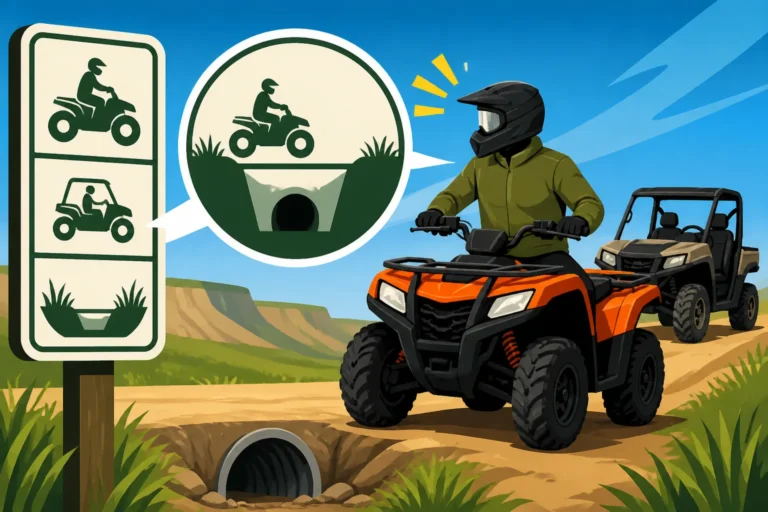
South Dakota has a unique provision for riding in road ditches, which can sometimes come with an age-based exception that indirectly touches upon driver's licensing. Generally, if a county has not opted out of ditch riding, and your machine meets specific criteria, you can ride in the bottom of the right-of-way ditch adjacent to a public highway. The minimum age for riding in these ditches is typically 12 years old, without a driver's license.
This is a specific "right-of-way" exception, not a public road exception. You are explicitly not on the travel portion of the road. The catch, however, is that this applies only to the ditch bottom and has strict rules regarding crossing highways and avoiding certain types of ditches (like those along interstates or snowmobile trails). Furthermore, if a county has specifically banned ditch riding, then this exception goes out the window entirely within that county's boundaries. It's a nuanced rule designed to allow some limited public access for younger riders, but it's far from a free pass. Understanding [South Dakota Ditch Riding Rules Explained] is crucial if you plan to utilize this provision, especially concerning the age limits outlined in [Twelve Years Old in a South Dakota Ditch].
Riding on Designated Trails
When you're riding on a designated off-road trail system, such as those found in the Black Hills National Forest or at the Oahe Downstream OHV Area, a standard driver's license is generally not required, although a Motorized Trail Permit usually is. These areas are specifically managed for off-road recreation, and the rules differ significantly from public road regulations. Here, the focus is on responsible off-road operation, safety gear, and adherence to trail rules (like width restrictions and seasonal closures), rather than holding a traditional driver's license.
This is where many younger riders gain valuable experience. As long as they meet the minimum age requirements for operating an ATV/UTV (which is often tied to supervision rules for those under 16, typically 12 for supervised riding on public land), they can enjoy these trails. The emphasis is on safety and skill for the terrain, not road-driving proficiency. However, keep in mind that getting to these trailheads might involve traversing public roads, in which case the machine would need to be trailered, or the operator would need a driver's license if the machine is street-legal. The distinction between public road and designated trail is critical for understanding licensing requirements. You can learn more about trail specific requirements in [South Dakota Motorized Trail Permit].
Age Requirements and Supervision for South Dakota Riders
South Dakota's laws often weave age requirements into the discussion of who can ride, and under what conditions. These age rules sometimes act as de facto "license exceptions" by allowing younger, unlicensed riders to operate machines in specific contexts. Understanding these age gates and supervision mandates is key to legal riding, especially for families.
Minimum Age for Operation on Public Lands and Trails
As mentioned, for public lands and designated trails, there isn't a blanket driver's license requirement. Instead, there are often age minimums, usually coupled with supervision rules for younger riders. In South Dakota, generally, riders as young as 12 can operate an ATV or UTV on public lands and designated trails, provided they are under the direct supervision of an adult (18 years or older). This means a parent or guardian often needs to be riding nearby, actively monitoring the younger rider.
This setup is designed to allow youth to learn and enjoy off-road riding in a controlled environment, gaining experience before they might even be eligible for a driver's permit. It acknowledges that off-road skills are distinct from on-road driving skills. However, it places a significant responsibility on the supervising adult to ensure safety and compliance with all trail rules. For example, a 14-year-old on a Black Hills trail needs an adult nearby, not just at the trailhead. This is a great opportunity for families to enjoy the outdoors together, and many UTV rentals in the Black Hills cater to family groups, offering multi-seat machines.
Supervision Requirements for Young Riders
The supervision rule is not merely about having an adult present somewhere in the park; it often means direct, hands-on supervision. For instance, if a 14-year-old is riding an ATV on a designated forest trail, the supervising adult usually needs to be riding another ATV in close proximity, able to intervene or provide assistance immediately. This isn't a hard-and-fast rule for every single scenario, but it reflects the spirit of the law, which is to ensure the safety and responsible operation by minors.
| Age of Rider | Location of Operation | Driver's License Required | Supervision Required |
|---|---|---|---|
| Under 12 | Private Property | No | Yes, usually adult |
| Under 12 | Public Roads/Ditches | No (Prohibited) | N/A |
| 12-15 | Private Property | No | Yes, usually adult |
| 12-15 | Designated Trails | No | Yes, by 18+ adult |
| 12-15 | Road Ditches (legal) | No | Yes, by 18+ adult |
| 12-15 | Public Roads | No (Prohibited) | N/A |
| 16-17 | Private Property | No | No (if competent) |
| 16-17 | Designated Trails | No | No (if competent) |
| 16-17 | Road Ditches (legal) | No | No (if competent) |
| 16-17 | Public Roads (plated) | Yes (valid driver's lic.) | No |
| 18+ | Private Property | No | No |
| 18+ | Designated Trails | No | No |
| 18+ | Road Ditches (legal) | No | No |
| 18+ | Public Roads (plated) | Yes (valid driver's lic.) | No |
Note: "Prohibited" means the machine itself cannot legally be operated in that location by anyone under the age where a license would be required, regardless of supervision.
The specifics of [South Dakota Supervision Rules for Young Riders] are paramount here. These rules often define not just who must supervise, but also how that supervision occurs. The goal is to instill safe riding habits from a young age, preventing accidents and ensuring compliance with environmental and trail regulations. Proper training and safety courses, even if not legally mandated in South Dakota, are always highly recommended for young riders to develop the necessary skills and awareness.
Riding on Private Property: When the Rules Change
As we touched on earlier, private property offers the most significant latitude when it comes to driver's license requirements for ATV and UTV operation in South Dakota. This is where the state generally defers to the property owner's discretion, as long as public safety isn't overtly jeopardized and laws like reckless endangerment aren't being broken.
Owner's Discretion and Internal Rules
When you're on private land, the property owner effectively becomes the arbiter of many rules that would otherwise be dictated by the state. This means they can allow individuals, regardless of whether they hold a driver's license, to operate ATVs and UTVs on their property. For instance, a farmer might let their 15-year-old, unlicensed child drive a UTV to assist with chores around the farm, even if that child wouldn't be old enough or licensed to drive on a public road. The owner sets the rules regarding speed, safety gear, and general conduct.
This flexibility is a huge benefit for those who use these machines for work or recreation entirely within their own boundaries. It recognizes the practicalities of land management and personal freedom. However, it's also a responsibility. Landowners should still prioritize safety, especially when allowing inexperienced or unlicensed operators. While the state might not demand a driver's license, common sense and a duty of care still apply. This includes ensuring machines are properly maintained, perhaps with durable components from a brand like SuperATV, to prevent mechanical failures that could lead to accidents.
Understanding the Boundaries of "Private"
The biggest pitfall for riders on private property is misunderstanding where "private" ends and "public" begins. It's not always as clear-cut as a fence line. Drainage easements, utility access roads, section line roads that cross your property, and even ditches adjacent to public roads can all be areas where public regulations might still apply, even if they feel like part of your private domain. A short jaunt across a publicly maintained gravel road to access another part of your field, for example, often falls outside the private property exemption and would typically require a licensed driver and a street-legal machine.
It's crucial for riders and landowners to clearly understand their property lines and any public easements or rights-of-way that might traverse their land. Operating an unlicensed or unplated machine, or allowing an unlicensed driver on what turns out to be public access, can quickly lead to citations. If you're unsure, it's always best to err on the side of caution or consult with the local county treasurer's office or sheriff's department. Knowing the exact boundaries helps prevent accidental violations when transitioning from private to public access, as detailed in [South Dakota Landowner Permission Rules].
Potential Consequences of Riding Without a Proper License or Exception
Ignoring South Dakota's driver's license laws for ATV and UTV operation, or misinterpreting the exceptions, can lead to a range of unpleasant and costly consequences. These aren't just minor inconveniences; they can involve significant fines, legal trouble, and even affect your ability to drive other vehicles.
Fines and Penalties for Unlicensed Operation
Operating an ATV or UTV on a public road in South Dakota without a valid driver's license, when one is required, is typically treated much like operating any other motor vehicle without a license. This can result in a Class 2 Misdemeanor, which carries substantial penalties. Fines can range from several hundred dollars, and you could face jail time, though this is less common for a first offense. More importantly, it creates a criminal record.
Beyond the immediate legal penalties, you could also face administrative consequences from the Department of Public Safety, such as points on your driving record (if you have one) or even the suspension of your driving privileges for other vehicles. The state takes unlicensed operation seriously because it undermines the safety framework of its roadways. The law isn't just about whether you can operate the machine, but whether you've been formally authorized by the state to do so on public thoroughfares. Understanding [What a Class 2 Misdemeanor Costs a Rider] can give you a clear picture of the financial implications.
Vehicle Impoundment and Insurance Issues
In addition to fines, law enforcement has the authority to impound your ATV or UTV if it's being operated illegally, including by an unlicensed driver where a license is required. This means not only do you get a ticket, but your machine could be towed and stored at your expense, adding hundreds of dollars in impound and daily storage fees. Getting your machine back can be a complicated and costly process.
Furthermore, riding without a proper license can completely void your insurance coverage if you're involved in an accident. Most insurance policies have clauses that stipulate the operator must be legally licensed to operate the vehicle. If you're unlicensed and cause an accident, your insurance company could deny any claims for damages or injuries, leaving you personally responsible for potentially massive medical bills, property damage, and legal fees. This financial exposure is perhaps one of the most significant risks of riding without the proper credentials. It’s always best to ensure you and your machine are fully compliant, which includes having any necessary parts from reliable suppliers.
Navigating South Dakota's Unique Rules for Young Riders and Farm Use
South Dakota's blend of rural tradition and recreational opportunity means its ATV/UTV laws often try to balance safety with practicality. For young riders and those using machines for farm work, these rules can be particularly complex but also offer vital flexibility.
Teaching Young Riders Safely and Legally
Many parents want to introduce their children to ATV and UTV riding, and South Dakota's laws allow for this, primarily through the private property and designated trail exceptions. The key is to start young riders in controlled environments, ensuring they are adequately supervised by an adult over 18. This means teaching them on private land or on specific youth-friendly trails where a driver's license is not required for operation.
Even though a safety course might not be mandated by the state, it is highly advisable. Courses teach fundamental skills, responsible riding practices, and hazard awareness that can literally save a life. [South Dakota Safety Course Requirements] is a good place to start for more information on available training. This also helps young riders understand the distinct differences between trail riding and road riding, instilling the knowledge that a driver's license will be essential when they are old enough and choose to operate a plated machine on public roads. Patience and consistent reinforcement of safety principles are far more valuable than rushing them onto public thoroughfares before they're ready or legally allowed.
The Nuances of Agricultural and Utility Vehicle Exemptions
While the agricultural exemption allows for unlicensed operation on roads for specific work-related tasks, it's not an open invitation for all rural residents. The vehicle must be primarily used for agricultural purposes, and the travel on public roads must be incidental to that agricultural operation. This means hauling fencing supplies from one field to another directly across a road is generally okay, but taking the same UTV into the nearest town for lunch would not be.
Law enforcement officers in agricultural areas are generally familiar with these exemptions but will still enforce the spirit of the law. If it looks like you're using a "farm exemption" as a loophole for recreational road use, you could still be cited. For example, fitting your farm UTV with high-performance components or flashy accessories typically associated with recreational use might raise questions. The focus remains on the utility and necessity of the travel for agricultural purposes. It's always best to carry proof of your agricultural activity if you're utilizing this exemption on public roads, such as a farm registration or documentation. Many agricultural users, knowing the demands on their equipment, invest in heavy-duty components from brands like SuperATV to ensure their machines are reliable workhorses.
Disclaimer
This article is for general informational purposes only and does not constitute professional advice. Laws, prices and regulations vary by location and change over time. Consult a qualified professional for guidance on your specific situation.