Showing a Plate and a Decal
It's incredibly frustrating when you're just trying to enjoy the incredible off-road opportunities South Dakota offers, but you're constantly second-guessing if your machine is properly equipped and permitted. The rules can feel like a tangled mess of regulations, especially when you're trying to figure out if you need a license plate, a trail permit, or both, and where to put them! This guide is here to untangle that confusion, walking you through exactly what visible markers – your license plate and trail permit decal – you need to have displayed on your ATV or UTV to ride legally on South Dakota's roads and trails.
The Dual Requirements: Plate for Roads, Decal for Trails
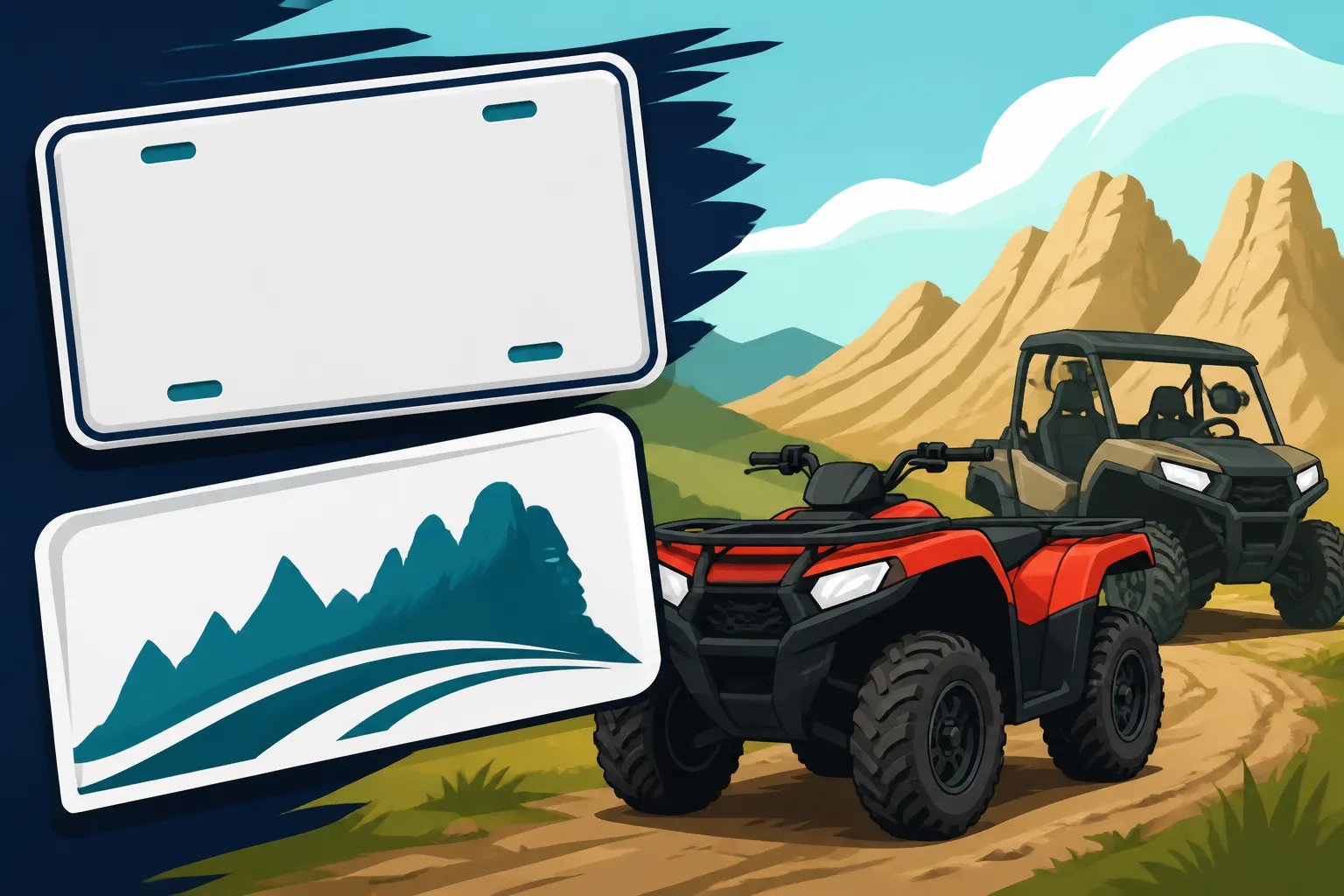
When it comes to legally operating your ATV or UTV in South Dakota, you're essentially dealing with two distinct sets of rules, each with its own visible identifier. If you plan to ride on public roads, you'll need a South Dakota license plate. If your adventure takes you onto the state's amazing network of motorized trails, particularly those managed by the U.S. Forest Service in the Black Hills, you'll need a Black Hills Motorized Trail Permit decal. It's not usually an either/or situation; many riders find themselves needing both depending on where they intend to explore.
Imagine planning a fantastic trip to the Black Hills. You’ve got your maps, your gear, and your machine is humming. You might start your day by trailering your UTV to a trailhead. But perhaps that trailhead requires you to travel a few miles on a gravel county road to get there, or you want to ride between two small towns on a paved route. For those road segments, your machine needs to be street-legal with a valid license plate. Once you hit the actual trail system, that's where the trail permit decal comes into play. Without both, you could quickly find yourself facing a conversation with a local law enforcement officer or a Forest Service ranger, and nobody wants their adventure cut short by a citation. This dual system ensures that funds are collected for both road maintenance and trail development, but it places the burden on us, the riders, to understand and comply with each requirement.
Understanding South Dakota's Street Legal Plate
Getting a license plate for your ATV or UTV in South Dakota is what makes it "street legal" in the eyes of the law, allowing you to ride on approved public roads. This isn't just about having a piece of metal on the back; it's about indicating that your machine has met specific equipment requirements and that you've paid the necessary taxes and fees to the state. The plate acts as visible proof of registration for road use.
When you successfully go through the process of titling your ATV or UTV, you'll also register it for road use, assuming your machine meets the [South Dakota Street Legal ATV Requirements]. This involves dealing with your local county treasurer's office, where you'll pay things like excise tax and registration fees. The plate itself is typically issued by the state and functions much like a motorcycle plate, meaning it's smaller than a car plate. You'll need to display this plate clearly on the rear of your machine. Without it, even if you meet all the other criteria for road use (like having a horn, mirrors, and appropriate lighting), you're essentially riding an unregistered vehicle on public roads, which can lead to fines. It's a common oversight, especially for those who primarily use their machines off-road, only to discover a need for road access for a short stretch.
Where the Plate Goes
For most ATVs and UTVs, the license plate needs to be securely mounted to the rear of the machine, clearly visible from behind. This isn't just a suggestion; it's a requirement to ensure law enforcement can easily identify your vehicle. Think about it: if a trooper pulls up behind you, they need to see that plate instantly.
For many machines, there's often a designated spot, perhaps a flat area on the rear plastic or a frame bracket, perfect for attaching a plate. If your machine doesn't have a clear spot, you might need an aftermarket license plate bracket. These are readily available from places like SuperATV or other off-road accessory retailers. The key is that it must be stable, not flapping in the wind, and unobstructed. Make sure it's illuminated if you plan to ride after dark, which is also a legal requirement for any plated vehicle. Trying to mount it on the side or tucked under a fender where it’s hard to see just won’t cut it and could still get you pulled over.
The Trail Permit Decal: Your Ticket to Forest Adventures
While a license plate gets you on the roads, the Black Hills Motorized Trail Permit decal is your essential pass for exploring the extensive network of designated motorized trails in the Black Hills National Forest and other similar areas. This decal signifies that you've contributed to the maintenance and development of these incredible trail systems, which are vital for responsible off-road recreation.
You see, riding on federal lands like the Black Hills National Forest comes with its own set of rules. These trails are specifically managed for motorized use, but maintaining them—clearing fallen trees, repairing washouts, signing routes—costs money. The trail permit is how riders contribute to these efforts. It’s distinct from your state registration for road use; you can have a plated machine and still need this decal for the trails, and conversely, you can have a trail permit without a plate if you only ride off-road on permitted trails. The funds generated from these permits go directly back into the trail system, ensuring future generations of riders can enjoy them. It's important to know that this permit is specifically for the trails; a [Do You Need a Permit on a Black Hills Road?] is a common question, and the answer is usually no, as your license plate covers road use.
Acquiring and Placing Your Decal
Getting your Black Hills Motorized Trail Permit is a relatively straightforward process. You can purchase them online, at many local businesses in the Black Hills area (like visitor centers or ranger district offices), and sometimes even from outfitters or convenience stores near popular riding spots. Once purchased, you'll receive a physical decal that needs to be affixed to your machine.
The placement of this decal is important for easy verification by Forest Service personnel or rangers. Typically, it should be placed on a visible, non-removable part of the machine. The ideal spot is often on the front fender or a prominent flat surface on the front of the machine, where it's easy to spot without obstruction. If you have a windscreen, the driver's side of the windscreen is also a common and acceptable spot for a [Black Hills Trail Permit Decal Placement]. The main goal is for it to be easily visible to someone inspecting your machine without them having to search for it. Don't stick it somewhere obscure or on a part that could easily be removed or lost. Remember, this decal is specific to that machine, not the rider. If you have multiple machines, each one will need its own permit if you plan to ride them on the trails. Keep in mind that these permits are typically valid for a set period, often through December 31st of the year purchased, regardless of when you buy it, so always check the expiration.
Why Both Matter: Roadside Checks and Trailhead Stops
It’s easy to think that if you’re “mostly” on trails, a plate isn’t necessary, or vice versa. But ignoring either requirement can lead to hassle and potential fines. Law enforcement, whether it’s a county sheriff’s deputy, a state trooper, or a Forest Service ranger, is trained to look for these visible indicators. They represent different jurisdictions and different sets of rules, so complying with both is crucial for seamless riding.
Imagine you're cruising down a scenic gravel road, heading to your favorite trail. A county deputy might check for your license plate to ensure your vehicle is legally registered for road use. Then, later, as you're unloading at a trailhead, a Forest Service ranger might walk by, looking for your trail permit decal. If either is missing, you could face consequences. For example, [What a South Dakota Trooper Checks Roadside] might include your plate, while a ranger at a trailhead would focus on your trail permit. These checks aren't meant to spoil your fun; they're to ensure compliance, safety, and funding for the infrastructure we all use. It can be a real bummer to have your fun interrupted by a ticket simply because you missed a small detail like a decal or a plate.
Scenario: The Black Hills Weekend Warrior
Let's walk through a common scenario to illustrate the importance of both. You're heading to the Black Hills for a long weekend of riding. You've got your UTV loaded onto a trailer, and you're planning to stay at a campground that's a few miles off a paved highway. From the campground, you want to ride directly to some forest service trails.
| Scenario Detail | Required Item (Visible) | Why It's Needed | Potential Issue Without It |
|---|---|---|---|
| Driving to campground on paved public roads | South Dakota Plate | Proof of legal road registration, excise tax paid | Fines for unregistered vehicle, traffic stop |
| Riding UTV on gravel county road to trail access | South Dakota Plate | Same as above, applies to all public roads | Fines for unregistered vehicle, local law enforcement stop |
| Entering designated Black Hills motorized trail | Trail Permit Decal | Contribution to trail maintenance, federal land access | Fines for no trail permit, Forest Service ranger stop |
| Stopping in a small town for gas (road use) | South Dakota Plate | Legal vehicle for any public road travel | Traffic stop, fines |
| Riding a side-by-side from SuperATV | Plate and/or Decal | Depending on location, ensures legal operation and access | Missed riding opportunities, legal issues |
This table clearly shows how different parts of your journey require different forms of visible proof. It's not one or the other; it's about matching the correct identifier to the specific riding environment. Riders often get confused because their machine might be legal in their home state with just one type of registration, but South Dakota's system, particularly for the Black Hills, has these distinct requirements.
Out-of-State Riders: A Special Consideration
If you're visiting South Dakota from another state, the rules can feel even more complex, but the principle of showing a plate and a decal largely remains. Your home state's registration might cover you for road use in South Dakota, provided it's considered a street-legal registration in your home state. This means if you have a valid license plate from Wyoming, Montana, or Nebraska, you generally won't need a South Dakota license plate for road segments. [Riding South Dakota With an Out-of-State Plate] is often permissible for road use, but there are nuances.
However, when it comes to the Black Hills Motorized Trail Permit, everyone needs one for the designated motorized trails, regardless of where your machine is registered. There's no reciprocity for trail permits between states because the funds directly support South Dakota's federal trail systems. So, an out-of-state rider will need to purchase a Black Hills Motorized Trail Permit decal and display it on their machine just like a South Dakota resident would. This means a visitor from Colorado might have their Colorado license plate on their UTV for road use, but they'd also need a South Dakota trail permit decal on their machine before hitting the forest trails. Failure to display the proper decal on the trails can result in [South Dakota Fines for No Trail Permit]. It really emphasizes that the decal is about access to a specific managed resource, not just general registration.
Common Mistakes and How to Avoid Them
It’s easy to make mistakes when navigating these rules, especially with the excitement of an upcoming ride. One of the most common issues riders encounter is assuming their road registration covers trail use, or vice versa. Another is simply forgetting to actually affix the decal or plate securely.
Many riders, especially those new to the area or new to ATVs and UTVs, might purchase a new machine or a cool upgrade from a place like SuperATV and focus so much on the performance and accessories that they overlook the paperwork. The thrill of a new winch or a lift kit can sometimes overshadow the necessity of ensuring all legal boxes are checked. It's vital to step back and make a checklist before every ride. Do you have a current license plate for any road segments you'll be on? Is your Black Hills Motorized Trail Permit decal clearly displayed and current for trail use? This simple habit can save you a lot of grief.
What to Do if You Lose a Plate or Decal
Things happen on the trail. Branches grab, mud flies, and sometimes a plate or decal can get damaged or fall off. If you discover your license plate is missing or unreadable, you'll need to contact your county treasurer's office to apply for a replacement. This is similar to replacing a lost car plate and will involve a small fee. Until you get the replacement, you technically shouldn't be riding on public roads.
For a lost or damaged trail permit decal, you'll need to repurchase one. Unfortunately, these decals are not typically replaceable individually without buying a new permit. This reinforces the need to secure them properly in the first place. You can visit one of the many vendors in the Black Hills, or order online, but be mindful of the processing and mailing time if you order online, as [How Long a Black Hills Permit Takes to Arrive] can be up to two weeks. It’s always a good idea to secure your decals in a spot that’s less prone to impact or rubbing to extend their lifespan.
The Role of Technology Fees and Other Costs
It’s worth noting that the fees you pay for your license plate and trail permit aren't just for the physical item itself. They often include additional charges that contribute to various state or federal funds. For example, your ATV title and registration might include a [South Dakota's $2 Technology Fee] or contributions to [South Dakota's Solid Waste and Patrol Dollars]. Similarly, the trail permit fees directly support the maintenance and infrastructure of the specific trail systems.
These fees, while sometimes feeling like "just another charge," are crucial for funding the very resources we love to use. They maintain the roads we travel to get to the trails, help keep state patrol officers on the roads, and ensure the trails themselves remain rideable and safe. Understanding that these visible markers – your plate and decal – are more than just stickers or pieces of metal, but rather symbols of your contribution to the system, can help make the process feel less like a burden and more like a necessary part of responsible riding.
Disclaimer
This article is for general informational purposes only and does not constitute professional advice. Laws, prices and regulations vary by location and change over time. Consult a qualified professional for guidance on your specific situation.