Riding Past a Meade County Line
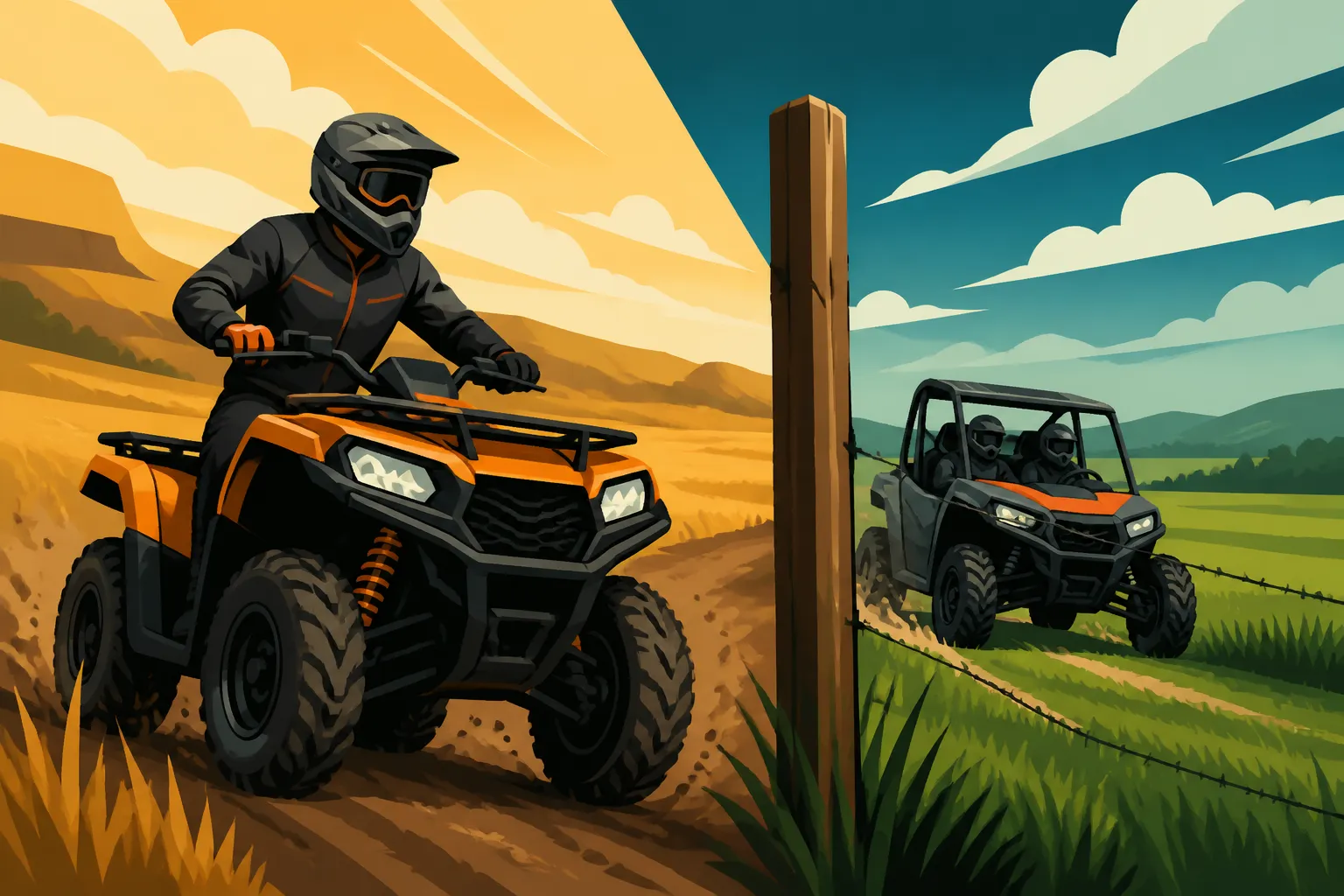
Riding your ATV or UTV across South Dakota offers some incredible experiences, from the open prairie to the majestic Black Hills. But the moment you start thinking about using roads, or even ditch lines, things can get confusing. What's perfectly legal in one county might land you a ticket just a few miles down the road, especially when you're riding a gravel section line or a highway ditch and suddenly realize you've crossed an invisible county boundary, like riding past a Meade County line. This guide will walk you through the ins and outs of South Dakota's ATV and UTV road rules, helping you understand how local ordinances can change your ride the moment you cross into new territory.
South Dakota's Framework for ATV and UTV Road Use
Before we dive into the specifics of county lines, it's crucial to understand the foundational rules South Dakota has in place for ATVs and UTVs operating on or near public roads. The state provides a framework, but counties often have the power to modify certain aspects, leading to the kind of confusion that leaves riders scratching their heads.
Plating Your Machine for South Dakota Roads
The first and most important step if you intend to ride your ATV or UTV on paved or maintained gravel roads in South Dakota is to get it properly plated. This isn't just a suggestion; it's a requirement that turns your off-road vehicle into a street-legal machine, at least within the confines of state law. To qualify, your ATV generally needs to meet certain engine displacement criteria. For a four-wheeled ATV, the engine must be 200cc or greater. If you're on a two-wheeled machine like a dirt bike, it's 120cc or greater. This [South Dakota's 200cc Motorcycle Licensing Rule] is a key distinction.
Once your machine meets the engine size requirement, the process involves titling and registering it, much like a motorcycle. In fact, the plates you'll receive are often standard motorcycle plates, which can sometimes be a bit of a conversation starter with folks who aren't familiar with South Dakota's rules. [Why South Dakota Plates Are Motorcycle Plates] Beyond the plate itself, your machine will also need specific safety equipment to be truly road-ready. This includes working headlights, taillights, brake lights, a horn, and at least one rearview mirror. Many riders find that aftermarket accessories from companies like SuperATV can be a huge help here, providing durable and compliant lighting kits, horns, or mirrors to ensure your machine is up to snuff before you ever hit the pavement.
The Nuance of Ditch Riding Rules
Ah, ditch riding. This is where South Dakota's laws get particularly interesting, and it's often the source of the most confusion when crossing county lines. The general statewide rule is that riding in the extreme right-hand bottom of a highway ditch is actually legal. This might sound surprising to riders from other states, but it's been a long-standing practice here, born out of the vast open spaces and the need for agricultural access. However, there's a huge catch: this permission is by default. What does that mean? It means that any individual county has the authority to "opt out" of this rule and ban ditch riding within its borders. [Ditch Riding Is Legal Until a County Opts Out]
So, while you might be cruising along happily in the ditch bottom in one county, the moment you cross into another county that has opted out, you could be breaking the law. The rules aren't always about just the bottom of the ditch either; they can encompass the back-slope or the shoulder, though the default often focuses on the lowest part. [Riding the Bottom of a Highway Ditch] [Riding the Back-Slope of a Ditch] It's also important to remember that age restrictions apply; generally, you need to be at least twelve years old to operate an ATV or UTV in the right-of-way, even where permitted. [Twelve Years Old in a South Dakota Ditch] This creates a patchwork quilt of regulations that demands riders be vigilant.
Crossing Highways and Section Lines
Even in counties where ditch riding might be prohibited, South Dakota law typically allows for the crossing of highways. This is a crucial distinction, as it ensures riders can still get from one side of a road to another to access trails, private property, or another legal ditch line. [Why No County Can Close a Highway Crossing] You just can't parallel the highway within the ditch or on the road for any significant distance if prohibited.
Similarly, traversing section lines – those often unmaintained, sometimes grassy two-tracks that divide agricultural fields – falls under its own set of rules. While many are public access, some might cross private property or have restrictions. Always be aware of signs or markings. If you're riding a prairie two-track, respect any gates you encounter, always closing them behind you, and never venture onto clearly private land without explicit permission. [Can You Ride an Unopened South Dakota Section Line?]
Riding Into and Out of Meade County: What Changes?
Meade County, home to Sturgis and significant portions of the Black Hills National Forest, presents a unique scenario for ATV and UTV riders. Its diverse landscape, from wide-open prairie to dense forest and bustling towns, means that understanding the local nuances is exceptionally important.
Meade County's Approach to Ditch Riding and Road Access
Meade County, like all South Dakota counties, operates under the state's default rule for ditch riding unless it has specifically opted out. Given the heavy recreational traffic, especially during events like the Sturgis Motorcycle Rally, and its mix of rural and more developed areas, riders should always assume a heightened level of enforcement and diligence. While Meade County generally remains open to ditch riding where not specifically signed otherwise, the sheer volume of vehicles and the presence of law enforcement, particularly during peak seasons, means you need to be extra cautious.
It's not uncommon to see a local sheriff's deputy or a Highway Patrol trooper out on patrol, and they are well-versed in the specifics of local ordinances. If you're on a plated machine, you generally have more freedom on maintained roads, but off-road sections or ditches require careful attention to local signage. For those participating in events or simply riding recreationally, knowing the specific rules for [Riding in Sturgis Week] is paramount to avoid unwanted citations.
The Invisible Line: Crossing a County Boundary
The real puzzle begins when you're enjoying a ride and cross from Meade County into a neighboring county, or vice-versa. Suddenly, the rules for ditch riding could change. Imagine you're riding a quiet gravel road and its adjacent ditch line, and without warning, you pass a small, unassuming sign indicating a county line. On one side, ditch riding might be perfectly fine. On the other, it could be banned, and you've just committed an infraction.
The critical thing to remember is that these county lines are not just lines on a map; they are boundaries where jurisdiction and local laws can shift. This is why paying attention to regulatory signs is so important. Often, where a county has opted out of ditch riding, they are required to post signs indicating this at major entry points. [Reading the Regulatory Sign at a Ditch Entrance] A South Dakota Highway Patrol trooper or a local sheriff's deputy doesn't care if you didn't see the sign; their job is to enforce the law within their jurisdiction. What a trooper checks at a roadside stop will include whether you're in a legal area for your machine, as well as your license, registration, and any required permits. [What a Trooper Checks at a Meade County Stop] Being informed before you ride is your best defense.
Uniform Rules vs. Local Variances
While ditch riding is the primary area of potential variance between counties, it's reassuring to know that many other rules for ATV and UTV operation remain consistent statewide. If your machine is plated and equipped for road use, the requirements for mirrors, lights, and a horn don't change just because you cross into another county. Similarly, rules regarding helmet use for minors or eye protection apply uniformly across the state.
The biggest variable, therefore, is almost always whether a county has exercised its option to prohibit ditch riding. All other state-mandated safety and equipment regulations for road-legal machines stay the same. This means your preparation for plating your machine and ensuring it meets safety standards is a constant. However, for the specific act of riding in the ditch or on certain unmaintained public ways, always be on high alert for local county signs that might indicate a change in status.
Practical Navigation and Due Diligence for Multi-County Rides
Riding multiple counties in South Dakota is an incredible way to see the state, but it requires a proactive approach to understanding the rules. Don't let a scenic ride turn into a costly mistake.
Researching Your Route and Destinations
The best defense against unknowingly breaking local rules is good old-fashioned research. Before you embark on a ride that will take you across county lines, take a few minutes to check the websites of the county sheriff's departments or county treasurers in your planned riding area. Many counties will publish their ordinances online, especially if they have opted out of the statewide ditch riding allowance. It's also wise to make a quick phone call if you can't find clear information.
If your route includes federal lands, such as the Black Hills National Forest which spans multiple counties including Meade, then Forest Service Motor Vehicle Use Maps (MVUMs) are your best friend. These maps clearly designate which roads and trails are open to motorized use, and often, what types of vehicles are allowed. They also indicate areas of closure. [Checking a Forest Notice Before You Load Up] Remember that while a Black Hills Motorized Trail Permit is required for trails, it doesn't automatically grant you unlimited access on roads or ditches outside the forest boundaries or where counties have banned it. [Black Hills Motorized Trail Permit Cost] Knowledge is power, and a few minutes of planning can save you a lot of hassle.
Equipping Your Machine for Any South Dakota Road
Even if you meticulously plan your route, conditions can change, or you might find yourself needing to detour. Having your ATV or UTV fully equipped for road use, as per state law, provides a solid baseline of legality and safety no matter which county you're in. This means ensuring your machine has proper headlights and brake lights, a functional horn, and at least one rearview mirror. [Equipment a South Dakota Road Machine Needs] [A Rear-View Mirror for South Dakota Road Use] [A Horn on a South Dakota Road Machine] [Headlights and Brake Lights in South Dakota]
Investing in quality accessories can make a real difference, not just in compliance but in enhancing your riding experience. Companies like SuperATV offer a wide range of robust and well-designed mirrors, lighting kits, and other street-legal conversion parts that can handle the rigors of both trail and road riding. Beyond the required items, consider adding a GPS unit, a small toolkit, and even a satellite communication device, especially if you plan to venture into remote areas where cell service can be spotty. [Cell Dead Zones in the Hills] Being prepared isn't just about avoiding tickets; it's about being safe and self-sufficient.
Encountering Law Enforcement at a County Border
It's inevitable that at some point, you might encounter law enforcement while riding. Whether it's a routine check or they have questions about your specific location, always be polite, cooperative, and have your paperwork readily available. This includes your driver's license, your machine's title or registration, and if you're an out-of-state rider using South Dakota trails, your [South Dakota's Nonresident ORV Permit].
If you're stopped and questioned about being in a particular ditch or on a specific road, and you've done your homework, you can confidently explain your understanding of the local ordinances. However, remember that ultimately, the officer's interpretation and the specifics of the situation will determine the outcome. Ignorance of the law is rarely an excuse, which is why taking the time to research before you ride is so important. Understanding the rules for [What a Meade County Road Ticket Costs a Rider] can be a strong motivator to ensure you're always on the right side of the law.
Broader Safety and Responsibility Across South Dakota's Landscapes
Beyond just the legalities of where you can and cannot ride, being a responsible ATV or UTV operator in South Dakota involves a commitment to safety, environmental stewardship, and respect for other land users. These principles hold true no matter which county you're traversing.
Rider Etiquette and Environmental Awareness
South Dakota boasts incredible natural beauty, and it's up to every rider to help preserve it. This means always staying on designated roads and trails and never venturing off-route to create new tracks, especially on fragile prairie or forest ecosystems. Respecting private property is paramount. If you see "No Trespassing" signs or suspect you're on private land, turn around. If you need to cross private ground, make sure you have explicit, ideally written, permission from the landowner. [Riding Private Ground in South Dakota] [South Dakota Landowner Permission Rules] Leaving a ranch gate open after passing through can quickly sour relationships with landowners and close off access for everyone. [Why Leaving a Ranch Gate Open Costs You Access]
When riding on gravel roads or two-tracks, be mindful of dust, especially if you're following or meeting other vehicles. [Dust Behind a Hay Truck] Slowing down and giving space can go a long way in showing respect to residents, other riders, and agricultural workers. Remember that you're sharing the landscape with ranchers, farmers, hikers, cyclists, and wildlife. Practicing good etiquette ensures that motorized recreation remains a welcome activity across the state.
Planning for Varied Conditions and Emergencies
South Dakota's weather can be unpredictable, especially in the Black Hills. A sunny morning can quickly turn into an afternoon thunderstorm, leaving trails muddy and roads slick. [Mud After a Hills Thunderstorm] High elevations can experience significant temperature drops, even in summer, and fog can roll in quickly. [Fog in a Black Hills Draw] Always check the weather forecast before you head out and pack accordingly, including extra layers, water, and emergency supplies.
Beyond weather, it's wise to carry a basic repair kit, including tire plugs and a portable air compressor, especially since you might be far from help on remote section lines or forest roads. Navigational tools, whether a physical map, a dedicated GPS unit, or a reliable smartphone app with downloaded maps (because [Cell Dead Zones in the Hills] are real!), are crucial for staying on track and knowing your location in an emergency. Preparing for the unexpected is a hallmark of any responsible outdoor enthusiast, ensuring your South Dakota ATV adventures are memorable for all the right reasons, not the wrong ones.
| Rule Category | Statewide Default | Potential County Opt-Out | What to Look For |
|---|---|---|---|
| Ditch Riding | Legal in extreme right-hand bottom of highway ditch | Prohibited within county borders | Regulatory signs at county lines and road entrances |
| Highway Crossings | Generally permitted, even if ditch riding is banned | No county can prohibit this | Consistent statewide |
| Road Plating | Required for legal road use (200cc+ ATV, 120cc+ dirt bike) | Consistent statewide (county has no power to change) | Your motorcycle plate and proper equipment (horn, mirror, lights) |
| Equipment | Horn, mirror, headlights, taillights, brake lights required for plated machines | Consistent statewide (county has no power to change) | Ensure all equipment is installed and functioning |
| Age for Riding | 12 years old for right-of-way operation | Consistent statewide (county has no power to change) | Check state law for specific age-related rules |
| Permits | Trail permit for Black Hills trails; nonresident ORV permit for unplated machines. | Trail permit rules are specific to federal lands, not county. | Black Hills Motorized Trail Permit, South Dakota's Nonresident ORV Permit |
Disclaimer
This article is for general informational purposes only and does not constitute professional advice. Laws, prices and regulations vary by location and change over time. Consult a qualified professional for guidance on your specific situation.