Where a Section Line Meets Pavement
There’s nothing quite like the freedom of riding your ATV or UTV across South Dakota’s vast landscapes, whether you’re exploring ranch roads, hunting access, or just enjoying the open prairie. But inevitably, your adventure will lead you to a crossroads – often literally – where that familiar gravel or dirt section line suddenly meets a paved highway or county road. This transition can be confusing, dangerous, and even illegal if you’re not prepared, so this guide is here to clarify what you need to know to safely and legally navigate those crucial junctures.
Understanding South Dakota's Section Lines and Their Purpose
First off, let’s talk about what a "section line" even is in South Dakota, because it’s a term you'll hear a lot, especially in rural areas. Historically, section lines are a relic of the Public Land Survey System, a grid laid out across much of the American West. These lines typically run north-south and east-west, dividing the land into one-square-mile sections. While they were originally just survey markers, many of these section lines have evolved into public rights-of-way, serving as unimproved roads, two-tracks, or simply paths through fields, providing essential access to agricultural land and remote properties.
For ATV and UTV riders, these section lines can be an absolute blast. They offer a unique way to traverse the landscape, often providing shortcuts or scenic routes that bypass paved roads. You might find yourself on a wide gravel section line, perfect for a leisurely cruise, or a barely-there two-track winding through tall grass, demanding more technical riding skill. It’s important to remember that while many are public rights-of-way, not all are maintained or even clearly marked. Always respect private property boundaries that may abut these lines, and remember that even on public section lines, you're usually operating in an area that sees little traffic, which can lead to a false sense of security. Always be aware of your surroundings, especially when approaching any crossing or intersection. [South Dakota Rules for Riding a Section Line] are pretty specific, so it's worth understanding them thoroughly.
The very nature of these section lines – their often unimproved state and their primary use for agricultural or local access – is precisely what makes their intersection with paved roads so critical. You're moving from a low-speed, low-traffic environment to one that demands immediate attention, higher speeds from other vehicles, and entirely different legal considerations for your machine. It’s a transition that can catch even experienced riders off guard if they haven't thought it through.
Navigating the Transition: From Section Line to Paved Road
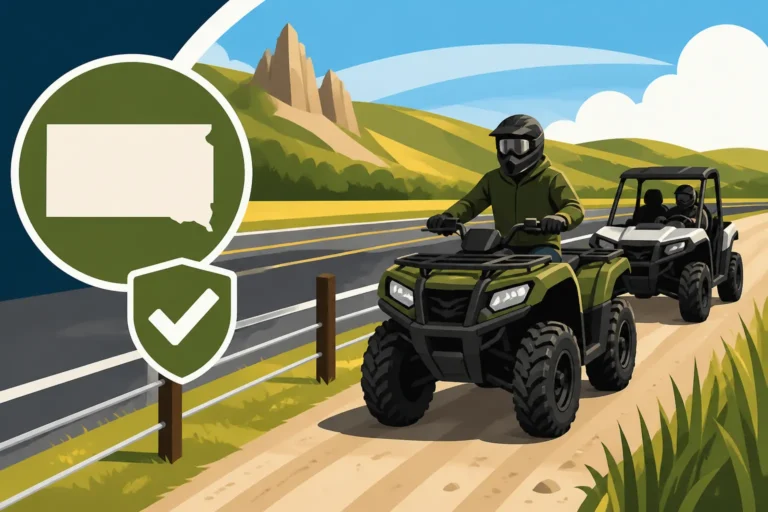
The moment your dusty section line ride transforms into a paved road encounter is where the rules of the game change dramatically. Whether you intend to cross the paved road, turn onto it, or even continue riding alongside it (where legally permissible), the primary concern is safety and adherence to South Dakota’s regulations. Paved roads, especially state highways or busy county roads, are designed for faster-moving, enclosed vehicles, not always for the diverse capabilities and limitations of ATVs and UTVs.
If your ATV or UTV is not street legal, your options when you hit pavement are severely limited. In South Dakota, an untitled or unplated off-road vehicle generally cannot operate on paved public roadways, except for very specific situations like crossing at a 90-degree angle to get to another trail or private property, or participating in a permitted event. You cannot just ride down the shoulder, even for a short distance, unless you meet specific criteria, which usually involves agricultural use or local ditch riding rules. Attempting to do so can lead to significant penalties, including [South Dakota Fines for Illegal ATV Road Use]. This means that a crucial part of navigating these intersections is knowing your machine's legal status. If you've been having a blast on a long section line, it can be a real buzzkill to realize you can't proceed because a paved road blocks your path and your machine isn't equipped or legal for it.
When you do approach a paved road from a section line, especially an unimproved one, visibility becomes a major challenge. The view can often be obscured by tall grass, cornfields, trees, or even just the crest of a small hill. Other vehicles on the paved road are likely traveling at much higher speeds and may not expect an ATV or UTV to suddenly appear. This is why vigilance and caution are paramount. Always assume there is traffic coming, even if you can't hear or see it initially. A moment of inattention at one of these junctions can have serious consequences. [South Dakota Rules for Crossing a Highway] lay out specific guidelines that are designed to minimize risk, and they apply whether you're on a street-legal machine or just attempting a brief crossing.
Equipping Your Machine for Paved Road Interactions in South Dakota
To legally and safely handle paved roads in South Dakota, even for simple crossings, your ATV or UTV generally needs to meet certain "street legal" requirements. This isn't just about avoiding a ticket; it's about making your machine visible and controllable in an environment it wasn't originally designed for. The distinction between an off-road machine and one capable of road travel is significant, and South Dakota has clear definitions for what's needed.
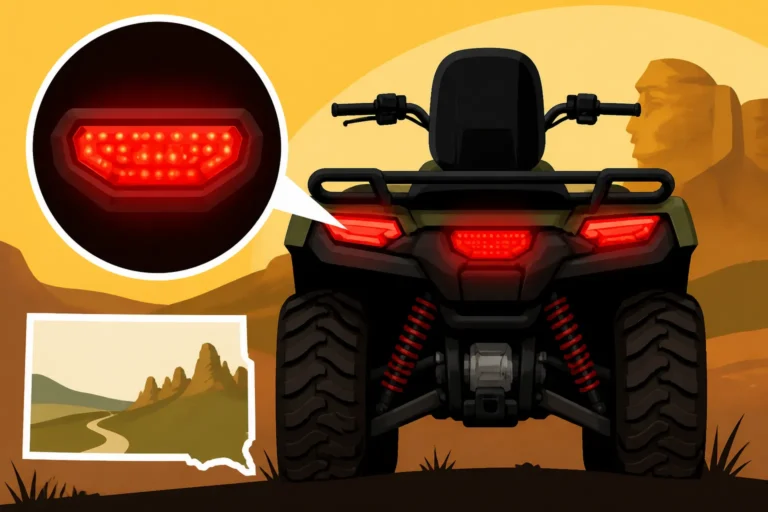
The most fundamental requirement for an ATV or UTV to be considered street legal in South Dakota is that it must be titled and registered, and display a standard motorcycle license plate. Without that plate, your options for interacting with pavement are minimal. Beyond the plate, your machine needs specific safety equipment to be legally ridden on public roads. This typically includes proper headlights and brake lights that are fully functional and visible both day and night. You’ll also need a horn, which might seem minor, but it’s critical for alerting other drivers, especially at blind intersections. A rearview mirror is another must-have, allowing you to see traffic approaching from behind without constantly turning your head, which can be dangerous. Many riders also add turn signals, though depending on the classification, hand signals might suffice. Companies like SuperATV offer a range of accessories, from mirrors to complete street legal kits, that can help you meet these requirements.
Beyond the physical equipment, the operator must also be legally qualified. This means having a valid driver’s license. Just because you can ride an ATV off-road without a standard driver's license (under certain conditions) doesn't mean you can do the same on a paved road, even for a brief crossing. These are standard motor vehicle laws that apply regardless of the type of vehicle. For a full breakdown of what’s needed, checking the [South Dakota Street Legal ATV Requirements] is essential. Understanding the [South Dakota Equipment List for Road Use] will help ensure your machine is compliant. Items like [A Horn on a South Dakota Road Machine] and [Headlights and Brake Lights in South Dakota] are non-negotiable for safe and legal operation on pavement. Remember, if you lack the required equipment or a valid [South Dakota Driver's License Rules for ATVs], your interaction with pavement should be limited to safely finding an alternate route or getting off the road entirely if possible.
| Feature / Scenario | Section Line Riding (Unimproved) | Paved Road Crossing/Riding (Street Legal) | Paved Road Crossing/Riding (Not Street Legal) |
|---|---|---|---|
| Legal Status | Generally Permitted (check land) | Permitted with proper equipment & licensing | Generally Illegal, except for specific crossings |
| Required Equipment | Basic safety gear (helmets for minors, etc.) | License plate, headlights, brake lights, horn, rearview mirror, sometimes turn signals | Basic safety gear, but insufficient for road use |
| Driver's License | Not always required for off-road use | Required for operator | Required for operator, but vehicle still illegal |
| Speed Limit | Variable, based on conditions & safety | Posted road speed limits, but ATVs may have lower limits | N/A (should not be riding) |
| Traffic Expectation | Low, often agricultural or recreational | High, diverse vehicle types, varying speeds | High, high risk of accident & legal issues |
| Visibility | Often reduced by terrain/vegetation | Critical to be seen by other motorists | Extremely difficult, high risk of being unseen |
| Brand Assistance | N/A | SuperATV for street legal kits/parts | N/A |
Practical Safety and Legal Best Practices at Intersections
Approaching a paved road from a section line requires a significant shift in mindset and riding technique. It’s no longer just about enjoying the ride; it’s about anticipating danger, ensuring your visibility, and adhering to the law. Even if your machine is fully street legal, these intersections present unique hazards that demand your full attention.
First and foremost, slow down, look, and listen. As you approach the paved road, reduce your speed dramatically. Often, dust kicked up by your tires on the section line can obscure your vision, so you may need to come to a near stop well before the actual pavement to get a clear view. Listen intently for approaching vehicles, as sound can travel further than your sightline, especially if you're coming out of a dip or around a curve. It’s always best to assume there’s oncoming traffic. Signaling your intentions, even with basic hand signals if you don't have turn signals, is a good practice, though not always effective for high-speed traffic.
Yielding to traffic on the paved road is not optional; it's a legal and safety imperative. Vehicles on paved roads have the right-of-way. You must wait for a clear and safe opportunity to cross or merge, and that often means a much larger gap in traffic than you might typically take in a car. Remember, your ATV or UTV accelerates and brakes differently than a car, and other drivers might not accurately judge your speed or intentions. If you're on a plated machine intending to turn onto the pavement, ensure you can accelerate safely to the flow of traffic without becoming a hazard. For those late evening rides, [South Dakota Rules for Riding After Dark] really emphasize visibility, so ensure your lights are in top working order.
Finally, always be aware of your machine's legal status. If you realize you're about to hit pavement and your ATV or UTV is not street legal, your options are limited but critical for safety and legality. If a crossing is absolutely necessary and allowed (e.g., to access private land directly opposite), execute it quickly and safely, straight across, minimizing your time on the pavement. If there’s no immediate, legal reason to be on the paved road, you must find an alternative route or turn back. Do not attempt to ride along the shoulder or merge into traffic. It's simply not worth the risk of an accident or the substantial fines and legal trouble you could face. Always remember that while state laws provide a general framework, some local jurisdictions might have specific ordinances regarding ATV use on or near roads, so a quick check with the county treasurer's office or local law enforcement is never a bad idea.
Disclaimer
This article is for general informational purposes only and does not constitute professional advice. Laws, prices and regulations vary by location and change over time. Consult a qualified professional for guidance on your specific situation.