South Dakota Rules for Riding a Gravel Road
There's nothing quite like exploring the vast, open landscapes of South Dakota, and for many ATV and UTV enthusiasts, that means taking to the miles upon miles of gravel roads that crisscross the state. But for those new to the area, or even seasoned riders trying to stay on the right side of the law, the rules for riding your machine on these public thoroughfares can feel like navigating a maze. This guide is here to clear up the confusion, helping you understand exactly what it takes to legally and safely enjoy South Dakota's gravel roads on your quad or side-by-side.
The Foundation: Street Legality and Gravel Roads in South Dakota
Before you even think about hitting that dusty stretch of county road, you need to understand that your ATV or UTV isn't automatically considered street legal in South Dakota. Unlike some states where a wink and a nod might get you by, South Dakota has specific requirements that your machine must meet to be plated and legally operated on public roads, including those inviting gravel paths. It’s not just about having a powerful engine; it’s about meeting a set of standards that bring your off-road vehicle closer to a conventional street-legal vehicle.
Understanding South Dakota's Road-Use Rules for ATVs
At the heart of it all, South Dakota generally requires your ATV or UTV to be plated as a motorcycle to legally ride on public roads. This isn't just a formality; it means your machine has to pass certain criteria to even qualify for a plate. For most ATVs, this specifically means an engine size of 200cc or greater. If your quad is smaller than that, unfortunately, it won't be eligible for a South Dakota plate, which immediately restricts its ability to ride on public roads. For two-wheeled dirt bikes, the threshold is 120cc. This rule can be a real bummer if you have a youth machine or a smaller sport quad that you hoped to connect trails with via the public roads.
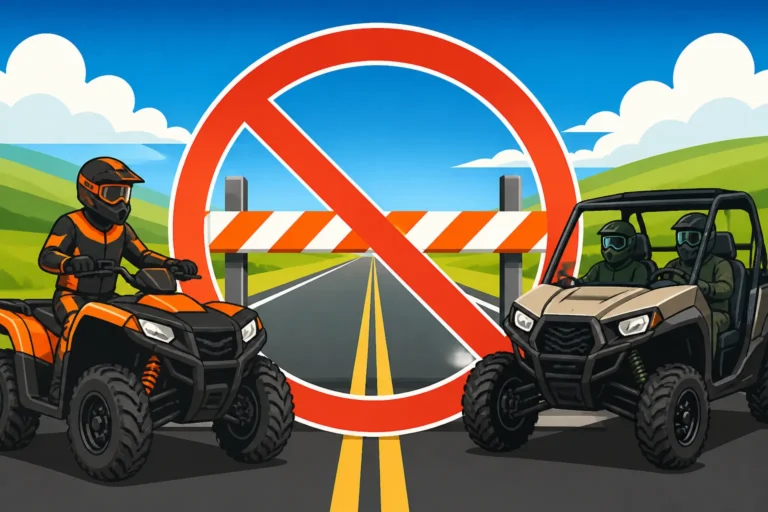
Once your machine is properly plated, it generally gains the same rights and responsibilities as any other motor vehicle on most public roads in South Dakota. This includes county and township gravel roads. The critical exception is interstate highways, which remain off-limits to ATVs and UTVs, even if they are plated. So, while you can't zip down I-90, that long, straight gravel road taking you through the prairie or connecting you to a trailhead is likely fair game. Understanding these foundational rules is the first step in ensuring your ride is lawful and worry-free. For a deeper dive into what it takes to get your machine legal, check out our guide on [South Dakota Street Legal ATV Requirements] and also [South Dakota ATV Engine Size for Plates].
Differentiating Gravel Roads from Other Public Ways
When we talk about "gravel roads" in South Dakota, we're typically referring to a broad category of public thoroughfares that aren't paved. These include everything from well-maintained county highways with a gravel surface to less-traveled township roads that might feel more like a two-track path. These are distinct from paved state highways, U.S. routes, and definitely interstates. The good news is that if your ATV or UTV is plated, the rules for riding on these gravel roads are generally the same as for paved roads, meaning you're allowed to operate on the road surface itself.
It's important to differentiate this from "ditch riding" rules, which apply to the shoulders or ditches alongside many public roads. While South Dakota does allow ditch riding in many areas, a plated machine has the privilege of riding directly on the road, where it can be more visible and safer, especially when encountering other traffic. However, you should still be mindful of local regulations. While a county might not ban gravel road use for plated machines, they can opt out of allowing ditch riding. Always be aware of the specific signs in the area you plan to ride. For more information on navigating the ditches, read our article on [South Dakota Ditch Riding Rules].
Essential Equipment for South Dakota Gravel Road Riding
Just because you can get a plate for your ATV or UTV doesn't mean it's ready to roll onto a gravel road straight from the dealership floor. There are specific pieces of equipment your machine needs to have, or you'll need to add, to meet South Dakota's requirements for street legality. Missing even one of these components can lead to a roadside citation, turning a fun day into a frustrating one. These aren't just suggestions; they are mandates designed to ensure your safety and the safety of others sharing the road.
Lights, Mirrors, and Horn: The Non-Negotiables
To be truly street legal and safe on South Dakota's gravel roads, your ATV or UTV needs a full complement of functional lights. This includes a working headlight, taillights, and brake lights that illuminate when you apply the brakes. These are crucial for visibility, particularly on dusty gravel roads where the "fog" of kicked-up dirt can drastically reduce sightlines, or if you find yourself riding as the sun begins to set. Some machines might also require turn signals, especially if they are plated as a motorcycle, though many ATVs are exempt from this specific requirement if they are hand-signaled.
Beyond lighting, you absolutely must have at least one rearview mirror. This allows you to monitor traffic behind you, which is incredibly important when sharing the road with cars, trucks, and farm equipment. A working horn is also mandatory. A quick tap of the horn can alert other drivers to your presence, especially when cresting a blind hill or coming around a curve on a narrow gravel road. Many stock ATVs don't come equipped with these items, so riders often turn to aftermarket solutions. Companies like SuperATV offer a wide range of street-legal kits and individual components designed to help you meet these requirements without hassle. Equipping your machine correctly means you're not just compliant, but also significantly safer. Delve deeper into the specific equipment needed with our guide [South Dakota Equipment List for Road Use], and don't forget to check out [South Dakota Mirror Requirement], [South Dakota Horn Requirement], and [South Dakota Lighting Requirements for ATVs] for more details.
Other Key Gear for Safety and Compliance
While lights, mirrors, and a horn are the big three for your machine, there are other considerations to ensure both your compliance and your personal safety on gravel roads. First and foremost, you, the rider, must possess a valid driver's license. Operating a plated ATV or UTV on a public road in South Dakota is the same as operating a car or truck in this regard – you need to be a licensed driver. There's no special "ORV license" for road use; your standard driver's license is what's required.
Eye protection is another non-negotiable item. Whether it's goggles, a face shield on a helmet, or adequate windshield coverage, you must have protection for your eyes. This is particularly vital on gravel roads where dust, small stones, and insects can become serious hazards. While helmets are not legally required for adults 18 and older in South Dakota when riding an ATV on a public road, they are highly recommended. The speeds and conditions on gravel roads can be unpredictable, and a helmet provides critical protection. Finally, a spark arrester is generally required on public lands and is a good safety measure to prevent wildfires, even on gravel roads that might be adjacent to dry grass or fields. Understanding these nuances helps ensure that both you and your machine are ready for the open road. Learn more about rider requirements by reading [South Dakota Driver's License Rules for ATVs], [South Dakota Helmet Law for ATV Riders], and [South Dakota Eye Protection Requirement].
Navigating South Dakota Gravel Roads: Rules and Etiquette
Riding your ATV or UTV on a South Dakota gravel road isn't just about having the right equipment; it's also about understanding and adhering to the rules of the road and practicing good etiquette. These roads are often the lifelines for rural communities, used by residents for daily commutes, farming operations, and accessing their homes. Your presence on these roads means you're sharing them with a diverse group of users, and respecting that shared space is paramount to a safe and enjoyable experience for everyone.
Sharing the Road: Speed, Dust, and Courtesy
When you're out on a gravel road, remember you're sharing it. Speed limits apply just as they would on a paved road, and it’s critical to obey them. If there's no posted limit, the default rural speed limit applies, which is typically 55 mph, though common sense often dictates a much slower speed on loose gravel. But beyond the written law, courtesy plays a huge role. One of the biggest concerns on gravel roads is dust. When you're traveling at speed, your machine can kick up a significant dust cloud, severely impacting visibility for both yourself and any vehicles behind you or approaching you.
When you encounter another vehicle, whether it's an oncoming car, a slow-moving tractor, or someone pulling up behind you, it's good practice to slow down and move over slightly to the right. This reduces the dust you're kicking up and makes it easier for other drivers to see and pass safely. Passing other vehicles on a gravel road requires extra caution due to reduced traction and potential for obscured vision from dust. Always ensure you have a clear line of sight and ample space. Think about how you would want someone to behave if they were driving past your home on a dusty road, and extend that same courtesy. This is especially true when [Dust Behind a Hay Truck] or trying to [Meeting a Motorcycle Pack on a Forest Road].
Specific Scenarios: Section Lines and Ranch Roads
South Dakota has countless "section lines" – paths that follow the survey lines dividing sections of land. Many of these are established public rights-of-way, even if they are unmaintained two-tracks or simply mowed paths through fields. If they are legally designated public roads, then your plated ATV/UTV can usually be ridden on them. However, it's absolutely crucial to know the legal status of a section line before you ride. Not all section lines are public access; some are entirely private. Using outdated maps or assuming public access can easily lead to trespassing charges. Always consult current county maps or local authorities to verify.
Ranch roads and other private property are a different beast entirely. You absolutely, unequivocally need express permission from the landowner before riding on private property, including ranch roads. An open gate does not imply permission to enter. Many of South Dakota's vast lands are privately owned and actively used for agriculture or ranching. Trespassing can damage crops, disturb livestock, and lead to serious legal consequences, not to mention creating ill will that can affect access for all riders. Always get permission, ideally in writing, and always close gates behind you. Respecting private property is key to maintaining good relationships with landowners and ensuring future riding opportunities. Make sure you understand [South Dakota Rules for Riding a Section Line], [South Dakota Rules for Riding Private Land], and [South Dakota Landowner Permission Requirements]. If you're riding through a ranch, be familiar with [South Dakota Rules for Riding a Ranch Road].
What a South Dakota Trooper Checks Roadside
Encountering law enforcement on a gravel road ride can be a bit nerve-wracking, but if you're prepared and compliant, it should be a quick and uneventful stop. A South Dakota Highway Patrol trooper or local sheriff's deputy will primarily be looking for a few key things when they pull over an ATV or UTV on a public road. First, they'll want to see proof of registration – your license plate and current decals. They'll also verify that you, the operator, have a valid driver's license. Don't forget, eye protection is mandatory, so they'll be checking for that.
Beyond documentation, they'll quickly assess your machine's equipment: functioning headlights, taillights, brake lights, a rearview mirror, and a horn. These are all part of the street-legal requirements. They'll also be observing your driving behavior for any signs of impairment, as DUI laws apply equally to ATVs and UTVs on public roads. Being polite, cooperative, and having all your paperwork and equipment in order will make any roadside interaction smooth. It’s always best to be prepared and understand [What a South Dakota Trooper Checks Roadside] so you know what to expect.
The South Dakota Gravel Road Riding Experience
Riding your ATV or UTV on South Dakota's gravel roads offers a unique blend of freedom and adventure. It's a fantastic way to connect with the landscape, access remote fishing spots, or simply enjoy the feeling of the open road without the constant hustle of paved highways. However, like any outdoor activity, it comes with its own set of advantages and challenges that savvy riders learn to anticipate and manage.
Advantages and Challenges of Gravel Road Riding
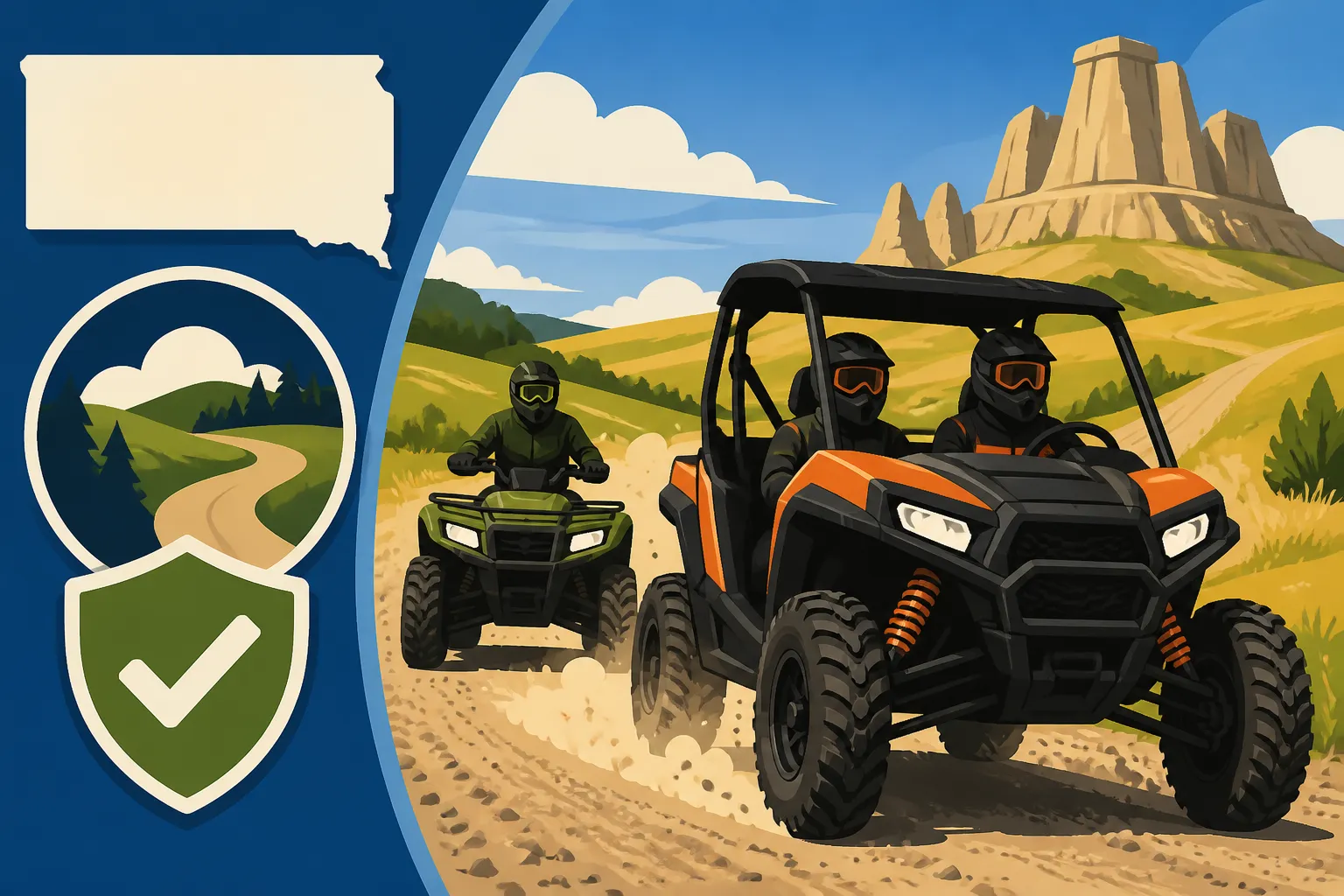
One of the biggest advantages of South Dakota's gravel roads is the sheer access they provide. They often lead to breathtaking scenic areas that paved roads simply don't reach, or they serve as crucial connectors between various motorized trail systems. This allows for longer, more diverse rides that combine trail sections with stretches of road, letting you cover more ground and see more of the state's natural beauty. The relatively low traffic on many of these roads can also offer a more relaxed riding experience compared to busy highways.
However, gravel road riding isn't without its challenges. As mentioned earlier, dust is a constant companion, especially in dry conditions. This can not only obscure your vision but also coat your machine and gear, requiring extra cleaning. Washboards – those rippling waves in the gravel – can make for a bone-jarring ride, testing both your suspension and your patience. Loose gravel on turns or hills can reduce traction, requiring careful handling. Furthermore, while traffic might be light, the vehicles you do encounter, like large farm equipment or pickups, can be significantly heavier and faster, demanding extra vigilance. Ensuring your machine is built to handle these conditions, perhaps with robust aftermarket parts from a company like SuperATV, can make a significant difference in your riding comfort and the longevity of your machine. For example, upgrading your suspension components or adding full-skid plates can protect your undercarriage from unexpected rocks.
Planning Your Gravel Road Journey
Successful and enjoyable gravel road riding in South Dakota often boils down to good planning. Don't just head out blindly; invest in good, current maps, such as county highway maps or U.S. Forest Service Motor Vehicle Use Maps (MVUMs) if you're in the Black Hills. These maps will clearly delineate public roads from private land and show any specific restrictions. GPS devices loaded with topographical maps can also be incredibly helpful, especially in areas with limited cell service.
Weather is another critical factor. A dry spell can mean extreme dust and washboard conditions, while a heavy rain can transform those same roads into slick, muddy, or even impassable quagmires. Always check the forecast before you leave. Finally, always plan for fuel and other essential supplies. Many remote gravel roads are far from towns, so knowing where your next gas stop is, and carrying extra water, snacks, and a basic tool kit, are wise precautions. Your plated machine might be capable of long distances, but human endurance and fuel tank capacity are your limiting factors. Equipping your machine with durable tires and reliable components, such as those from SuperATV, means you can venture further with confidence, but preparedness is always your best friend on the open road.
Here's a quick summary of what you'll need:
| Category | Must-Have (South Dakota Street Legal) | Good-to-Have (Enhanced Safety/Experience) |
|---|---|---|
| Machine | Valid License Plate | Full Skid Plates |
| Engine 200cc+ (ATV) / 120cc+ (2-wheel) | Upgraded Suspension Components | |
| Headlight, Taillights, Brake Lights | Winch | |
| Rearview Mirror(s) | Spare Tire/Repair Kit | |
| Horn | GPS Device with Offline Maps | |
| Spark Arrester | External Fuel Canister | |
| Rider | Valid Driver's License | Helmet (strongly recommended for all ages) |
| Eye Protection (goggles/shield) | Hydration Pack/Water Bottles | |
| First Aid Kit | ||
| Communication Device (satellite messenger for remote areas) | ||
| Documentation | Vehicle Registration | Proof of Insurance |
| Title (proof of ownership) |
Disclaimer
This article is for general informational purposes only and does not constitute professional advice. Laws, prices and regulations vary by location and change over time. Consult a qualified professional for guidance on your specific situation.