South Dakota Rules for Riding a Dry Creek Bed
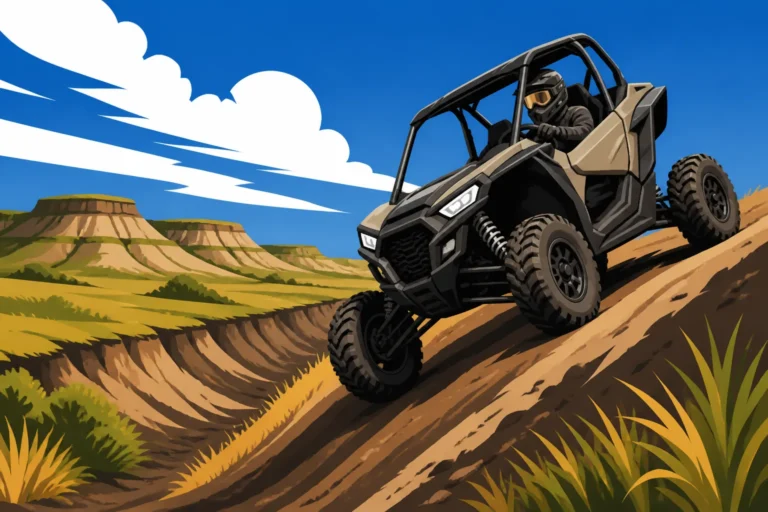
It's tempting to explore every nook and cranny with your ATV or UTV, especially when you come across what looks like an inviting, dry creek bed. The winding paths, the natural obstacles, the sense of uncharted territory – it calls to the adventurous spirit in all of us. But before you drop into that sandy bottom, it's critical to understand that what appears to be a harmless, dried-up waterway can actually be a legal minefield in South Dakota. This guide will help you navigate the complex rules and considerations surrounding riding your off-road vehicle in dry creek beds, ensuring you stay within the law and protect the environment.
The Allure and Legal Ambiguity of Dry Creek Beds for ATV/UTV Riders in South Dakota
There's a unique draw to exploring natural contours like dry creek beds. They often present an organic trail, a challenging landscape that differs from a groomed path or a wide-open prairie. For many off-road enthusiasts, it feels like the ultimate natural playground. However, this seemingly innocuous environment is fraught with legal and environmental complexities that every rider in South Dakota needs to be aware of.
The Thrill and Treacherous Nature of Creek Bed Riding
The appeal is undeniable: a winding, sandy track, maybe some rocky sections, small drops, and climbs. It feels like Mother Nature designed a trail just for your machine. This kind of terrain can be incredibly fun and offers a different kind of technical challenge than typical trails. Machines equipped with robust suspension and durable components, perhaps from a brand like SuperATV, might handle the bumps and ruts with ease, making it even more tempting. But this thrill comes with significant responsibilities and potential pitfalls. What looks dry today could be a raging torrent tomorrow, and even when dry, the ground beneath can be surprisingly unstable or fragile.
Why "Dry Creek Bed" Isn't a Simple Legal Definition
In South Dakota, the legal definition of what constitutes a "creek bed" – dry or otherwise – can be incredibly nuanced. It's not just about whether there's water present at the moment you're riding. Laws often consider the historical presence of water, the ecological function of the area, and even the "ordinary high water mark" regardless of current flow. This means a dusty ditch in August could still be legally considered a waterway, subject to specific regulations that might prohibit motorized travel. Ignorance of this distinction is not a defense, and a simple misinterpretation can lead to significant fines or environmental damage charges.
Understanding Land Ownership and Its Role in Access
One of the most fundamental principles governing where you can ride your ATV or UTV in South Dakota, especially when it comes to natural features like creek beds, is land ownership. Whether the land is private, state-owned, federal, or managed by a local municipality makes all the difference. You might assume that if a creek bed is on what appears to be unposted land, it's fair game, but that's rarely the case. Even private land has rules about waterways that flow through it, and public lands have very clear designations for motorized use. Understanding [Riding Private Ground in South Dakota] is key, as is knowing who owns the land you're on.
South Dakota's Broader Off-Road Vehicle Regulations and Their Impact on Creek Beds
To understand the specifics of riding in dry creek beds, it helps to first grasp South Dakota's general approach to off-road vehicle (ORV) use. The state aims to balance recreation with conservation, which means strict rules apply to certain sensitive areas, and waterways are almost always high on that list.
Public Lands Versus Private Property: A Fundamental Distinction
South Dakota makes a clear distinction between private land and various types of public lands. On your own private property, you generally have the most freedom to ride, including in dry creek beds, provided you're not causing a public nuisance or violating specific environmental regulations related to your property. However, once you step onto public land – whether it's state parks, national forests, Game, Fish and Parks (GFP) managed areas, or even unassigned public domain – the rules change dramatically. Most public lands have designated trails and areas for ORV use, and venturing off these can lead to serious consequences. A dry creek bed, unless specifically marked as a motorized trail, is almost certainly off-limits on public land. It's crucial to understand [Riding GFP Land on a Machine] and other public land regulations before venturing out.
Environmental Concerns and the Law: Why Creeks Are Different
Creek beds, even dry ones, are vital ecological corridors. They channel water during wet periods, provide habitat for various species, and contribute to the overall health of the ecosystem. Riding an ATV or UTV in these areas can cause significant damage:
- Soil Erosion: Tires can loosen soil, leading to increased erosion when water eventually flows, silting up downstream areas.
- Habitat Disruption: Even a dry bed provides shelter for small animals, insects, and plant life. Motorized vehicles can crush vegetation and disturb wildlife.
- Water Quality: If there's any residual moisture or when water returns, oil, gas, and other pollutants from your machine can contaminate the water.
- Spread of Invasive Species: Vehicles can inadvertently transport seeds of invasive plants from one area to another.
Because of these concerns, environmental protection laws often give special status to waterways, regardless of their current water level. Even if you're riding a rugged machine enhanced with SuperATV lifts or tires designed for extreme terrain, the environmental impact remains a serious consideration.
The Role of Local Jurisdictions and the Department of Game, Fish and Parks (GFP)
While state laws provide a framework, local ordinances and the specific management policies of agencies like the South Dakota Game, Fish and Parks (GFP) can further restrict ORV use in certain areas. For instance, GFP often manages wildlife areas, recreation areas, and public fishing access sites, many of which contain creek beds. These areas typically have strict rules against off-trail riding to protect natural resources. Counties and municipalities might also have their own regulations regarding motorized vehicle use on public easements, ditches, or undeveloped land within their boundaries. Always assume that a natural waterway, even when dry, is off-limits unless explicitly stated otherwise by the managing authority.
Navigating the Specifics: When Can You (or Can't You) Ride a Dry Creek Bed?
This is where the rubber meets the trail, so to speak. Understanding the general principles is one thing, but knowing the precise conditions under which you might – or absolutely might not – ride a dry creek bed is paramount. The short answer for most public land scenarios is: don't do it.
Riding on Your Own Private Land: The Primary Exception
If the dry creek bed is entirely contained within your private property, and you own all the land it crosses, you generally have the right to ride your ATV or UTV there. This is the primary exception to the strict no-creek-bed-riding rule. However, even on your own land, you should consider the environmental impact. Excessive riding can still lead to erosion, and if that erosion impacts downstream property or public waterways, you could still face legal issues. Plus, safety is always a concern; creek beds can be unpredictable, with hidden obstacles or unstable banks.
Gaining Permission for Private Land Access
What if the dry creek bed isn't on your land, but it's on a neighbor's property or a friendly rancher's spread? In this case, obtaining explicit, written permission is absolutely essential. Verbal permission can be easily misunderstood or forgotten, and without documentation, you leave yourself vulnerable to trespass charges. Ranchers and landowners often have specific reasons for not wanting vehicles in their creek beds – perhaps it's a future watering source, a calving area, or simply a desire to preserve the natural state of their land. Always follow [South Dakota Landowner Permission Rules] and respect their wishes. A simple handshake isn't enough when it comes to riding anywhere that isn't clearly designated for public ORV use. You might even use a bill of sale type document to secure riding permission.
The Strict Rules for Public Lands and Waterways
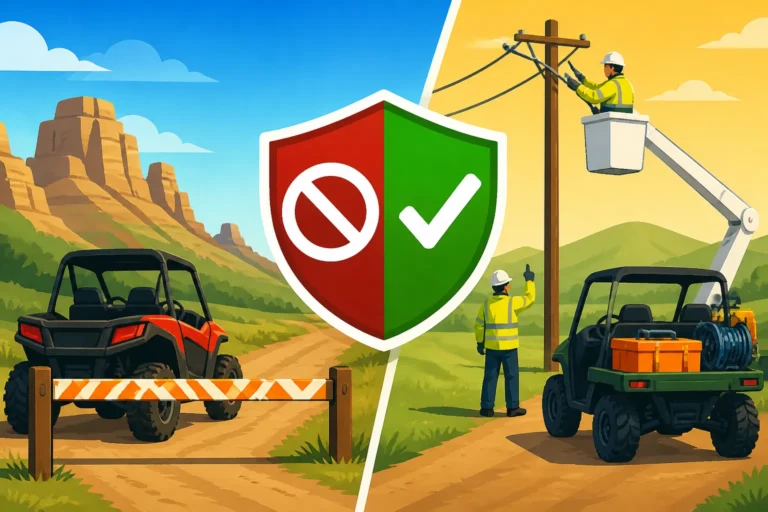
This is where the "no" becomes almost universal. Riding a dry creek bed on public land in South Dakota is almost always prohibited. This includes:
- National Forests: The Black Hills National Forest, for example, has a comprehensive system of designated motorized trails. Riding off these trails, especially in sensitive areas like creek beds, is a violation. Always consult a Motor Vehicle Use Map (MVUM) for specific areas.
- State Parks and Recreation Areas: These areas are managed for conservation and specific recreational uses, and unsupervised ORV use in natural waterways is not among them.
- GFP Lands: As mentioned, GFP-managed properties are focused on wildlife and habitat. Unauthorized off-trail riding, including in dry creek beds, is a serious offense.
- Corps of Engineers Lands: Areas around reservoirs and rivers managed by the Army Corps of Engineers also have strict rules.
The rationale is environmental protection, public safety, and ensuring that recreational activities are conducted in appropriate, designated areas. If you're looking for natural, challenging terrain, focus on areas explicitly marked for off-road use, such as a designated OHV park or legal [Riding a Prairie Two-Track].
Here's a quick summary of creek bed riding legality:
| Location Type | Creek Bed Status | General Legality of Riding | Key Considerations |
|---|---|---|---|
| Your Private Land | Dry or Wet | Generally Permitted | Environmental impact, downstream effects, safety |
| Other Private Land | Dry or Wet | Only with Written Permission | Respect landowner's wishes, specific terms of access |
| National Forest Land | Dry or Wet | Generally Prohibited | Stick to MVUM-designated trails, environmental laws |
| State Parks/GFP Land | Dry or Wet | Prohibited | Habitat protection, designated recreational use only |
| Public Right-of-Way | Dry or Wet | Prohibited | Ditch riding rules typically don't apply to creeks |
Potential Penalties for Unauthorized Creek Bed Riding
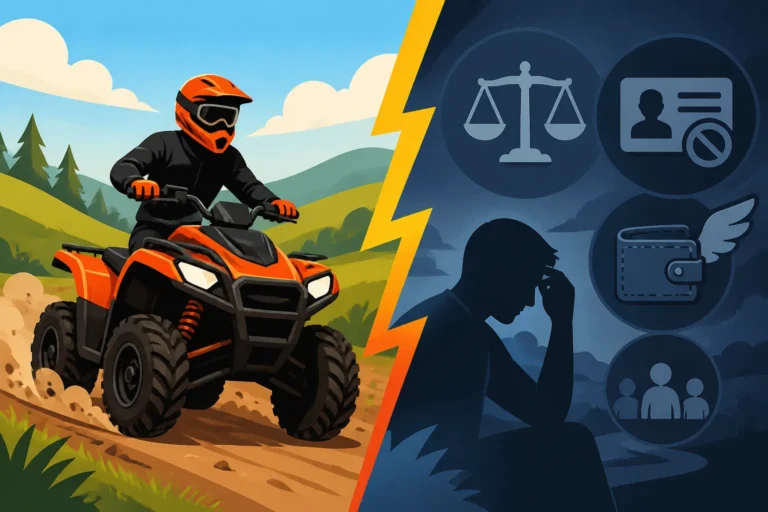
The consequences of riding where you shouldn't, especially in a sensitive area like a creek bed, can be severe. You might face:
- Fines: These can range from hundreds to thousands of dollars, depending on the severity of the offense and the jurisdiction. [What a Class 2 Misdemeanor Costs a Rider] can be significant, and many trespass or environmental violations fall into this category or worse.
- Vehicle Impoundment: Your ATV or UTV could be seized.
- Restitution: You might be ordered to pay for environmental damage you caused.
- Criminal Charges: In egregious cases, particularly involving significant environmental harm or repeated offenses, you could face misdemeanor or even felony charges.
- Loss of Future Access: Violations can lead to being banned from specific public lands.
An enforcement officer, whether it's a county sheriff, a state game warden, or a forest service ranger, has the authority to issue citations for trespassing, damaging natural resources, or violating specific ORV regulations. Don't risk it.
Best Practices for Responsible Off-Roading and Avoiding Legal Trouble
Given the complexities, the best approach to dry creek beds in South Dakota is usually to avoid them unless you are absolutely certain of their legal status and have explicit permission on private land. Beyond that, responsible riding means being prepared and informed.
Researching Your Route and Knowing the Land
Before you even load your machine, do your homework. Get detailed maps – physical and digital – of the area you intend to ride. Look for land ownership boundaries, designated ORV trails, and any areas marked as sensitive or restricted. Call the local Game, Fish and Parks office, the Forest Service district office, or the county sheriff's department if you have questions about specific areas. They are there to help ensure safe and legal recreation. Never assume that "unposted" means "open." Many areas have implied restrictions or are simply not suitable for motorized use. For broader context, understand [What South Dakota Counts as an Off-Road Vehicle] and where those vehicles are legally allowed to operate.
Equipping Your Machine for Diverse Terrain Responsibly
While avoiding dry creek beds is often the wisest course, if you do have legal access to rugged terrain, ensure your machine is properly equipped. Good tires with adequate tread, sufficient ground clearance (which SuperATV is known for providing through their lift kits and suspension components), and reliable brakes are crucial. Beyond just performance, make sure your machine meets environmental requirements. This includes having a properly functioning [South Dakota Spark Arrester Rules] and ensuring your exhaust system isn't excessively loud, adhering to [South Dakota Sound Limits on Forest Trails]. Being a responsible rider means more than just staying on the trail; it means minimizing your impact on the environment and on other trail users.
The Importance of "Tread Lightly" Principles
The "Tread Lightly!" philosophy is your best guide for responsible off-roading. It emphasizes minimizing your impact on the land, respecting wildlife, and being considerate of others. For dry creek beds, this means:
- Travel and recreate with minimum impact: If you must cross, do so at the most durable spot.
- Respect the environment and the rights of others: Don't disturb plants, animals, or cultural artifacts.
- Educate yourself: Know the regulations and land closures before you go.
- Avoid sensitive areas: Waterways, wetlands, and fragile ecosystems are particularly vulnerable.
- Do your part: Leave areas better than you found them.
By adhering to these principles, you not only protect the natural beauty of South Dakota but also help ensure that opportunities for off-road recreation continue for future generations. Remember, choosing to ride [South Dakota Rules for Riding Off a Route] without proper authorization is a direct violation of these principles and the law.
Disclaimer
This article is for general informational purposes only and does not constitute professional advice. Laws, prices and regulations vary by location and change over time. Consult a qualified professional for guidance on your specific situation.