South Dakota’s 200cc Motorcycle Licensing Rule
Navigating the world of ATVs and UTVs in South Dakota, especially when you want to take your machine onto the roads, can feel like trying to solve a Rubik's Cube blindfolded. Many riders get tangled in the confusion surrounding engine size, driver's licenses, and what equipment is actually required before they can legally hit a gravel section line or even cross a highway. It's a common frustration to see different rules apply to different machines, or to hear conflicting advice, leaving you wondering if you're truly compliant. This comprehensive guide is here to untangle those complexities, specifically focusing on the pivotal 200cc engine rule and what it means for your riding aspirations on South Dakota roads.
Understanding South Dakota's ATV/UTV Road Rules: The Basics
South Dakota has a rather unique approach to off-road vehicles (ORVs) on its roads, differentiating itself from many other states. It's not a blanket ban, nor is it a free-for-all. Instead, there are specific conditions and requirements that dictate whether your ATV or UTV can legally operate on public roadways, even if it's just for short stretches. The core of this distinction often revolves around how the state classifies your machine and what that classification implies for plating and licensing.
What South Dakota Actually Counts as an Off-Road Vehicle
Before we even talk about roads, it's crucial to understand what the state considers an ORV. In South Dakota, an off-road vehicle is generally defined as any motorized vehicle that is designed for or capable of travel over unimproved terrain and is not otherwise defined as a motor vehicle. This broad definition typically includes ATVs, UTVs, side-by-sides, and quads. The key here is "not otherwise defined as a motor vehicle," which brings us to the distinction of whether it can be titled and licensed for road use. It's a foundational step to know if your machine falls into this category before trying to put a plate on it. Sometimes, people assume all ATVs are the same in the eyes of the law, but South Dakota's definitions can be quite specific, influencing everything from where you can ride to the type of paperwork you'll need. You can learn more about the specifics in [What South Dakota Counts as an Off-Road Vehicle].
The Core Distinction: Road-Legal vs. Off-Road Use
The biggest hurdle for many riders is grasping that a machine designed for the dirt doesn't automatically get a pass for the pavement. South Dakota draws a clear line: there's off-road use, which generally requires an ORV permit for certain areas (especially for non-residents), and then there's road-legal use, which demands a different set of criteria entirely. An ORV permit allows you to ride on designated trails and public lands, while road-legal status enables you to operate on most public roads, subject to certain conditions. This distinction is vital because a machine ridden exclusively off-road won't need a license plate, but one that ventures onto the road most certainly will. It's not just about slapping a plate on it; it's about meeting a whole host of equipment and classification requirements that fundamentally change how your vehicle is viewed by law enforcement.
Why Your Machine Might Need a Plate (and Why It Might Not)
The need for a license plate in South Dakota comes down to your intent and the capabilities of your machine. If you plan to ride your ATV or UTV on any public road, including gravel section lines, county highways, or even for short distances on state routes to get from one trail to another, you absolutely need a license plate. This signals to authorities that your machine has met the necessary criteria to share the road with cars and trucks. However, if your machine is strictly used on private property, within designated OHV parks (like Oahe Downstream), or on trails where road access isn't required, then a plate isn't necessary. The state doesn't mandate a plate for machines confined to off-road environments. The grey area often comes when riders want to connect trails using public roads or use their UTVs for agricultural purposes that might involve crossing or briefly traveling on a road. In these cases, understanding the rules before you roll out is key to avoiding an unexpected conversation with a sheriff's deputy.
The 200cc Engine Threshold: A Deep Dive
Here's where a lot of the South Dakota-specific confusion truly kicks in. Unlike many states that might have a simple weight or width restriction for road-legal ORVs, South Dakota throws an engine displacement curveball into the mix, specifically for ATVs. This 200cc rule is a critical factor that many riders overlook, only to find their dreams of cruising country roads dashed because their beloved quad simply doesn't meet the engine size minimum.
How Engine Size Dictates Plate Eligibility
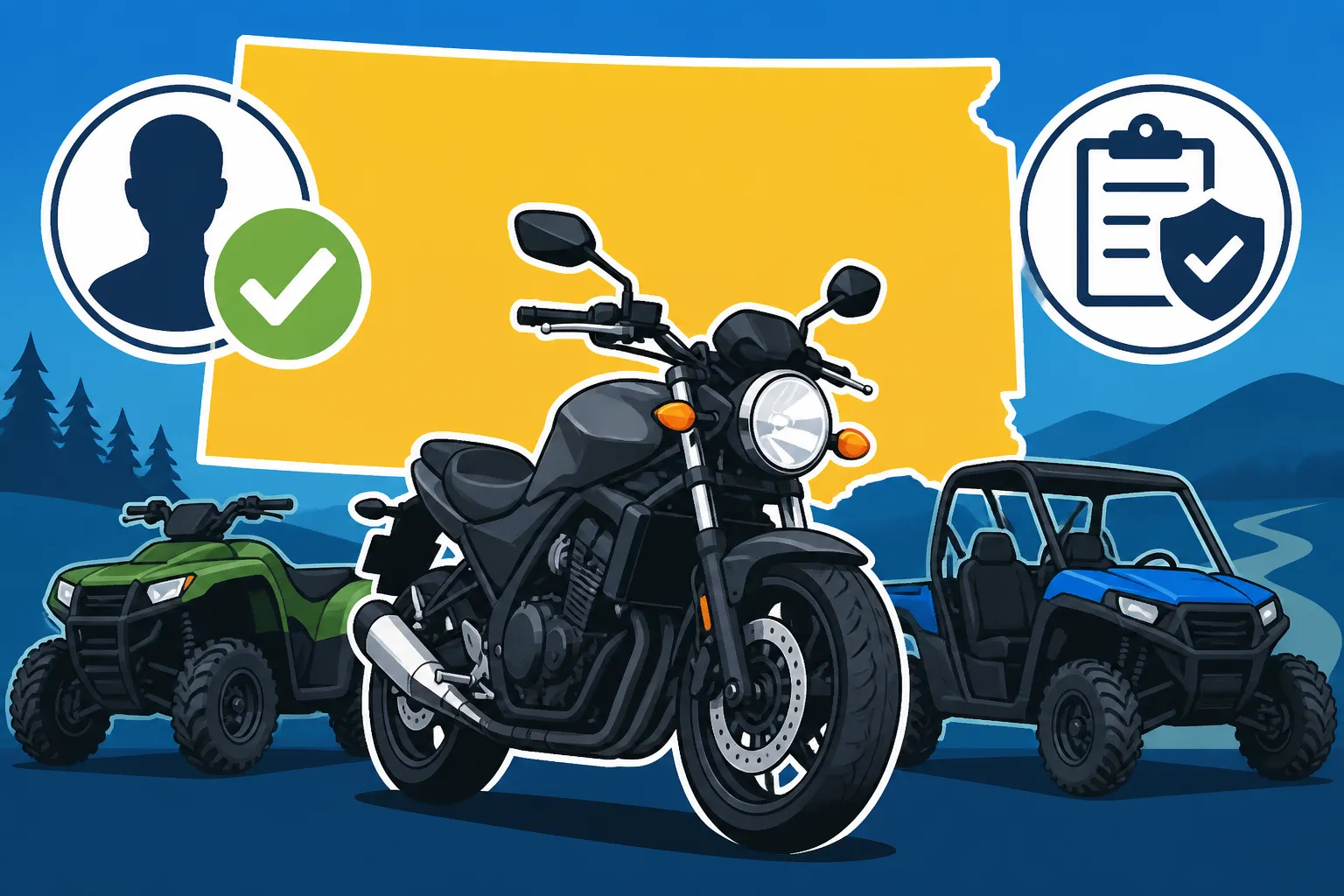
For an ATV to be considered eligible for a motorcycle plate in South Dakota – which is the path to street legality for many quads – it generally needs to have an engine displacement of 200 cubic centimeters (cc) or more. This isn't just an arbitrary number; it's a legislative decision that aims to classify ATVs with sufficient power and capability to reasonably keep up with traffic or safely navigate roadways. A 200cc engine is typically seen as the minimum to provide adequate acceleration and speed for basic road conditions, even if you're just riding ditch bottoms or crossing intersections. If your ATV falls below this threshold, regardless of how new, well-maintained, or accessory-laden it is, it typically won't qualify for a South Dakota motorcycle plate, thus severely limiting its legal road use options.
Why a Quad Under 200cc Cannot Get a South Dakota Plate
It can be incredibly frustrating to have a perfectly good quad, perhaps a newer 150cc model or an older 180cc machine, and be told it can't be plated for road use. The reason [Why a Quad Under 200cc Cannot Get a South Dakota Plate] is rooted in the state's classification system. South Dakota essentially treats ATVs that can be plated as a type of motorcycle for registration purposes. And just like smaller dirt bikes might not be able to be plated as street-legal motorcycles, the state applies a similar logic to ATVs. The legislature has deemed that machines under 200cc don't meet the minimum power standards for safe and efficient operation on public roads. This isn't about judging your riding skill or the quality of your particular machine; it's a hard and fast rule based on engine displacement. For riders who own smaller machines, this often means limiting their riding to private land or designated off-road parks, as even short stints on public roads could lead to citations.
The Impact on Electric ATVs and Other Non-Gas Machines
This 200cc rule naturally raises a huge question: what about electric ATVs or UTVs that don't have a combustion engine at all? How do they fit into a rule based on cubic centimeters? The state recognizes that electric vehicles operate differently, and the spirit of the law often translates the "200cc" idea into a comparable power output for electric motors. While the exact conversion isn't always a direct science, authorities typically look for electric machines that demonstrate similar performance capabilities to a 200cc gas engine. This means a low-powered electric youth ATV likely won't qualify, but a robust electric UTV with significant horsepower might. If you have an electric machine and are considering plating it, it's always best to consult with your local county treasurer's office or the Department of Revenue for the most up-to-date guidance, as these interpretations can sometimes evolve with technology. Manufacturers like SuperATV often offer electric machine accessories, and ensuring they meet any specific requirements is also important.
Licensing Requirements for Street-Legal ATVs in South Dakota
Once you've navigated the engine size requirements and your ATV or UTV is eligible for a plate, the next logical step is understanding what it takes for you, the operator, to be legal behind the handlebars (or steering wheel). This isn't just about the machine; it's about the person operating it. South Dakota has specific rules regarding driver's licenses for road-legal ORVs, and they might not be what you expect, especially if you're coming from a state with different regulations.
The Driver's License Exception for South Dakota Riders
This is one of those fantastic tidbits that often surprises out-of-state riders or even new residents: South Dakota has a notable exception for driver's licenses when it comes to operating a plated ATV or UTV on public roads. While you might assume you need a motorcycle endorsement to ride a "motorcycle-plated" ATV, that's generally not the case for residents. For a South Dakota resident operating a properly plated ATV or UTV on a public roadway, a standard Class D driver's license (the regular car license) is typically sufficient. You don't usually need a special motorcycle endorsement. This can be a huge relief for many riders who might not have a motorcycle license but want to enjoy the freedom of road-legal ATV use. It's a pragmatic approach that recognizes the differing nature of operating an ATV compared to a two-wheeled motorcycle. For a more detailed look, see [The Driver's License Exception for South Dakota Riders].
Why a Licensed ATV Escapes the License Test
Following from the previous point, because a standard Class D driver's license is generally all that's required for a South Dakota resident, you also escape the need for a separate motorcycle license test. This is not to say that safety knowledge isn't important – quite the opposite – but it means the state doesn't require you to demonstrate specific motorcycle riding skills to legally operate your plated ATV on the road. The assumption is that the skills required to operate a four-wheeled ATV are more akin to driving a car than riding a motorcycle, making a standard license appropriate. This simplifies the process immensely for riders, removing a significant barrier to road legality. However, it's crucial to remember that this applies to South Dakota residents. Non-residents often need to comply with the licensing laws of their home state, which might include motorcycle endorsements, if they intend to ride their street-legal machine here. [Why a Licensed ATV Escapes the License Test] provides more context.
Navigating Licensing if You're Under 18
Age is another critical factor, particularly for younger riders. While the general driver's license rules are quite accommodating for adults, minors face stricter regulations. If you're under 18 and want to operate a plated ATV or UTV on public roads in South Dakota, you'll still need to comply with all standard driver's license requirements for your age group. This means progressing through the graduated driver's license program (permit, restricted, and then full license) just like you would to drive a car. There isn't a special "ATV license" for minors. Additionally, younger riders might still be subject to helmet laws, even if adults aren't, when operating on public roads. It's essential for parents and guardians to be fully aware of these age-specific rules to ensure their teenagers are riding legally and safely, especially when mixing with road traffic.
Essential Equipment for South Dakota Road-Legal ATVs
So, you've got your machine, it meets the 200cc rule, and you've got your driver's license ready to go. What's next? Outfitting your ATV or UTV with the correct equipment to make it truly road-legal. This isn't just about aesthetics; these are functional and safety requirements designed to make your machine visible, controllable, and compatible with other vehicles on the road. Skipping these steps can lead to fines, citations, and unsafe riding conditions.
Outfitting Your Machine for Highway Use
Making your off-road machine fit for highway use goes beyond just sticking a license plate on it. South Dakota has specific equipment requirements that your ATV or UTV must meet to be considered street-legal. Think of it as preparing your machine for an inspection, even if an official inspection isn't always mandated. These requirements are in place for safety, ensuring your machine can communicate its intentions to other drivers and operate predictably in a mixed-traffic environment. This means adding or ensuring certain lights, mirrors, and signaling devices are present and functional. It's not uncommon for riders to head to places like SuperATV for aftermarket parts that help them meet these requirements, especially if their machine isn't factory-equipped for road use.
Mirrors, Horns, and Lights: What's Required
Let's break down the essential equipment. For your ATV or UTV to be road-legal in South Dakota, it generally needs:
- Headlights: At least one, but often two, capable of illuminating the road for a safe distance, especially if you plan to ride after dark. They must be white and properly aimed.
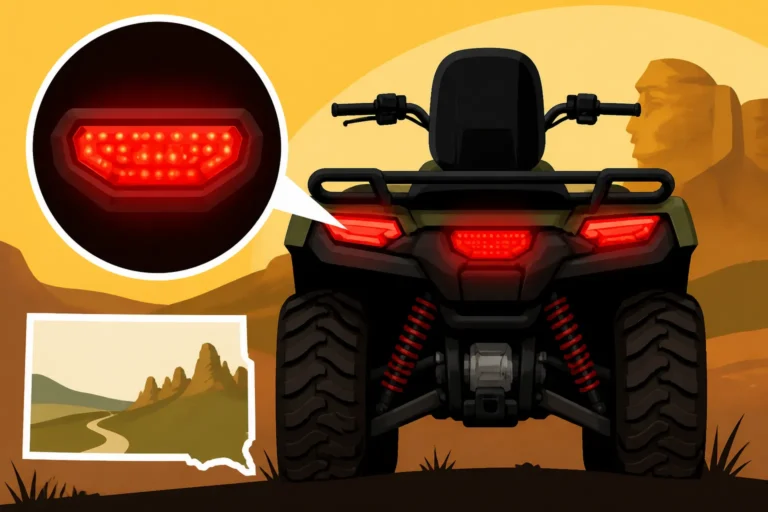
- Taillights/Brake Lights: A red taillight visible from the rear, which also functions as a brake light when the brakes are applied. Many machines come with these, but they must be functional.
- Turn Signals: While not always explicitly mandated for all ORVs that get motorcycle plates (as some older motorcycles also pre-date turn signal requirements), having working turn signals (front and rear) is highly advisable for safety and clarity, especially on busier roads. Hand signals are an alternative if signals aren't fitted.
- Rearview Mirror: At least one rearview mirror is typically required, allowing you to see traffic approaching from behind. Many riders choose a second mirror for improved visibility.
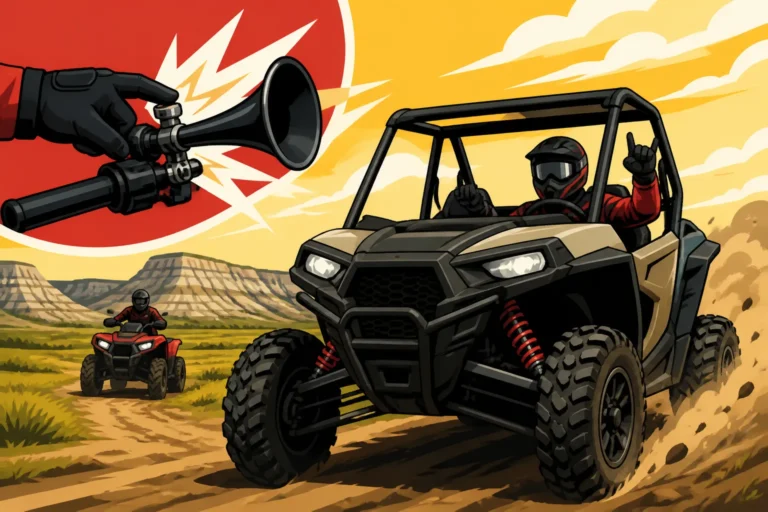
- Horn: A working horn, audible from at least 200 feet, is essential for signaling warnings to other drivers or pedestrians.
- Tires: Your tires must be DOT-approved for street use. Aggressive off-road tread patterns might be fine for dirt, but if they're not DOT-rated, they're typically not legal for sustained road use.
- Spark Arrester: While more for trail use, a spark arrester is also crucial for preventing fires, especially in dry conditions.
Meeting these requirements ensures you're not only legal but also visible and safe when sharing the road.
| Required Equipment | Description | Why It's Needed |
|---|---|---|
| Headlight(s) | White, visible from 500 ft, properly aimed, functional for night riding. | Visibility for rider and to other drivers. |
| Taillight/Brake Light | Red, visible from 500 ft, illuminates when brakes are applied. | Rear visibility and signaling stops. |
| Horn | Audible from 200 ft. | Warning other road users. |
| Rearview Mirror(s) | At least one, allowing clear view of the road behind. | Situational awareness and safe lane changes. |
| DOT-Approved Tires | Designed for public road use. | Safe traction and handling on paved/gravel surfaces. |
| Spark Arrester | USFS-approved. | Fire prevention, especially important on trails and dry roadsides. |
Avoiding Common Equipment Pitfalls
It's easy to overlook some of these details, leading to unexpected issues. One common pitfall is assuming factory equipment is automatically road-legal. Many ATVs come with basic lights, but they might not be bright enough, or correctly aimed for road use, especially at night. Another is neglecting to check if your tires are DOT-approved; just because they have good tread doesn't mean they're street legal. Riders often forget about the horn until they need it, or they might rely on a tiny, almost inaudible horn that doesn't meet the "audible from 200 feet" requirement. Always double-check each component before heading out. Sometimes, aftermarket parts from reputable suppliers can even exceed these requirements, giving you an extra layer of safety. Making sure your machine is up to snuff can save you a lot of headache and potential fines down the road.
Navigating Ditch Riding and Road Crossings
Even with a fully plated and equipped ATV or UTV, you're not entirely free to roam every inch of every road. South Dakota has specific rules regarding where you can ride on a road, particularly concerning ditch bottoms and shoulders, as well as strict guidelines for crossing highways. This is where the unique nature of ATV/UTV road use really comes into play, setting it apart from traditional vehicle operation.
South Dakota Ditch Riding Rules Explained
South Dakota has a long-standing tradition of ditch riding, particularly on county roads and state highways. This means that, in many areas, a properly plated ATV or UTV can legally operate in the ditch bottom or on the extreme outer edge of the right-of-way. This isn't permission to ride in the traffic lanes, but rather in the adjacent unpaved areas. However, this privilege comes with caveats. Counties have the option to "opt out" of ditch riding, meaning they can ban it within their jurisdiction. It's crucial to be aware of local ordinances and look for posted signs. Generally, you're expected to ride as far to the right as possible, away from moving traffic, and exercise extreme caution. Speed limits for ditch riding can also be lower than the posted road speed. For comprehensive details, refer to [South Dakota Ditch Riding Rules Explained]. Understanding these nuances is vital to avoid trespassing or riding in prohibited areas.
When the Shoulder Becomes Legal
While ditch bottoms are a primary area for ORV operation, there are specific circumstances when the paved shoulder of a road might become a legal riding area. This typically occurs when an obstruction in the ditch bottom (like a deep culvert, standing water, or dense brush) makes ditch riding impossible or unsafe. In such cases, a plated ATV or UTV may briefly use the paved shoulder to bypass the obstruction, returning to the ditch bottom as soon as it's safe and practical. This is not an open invitation to ride the shoulder continuously. It's a temporary allowance for safety and practicality. Riding on the shoulder when the ditch is clear could still result in a citation. Always prioritize safety and be mindful of other vehicles when making these temporary transitions.
Safe Highway Crossings and Intersections
Crossing a highway on an ATV or UTV, even a plated one, requires immense caution and adherence to specific rules. South Dakota generally allows plated ORVs to cross highways at a right angle, after coming to a complete stop and yielding to all traffic. You must cross directly and not travel along the highway, even briefly, unless it's explicitly designated as an ORV route (which is rare for state highways). At intersections with stop signs or traffic signals, you must obey all traffic laws, just like any other vehicle. When approaching a blind intersection or a crest, exercise extra vigilance. It's often recommended to make yourself as visible as possible before crossing, perhaps by standing up on your machine for better visibility or ensuring your lights are on. Don't assume other drivers will see you. Always make eye contact and be prepared to yield, even if you think you have the right-of-way.
Titling Your ATV/UTV for Road Use in South Dakota
Getting your machine titled is the foundational step for legal road use. Without a proper title and subsequent registration, that plate simply isn't going to happen. The process involves more than just a quick trip to a local office; there are forms, fees, and deadlines that, if missed, can lead to additional costs and headaches. It's a bureaucratic but essential part of becoming street-legal.
The Process of Titling a Machine for the Road
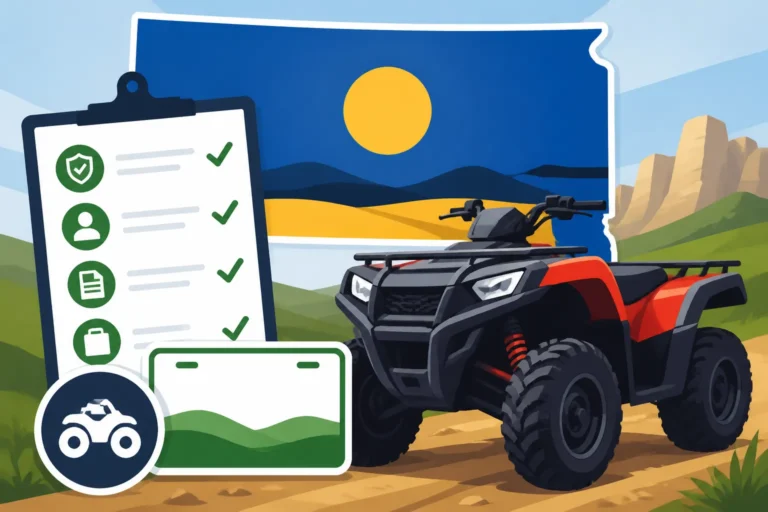
Titling an ATV or UTV in South Dakota generally follows a similar process to titling any other vehicle. You'll need to visit your local [Titling at a South Dakota County Treasurer] office. You'll typically need to bring:
- The manufacturer's Certificate of Origin (MCO) if it's a new machine, or the previous owner's signed-over title if it's used.
- A bill of sale, especially for private party purchases, detailing the purchase price.
- Proof of your identity and residency (like a driver's license).
- Completed application for title and registration.
The county treasurer's office will review your paperwork, verify the VIN, and collect the necessary fees and taxes. Once everything is processed, you'll receive a temporary registration, and your official title will be mailed to you later. It's a straightforward process as long as all your paperwork is in order. Any missing information or discrepancies can cause significant delays.
Understanding South Dakota's 4 Percent Excise Tax
One of the most significant costs associated with titling your ATV or UTV for road use in South Dakota is the excise tax. The state levies a [South Dakota's 4 Percent Excise Tax] on the purchase price of your machine. This tax is paid at the time of titling, not at the point of sale (unless you buy from a dealer who collects it). For example, if you bought a UTV for a certain amount, you'd pay 4% of that amount in excise tax when you go to the county treasurer's office. This tax applies whether you bought the machine new or used. It's crucial to factor this into your budget when purchasing an ATV or UTV, as it can add a noticeable amount to your total outlay, especially on higher-priced machines. Don't be surprised by this fee; it's a standard part of vehicle acquisition in South Dakota.
South Dakota's Forty-Five Day Title Deadline and Penalties
South Dakota is pretty clear about its expectations for titling a newly acquired vehicle. You have [South Dakota's Forty-Five Day Title Deadline] from the date of purchase to get your ATV or UTV titled at the county treasurer's office. This deadline is strictly enforced. If you miss it, you'll start accruing penalties. The penalty system is designed to encourage prompt titling and involves a per-month charge that can quickly add up. Specifically, you'll face [South Dakota's 1 Percent a Month Penalty] after the 45-day window. And if you let it go for too long, say past 60 days, that penalty increases. This is where ignoring the paperwork can become a surprisingly expensive mistake. It's far better to gather all your documents immediately after purchasing your machine and make that trip to the treasurer's office well within the 45-day timeframe. Set a reminder on your phone if you have to!
The Finer Points: Insurance, Helmets, and Local Ordinances
Beyond the big-ticket items of engine size, licensing, and titling, there are several other important details that every ATV/UTV rider needs to be aware of when considering road use in South Dakota. These include insurance requirements, helmet laws (especially for younger riders), and how local rules can sometimes override state statutes, adding another layer of complexity.
South Dakota's Helmet Law for ATV Riders and Passengers
This is a common question, and the answer isn't always a simple yes or no. For adults (18 years and older) operating a plated ATV or UTV on public roads in South Dakota, a helmet is generally not legally required. However, for riders and passengers under the age of 18, helmets are typically mandatory when operating on public roads. This applies even if the machine is fully plated and street-legal. The state prioritizes the safety of minors, and this rule reflects that concern. Even for adults, wearing a helmet is always a smart choice for personal safety, regardless of legal mandates. Head injuries are a severe risk in any riding accident, and a helmet provides crucial protection. For more specific details, consult [South Dakota Helmet Law for ATV Riders].
Eye Protection: More Than Just a Suggestion
While helmet laws might be conditional based on age, eye protection is much more consistently required. When operating an ATV or UTV on public roads in South Dakota, all riders and passengers are generally required to wear appropriate eye protection. This means goggles, a face shield on a helmet, or eyeglasses (including sunglasses) that provide adequate protection from wind, dust, and debris. Regular eyeglasses are usually sufficient. The rationale here is clear: flying debris, insects, or even just strong winds can impair your vision, leading to dangerous situations. Ensuring your eyes are protected is a simple yet effective way to maintain clear vision and prevent accidents. Don't overlook this seemingly small detail; it's a significant safety consideration. You can find more information in [South Dakota Eye Protection Requirement].
Local Rules and How Counties Can Opt Out
As mentioned earlier with ditch riding, South Dakota law allows for a degree of local control regarding ORV operation. While state law provides the general framework for street-legal ATVs and UTVs, counties have the authority to implement more restrictive ordinances in certain areas. This is most common with ditch riding, where a county can vote to ban it entirely within its borders. However, local control can also extend to other aspects of ORV operation on public roads, such as specific hours of operation or even stricter equipment requirements on certain local routes. It is absolutely essential to check with the county treasurer's office, the sheriff's department, or local city halls for any specific ordinances in the areas where you plan to ride. What's legal in Lawrence County might be prohibited just across the line in Meade County. Never assume; always verify.
Common Road Use Scenarios and Troubleshooting
Even after understanding all the rules, real-world riding situations can throw curveballs. It's one thing to know the law; it's another to apply it when you're out on a gravel road, facing a sudden closure, or dealing with a roadside stop. Let's look at some practical scenarios and how to troubleshoot them.
Riding to a Trailhead vs. Cruising a Section Line
This distinction is crucial for understanding the intent behind South Dakota's road-legal ORV rules. Riding to a trailhead often involves a short, purposeful journey on a public road to access an off-road area. In this scenario, your plated ATV or UTV is acting as transportation. Cruising a section line, on the other hand, might be the destination itself – enjoying a leisurely ride on a gravel road that forms part of the public right-of-way. Both are generally legal for a plated machine, but the context influences perception. When riding to a trailhead, ensure your route is direct and efficient. When cruising, be extra mindful of residential properties, dust, and other traffic. The rules for ditch riding, speed, and yielding still apply in both scenarios. Remember that "road-legal" means you're sharing the road, not claiming exclusive use.
What a South Dakota Trooper Checks Roadside
If you're stopped by a South Dakota Highway Patrol trooper or a county sheriff while riding your ATV or UTV on a public road, they'll primarily be checking for compliance with the vehicle and operator laws. Expect them to verify:
- Registration and Plate: Is your license plate current and properly displayed? Is your registration paperwork in order?
- Title: Do you have proof of ownership, or can it be verified?
- Driver's License: Do you possess a valid South Dakota Class D driver's license (if a resident) or your home state's equivalent (if a non-resident)?
- Equipment: Are all required lights, mirrors, and the horn functional? Are your tires DOT-approved? Is your machine otherwise street legal?
- Age/Helmet: If you or a passenger is under 18, are helmets being worn?
- Ditch Riding Compliance: If you were ditch riding, were you in an authorized area, and were you riding safely?
Being prepared with all your documentation and ensuring your machine is compliant can make a roadside stop quick and hassle-free. [What a South Dakota Trooper Checks Roadside] can offer more insights.
Appealing a Black Hills ATV Citation
Let's face it, sometimes despite our best efforts, we might still receive a citation. Maybe there was a misunderstanding of a local ordinance, or a question about a specific piece of equipment. If you find yourself with an ATV-related citation in the Black Hills (or anywhere else in South Dakota), you have the right to appeal it. The process typically involves:
- Understanding the Charge: Clearly identify what ordinance or statute you're accused of violating.
- Gathering Evidence: Collect any evidence that supports your case, such as photos of the location, proof of equipment, or relevant permits.
- Contacting the Court: The citation will usually provide information on how to contact the court responsible for hearing your case.
- Seeking Advice: Consider consulting with a legal professional who specializes in traffic or vehicle laws. They can often provide invaluable guidance.
Remember, simply paying the fine is an admission of guilt. If you believe you were wrongly cited or there were mitigating circumstances, appealing the citation is your right. Companies like SuperATV often have forums or communities where riders discuss legal issues and might offer anecdotal advice, though always consult legal professionals for specific situations.
Disclaimer
This article is for general informational purposes only and does not constitute professional advice. Laws, prices and regulations vary by location and change over time. Consult a qualified professional for guidance on your specific situation.