Street Legal ATVs in South Dakota: The Short Answer
Navigating the rules for riding your ATV or UTV on public roads in South Dakota can feel like trying to solve a really confusing riddle. Many riders are desperate to take their machine from the trail to the diner, or simply down the road to a neighbor's place, only to be met with vague information or conflicting advice from well-meaning friends. This comprehensive guide will cut through the confusion, clearly laying out exactly what it takes to make your off-road vehicle street legal in South Dakota, covering everything from essential equipment to where you can actually ride.
Understanding South Dakota's Definition of an Off-Road Vehicle (ORV)
Before we dive into how you can get your ATV or UTV on South Dakota roads, it’s crucial to understand how the state actually defines these machines, and more importantly, how that definition impacts their road-worthiness right out of the box. Many people assume that because their UTV has a steering wheel and seatbelts, it’s practically a car, but the state sees things differently. This foundational understanding is the key to unlocking the street-legal puzzle.
What South Dakota Doesn't Consider a Road Machine
When you buy an ATV or UTV from a dealership, or even a used one from a private seller, it’s almost always classified by the state as an Off-Road Vehicle, or ORV. This designation means it’s intended for use on trails, private property, or designated off-road areas, not public streets. The sticker on your machine probably even warns against road use. This isn't just a suggestion; it's a legal classification that carries significant weight. For many riders, this is where the frustration begins – realizing their brand-new, powerful machine isn't automatically eligible for a quick run to the gas station.
The state’s perspective is rooted in safety and regulation. Traditional street vehicles undergo rigorous testing and meet specific federal and state standards for things like emissions, crashworthiness, lighting, and braking systems. Most ATVs and UTVs, in their factory configuration, simply don’t meet these same stringent requirements. They’re built for rough terrain, not for safely navigating traffic alongside cars and trucks on paved highways. This fundamental difference is why you can’t just throw a license plate on your quad and hit the asphalt. South Dakota's rules are designed to bridge this gap, but it requires transforming your ORV into something legally recognizable as a road-worthy vehicle.
The Critical "Motorcycle" Exception
Here’s where it gets interesting, and where the path to street legality truly opens up in South Dakota. The state has a provision that allows an ORV to be titled and registered as a "motorcycle" if it meets specific criteria. This isn't about literally turning your four-wheeled UTV into a two-wheeled motorcycle, but rather applying the licensing and equipment standards of a motorcycle to your off-road machine. It’s a bit of a legal workaround, but it’s the primary way to achieve street legality.
This "motorcycle exception" is absolutely critical because it provides a clear pathway forward. Without it, your ATV or UTV would remain relegated strictly to off-road use, with only limited exceptions for ditch riding or highway crossings, which we'll discuss later. By converting its legal status to that of a motorcycle, you are essentially telling the state that your machine now adheres to a set of safety and equipment standards that make it suitable for general road use. It means you’ll need to ensure your machine is equipped just like a street motorcycle, even though it may look nothing like one. This reclassification allows you to get a plate, and with that plate, come the privileges and responsibilities of any other road-going vehicle.
Meeting South Dakota's Street Legal Equipment Requirements
So, you’ve wrapped your head around the "motorcycle exception." Now comes the practical part: making your machine actually look and function like it belongs on the road. This isn't just about bolting on a few accessories; it's about ensuring every required piece of equipment is properly installed and operational, allowing your ATV or UTV to meet the Department of Transportation (DOT) standards for a road-going vehicle. Missing even one item or having a non-compliant part can mean the difference between a legal cruise and a costly ticket.
Essential Lighting and Reflectors
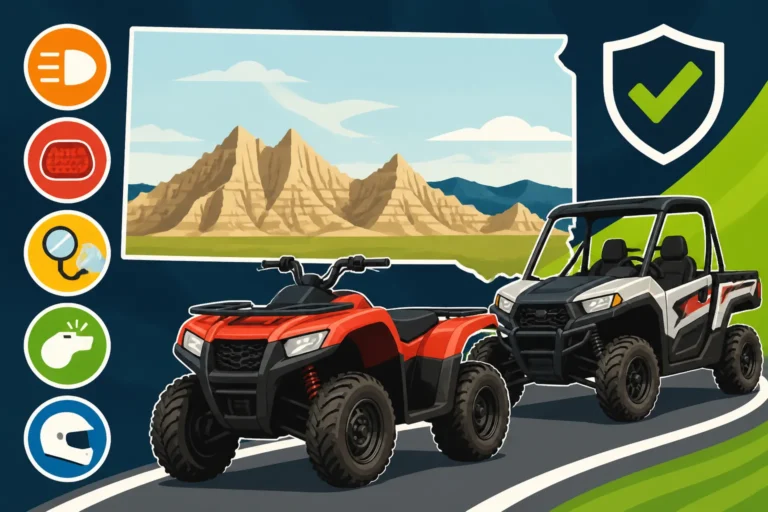
When you’re sharing the road with cars and trucks, visibility is paramount. Your ORV, once converted to a road-legal machine, must have a full suite of lighting equipment just like any other vehicle. This includes a properly functioning headlight (or headlights, if your machine has two), which must be capable of illuminating the road a certain distance ahead. Equally important are the taillights, which need to be visible from the rear, and dedicated brake lights that illuminate brightly when you apply the brakes.
Beyond these, you’ll absolutely need turn signals. These must be clearly visible from both the front and the rear of your machine, indicating your intentions to other drivers. Having functional turn signals is often one of the biggest modifications for many stock ATVs and UTVs. Finally, reflective devices are also part of the package, typically at the rear and sides, to enhance visibility, especially in low light conditions. Many riders turn to reputable aftermarket providers like SuperATV for their lighting kits, as they offer comprehensive solutions designed to meet these exact requirements. It's not enough to simply have lights; they must be bright, properly aimed, and fully operational for both day and night use.
Mirrors, Horn, and Other Safety Gear
Visibility isn't just about being seen; it's also about seeing what's around you. Every street-legal machine in South Dakota must be equipped with at least one rear-view mirror. While one is the minimum, many riders opt for two mirrors – one on each side – for enhanced safety and a wider field of vision, especially when navigating traffic or merging. These mirrors need to be securely mounted and provide a clear, unobstructed view of the road behind you.
Next up is a horn. Just like a car or motorcycle, your street-legal ATV or UTV needs an audible warning device. This horn must be capable of emitting a sound that can be heard from a reasonable distance, giving you the ability to alert other drivers or pedestrians to your presence. A small, weak horn might not cut it; think about what you'd expect to hear from a typical street motorcycle. Other key safety considerations include a functional speedometer and odometer to track your speed and mileage, and DOT-approved tires. Your off-road knobbies might be fantastic on the trail, but they might not be rated for sustained highway speeds or provide adequate traction on pavement, so checking for the DOT rating is crucial.
Brakes and Exhaust Standards
The ability to stop safely and effectively is non-negotiable for any road-going vehicle. Your street-legal ATV or UTV must have a fully functional braking system on all wheels. This means the brakes must be in good working order, capable of stopping your machine reliably and within a safe distance. Any deficiencies in your braking system could not only lead to a citation but, more importantly, put you and others at serious risk. Regular maintenance and inspection of your brakes are essential for road use.
Finally, let's talk about the exhaust system. While many ORVs come with relatively loud exhausts for performance or just part of their design, street-legal machines must adhere to specific sound regulations. Excessive exhaust noise can be a nuisance and is often regulated by local ordinances as well as state law. Additionally, your exhaust must be fitted with a spark arrester. This is a crucial safety device, especially important for preventing wildfires when riding in dry conditions, even on public roads that might pass through or near vegetated areas. It's a reminder that while you're on the road, you're still expected to be a responsible operator, mindful of both noise pollution and environmental impact.
Licensing Your ATV/UTV for Road Use in South Dakota
Once your machine is properly equipped, the next hurdle is the paperwork and official processes to get it recognized by the state as street legal. This involves several steps, from proving ownership to obtaining the actual license plate that signifies its road-worthiness. It can feel like a bureaucratic maze, but each step is essential to ensure your vehicle is legally allowed on public thoroughfares.
The Titling Process
Before you can even think about getting a license plate, your ATV or UTV needs a proper title. The title is the fundamental document proving legal ownership of your machine. For new machines, the dealership will typically handle the initial titling process. If you’re buying a used machine, you’ll need to ensure the seller provides you with a properly signed-over title. Without a clean, accurate title in your name, you won't be able to proceed with registration or plating. This can be a significant sticking point for older machines or those purchased without proper documentation.
The process of [Titling an ATV in South Dakota] usually involves visiting your county treasurer's office. You'll need to present the title (or manufacturer's statement of origin for a new machine), a bill of sale, and identification. Be prepared to pay any applicable fees, including South Dakota's 4% excise tax on the purchase price of the machine. This tax is assessed when the machine is first titled in the state, so if you're bringing a machine in from out of state or titling it for the first time, this will be part of the initial cost. Ensuring all your [South Dakota ATV Title Paperwork] is in order is crucial to avoid delays. The treasurer's office is also where the initial payment for the [South Dakota's 4 Percent Excise Tax] is typically handled.
Obtaining a Motorcycle Plate
With a title in hand, you're ready to tackle the registration and plating process. This is where your ATV or UTV officially becomes a "motorcycle" in the eyes of the law, allowing it to receive a standard motorcycle license plate. You'll return to your local county treasurer's office to apply for the registration and plate. This step requires verifying that your machine meets the engine size requirements for plating. For ATVs, South Dakota specifies that the engine must be 200cc or greater to be eligible for a motorcycle plate. Two-wheeled dirt bikes have a 120cc minimum. This [South Dakota ATV Engine Size for Plates] is a non-negotiable hurdle.
The reason your ATV gets a motorcycle plate is purely a matter of classification within the state’s vehicle code. Rather than creating an entirely new vehicle category for street-legal ATVs and UTVs, the legislature opted to fold them into the existing motorcycle category, provided they meet the specific equipment and engine size criteria. This simplifies the regulatory framework but can be confusing for new riders. You'll fill out the necessary application forms, pay the [South Dakota ATV Plate Cost] (which will vary depending on factors like the machine's age and weight), and if all conditions are met, you'll be issued a plate. For more details on why this classification exists, you can look into [Why South Dakota Plates Are Motorcycle Plates].
Insurance and Driver's License Requirements
Just like any other vehicle on the road, your street-legal ATV or UTV must be insured. South Dakota mandates liability insurance for all registered motor vehicles, and your newly plated machine is no exception. This insurance protects you financially in case you are at fault in an accident, covering damages or injuries to other parties. Without proof of valid liability insurance, you will not be able to register and plate your machine, and riding without it is illegal and carries significant penalties.
Furthermore, operating a street-legal ATV or UTV on public roads requires a valid driver's license. You can't just be any age; you need to meet the standard requirements for operating a motorcycle or car. This typically means being at least 16 years old and possessing a Class M (motorcycle) or Class D (operator) driver's license. There are no special "ATV licenses" for road use; you're held to the same standards as someone driving a car or riding a motorcycle. Understanding the [South Dakota Driver's License Rules for ATVs] is crucial, as operating without a proper license could result in fines, license suspension, or even impoundment of your machine. It’s about ensuring that anyone behind the handlebars on public roads has demonstrated the necessary skills and knowledge to do so safely.
Where You Can (and Can't) Ride on South Dakota Roads
So, you’ve done all the work: your machine is equipped, titled, plated, and insured, and you've got your license. Now the big question: where can you actually ride it? While having a street-legal ATV or UTV opens up many possibilities, it doesn’t mean you have carte blanche to go anywhere. South Dakota has specific rules about which types of roads are permissible and under what conditions, including unique provisions for ditches and important restrictions on major highways.
Ditch Riding Rules and County Ordinances
One of the most unique aspects of riding in South Dakota is the provision for ditch riding. Generally, ATVs and UTVs are permitted to operate in the ditches of public highways, but there are some critical caveats. You must travel in the same direction as the adjacent traffic, and the ditch must be within the right-of-way. This rule allows riders to traverse areas where direct road access might be limited or unsafe. However, this is not an open invitation to ride in every ditch you see.
Crucially, counties in South Dakota have the authority to "opt out" of ditch riding. This means a county can pass an ordinance banning ORV use in the ditches within its jurisdiction. It’s absolutely vital to know which counties allow or restrict ditch riding before you venture out, as what's legal in one county might land you a ticket in the next. Signs are often posted where counties have opted out, but it's always best to check with the county sheriff's office or highway department beforehand. You can find more information about these specifics in [South Dakota Ditch Riding Rules] and [How a South Dakota County Opts Out of Ditch Riding]. Always be aware of your surroundings, stay to the outer edge of the ditch away from traffic, and avoid areas where pedestrian traffic or property access would be impeded.
Highway Crossings and Interstates
Even if your ATV or UTV isn't street legal and you’re relying on ditch riding, you'll eventually need to cross a highway or pavement. South Dakota law generally allows ORVs to cross a highway perpendicularly, meaning a direct path from one side to the other. You must yield to all traffic on the highway and cross as safely and efficiently as possible. This is not for cruising down the highway, but rather for accessing another ditch, trail, or piece of private property on the opposite side. It's a quick, straight shot across, not a turn onto the road to drive alongside traffic.
However, there's a hard and fast rule that applies to all ATVs and UTVs, whether street legal or not: they are absolutely, unequivocally banned from interstate highways. This includes the main travel lanes, shoulders, and even the frontage roads that run parallel to the interstates. Interstates are high-speed, high-volume roadways, and ATVs and UTVs simply aren’t designed for that environment. Attempting to ride on an interstate or its frontage roads is extremely dangerous and will result in significant legal penalties. This is one of those rules with no exceptions or gray areas, so always plan your routes to avoid these major thoroughfares entirely.
City, Town, and Gravel Roads
While state law provides the framework, individual cities and towns in South Dakota often have their own ordinances regarding ATV and UTV use within their municipal limits. Even with a street-legal plate, you might find that certain city streets are off-limits, or there might be restrictions on hours of operation or noise levels. It’s always a good idea to check with the local police department or city hall for specific rules before riding your machine through downtown Deadwood or a quiet residential neighborhood. Respecting local ordinances is key to maintaining good relationships between riders and communities.
Gravel roads and section line roads, which crisscross much of the state’s rural landscape, are generally more permissible for street-legal ATVs and UTVs. These roads often see less traffic and are more akin to the natural environment of an ORV. However, the same state laws regarding equipment, insurance, and licensing still apply. Even on a remote gravel road, you need to be properly plated and licensed. Always be mindful of dust, especially when passing rural residences, and yield to any larger vehicles, particularly agricultural machinery, that you might encounter. For more on these, check out [South Dakota Rules for Riding a Gravel Road] and [South Dakota Rules for Riding a Section Line]. These unpaved arteries are often a favorite for riders, offering scenic routes away from heavier traffic.
Rider Requirements and Safety Considerations
Beyond the machine itself, the person operating it also has responsibilities and specific requirements under South Dakota law. Just as you wouldn’t let an unqualified driver take your car for a spin, there are rules dictating who can operate a street-legal ATV or UTV and what safety gear they must wear. These regulations are designed to protect not only the rider but also passengers and others on the road.
Helmet and Eye Protection Laws
South Dakota has specific laws regarding helmets, particularly for younger riders. If you are under the age of 18, wearing an approved helmet is mandatory when operating an ATV or UTV on public roads or ditches. This rule is straightforward and rigorously enforced for the safety of minors. Parents and guardians should ensure their young riders are always properly equipped with a DOT-approved helmet. [South Dakota Helmet Law for ATV Riders] outlines these age-specific requirements.
However, for riders 18 years of age and older, helmets are not legally mandated when operating a street-legal ATV or UTV on public roads. This exemption often leads to confusion and sometimes a false sense of security. While not legally required for adults, wearing a helmet is always a smart decision. The risks of head injury in an accident are significant, regardless of age. Beyond helmets, eye protection is required for all riders, regardless of age, whenever operating an ATV or UTV on public roads. This means goggles, a face shield, or a windscreen that provides adequate protection from debris, wind, and insects. [South Dakota Eye Protection Requirement] is critical for maintaining clear vision and preventing eye injuries.
Passenger Rules and Age Restrictions
If your ATV or UTV is designed to carry more than one person, you are generally allowed to carry passengers on public roads, provided your machine is street legal and you adhere to certain conditions. The machine must have designated seating for each passenger, and they must be able to ride safely without interfering with your operation. You can’t just have someone stand on the footwells or perch unsafely. Common UTVs with multiple seats are generally well-suited for carrying passengers, but many ATVs are designed for a single rider only, and adding a passenger to a single-rider ATV on public roads is often illegal and highly dangerous.
When it comes to age restrictions for riders on public roads, you need to have a valid driver’s license, as discussed earlier. This generally sets the minimum age at 16. For ditch riding, which has slightly different rules, the minimum age to operate an ORV is 12 years old, but this is specific to ditches, not general public roads. For further clarification on age limits related to ditches, you can reference [South Dakota Minimum Age for Ditch Riding]. Always err on the side of caution and ensure that anyone operating or riding as a passenger on your street-legal machine is doing so safely and legally.
Road Etiquette and Awareness
Operating an ATV or UTV on public roads requires a heightened sense of awareness and adherence to proper road etiquette. While your machine might be street legal, it’s still smaller and less visible than a typical car or truck. Drive defensively, anticipate the actions of other drivers, and make yourself as visible as possible. Brightly colored gear, flags, and proper use of your lighting and turn signals are essential. Remember that many other drivers may not be accustomed to seeing ATVs or UTVs on the road, so they might not expect you.
Seasonal conditions also play a huge role in safety. Dust can be a major issue on gravel roads, reducing visibility for you and following vehicles. In colder months, watch out for ice and snow, which can make handling treacherous. Always adjust your speed and driving style to match the conditions. Furthermore, understand that your machine, especially a UTV, has a higher center of gravity than a car, making it more prone to rollovers if you take turns too fast or make sudden maneuvers. Even with modifications, a UTV handles differently on pavement than a car. Staying alert, being predictable, and driving within your machine’s and your own limits are paramount for a safe and enjoyable road-riding experience.
| Feature / Requirement | Standard Car / Motorcycle | Street-Legal ATV/UTV (South Dakota) | ORV (Ditch Use Only) |
|---|---|---|---|
| Title Required | Yes | Yes | Yes |
| Registration/Plate | Yes | Yes (Motorcycle Plate) | No (Permit/Sticker) |
| Liability Insurance | Yes | Yes | No (Recommended) |
| Driver's License | Yes (Class D/M) | Yes (Class D/M) | No (Age 12+ for Ditch) |
| Headlights | Yes | Yes (DOT Compliant) | Yes (for dusk/night) |
| Brake Lights | Yes | Yes (DOT Compliant) | Yes |
| Turn Signals | Yes | Yes (DOT Compliant) | No |
| Rear-View Mirror | Yes | Yes (at least one) | No |
| Horn | Yes | Yes | No |
| DOT Tires | Yes | Recommended/Required | No |
| Helmet (Adult) | N/A (Motorcycle: Often Yes) | Not Required (Recommended) | Not Required |
| Helmet (Under 18) | N/A (Motorcycle: Yes) | Yes | Yes |
| Eye Protection | N/A (Motorcycle: Yes) | Yes | Yes |
| Interstate Access | Yes | No | No |
| Ditch Riding | No | Yes (County dependent) | Yes (County dependent) |
Common Misconceptions and Penalties
Despite all the rules and guidelines, there are still many misunderstandings that circulate among ATV and UTV enthusiasts about road use. These misconceptions can lead to costly mistakes, both in terms of fines and potential accidents. It’s crucial to clear up these common errors and understand the serious penalties that can come from non-compliance.
"Just Riding a Few Miles" Isn't an Excuse
One of the most frequent justifications for illegal road use is the idea that it's "just a short trip." Whether it's to the local convenience store for a soda, a quick run down the road to a friend's house, or simply to get from one section of private property to another, many riders believe that if the distance is minimal, the rules don’t really apply. This couldn't be further from the truth. In South Dakota, if your ATV or UTV is on a public road and it's not legally equipped, titled, and plated as a street-legal machine, it’s illegal, regardless of how far you intend to ride it.
Law enforcement officers don't issue exemptions for convenience or short distances. The moment your non-street-legal ORV touches a public road (outside of legal ditch riding or crossings), you are in violation of the law. The penalties for operating an untitled or unplated ATV on a public road can be steep, ranging from significant fines to having your machine impounded. It’s an expensive lesson to learn that a "quick trip" isn't worth the risk. [South Dakota Fines for an Untitled ATV] can really add up, making that shortcut far more costly than you anticipated. The only way to guarantee legal road use for even the shortest distance is to go through the full street-legal conversion process.
The Difference Between Trail and Road Legal
It’s easy to confuse "trail legal" with "road legal," but they are distinctly different concepts in South Dakota. A machine that is perfectly legal for riding on designated off-road trails, perhaps with a motorized trail permit, is not automatically street legal. Trail legality often involves rules around things like spark arresters, sound limits, and sometimes specific width restrictions for certain trails. While these are important for trail riding, they don't cover the full spectrum of requirements for public road use.
For instance, a machine might have bright headlights for the trail, but they might not meet DOT standards for road illumination or beam pattern. It might have a basic taillight, but lack dedicated brake lights or turn signals. Furthermore, many modifications common for trail riding, such as large lift kits or aggressive mud tires (even from a trusted brand like SuperATV), might not be suitable or even legal for sustained highway speeds. While many SuperATV products enhance trail performance, riders must ensure their road-going modifications meet DOT standards. Trail permits, like the Black Hills Motorized Trail Permit, grant access to specific trail systems; they are not a substitute for a state-issued license plate for road travel. Understanding this fundamental distinction is vital to avoid fines or accidents when transitioning between off-road and on-road environments.
What to Do if You're Pulled Over
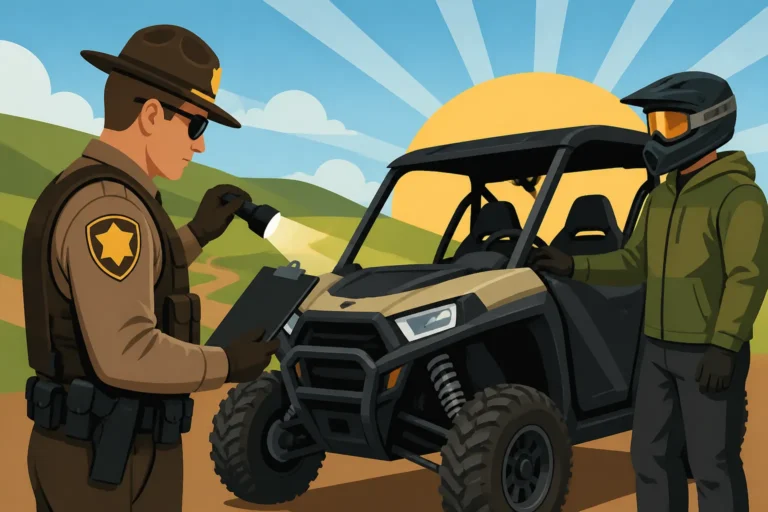
Despite your best efforts to comply with all regulations, there might come a time when you’re pulled over by law enforcement while operating your street-legal ATV or UTV. The most important thing to remember is to remain calm, cooperative, and respectful. Pull over safely to the right side of the road, turn off your engine, and keep your hands visible. Fumbling for documents or making sudden movements can be misinterpreted.
When the officer approaches, be prepared to provide your driver’s license, vehicle registration (proving it’s plated as a motorcycle), and proof of insurance. These are the standard documents required for operating any motor vehicle on South Dakota roads. The officer may also visually inspect your machine to ensure it has all the required safety equipment (lights, mirrors, horn, etc.) that make it street legal. If everything is in order, you’ll likely be sent on your way with a friendly reminder to drive safely. If there are issues, however, being cooperative can sometimes lead to a warning rather than a citation, but always be prepared for the possibility of a fine if your machine or documentation is found to be non-compliant. Knowing the rules and having your paperwork in order is your best defense.
Disclaimer
This article is for general informational purposes only and does not constitute professional advice. Laws, prices and regulations vary by location and change over time. Consult a qualified professional for guidance on your specific situation.