What a South Dakota Seller Should Hand Over
Selling a used ATV or UTV in South Dakota can feel like navigating a maze blindfolded, especially when you want to make sure you're doing everything by the book for both your protection and the buyer's peace of mind. You want to hand over the right paperwork, ensure the transaction is legitimate, and avoid any headaches down the road. This guide is here to walk you through exactly what a seller in South Dakota needs to provide to make the sale of their off-road vehicle as smooth and legally sound as possible.
The Absolute Must-Haves: South Dakota's Core Requirements for Sellers
When you're parting ways with your beloved ATV or UTV, there are a few non-negotiable items that absolutely must change hands. These aren't just suggestions; they're the foundational pieces of a legitimate sale in South Dakota, crucial for both you as the seller and the new owner. Missing even one of these can lead to serious headaches, delays, or even legal issues, so let's get them straight from the start.
The Signed-Over Title: Your Proof of Transfer
This is it, folks – the big one. The original Certificate of Title for your ATV or UTV is the single most important document you will hand over. Think of it as the vehicle's birth certificate and ownership history all rolled into one. Without it, the buyer simply cannot legally register the machine in their name, and you haven't truly transferred ownership.
On the back of the South Dakota title certificate, you'll find sections specifically designed for transferring ownership. It’s absolutely critical that you, as the seller, accurately fill out your portion. This typically includes signing your name, printing your name, and dating the transfer. You'll also need to enter the sale price and, if applicable, the odometer reading. Now, for many ATVs and UTVs, an odometer reading isn't always a hard requirement like it is for road vehicles, but if your machine has one and it's functional, record it. It adds another layer of transparency to the sale. A common mistake sellers make is not filling this out completely or legibly, which can cause the buyer issues when they try to complete their own [Titling an ATV in South Dakota] at the county treasurer's office. Make sure all the information matches your current identification. This is a common point of frustration for buyers trying to get their paperwork through, so help them out by being meticulous.
What if your title has seen better days, or worse, has gone missing entirely? This happens more often than you'd think! Don't panic and certainly don't try to sell a machine without a title. Your first step should be to apply for a duplicate title. This is something you can do at your local county treasurer's office. You'll need to fill out an application and pay a small fee. It's a bit of a delay, but it's a necessary step to ensure a clean transfer. You can find more information on this process in our guide on [Replacing a Lost South Dakota Title]. If there's a lien listed on your current title – meaning you still owed money on the machine when you got the title – you'll need to make sure that lien has been properly released. We'll dive into that in more detail later, but for now, just know that a buyer can't get a clean title if there's an outstanding lien against it. Our piece on [Titling a Machine With a Lien in South Dakota] covers this extensively.
A Comprehensive Bill of Sale: Protecting Both Parties
While the signed-over title is the legal proof of ownership transfer, a well-drafted bill of sale is your best friend for documenting the specifics of the transaction and protecting both you and the buyer. It's more than just a simple receipt; it's a contract detailing the agreement. Think of it as your written record of exactly what was sold, for how much, and under what conditions. This document is particularly vital if any disputes arise later, even if you both shake hands and feel great about the deal on sale day.
A solid bill of sale for an ATV or UTV in South Dakota should contain several key pieces of information:
- Buyer and Seller Information: Full legal names, addresses, and contact information for both parties.
- Vehicle Identification Number (VIN): This is absolutely crucial. Double-check that the VIN on the bill of sale matches the VIN on the title and, most importantly, the VIN stamped on the machine itself.
- Vehicle Description: Make, model, year, and any distinguishing features of the ATV or UTV.
- Sale Price: The agreed-upon amount the buyer is paying.
- Date of Sale: The exact date the transaction occurred.
- "As-Is" Clause: This is incredibly important for sellers of used vehicles. It states that the buyer is purchasing the ATV or UTV "as-is" with no warranties, express or implied, from the seller. This means you're not guaranteeing its future performance, only its condition at the time of sale. This helps shield you from liability if something breaks after the buyer takes possession.
- Signatures: Both the buyer and seller must sign and date the bill of sale.
Many sellers find it incredibly helpful to use a professional, comprehensive bill of sale template. Generic handwritten notes often miss critical legal language. Services like LawDepot offer excellent, customizable templates that ensure all necessary clauses are included, providing robust protection for both parties. Using such a template can prevent a lot of guesswork and ensure you're covered. It makes creating a [A South Dakota Bill of Sale for an ORV] a breeze, and you know you haven't missed anything important. Always make two copies of the signed bill of sale: one for you to keep safely and one for the buyer to take with them.
Beyond the Basics: Documents and Items That Streamline the Process
While the signed title and a thorough bill of sale are your absolute must-haves, there are several other documents and items that, while not strictly legally required for the transfer of ownership, can significantly smooth the transaction, build buyer confidence, and prevent potential headaches for everyone involved. These are the details that show you're a responsible seller and that the buyer is getting a well-documented machine.
Lien Releases and Other Financial Paperwork
If you financed your ATV or UTV, the original title likely has a lien noted on it, indicating that a bank or financial institution had an interest in the machine until it was paid off. Even if you've long since paid off the loan, that lien might still be physically printed on the title document. For a buyer to successfully title the machine in their name with a clean record, this lien must be formally released.
The financial institution will typically send you a lien release document once the loan is fully satisfied. This document officially states that their claim on the vehicle is cleared. You, as the seller, need to provide this original lien release to the buyer. Without it, even with a signed title, the county treasurer won't issue a new title without the lien holder's information still attached. This is a huge point of frustration for buyers, and it's solely the seller's responsibility to provide it. If you paid off your loan and never received a physical lien release, contact your lender immediately to request one. It can take some time to obtain, so don't wait until the last minute if you plan to sell. Our guide on [South Dakota ATV Lien Release] details this process, including who to contact and what to expect.
Beyond a lien release, any other financial paperwork related to the purchase or payoff of the machine can be helpful. This isn't usually a requirement for the sale, but it contributes to a transparent transaction. For example, if you recently paid off the loan, having the final payment confirmation or a letter from the bank can provide extra reassurance to the buyer that the lien is truly satisfied, even before the official release arrives.
The Importance of Owner's Manuals and Accessories
Think about it: when you buy something used, you always appreciate getting everything that originally came with it. The same goes for an ATV or UTV. Handing over the original owner's manual (or at least directing the buyer to where they can find a digital version online) is a fantastic gesture. The manual contains crucial information about the machine's operation, maintenance schedule, fluid types, safety warnings, and troubleshooting tips. This is invaluable for a new owner, especially if they're new to the specific make or model. It immediately gives them the resources they need to properly care for their new machine.
Beyond the manual, consider what else you might have that goes with the ATV or UTV. This includes:
- All Sets of Keys: If you have a spare key, hand it over! It's a small detail that makes a big difference.
- Remote Controls: For winches, light bars, or other accessories.
- Any Special Tools: Sometimes machines come with a small toolkit or specific tools for adjustments.
- Aftermarket Accessories: If you're including a winch, snowplow mount, cargo box, extra lights, or upgraded tires and wheels as part of the sale, make sure they're either installed or clearly laid out for the buyer. It's helpful to explicitly list these included accessories on your bill of sale as well.
These items, while not part of the legal ownership transfer, greatly enhance the buyer's experience and contribute to their satisfaction. It signals to the buyer that you took good care of the machine and are providing them with everything they need to enjoy it. It adds value to the sale and builds significant trust.
What to Expect from the Buyer and the Post-Sale Process
Once you've handed over the title, the bill of sale, and any other relevant documents or accessories, your immediate responsibilities as a seller are largely complete. However, understanding what the buyer needs to do next can help you ensure a clean break and potentially avoid issues down the line. It's also wise to be prepared for common questions and potential pitfalls during the sales process itself.
Buyer's Responsibilities and Your Peace of Mind
After the transaction is complete, the ball is firmly in the buyer's court. In South Dakota, the buyer is required to present the signed-over title and bill of sale to their local county treasurer's office to apply for a new title in their name and pay the applicable sales tax and fees. They typically have a deadline to do this – usually [South Dakota's Forty-Five Day Title Deadline]. While this is the buyer's responsibility, it's actually in your best interest as the seller for them to complete this process promptly. Why? Because until the title is officially transferred out of your name, there's a slim chance you could be associated with the machine if it's involved in something unfortunate, even if you no longer own it. A complete and properly executed bill of sale helps protect you, but a rapid title transfer by the buyer provides ultimate peace of mind.
Before the buyer drives or trailers away with their new machine, make sure you've removed anything personal from it. This includes old registration stickers, any personal decals you don't want to go with it, and certainly any personal belongings you might have stored in a cargo box or under a seat. Some buyers might request to keep your old registration decals on for a short period, but it's generally best to remove them. The new owner will receive their own set of decals once they register.
Common Seller Questions and Potential Pitfalls
Selling privately can bring up a lot of questions. Here are a few common scenarios and how to navigate them:
- What if the buyer doesn't have all the cash? This is where you need to be cautious. For a private sale, it's always best to deal in cash or a verified bank transfer. If a buyer wants to pay with a personal check, cashier's check, or money order, ensure it has cleared your bank and the funds are irrevocably in your account before you hand over the title and keys. Bank scams are unfortunately common. Consider meeting at your bank to facilitate the transaction, where the teller can verify funds.
- What if the buyer wants to ride it away without titling it? Strongly discourage this. If the machine is to be ridden on public lands requiring a permit or a plate, the buyer needs to handle their [South Dakota ATV Title Paperwork] and get the necessary documentation. While you've transferred ownership, if they get pulled over or have an accident and the title isn't officially in their name, it can cause complications. Emphasize their need to register it quickly.
- Who handles the paperwork? As the seller, you're responsible for signing over the title and providing the bill of sale. The buyer is responsible for taking these documents to the [Why a County Treasurer Handles South Dakota Titles] to complete the transfer and pay taxes. While you don't file anything as a seller, knowing the process helps you guide the buyer. The [The South Dakota Department of Revenue and ORVs] oversees these regulations, but it's the county treasurers who handle the actual titling at the local level.
By anticipating these questions and being firm on your terms, you can protect yourself and ensure a straightforward transaction for [Selling an ORV in South Dakota].
Creating an Organized Sale Experience
A smooth sale isn't just about showing up with the right documents; it's about being prepared and professional throughout the entire process. From the moment you decide to sell until the machine rolls away with its new owner, a little organization goes a long way.
Preparing Your ATV/UTV for Sale Day
First impressions matter, even for off-road vehicles. Before you even advertise your ATV or UTV, give it a good cleaning. Wash off the mud, wipe down the plastics, clean the seat, and make sure it looks its best. A clean machine suggests it's been well-maintained, which immediately builds trust with potential buyers. You don't want to spend money on a full detail, but a quick scrub makes a big difference.
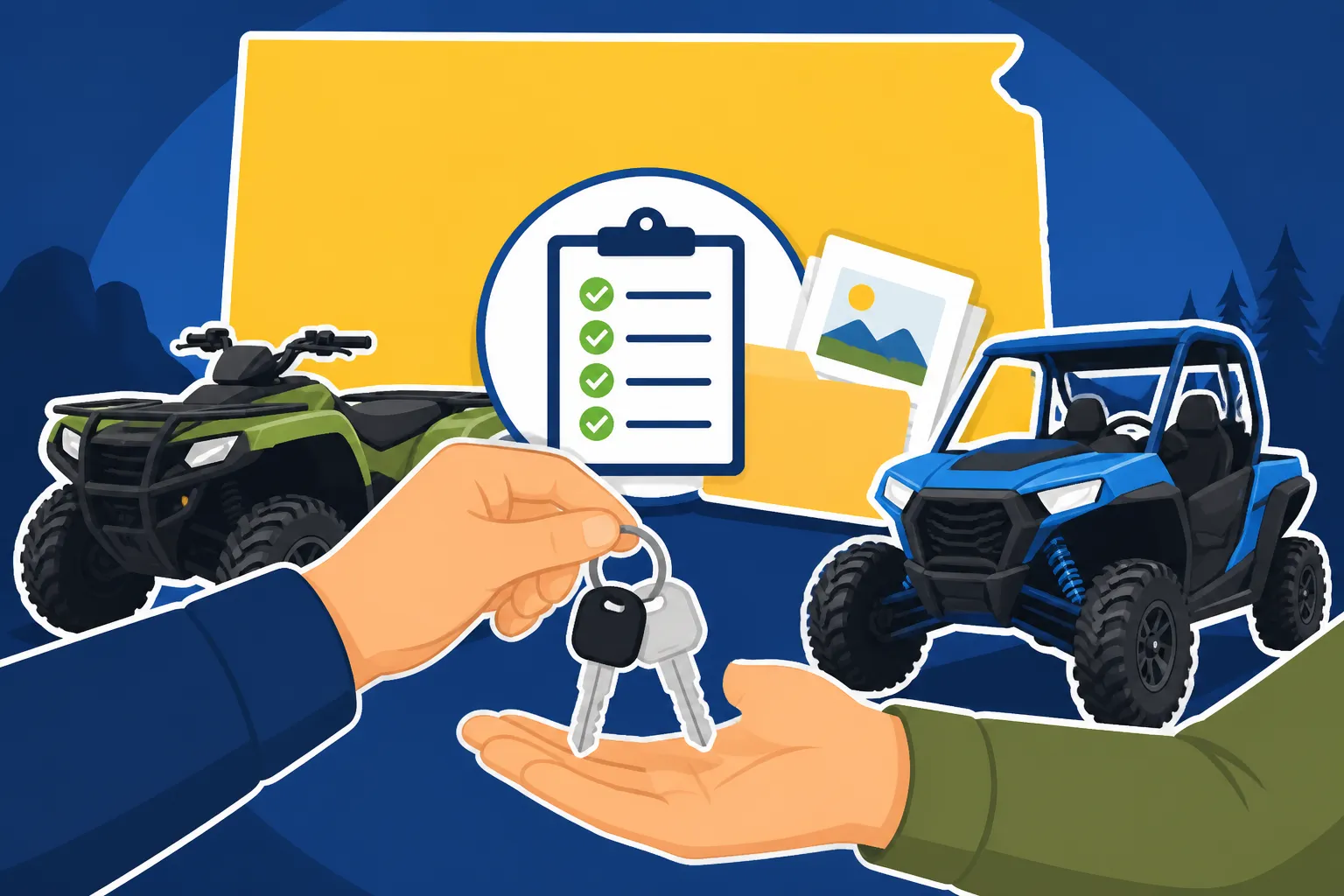
More importantly, gather all your essential documents in advance. Don't wait until a buyer is on their way to hunt for the title. Have the original title, ready to be signed over, along with a few copies of your prepared bill of sale template. If you have the lien release, manual, or any service records, put them all in a folder so they're easily accessible. This proactive approach saves time and reduces stress on sale day. It also allows you to review everything calmly before you're in the pressure of a live transaction. For anyone considering [Buying a Used ATV in South Dakota], seeing a seller this organized is a huge plus.
Finalizing the Transaction
When it comes to the actual exchange, safety and security should be paramount. Consider meeting in a public place, or even better, at your bank. If you choose to meet at your home, make sure you feel comfortable and have someone else present.
The golden rule for private sales is: do not hand over the title or the keys until you have verified payment. If the buyer is paying cash, count it in front of them and, ideally, have it verified by a bank teller if you're meeting there. For a bank transfer, confirm the funds have actually landed in your account and are cleared before releasing the machine. Be wary of any buyer who tries to rush you or pressure you into handing over the vehicle before payment is fully secured.
Before the buyer leaves, take a moment to review all the documents together. Point out where you've signed the title and confirm that all details on the bill of sale are correct and legible. Have both of you initial any minor changes if needed. Ensure both parties have their respective copies of the signed bill of sale. Once that's done, you can confidently hand over the keys and watch your ATV or UTV embark on its next adventure, knowing you've handled every aspect of the [South Dakota ATV Title Transfer] correctly.
| Document/Item | Seller's Responsibility | Notes for Seller |
|---|---|---|
| Original Title | Required | Sign, print name, date, and enter sale price. Odometer reading if applicable. |
| Bill of Sale | Required | Detail VIN, make, model, year, price, "as-is" clause. Both parties sign. Keep copy. |
| Lien Release | Required (if lien exists) | Obtain from lender if loan was paid off. Provide original to buyer. |
| Owner's Manual | Recommended | Provide physical manual or direct buyer to digital version. |
| All Keys/Remotes | Recommended | Hand over all sets of keys and any remotes for accessories. |
| Service Records | Recommended (if available) | Provides transparency on maintenance history. |
| Included Accessories | Recommended | Ensure all agreed-upon extras (winch, plow, etc.) are present and documented. |
| Personal Belongings | Required (to remove) | Remove all personal items and old registration decals. |
Disclaimer
This article is for general informational purposes only and does not constitute professional advice. Laws, prices and regulations vary by location and change over time. Consult a qualified professional for guidance on your specific situation.