Riding Into South Dakota’s Custer State Park
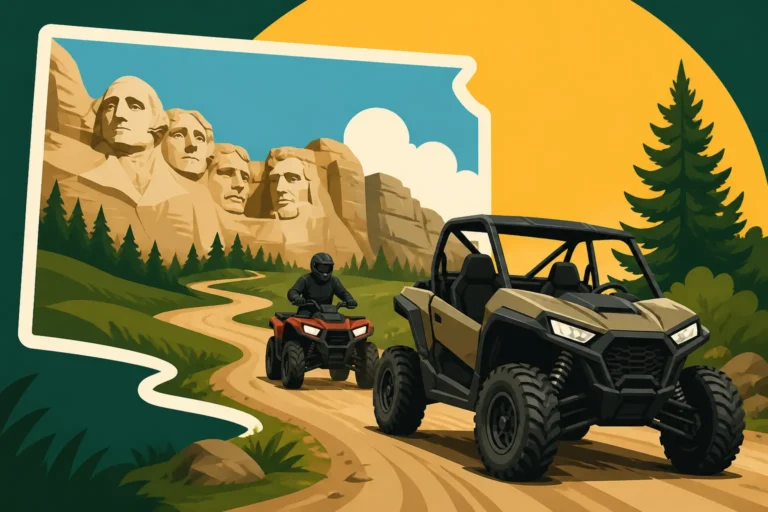
It's incredibly common for folks bringing their ATVs or UTVs to South Dakota, especially around the Black Hills, to wonder about riding into Custer State Park. You've heard about its scenic beauty, the bison, and the winding roads, and naturally, you want to experience it all from the seat of your off-road machine. But the rules can be a real head-scratcher, leaving many riders unsure if their pride and joy is even allowed past the entrance booth. This guide will clarify exactly what it takes to ride your ATV or UTV through Custer State Park, detailing the requirements and what you can expect.
Understanding Custer State Park's Unique Rules
Custer State Park is a jewel in South Dakota's crown, known for its incredible wildlife, stunning landscapes, and iconic drives like the Wildlife Loop Road and Needles Highway. However, it's crucial to understand that Custer State Park operates under different rules than, say, the open trails of the Black Hills National Forest. Many riders assume that because it's in the same region, the rules for motorized recreation will be similar, but that's simply not the case. This distinction often catches visitors off guard, leading to confusion or even disappointment if they arrive unprepared.
The General Vehicle Access Policy
Think of Custer State Park's roads much like any other public road in South Dakota. This isn't a vast trail system where you can simply point your machine off-pavement and go exploring. Instead, access for all vehicles, including ATVs and UTVs, is strictly limited to designated roads, which are either paved or well-maintained gravel. You're expected to follow all standard traffic laws, just as you would in a car or on a motorcycle. The park's primary goal is conservation and providing a traditional sightseeing experience, not off-road adventure. This means that while you can enjoy the park's scenic drives, you won't be accessing specific ATV/UTV trails within its boundaries.
The distinction is important because the Black Hills National Forest, which borders and even intertwines with parts of Custer State Park, offers extensive [Where to Ride an ATV in South Dakota] opportunities on designated motorized trails. It's easy to assume the same applies to the state park, but park management focuses on preserving the natural environment and providing a safe experience for wildlife and all types of visitors, which means keeping all motorized vehicles on established roads.
Why a Plated Machine is Key
For your ATV or UTV to be allowed on any public road in South Dakota, including those within Custer State Park, it absolutely must be street legal and properly titled and registered with a valid license plate. This is the fundamental requirement that separates frustration from a fantastic ride. Many states have different rules for ATVs, often classifying them purely as off-road vehicles. South Dakota, however, provides a pathway for these machines to become road-legal, and Custer State Park enforces this strictly. Without a license plate, your machine is considered an off-road vehicle and cannot legally traverse the park's roads.
This means if you're traveling from out of state, you'll need to ensure your home state's registration and plating allows for road use, and that South Dakota honors that. Otherwise, you might find yourself needing to explore South Dakota's titling process for out-of-state machines. The park staff at the entrance booths are very clear on this: if you don't have a plate, you're not getting in on your ATV or UTV. They aren't looking for a [South Dakota Nonresident ORV Permit], which is for trails, but rather a standard, valid license plate for road use.
South Dakota's Street Legal Requirements for ATVs/UTVs
So, what exactly does it mean to be "street legal" in South Dakota for an ATV or UTV? It's more than just slapping on a license plate. The state has specific requirements regarding engine size, equipment, and how your machine is classified. Understanding these details is critical, whether you're titling a brand-new side-by-side or modifying an older quad to meet the regulations. Skimping on these details could not only get you turned away from Custer State Park but also earn you a citation from law enforcement on any public road.
Engine Size and Licensing
South Dakota has a specific rule regarding engine displacement for four-wheeled off-road vehicles to qualify for a license plate: your ATV or UTV must have an engine size of 200 cubic centimeters (cc) or greater. This is a non-negotiable threshold for four-wheelers. If your quad is smaller than 200cc, it simply cannot be legally plated for road use in South Dakota, meaning it cannot be ridden on Custer State Park roads. For two-wheeled machines, the threshold is 120cc. This rule is designed to ensure that vehicles capable of operating safely in traffic conditions are the only ones granted road privileges.
Beyond the machine itself, the operator also needs to be properly licensed. If your ATV or UTV is street legal and plated, you'll need a valid driver's license to operate it on public roads, including those within Custer State Park. While South Dakota does allow some exceptions for operating ATVs off-road without a driver's license (like on private property or for agricultural purposes), these do not apply to road use. Essentially, if you're driving it on a road, you're driving a motor vehicle, and the standard rules apply. You can find more details on [South Dakota Driver's License Rules for ATVs] if you need further clarification on this.
Essential Equipment for Road Use
Converting your off-road machine into a street-legal vehicle for South Dakota roads, and thus for Custer State Park, requires specific equipment. This isn't just about making it look ready; it's about meeting safety and visibility standards for interacting with other traffic. Here's a rundown of the key items you'll need:
- Headlights and Taillights: Your machine must have functional headlights that illuminate the road ahead and taillights that are visible from the rear, especially when riding in low-light conditions or after dark. These need to be properly adjusted to avoid blinding oncoming traffic.
- Brake Lights: When you apply the brakes, a bright brake light must illuminate at the rear of your machine, signaling to drivers behind you that you are slowing down or stopping.
- Turn Signals: You need working turn signals on both the front and rear of your ATV or UTV to clearly indicate your intentions to turn or change lanes.
- Horn: A functional horn is essential for warning pedestrians, cyclists, or other drivers of your presence when necessary.
- Rear-View Mirrors: At least one rear-view mirror is required, allowing you to see traffic approaching from behind. Many riders opt for two mirrors for better visibility, and companies like SuperATV offer excellent aftermarket mirror kits that are durable and designed for powersports machines, making them perfect for road conversion.
- Tires: Your tires must be DOT (Department of Transportation) approved. Knobby off-road tires, while great for trails, might not always meet this requirement and can wear out quickly on pavement.
- Windshield: While not always strictly mandated for all ATVs, a windshield can greatly enhance rider comfort and safety, protecting you from debris and insects, especially at road speeds. SuperATV also provides a wide range of UTV windshields that are popular for road conversions.
- Muffler/Exhaust: Your exhaust system must meet noise regulations. Excessively loud exhaust systems are usually not street legal.
It's a comprehensive list, and ensuring every component is up to snuff can feel like a project. But these items are fundamental to safety and compliance. When considering upgrades or additions, looking at reputable brands like SuperATV can help ensure you're getting quality, durable components that meet the demands of both on-road and potential off-road excursions (outside the park, of course).
Navigating Entrance Fees and Permits
Another aspect that can cause confusion for riders heading into Custer State Park is the difference between park entrance fees and other recreational permits they might be familiar with. It's a common misconception that if you have a [Black Hills Motorized Trail Permit], you're all set for the state park. This is not the case; Custer State Park operates its own fee structure.
Custer State Park Entrance License
Unlike the Black Hills National Forest, which generally doesn't charge an entrance fee for driving through on public roads, Custer State Park requires an entrance license for every vehicle. This fee is separate from your machine's registration or any trail permits. It's an entrance fee to the park itself, much like entering a national park, and it applies to cars, motorcycles, and yes, your street-legal ATV or UTV. When you pull up to an entrance booth, you'll be required to purchase either a temporary day pass or an annual pass, depending on the duration of your stay.
This fee goes directly to the upkeep and operation of Custer State Park, including wildlife management, road maintenance, and visitor services. So, while you're enjoying the scenic drives and bison herds, know that your entrance fee contributes to preserving this incredible resource. Don't be surprised by this charge; it's a standard part of visiting Custer State Park, regardless of your vehicle type. More information can be found under [Riding Into Custer State Park With a Plate] to help you understand the full picture of what to expect at the gate.
Distinguishing Park Fees from Trail Permits
It's absolutely vital to differentiate between the Custer State Park entrance license and the [South Dakota Motorized Trail Permit] (sometimes informally called the Black Hills Trail Permit). These are two entirely different things, serving different purposes, and one does not replace the other.
- Custer State Park Entrance License: This is what you pay to enter Custer State Park and drive on its public roads. It's a fee for access to the park's scenic beauty and attractions.
- South Dakota Motorized Trail Permit: This permit is specifically for riding on designated motorized trails within the Black Hills National Forest and other federal lands. It allows you to access dirt trails, many of which are specifically designed for ATVs and UTVs. This permit is not required for driving on the paved and gravel roads within Custer State Park, and conversely, the Custer State Park entrance license does not grant you access to the Black Hills National Forest trails.
Confusing these two can lead to unnecessary purchases or, worse, being turned away from an area you intended to ride. If your plan is to ride both the Custer State Park roads and the Black Hills National Forest trails, you will need both a Custer State Park entrance license for your time in the park and a South Dakota Motorized Trail Permit for when you're on the trails outside the park. For instance, if you wanted to explore the 600 miles of forest trail available in the Black Hills, you would need that separate permit.
Riding Within Custer State Park
Once you've ensured your ATV or UTV is street legal, paid your park entrance fee, and are officially inside Custer State Park, you'll find that riding here is a unique experience. It's about cruising scenic roads, observing wildlife, and enjoying the natural beauty, all while adhering to the same rules as any car or motorcycle. This isn't a place for mud-slinging or aggressive trail riding, but rather for a more relaxed, observational journey.
Permitted Roads and Areas
Within Custer State Park, your street-legal ATV or UTV is permitted only on established public roads. This includes all paved highways, scenic drives like the Wildlife Loop Road, Needles Highway, and Iron Mountain Road, as well as designated gravel roads. You cannot take your machine off these roads. This means no venturing onto undeveloped tracks, no creating new trails, and no riding on hiking paths or designated non-motorized areas. The park strictly enforces this to protect the delicate ecosystem and ensure visitor safety.
The focus here is truly on the scenic drive. Imagine you're in a convertible, taking in the sights – that's the mindset to adopt. Pull over at designated overlooks, respect no-parking zones, and always stay on the marked route. While it might be tempting to explore a side path that looks interesting, remember that Custer State Park prioritizes preservation and a specific type of visitor experience. Any deviation from established roads for an ATV or UTV will be considered off-roading and is strictly prohibited, potentially leading to fines or being escorted out of the park.
Rules of the Road and Rider Conduct
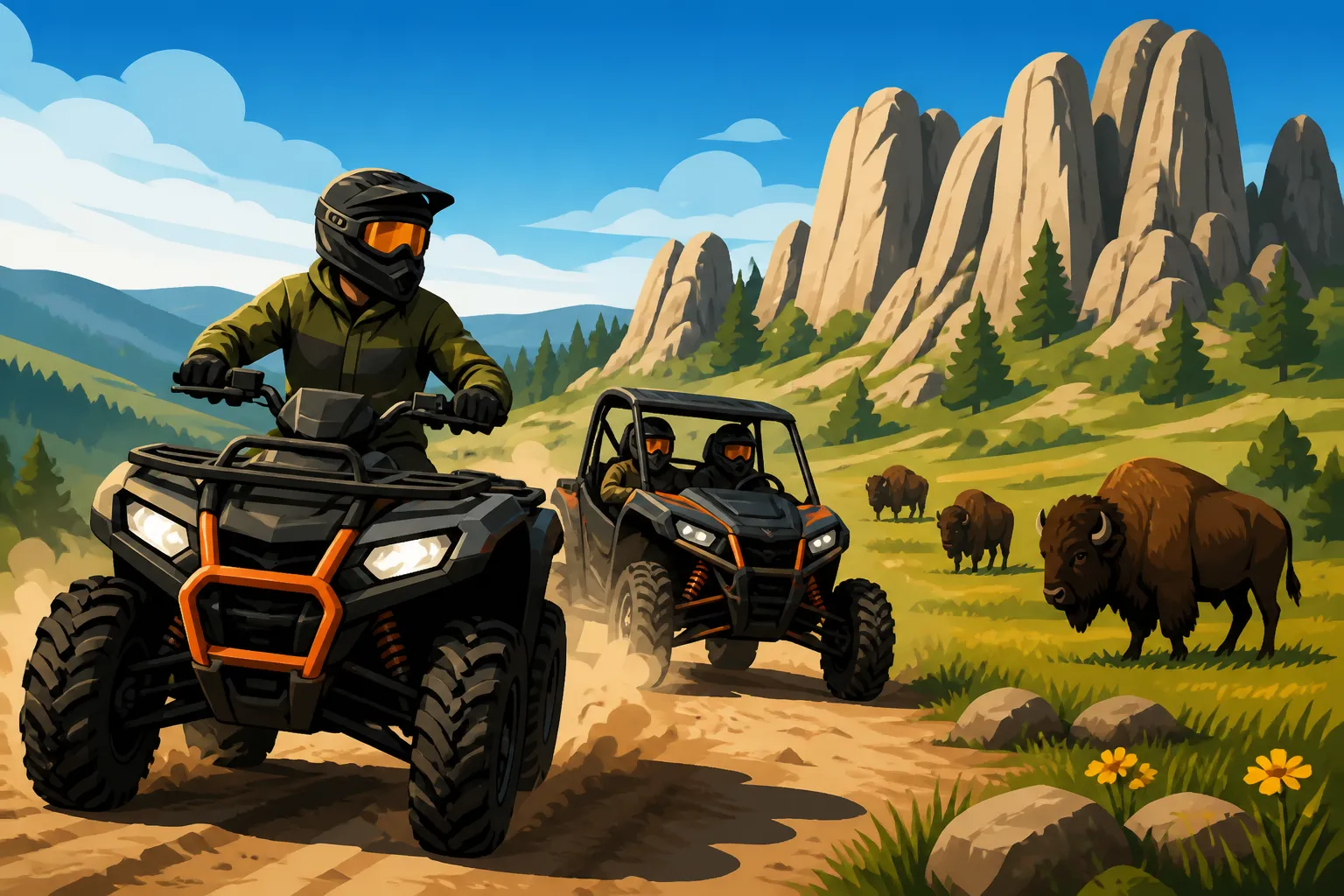
When riding your street-legal ATV or UTV in Custer State Park, you are bound by all standard South Dakota traffic laws. This includes obeying posted speed limits, which are often lower in the park's more scenic or wildlife-heavy areas. Remember, you'll be sharing the road with cars, motorcycles, RVs, and often, wildlife. Speed limits are not suggestions; they are strictly enforced for safety and conservation reasons. A key consideration is wildlife. Custer State Park is famous for its bison herds, as well as deer, elk, pronghorn, and bighorn sheep. These animals often wander onto or near the roads, and you must give them plenty of space. Do not approach, harass, or feed wildlife. Be prepared to stop suddenly, especially on the Wildlife Loop Road, if animals are blocking the way.
Beyond traffic laws, consider general etiquette. Keep noise levels down, especially when near wildlife or other visitors enjoying the quiet of nature. Pull over safely to allow faster traffic to pass if there's no safe opportunity to do so yourself. If you're running low on fuel, be aware that gas stations are limited within the park, so plan your route accordingly. Carrying essential tools or a small emergency kit, perhaps from SuperATV's utility offerings, can be a smart move, though major breakdowns would require professional assistance.
Practical Tips for Your Custer State Park Ride
Planning your ride into Custer State Park effectively can make all the difference between a smooth, enjoyable experience and one filled with unforeseen challenges. A little preparation goes a long way, especially when you're dealing with specific park regulations and the realities of riding a powersports machine on public roads.
Pre-Trip Checklist
Before you even load up your ATV or UTV, or head towards the park entrance, a thorough checklist can save you headaches.
- Verify Street Legality: Double-check that your machine meets all South Dakota street-legal requirements, from engine size to required equipment (headlights, taillights, turn signals, horn, mirrors, DOT tires). If you're missing anything, consider the range of [South Dakota Equipment List for Road Use] necessary to be fully compliant.
- Current Registration and Plate: Ensure your registration is current and your license plate is properly mounted and clearly visible.
- Driver's License: Make sure you and any other operators have a valid driver's license.
- Custer State Park Entrance Fee: Be prepared to pay the entrance fee at the gate. You can check the park's official website for current rates.
- Fuel: Start with a full tank of gas. While there might be limited options within or very near the park, it's always best to be self-sufficient.
- Maps: Carry a physical map of the park. Cell service can be spotty in some areas of the Black Hills, and a map ensures you can navigate even without a signal.
- Weather Gear: Black Hills weather can change rapidly. Pack layers, rain gear, and sunscreen.
- Hydration and Snacks: Bring plenty of water and some snacks, especially if you plan on a longer drive through the park.
- Emergency Kit: A small tool kit, tire repair kit, first-aid kit, and a communication device (like a satellite messenger if you're venturing to very remote spots, though Custer's roads are well-traveled) are always good to have. SuperATV also offers storage solutions and bags that make carrying these essentials much easier.
By running through this list, you'll address many common issues before they become problems, ensuring a much more relaxed and enjoyable ride through the park.
Nearby Riding Opportunities
While Custer State Park is fantastic for scenic road touring on your street-legal ATV or UTV, it's not the place for dedicated off-road trail riding. If you're looking for that adrenaline rush and true trail experience, you'll want to explore the extensive trail systems in the surrounding Black Hills National Forest. The National Forest offers hundreds of miles of designated motorized trails for ATVs and UTVs, ranging from easy forest roads to challenging technical routes.
Popular areas like the northern Black Hills (near Lead, Deadwood, and Spearfish) and the central Hills (near Hill City and Custer, outside the state park boundaries) are full of access points to these trails. You'll need the [Black Hills Motorized Trail Permit] to ride these forest trails, which is different from the Custer State Park entrance license. Many riders choose to base themselves near a town like Hill City or Custer, ride through Custer State Park on one day, and then trailer their machines a short distance to access the forest trails on other days. This allows you to experience the best of both worlds – the majestic beauty of the state park and the exhilarating adventure of the National Forest trails.
| Feature / Location | Custer State Park Roads (Plated ATV/UTV) | Black Hills National Forest Trails (Permitted ATV/UTV) |
|---|---|---|
| Vehicle Requirement | Street-legal, plated ATV/UTV (200cc+ for 4-wheel) | Off-road machine (may be plated or unplated) |
| Primary Activity | Scenic driving, wildlife viewing, sightseeing | Off-road trail riding, exploration, challenging terrain |
| Required Fee/Permit | Custer State Park Entrance License | South Dakota Motorized Trail Permit (Annual/7-Day) |
| Road/Trail Type | Paved and well-maintained gravel roads | Designated dirt trails, forest roads, single-track |
| Off-Road Travel | Strictly Prohibited | Permitted on marked trails |
| Speed Limits | Enforced, often lower for wildlife areas | Vary by trail/road, often lower than public roads |
| Wildlife Interaction | Common on roads, observe from a distance | Possible on trails, observe from a distance |
| Amenities | Visitor centers, campgrounds, lodges, stores | Limited, often primitive staging areas |
By understanding these distinctions and planning accordingly, you can maximize your South Dakota ATV/UTV adventure, enjoying the diverse riding experiences the region has to offer.
Disclaimer
This article is for general informational purposes only and does not constitute professional advice. Laws, prices and regulations vary by location and change over time. Consult a qualified professional for guidance on your specific situation.