South Dakota Rules for Riding a State Park Road
It's incredibly frustrating when you want to explore the stunning scenery of South Dakota's state parks on your ATV or UTV, but you're not entirely sure where you're actually allowed to ride. The rules can feel like a tangled mess of regulations, making you hesitant to even load up your machine. This guide aims to untangle that knot, meticulously breaking down the specific rules and requirements for legally operating your off-road vehicle on South Dakota state park roads, ensuring you can plan your adventure with confidence and avoid any unwelcome surprises.
Navigating State Park Roads with Your ATV or UTV
Riding your ATV or UTV in a South Dakota state park sounds like an absolute dream, doesn't it? Imagine cruising through the picturesque landscapes of Custer State Park or rolling along the scenic routes near Lake Oahe. However, unlike simply riding on private land or designated off-road areas, state parks come with a distinct set of rules that marry general road-use laws with specific park regulations. It's not as simple as just having a machine; you need to understand the layers of compliance.
The Core Principle: Plate for Pavement, Permit for Park
Here's the fundamental truth to wrap your head around: if you intend to ride your ATV or UTV on any road within a South Dakota state park, that machine generally needs to be street-legal. This means it must be titled and licensed for road use, just like a motorcycle or car. This requirement isn't unique to state parks; it's the baseline for operating an ATV or UTV on any public road in South Dakota. Many riders make the mistake of thinking that because it's a park, the rules are more relaxed for off-road vehicles. In reality, when you're on a paved or gravel road within a state park, you're essentially on a public road, and the same rules apply. This is a critical distinction, as without a plate, your machine's adventures on park roads are severely limited.
Think of it this way: the pavement doesn't magically change its legal status just because it's surrounded by pine trees and buffalo. It's still a thoroughfare. So, your primary goal for state park road riding is to ensure your machine meets all the [South Dakota Street Legal ATV Requirements]. This involves everything from proper lighting to mirrors and a horn. On top of that, if you plan to access motorized trails within a state park system (which are different from the roads themselves), you'll also likely need a [South Dakota's Motorized Trail Permit], which is a separate requirement altogether. It's easy to get these confused, but the permit is for trails, while the plate is for roads.
Why State Parks Are Different from Forest Roads
Many riders are familiar with the rules for national forest lands, where often a trail permit is the primary requirement for riding on designated forest roads and trails. State parks, however, often operate under a different philosophy, prioritizing preservation and diverse recreational use over extensive motorized access on all their internal roads. While some state parks may have specific motorized trails (which will, again, require a trail permit), their main internal road networks are typically managed like any other public road system. This means that, unlike some national forest roads where an unplated machine might be allowed to travel to a trailhead with a permit, state park roads almost universally demand a street-legal, plated vehicle.
This distinction is crucial for planning your trip. You can't just assume your unplated but permitted machine can cruise along the Wildlife Loop Road in Custer State Park. That road is treated like any other public thoroughfare. The state park system aims to manage traffic and minimize conflicts between different user groups—hikers, cyclists, motorists, and ATV/UTV riders. By requiring street legality for road use, they ensure that all vehicles operating on those roads meet common safety and regulatory standards. It's a way to maintain order and ensure everyone can enjoy the park safely, even if it means a few extra hoops to jump through for us off-road enthusiasts. This is why knowing the difference between a forest service road and a state park road is paramount before you even leave your driveway.
Essential Requirements for Road Use in South Dakota State Parks
So, you've decided you want to take your ATV or UTV on the roads inside a South Dakota state park. Excellent! Now let's talk about the brass tacks: what exactly do you need to do to make that a reality? It’s not just about having a powerful machine; it’s about making sure that machine is legally configured and that you, as the operator, are properly qualified. Overlooking any of these steps could lead to an unwanted citation from a park ranger or a state trooper, which definitely puts a damper on any scenic ride.
Licensing Your Machine for State Park Roads
The absolute first step to riding your ATV or UTV on a state park road is to ensure it is street legal and properly licensed with a South Dakota motorcycle plate. This means your machine must meet the criteria to be considered a motorcycle under state law. Typically, this involves engine displacement minimums and specific equipment. For example, [South Dakota ATV Engine Size for Plates] details that most quads need to be 200cc or more to qualify for a plate. If your machine is under this threshold, it simply won't be eligible for road plates, effectively barring it from state park roads.
Once your machine qualifies, you'll go through the titling and registration process with your county treasurer. This will involve paying sales tax, title fees, and registration fees, and ultimately receiving a license plate that you must affix to the rear of your machine. Without that plate prominently displayed, you are not street legal, regardless of how many mirrors or headlights you've added. It's also important to remember that a [South Dakota's Nonresident ORV Permit] or a [Black Hills Motorized Trail Permit Cost] is not a substitute for a street-legal plate for road use. Those permits are for designated trails, while the plate is for public roads, including those found within state parks. So, confirm your machine is ready to roll with all the appropriate paperwork and hardware before heading to any state park.
Driver Qualifications and Age Restrictions
Just as your machine needs to be street legal, you, the operator, also need to be properly licensed. In South Dakota, to operate a plated ATV or UTV on public roads—which includes state park roads—you must possess a valid driver's license. This isn't just a suggestion; it's a legal requirement. A learner's permit typically isn't sufficient for independent operation on public roads, and certainly not for operating an ATV or UTV that requires a motorcycle endorsement. If you're wondering about the specifics, you'll find more information in [South Dakota Driver's License Rules for ATVs].
Age also plays a significant role. While there are rules for younger riders in ditches or on private land, for street-legal operation on state park roads, the standard driver's license rules apply. Generally, this means you need to be at least 16 years old to hold a full driver's license. Furthermore, for any passengers, especially minors, ensure you are complying with all passenger safety rules, which might include specific seating arrangements or age restrictions if the machine wasn't designed for multiple riders. It's your responsibility to know these rules before you ever put the machine in gear.
Equipment Checklist for Road-Legal Operation
This is where the rubber meets the road, quite literally. To be street legal in South Dakota and ride on state park roads, your ATV or UTV needs specific equipment beyond its factory setup. Don't assume your stock machine is ready. You'll need:
- Headlights and Taillights: These must be fully functional and meet brightness standards. You'll need both a headlight (or two) and at least one taillight and brake light. [South Dakota Lighting Requirements for ATVs] provides the details.
- Turn Signals: Essential for indicating your intentions to other drivers.
- Horn: A working horn is mandatory for alerting others. A simple push-button horn is usually sufficient. [South Dakota Horn Requirement] offers further clarity.
- Mirrors: You need at least one rear-view mirror, properly affixed and offering a clear view to the rear. Many riders opt for two for better visibility. You can find robust options for these, perhaps from a brand like SuperATV, that are designed to withstand off-road vibrations while still providing clear visibility on the road. For more on this, check out [South Dakota Mirror Requirement].
- Tires: Must be DOT-approved (Department of Transportation) for road use, not just knobby off-road tires.
- Brakes: Fully functional front and rear brakes.
- Muffler/Exhaust: Must meet noise regulations and typically requires a spark arrester if you're also using it on trails.
- Fenders/Mudguards: To prevent debris from being thrown up.
- License Plate Mount: A secure, illuminated mount for your South Dakota plate.
It’s crucial to treat this checklist seriously. A park ranger or state trooper inspecting your machine will be looking for all these items. Investing in quality aftermarket parts, perhaps from a reputable supplier like SuperATV, ensures you meet these requirements and have durable components for both on-road and potential trail use. Ignoring even one item could lead to a fine and the premature end of your state park road adventure.
| Requirement | Description | Why It's Important |
|---|---|---|
| Street Legal Plate | Issued by county treasurer, displays on rear of machine. | Legally designates your machine for public road use, including park roads. |
| Valid Driver's License | Operator must hold a current, unexpired driver's license. | Required by law for operating any plated vehicle on public roads. |
| Headlights & Taillights | Functional, bright enough for visibility, includes brake lights. | Ensures you can see and be seen by other motorists and park visitors. |
| Turn Signals | Working front and rear signals. | Critical for communicating turns and lane changes to others. |
| Horn | Audible, functional horn. | Alerts pedestrians, wildlife, and other vehicles to your presence. |
| Rear-View Mirror | At least one, providing clear view to the rear. | Essential for safe lane changes and awareness of traffic behind you. |
| DOT-Approved Tires | Tires rated for street use. | Provides proper traction and durability for paved and gravel roads. |
| Brakes | Functional front and rear braking systems. | Necessary for safe stopping and control of your machine. |
| Muffler | Reduces noise and often includes a spark arrester. | Complies with noise ordinances and prevents wildfires. |
| Fenders/Mudguards | Prevents debris from being thrown from tires. | Keeps your machine and others safe from flying rocks and mud. |
Specific Rules and Areas to Be Aware of in State Parks
Even when your ATV or UTV is fully street-legal and plated, and you have all the necessary personal credentials, riding within a state park isn't a free-for-all. State parks often have additional layers of rules and specific zones where ATVs and UTVs, even if street-legal, might be restricted. It's vital to respect these park-specific guidelines, as they are designed to protect the natural environment, minimize impact, and ensure a pleasant experience for all visitors.
Speed Limits, Posted Signs, and Trail Access Points
Just like any other public road, state park roads have posted speed limits, and they are often lower than typical highway speeds. These limits are not suggestions; they are strictly enforced to protect wildlife, pedestrians, and other park users. You'll frequently see signs indicating lower speeds through campgrounds, picnic areas, and near visitor centers. Always obey these posted limits. Beyond speed limits, pay close attention to all regulatory signs. These might include "No Motorized Vehicles Beyond This Point" or "Trail Open to Hiking and Biking Only."
Many state parks also serve as access points to designated motorized trails. While you might ride your plated machine on a park road to reach a trailhead, don't assume the trail itself is open to you without checking. For example, [Riding Into Custer State Park With a Plate] means you can use the scenic roads, but that doesn't automatically grant you access to every single path or two-track you might see. It's critical to consult park maps and specific signage at trailheads. Remember, the general rule is [South Dakota Rules for Riding Off a Route] are strictly prohibited, especially in sensitive state park ecosystems. This means staying on marked roads and designated trails. If you're ever in doubt, err on the side of caution and find a park ranger or staff member to clarify.
Understanding Off-Road Travel Prohibitions
This is perhaps the biggest misconception: having a street-legal ATV or UTV does not give you permission to go off-road within a state park. State parks are specifically managed for conservation and often have sensitive ecosystems, historical sites, or fragile landscapes that would be damaged by off-road travel. Unless a specific area is explicitly marked as a "motorized off-road vehicle area" (which is rare within South Dakota State Parks themselves, though some parks might neighbor such areas), you must stay on the designated paved or gravel roads.
This means no cutting across meadows, no exploring the woods, and no making your own path. The only exception would be if you are specifically in a designated OHV area managed by the Game, Fish and Parks (GFP) department, such as Oahe Downstream or Revheim Bay, which are designed for off-road riding. Even then, these are distinct from a typical "state park" road. You must also remember that ditch riding, which is permissible in some areas of South Dakota, is generally not allowed within the confines of a state park unless explicitly marked. The integrity of the park's environment is paramount, and off-road driving can cause erosion, disturb wildlife, and damage vegetation. Equip your machine with a full skid plate and robust a-arms, perhaps from SuperATV, to handle the bumps of a legal gravel road, but understand that this equipment doesn't grant you permission to leave the road itself.
Fees and Permits Beyond the Plate
While your street-legal license plate covers the right to use public roads, including those within state parks, there's another crucial fee to remember: the South Dakota State Park Entrance License. This is a separate fee required for any vehicle entering and using the facilities of a South Dakota state park, recreation area, or nature area. It's often referred to as a "park license" or "park pass." This fee supports the maintenance and operations of the parks themselves, and it applies to cars, motorcycles, and yes, your plated ATV or UTV.
You can purchase daily or annual park entrance licenses at park entrances, visitor centers, or online. Don't make the mistake of thinking your vehicle plate exempts you from this. A park ranger will check for both your vehicle plate and your park entrance license. Furthermore, if the state park happens to contain or be adjacent to designated motorized trails, you would then need an additional [South Dakota's Motorized Trail Permit] if you intend to ride those trails. This is where it gets confusing for many: the plate is for the road, the park license is for entry, and the trail permit is for the trails. They all serve different purposes, and you need to budget for and acquire all applicable ones before you head out.
Common Misconceptions and Best Practices for State Park Riding
Riding your ATV or UTV in a South Dakota state park can be an incredibly rewarding experience, offering unique access to some of the most beautiful parts of the state. However, it's an environment shared with many others, and ensuring a positive experience for everyone means dispelling common myths and adhering to best practices. A little preparation and a lot of courtesy go a long way.
The "Ditch Riding" Rule in a Park Setting
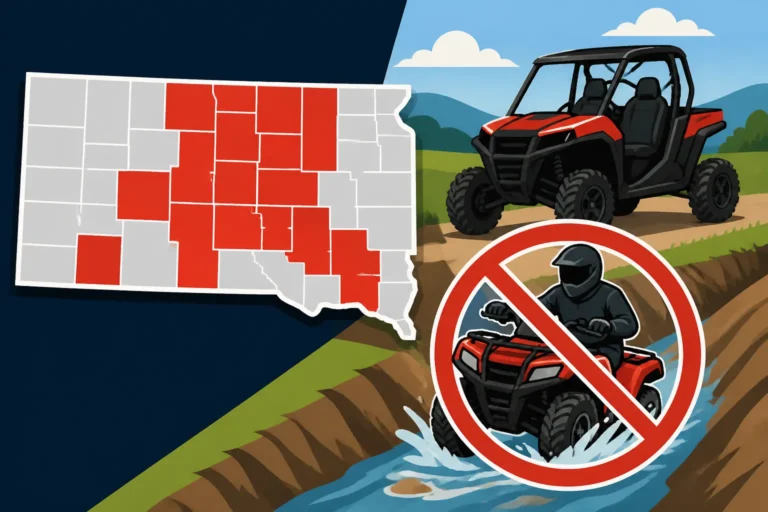
Many South Dakota residents are familiar with the state's ditch riding laws, which, in certain areas, permit ATVs and UTVs to operate in road ditches. This can lead to a common misconception that these rules apply universally, even within state parks. Let me be clear: this is generally not the case. State parks are managed environments with specific rules, and almost without exception, they prohibit ditch riding within their boundaries.
The reasoning is simple: state parks are designed to protect natural resources and provide a safe, undisturbed experience for all visitors. Ditch riding, while a part of the broader ATV/UTV culture in South Dakota, can lead to erosion, disturb wildlife, damage vegetation, and create safety hazards for pedestrians or cyclists who might be using the shoulders or adjacent areas. Always assume that ditch riding is prohibited in a state park unless there is explicit signage indicating otherwise, which is rare. When you're driving on a state park road, consider it just like any other public road where the vehicle must stay on the paved or gravel surface. Do not venture into the ditches, even if it feels natural to do so in other parts of the state.
Respecting Wildlife and Other Park Visitors
State parks are sanctuaries for wildlife and places of peace for many visitors. When you're operating an ATV or UTV, you're commanding a machine that can be louder and more imposing than a car, and certainly more so than a bicycle or a pair of hiking boots. It is absolutely paramount to be respectful of this shared space.
Keep your speed down, especially in areas where wildlife is frequently sighted or near campgrounds and picnic areas. Sudden loud noises or aggressive driving can spook animals, disrupt their natural behaviors, and ruin a quiet moment for other park-goers. If you encounter wildlife on the road, slow down, give them ample space, and never try to chase or harass them. Remember that park visitors are there to enjoy nature, and your presence should enhance, not detract from, their experience. This also means no excessive engine revving, no riding late at night if there's a noise curfew, and always yielding to pedestrians and cyclists. You might even consider equipping your UTV with a quieter exhaust system, which you can often find from aftermarket suppliers like SuperATV, to further minimize your impact on the serene environment. A good rule of thumb is to operate your machine as quietly and considerately as possible, always prioritizing the safety and enjoyment of others.
Preparing for a Smooth State Park Experience
A little preparation can make all the difference between a fantastic day and a frustrating one. Beyond making sure your machine is street-legal and you have all the necessary permits and licenses, consider these best practices for a smooth state park adventure:
- Check Park-Specific Regulations: Before you even load up, visit the South Dakota Game, Fish and Parks (GFP) website for the specific park you plan to visit. Many parks have detailed rules posted online, and these can sometimes vary slightly from one park to another, especially concerning motorized vehicle use.
- Carry All Documentation: Keep your driver's license, vehicle registration, proof of insurance, and park entrance license readily accessible. A ranger stop often happens in parks, and being prepared makes it quick and easy.
- Fuel Up Before You Go: Gas stations can be few and far between within or immediately adjacent to state parks. Plan your fuel stops carefully to avoid running out in a remote area.
- Pack Essentials: Bring water, snacks, a first-aid kit, and a basic tool kit. Cell service can be spotty in some parts of state parks, especially in more rugged terrain.
- Know Your Route: Study a park map in advance. Understand which roads are open to vehicles and which are not. Don't rely solely on GPS, as it might not account for park-specific restrictions.
- Leave No Trace: Always pack out everything you pack in. Do not litter, and respect park facilities.
By adhering to these best practices, you'll not only have a more enjoyable time yourself but also contribute positively to the shared experience of all who visit South Dakota's magnificent state parks. Your responsible riding helps ensure that these opportunities remain open for everyone, including future generations of ATV and UTV enthusiasts.
Disclaimer
This article is for general informational purposes only and does not constitute professional advice. Laws, prices and regulations vary by location and change over time. Consult a qualified professional for guidance on your specific situation.