Why a Dirt Bike Needs 120cc to Be Plated
Trying to figure out the maze of rules and regulations for getting your dirt bike legally registered for street use in South Dakota can feel like a real headache. You’ve got your heart set on hitting those gravel roads or even just riding from your campsite to the trailhead, but then you hear about engine size limits and suddenly, your plans hit a snag. This guide is here to untangle the specific requirement concerning engine displacement for dirt bikes and explain why that 120cc mark is so crucial if you want to get a South Dakota plate.
Understanding South Dakota's Plating Requirements for Dirt Bikes
Getting an off-road vehicle, like a dirt bike, ready for road use in South Dakota isn't as simple as just slapping on a license plate. The state has specific classifications and requirements that dictate whether your machine even qualifies for a plate in the first place. These rules are put in place to ensure safety on public roadways and to categorize vehicles appropriately. For dirt bikes, one of the most significant hurdles or green lights, depending on your machine, is its engine displacement.
Many riders assume that if they add all the necessary lights, mirrors, and a horn, they're good to go. While those components are absolutely essential, they are only part of the equation. South Dakota also looks at the fundamental design and power output of the machine itself. This is where the engine size comes into play, creating a clear distinction between what can be considered a road-worthy motorcycle and what remains strictly an off-road plaything. Ignoring this core requirement can lead to frustration, wasted money on modifications, and ultimately, a denial of your plating application.
The 120cc Threshold: Why It Matters
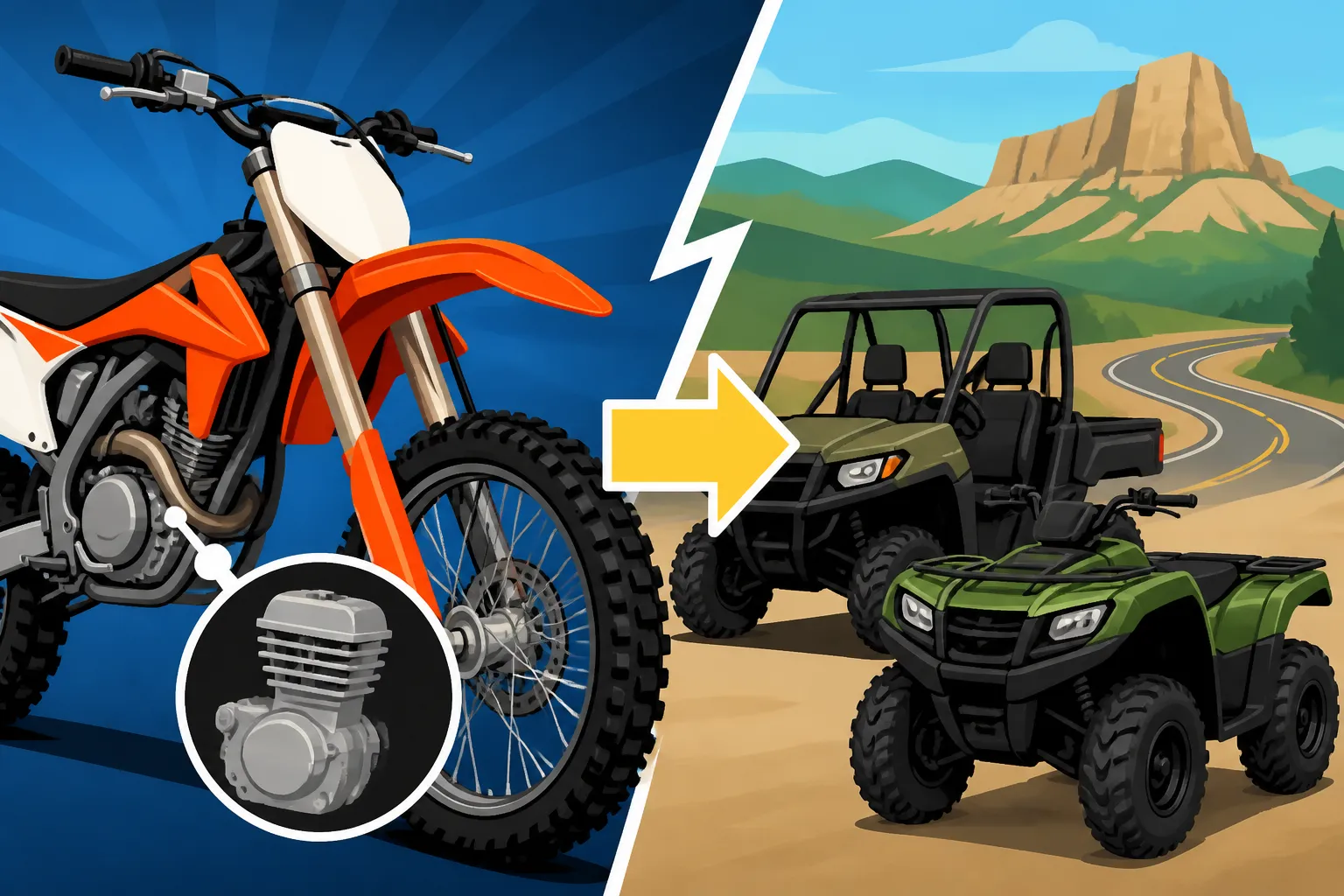
For dirt bikes in South Dakota, the magic number for engine displacement to qualify for a motorcycle plate is 120 cubic centimeters (cc). This isn't an arbitrary figure; it's a specific delineation used by the state to determine if a two-wheeled off-road machine has enough power and is of a certain "class" to be safely operated on public roads. If your dirt bike's engine is smaller than 120cc, it simply will not qualify for a South Dakota motorcycle plate, regardless of any other modifications you make. This means that many popular youth dirt bikes or smaller pit bikes, while fantastic for trails and private property, are permanently excluded from street legality in the state.
The rationale behind this threshold often revolves around a combination of minimum power output for maintaining safe speeds on roads and regulatory classifications. A 120cc engine generally provides enough torque and horsepower to keep up with basic traffic flows on rural roads or to cross highways safely. Anything less might struggle to accelerate or maintain speed, potentially creating a hazard for the rider and other motorists. It's not about prohibiting smaller bikes entirely, but rather ensuring that vehicles mixing with cars and trucks meet a baseline performance standard. You might find similar, though different, rules for larger machines, such as [South Dakota's 200cc Motorcycle Licensing Rule] for ATVs, but for dirt bikes, 120cc is the key.
So, if you own a 50cc, 80cc, or 100cc dirt bike, understand that its road-legal future in South Dakota is non-existent. This isn't to say you can't enjoy these machines; they just won't be sharing the pavement with cars. This rule greatly impacts purchasing decisions for anyone looking to use their dirt bike for more than just off-road fun. Always check the engine size before you commit to buying a dirt bike with the intention of plating it in South Dakota.
Beyond Engine Size: Other Road Legal Essentials
While the 120cc engine size is non-negotiable for dirt bikes, it's just one piece of the puzzle. Once your dirt bike meets that minimum displacement, you'll need to equip it with several other components to make it road legal in South Dakota. Think of these as the standard safety and visibility features required on any street-legal motorcycle. Without these, even a 250cc dirt bike won't pass muster for plating or for riding on public roads.
These essential components typically include functional headlights and taillights, brake lights that activate when either brake is applied, turn signals (though some specific exemptions may exist for older motorcycles, it's always best to have them for modern dirt bikes), a horn, and at least one rear-view mirror. Many aftermarket suppliers, including a company like SuperATV, offer universal kits and individual components designed to adapt off-road machines for street use, such as LED light bars, mirrors, and wiring harnesses. You’ll need to ensure these additions are properly installed and functioning before heading to the county treasurer's office to apply for a plate. For a comprehensive overview of all the necessary gear, check out [South Dakota Equipment List for Road Use].
It’s crucial to understand that simply having these parts isn't enough; they must be DOT-compliant (Department of Transportation) where applicable and installed correctly. For instance, a small, dimly lit Baja Designs headlight meant for night trail riding might not meet the brightness and beam pattern requirements for street use. The rear-view mirror needs to provide an adequate field of vision, and the horn must be audible at a certain distance. Taking the time to research and install these components properly will save you headaches and potential citations down the road.
Navigating the Plating Process for Your Dirt Bike
Once you've confirmed your dirt bike meets the 120cc minimum and you've equipped it with all the necessary road-legal gear, the next step is the actual plating process. This involves a trip to the local county treasurer's office, armed with the right paperwork and prepared for the associated fees. It’s a bureaucratic process, yes, but knowing what to expect can make it much smoother. Don't just show up hoping for the best; a little preparation goes a long way.
The state wants to ensure that the machine is legally owned, the taxes are paid, and all the identifying information is accurate before issuing a plate. This protects you as the owner and helps prevent theft and fraud. You'll be dealing with various forms and potentially a clerk who processes a wide array of vehicle titles, so having everything in order will expedite your visit.
Paperwork and Fees to Expect
When you head to the county treasurer's office, you'll need a specific set of documents to prove ownership and apply for your plate. The most critical item is the dirt bike's title. If you bought it new, you'll have an original Manufacturer's Statement of Origin (MSO) or Certificate of Origin (MCO). If you bought it used, you'll need the properly assigned title from the previous owner. Without a clear chain of title, you'll hit a major roadblock. Alongside the title, you'll also need a bill of sale, especially if you purchased it privately. This document helps establish the purchase price, which is vital for calculating sales tax. Make sure it includes details like the VIN, make, model, and seller/buyer information. For more on what to include, see [A South Dakota Bill of Sale for an ORV].
Beyond the paperwork, there are several fees involved. First, there's the title fee itself, which is a flat rate regardless of your machine's value. Then comes the excise tax, which is typically 4% of the purchase price (or a fair market value if the purchase price is deemed too low). This is essentially South Dakota's sales tax on vehicles. There's also a smaller technology fee that contributes to the state's motor vehicle IT systems. These fees can add up, so it's wise to budget for them. For a detailed breakdown, look into [South Dakota ATV Title Cost], [South Dakota's 4 Percent Excise Tax], and [South Dakota's $2 Technology Fee]. Remember, the faster you get this done, the better, as South Dakota has a [Forty-Five Day Title Deadline] to avoid penalties.
| Fee Type | Description | Calculation/Cost |
|---|---|---|
| Title Fee | Cost to process and issue a new title. | Flat Rate (Check current figures at Treasurer's office) |
| Excise Tax | Sales tax on the purchase of the vehicle. | 4% of purchase price or fair market value |
| Technology Fee | Contributes to state motor vehicle IT systems. | Flat Rate (Check current figures) |
| Lien Notation Fee | If financing, cost to record a lien on the title. | Flat Rate (Check current figures) |
| Late Penalty | Applied if title application is submitted after 45-day deadline. | 1% per month, then 10% after 60 days |
Where to Go and What to Bring
The primary place to handle your dirt bike's plating is your local South Dakota county treasurer's office. This is where all vehicle titling and registration in the state takes place, including for off-road vehicles that qualify for road use. It's not a trip to the Department of Revenue; it’s a localized process. For instance, if you live in or near Rapid City, you'd visit the Pennington County Treasurer's office. You can learn more about this process by consulting resources like [Titling at a South Dakota County Treasurer].
When you go, make sure you bring all your original documents – the title or MSO, bill of sale, and proof of identity (like your driver's license). It’s also wise to bring proof of residency, such as a utility bill, if your driver’s license doesn’t reflect your current address. Don't forget your payment method for the fees and taxes. Some counties prefer checks or cards, but it’s always good to have cash as a backup. While you're there, if you're thinking about future modifications or upgrades to your dirt bike, remember that companies like SuperATV offer a vast range of parts, from performance accessories to replacement components, that can enhance your riding experience both on and off the road. Having all your ducks in a row ensures a smooth transaction and gets you one step closer to legally riding your dirt bike on South Dakota’s public roads.
The Broader Implications of the 120cc Rule
The 120cc rule for plating dirt bikes isn't just a technicality; it has significant practical implications for riders, buyers, and sellers in South Dakota. It shapes the market for smaller displacement machines, influences choices for out-of-state visitors, and generally defines the boundaries of street legality for two-wheeled off-road vehicles. Understanding these broader impacts can help you make more informed decisions, whether you're looking to purchase, sell, or simply ride in the state.
This rule acts as a gatekeeper, channeling certain bikes into specific uses and preventing others from ever seeing pavement. It’s a common source of confusion for new riders or those relocating from states with different regulations. Being aware of these ripple effects can save you from costly mistakes or unmet expectations.
Buying and Selling Dirt Bikes in South Dakota
The 120cc engine size rule has a direct and significant impact on the buying and selling of dirt bikes within South Dakota. If you're looking to purchase a used dirt bike with the intention of making it street legal, this rule immediately narrows your options. Any machine under 120cc, regardless of its condition or other features, is a non-starter for plating. This often means that smaller displacement bikes, like those commonly used by younger riders or for recreational pit biking, will be priced differently and marketed strictly for off-road or private property use. When you're [Buying a Used ATV in South Dakota] (and this applies to dirt bikes too), it's essential to clarify the engine size upfront if street legality is your goal.
Conversely, if you're selling a dirt bike that's under 120cc, you need to be transparent with potential buyers about its inability to be plated for road use in South Dakota. Failing to do so could lead to disputes or unhappy customers. On the other hand, if you're selling a dirt bike that does meet the 120cc minimum and has the potential to be plated, highlighting this feature can add significant value to your listing. It opens up a wider market of buyers who want the versatility of both trail and road access. Always ensure you have a proper [A South Dakota Bill of Sale for an ORV] and a clear title for any transaction.
Considerations for Out-of-State Riders
For riders visiting South Dakota from other states, the 120cc rule can be a source of confusion, especially if their home state has different or no such requirements. While South Dakota generally honors valid out-of-state plates and registrations, the underlying eligibility for that plate can sometimes come into question if a machine is significantly outside South Dakota's classification. However, for a dirt bike already legally plated as a motorcycle in another state, you can typically ride it on South Dakota roads, assuming it meets all the equipment requirements like lights, mirrors, and horn. The question of [Does South Dakota Honor Out-of-State Registration?] largely depends on the legitimacy and type of your home-state registration.
The challenge arises if your dirt bike is not plated in your home state, and you had hoped to get it plated temporarily or permanently in South Dakota. In such a scenario, the 120cc rule applies to you just as it does to South Dakota residents. So, if you're hauling your 85cc dirt bike from Minnesota, thinking you might plate it for some local road riding, you'll be out of luck. It's always best to check the specific regulations and ensure your machine is appropriately registered and equipped before you plan on [Riding South Dakota With an Out-of-State Plate]. If you're ever in doubt about equipment, remember that SuperATV offers a wide selection of accessories that can help ensure your machine meets universal safety standards, even if the engine size rule is specific to South Dakota.
What Happens If Your Dirt Bike Doesn't Meet the 120cc Rule?
So, your beloved dirt bike has an engine smaller than 120cc, and now you know it can't be plated for road use in South Dakota. Does that mean your riding adventures are severely limited? Not at all! While road access might be off-limits, there are still plenty of fantastic opportunities to enjoy your machine legally and safely. It’s important to understand the alternative avenues available and, conversely, the potential pitfalls of ignoring the rules.
The key is to shift your focus from public roads to dedicated off-road spaces. South Dakota is rich with diverse terrain perfect for dirt biking, and many of these areas are specifically designed for machines that aren't street legal. Knowing these options can help you maximize your enjoyment without running afoul of the law.
Trail Riding and Private Land Options
If your dirt bike doesn't meet the 120cc requirement for plating, its primary domain will be off-road. South Dakota boasts incredible landscapes, particularly in the Black Hills National Forest, offering miles of trails and forest roads where unplated dirt bikes are welcome, provided you have the necessary trail permits. Places like the Black Hills are a mecca for off-road enthusiasts, and many trails are perfectly suited for smaller, nimble dirt bikes. You can explore [Where to Ride an ATV in South Dakota] for a broader view, but know that specific dirt bike trails and motorized areas abound.
Beyond public lands, private property offers limitless opportunities. If you own land, or if you have explicit permission from a landowner, you can ride your sub-120cc dirt bike freely. This is a common scenario for youth riders learning the ropes or for casual recreational use. Always remember to secure proper permission before riding on someone else's property, as trespassing laws are strictly enforced. Review [South Dakota Rules for Riding Private Land] to understand landowner permissions fully. Utilizing designated off-road areas and private lands means you can still experience all the thrills of dirt biking without the need for a license plate.
Penalties for Unplated Road Use
It might be tempting to risk it and take your unplated, under-120cc dirt bike on a public road, especially for short distances. However, doing so in South Dakota can lead to significant penalties. Operating an unplated vehicle on a public road is a clear violation of state law. A law enforcement officer can issue citations for several offenses, including operating an unregistered vehicle, lacking required safety equipment, and potentially even operating without a valid driver's license if you're attempting to pass it off as a street-legal machine. The fines can be substantial, and your vehicle could even be impounded.
These penalties are designed to deter unsafe and illegal road use. Law enforcement officers, particularly in popular riding areas, are well-versed in the state's vehicle codes and can easily identify a machine that doesn't meet the requirements. It's simply not worth the risk. Instead of facing potential fines and the hassle of dealing with law enforcement, stick to the designated off-road areas or private property where your smaller dirt bike is perfectly legal and safe to operate. For a general idea of the costs associated with similar violations, you can look at [South Dakota Fines for an Untitled ATV], keeping in mind that dirt bike-specific fines may vary but the principle of unregistered road use applies. And for those unplated trail adventures, don't forget that SuperATV offers great products to enhance your off-road experience, from protection gear to utility accessories, ensuring your ride is as safe and enjoyable as possible within legal boundaries.
Disclaimer
This article is for general informational purposes only and does not constitute professional advice. Laws, prices and regulations vary by location and change over time. Consult a qualified professional for guidance on your specific situation.