South Dakota ATV Engine Size for Plates
It can be incredibly confusing to figure out the exact rules for riding your ATV or UTV on public roads in South Dakota. You might own a powerful machine, but the big question often comes down to one fundamental detail: will your engine size allow you to get a plate? This guide is here to cut through the noise and explain precisely what engine size your off-road vehicle needs to meet South Dakota's requirements for street legality, and what that actually means for your riding adventures.
The Core Rule: Engine Size Matters for Road Plates
When you think about getting a license plate for your ATV or UTV in South Dakota, it’s easy to assume it’s a straightforward process, like titling a car. However, South Dakota has a very specific set of criteria, and the engine size of your machine is a critical gatekeeper for whether it can even qualify for a road plate. It’s not just about having a title; it’s about meeting the definition of a motorized vehicle that can be issued a standard motorcycle plate for street use.
Many riders are surprised to learn that their off-road machine, while powerful and capable, might not meet this basic engine displacement requirement. This often leads to frustration, especially if you've invested heavily in a UTV with all the bells and whistles, only to discover a seemingly arbitrary rule prevents you from riding it from your cabin to the local store. Understanding this fundamental rule from the outset can save you a lot of time, effort, and potential disappointment down the road.
Why the 200cc Threshold for Quads
For any ATV (or quad) to be considered for a motorcycle plate in South Dakota, it generally needs to have an engine displacement of at least 200 cubic centimeters (cc). This isn't just a suggestion; it's a hard rule that defines what the state classifies as a "motorcycle" for registration purposes. You see, South Dakota doesn't have a separate "ATV plate" category for road use. Instead, if your ATV meets the right criteria, it's essentially registered and plated as a motorcycle. This classification comes with all the associated rules and regulations that apply to two-wheeled motorcycles, even though your quad has four wheels.
The logic behind this threshold often stems from historical legislative definitions of what constitutes a "motorcycle" capable of safely operating on public roadways. It's designed to ensure that machines powerful and stable enough to keep up with traffic and handle various road conditions are the only ones allowed a plate. If your trusty 150cc youth quad or a smaller utility ATV doesn't hit that 200cc mark, it simply won't qualify for a street plate, regardless of how many mirrors or turn signals you bolt onto it. This is one of the key distinctions riders often miss when trying to make their machine road-legal.
The 120cc Rule for Two-Wheelers and Side-by-Sides
While our main focus is on ATVs and UTVs, it's worth noting that South Dakota applies a similar engine size logic to two-wheeled off-road motorcycles, commonly known as dirt bikes. For these machines to qualify for a road plate, they need an engine displacement of at least 120cc. This rule further highlights the state's intent to classify vehicles by their power and capability when determining road legality. Side-by-sides (UTVs) are generally treated similarly to ATVs for this purpose, with the 200cc minimum applying to them as well, assuming they meet other structural and equipment criteria.
This tiered system ensures that smaller, less powerful machines, which might struggle to maintain safe speeds on public roads or lack the necessary stability, are kept off the general roadway. It's a measure designed for public safety, even if it feels restrictive to owners of smaller, capable machines. So, whether you're looking at a new trail bike or a utility UTV, always double-check those engine specs against the minimums if a road plate is your goal. For those who frequently visit the state, it's crucial to understand these rules, as South Dakota takes road-use regulations seriously, and ignorance is rarely an excuse for an officer.
What South Dakota Counts as an ATV for Plating
So, we know the engine size is crucial, but what else does South Dakota consider when it decides if your off-road vehicle can get a plate? It's not just a matter of cubic centimeters; the physical characteristics and intended design of the machine also play a significant role. The state has a fairly clear definition of what constitutes an "off-road vehicle" (ORV), but for plating it as a motorcycle, it needs to bridge the gap between that ORV definition and a street-legal machine. This is where many aftermarket additions come into play, helping an ORV meet the requirements for road use.
Many machines, especially modern UTVs, are built with impressive capabilities, making them seem inherently ready for the road. However, the state looks at specific features beyond just engine power. This includes things like the number of wheels, steering mechanism, and even maximum speed capabilities. Understanding these nuances is essential, as simply having a large engine won't automatically qualify a machine that's designed purely for off-highway applications without proper modifications.
Beyond Engine Size: Other Road Equipment Requirements
Even if your ATV or UTV has an engine size that meets or exceeds the 200cc threshold, that's only part of the puzzle. To actually get a motorcycle plate, your machine must be equipped with several other components that are standard for street-legal vehicles. This isn't unique to South Dakota; most states have a list of mandatory equipment for any vehicle operating on public roads. These requirements are in place to ensure safety and visibility for both the rider and other motorists.
Think about it: a machine built purely for trails often lacks basic road safety features. You'll need things like headlights, taillights, brake lights, and turn signals that are clearly visible and functioning. A rearview mirror is typically mandatory, as is a horn for signaling. If your machine is mostly stock, you'll likely need to invest in aftermarket parts to bring it up to code. Many riders find great success equipping their machines with high-quality components from brands like SuperATV, which offers a wide range of street-legal kits and accessories designed to help ORVs meet these requirements. Don't forget proper tires; knobby off-road tires, while great for the trails, might not be suitable or safe for sustained road use, and some jurisdictions have rules against them. You can find more details on [South Dakota Street Legal ATV Requirements].
Why Some Machines Don't Qualify Even with Big Engines
Here's another curveball: some machines might have engines well over 200cc but still won't qualify for a South Dakota road plate. Why? Because their fundamental design or classification excludes them. The most common examples are golf carts and certain agricultural vehicles. While a modern golf cart might be powerful, it's explicitly defined differently and has its own set of very limited road-use rules, often restricted to specific communities or low-speed roads. Similarly, farm vehicles, even large utility UTVs used exclusively for agriculture, are typically exempt from standard titling and plating requirements for road use, operating instead under specific agricultural exemptions.
The key here is intent and design. South Dakota defines an "off-road vehicle" quite specifically, and then the plating process further refines that into a "motorcycle." If your machine falls outside the initial ORV definition (like a golf cart) or is specifically exempted for other reasons (like farm equipment), its engine size becomes irrelevant for obtaining a standard road plate. It’s crucial not to confuse specialized exemptions or classifications with eligibility for general street legality. For instance, you might be interested in [Why Farm Vehicles Sit Outside South Dakota's Definition] or [Why Golf Carts Are Excluded in South Dakota].
The Reality of Riding a Plated ATV on South Dakota Roads
So, you've done your homework, found a machine that meets the 200cc (or 120cc for two-wheelers) engine minimum, and outfitted it with all the required road-legal equipment, perhaps even with some sturdy aftermarket additions from SuperATV. Congratulations, you've likely navigated the toughest part! Now, what does having a South Dakota motorcycle plate actually allow you to do with your ATV or UTV on public roads? This is where the rubber meets the road, quite literally, and understanding the practical implications is just as important as knowing the rules for getting the plate itself.
A plate opens up significant opportunities for connecting trails, running errands, or simply enjoying a scenic drive on appropriate roadways. However, it's not a free pass to ride anywhere and everywhere. Just like a motorcycle, your plated ATV or UTV will still have certain restrictions and responsibilities. Being aware of these limitations beforehand will help ensure your rides are not only enjoyable but also fully compliant with state and local laws.
What a South Dakota Plate Allows You to Do
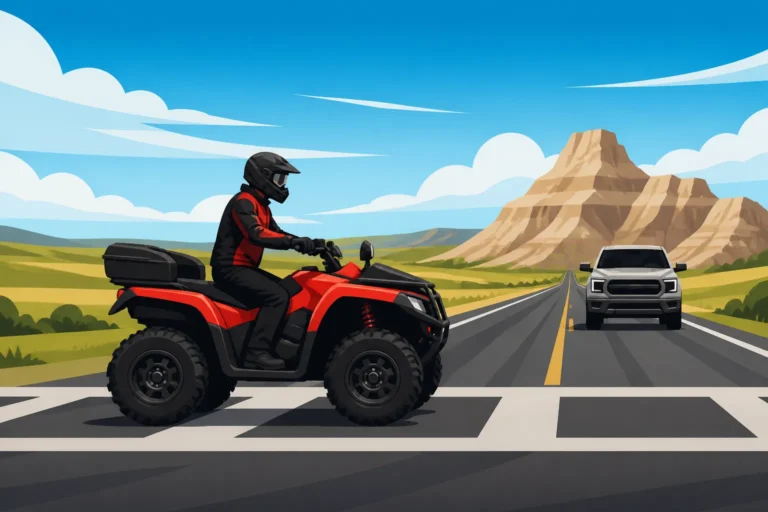
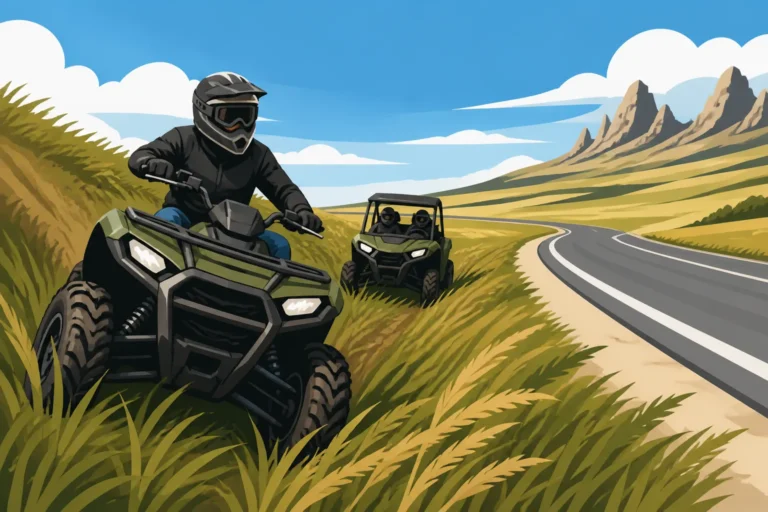
With a legitimate South Dakota motorcycle plate on your ATV or UTV, you gain the ability to legally operate your machine on most public roads within the state. This means you can ride on county roads, gravel section lines, and even most state highways (though specific speed limits and road types will apply). This is a huge advantage for many riders, allowing them to connect different trail systems without having to trailer their machine, or simply to access amenities in nearby towns. You can often travel on the paved shoulders or, more commonly, within the highway ditch bottom, as long as a county hasn't specifically opted out of ditch riding. More on that can be found in [South Dakota Ditch Riding Rules].
The plate fundamentally changes your machine's status from a purely off-road vehicle to one that can share the road with cars and trucks, albeit with some caveats. This expanded access means greater freedom and convenience for accessing trailheads, fueling up, or even just enjoying the journey between destinations. It also allows for easier highway crossings, which can be a real headache for unplated machines. This transition from off-road to road-legal opens up a whole new dimension of riding possibilities across the state's diverse landscapes.
What a Plate Doesn't Allow
Despite having a plate, there are still crucial restrictions you need to be aware of. The most significant limitation for plated ATVs and UTVs in South Dakota is the absolute ban on interstates. You cannot, under any circumstances, ride your ATV or UTV on an interstate highway, even if it's plated and fully equipped. This is a safety measure, as these machines are not designed for the high speeds and heavy traffic found on interstate systems. You can read more about this in [South Dakota's Interstate Ban].
Furthermore, while a plate grants you road access, it doesn't automatically grant you access to all off-road trails. Many dedicated motorized trails, especially those in the Black Hills National Forest, require a separate [Black Hills Motorized Trail Permit]. So, while your plate gets you to the trailhead, you'll still need that permit decal to legally ride on the trails themselves. Some counties might also have specific ordinances regarding ATV use on their roads, so it's always wise to check local regulations, though [Why No South Dakota County May Bar a Crossing] generally applies to highway crossings. Also, remember that a plate might also entail specific driver's license requirements for road use, typically a valid driver's license, which is a departure from pure off-road operation.
Navigating the Titling Process for a Road-Legal ATV
Once you've confirmed your ATV or UTV meets South Dakota's engine size requirements and you've installed all the necessary road-legal equipment (perhaps sourcing components from a trusted provider like SuperATV), the next step is the administrative process of getting that coveted plate. This usually involves a visit to your local county treasurer's office, which is the primary point of contact for vehicle registrations and titles in South Dakota. While the process itself is generally straightforward, having all your ducks in a row can save you significant time and prevent unnecessary delays.
Many people find themselves frustrated by the paperwork and fees involved, but understanding each step can simplify the experience. It's not just about showing up; it's about presenting the correct documentation and being prepared for the fees associated with titling and plating. Getting this right the first time ensures you can hit the road legally without worries.
Where to Go and What to Bring
To title and plate your ATV or UTV for road use in South Dakota, you'll need to visit your county treasurer's office. This is the local authority responsible for processing vehicle titles and registrations. For example, if you live in the Black Hills, you'd visit the treasurer's office in Lawrence County or Pennington County, depending on your residence. It’s always a good idea to call ahead or check their website for specific hours and any unique local requirements, as sometimes individual counties have slightly different processes or preferred forms. You can learn more about [Titling at a South Dakota County Treasurer].
When you go, make sure you bring all the essential paperwork. This typically includes the original Manufacturer’s Certificate of Origin (MCO) if the machine is new, or the properly assigned title from the previous owner if it’s used. You'll also need a bill of sale, especially if you bought it privately, clearly stating the purchase price. Your valid driver's license and proof of residency will also be required. Be prepared to pay the applicable fees, including the 4 percent excise tax, the title fee, and the plate fee. Without these documents and funds, your visit will be unproductive, leading to frustrating return trips.
Common Pitfalls and How to Avoid Them
The most common pitfalls in the titling and plating process often revolve around incomplete paperwork or missing deadlines. South Dakota imposes a strict [South Dakota's Forty-Five Day Title Deadline] from the date of purchase to title your machine. Missing this deadline incurs penalties, including a [South Dakota's 1 Percent a Month Penalty] and potentially even a [South Dakota's 10 Percent Penalty at Sixty Days]. To avoid these extra costs, make sure you initiate the titling process as soon as possible after purchasing your ATV or UTV.
Another pitfall is assuming your machine automatically qualifies. We've discussed the engine size, but also confirm it's not explicitly excluded, like a golf cart or certain farm equipment. Double-check that all required road-legal equipment is properly installed and functioning before you present your machine for inspection (if required by your county, though often a visual check is sufficient based on your application). Finally, ensure your bill of sale is complete and accurate, especially regarding the purchase price, as this impacts the [South Dakota's 4 Percent Excise Tax]. Getting all this information in order upfront will make for a much smoother and less costly experience.
| Vehicle Type | Minimum Engine Size for Plate | Primary Plate Type | Key Road Use Limitations |
|---|---|---|---|
| ATV/Quad (4 wheels) | 200cc | Motorcycle Plate | No Interstates; Trail Permit needed for designated trails |
| Dirt Bike (2 wheels) | 120cc | Motorcycle Plate | No Interstates; Trail Permit needed for designated trails |
| UTV/Side-by-Side | 200cc | Motorcycle Plate | No Interstates; Trail Permit needed for designated trails |
| Golf Cart | N/A (Excluded) | Special Permit (Limited) | Very limited road access, specific low-speed zones only |
| Farm Vehicle | N/A (Exempted) | Exempt | Road use for agricultural purposes only |
Disclaimer
This article is for general informational purposes only and does not constitute professional advice. Laws, prices and regulations vary by location and change over time. Consult a qualified professional for guidance on your specific situation.