Riding a Ditch Beside a State Route
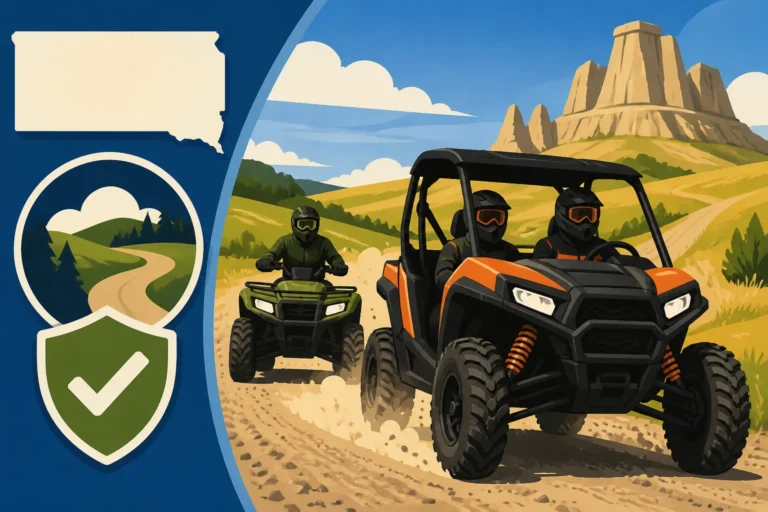
That open stretch of highway, the one with the inviting-looking grassy ditch running alongside it, can be incredibly tempting for ATV and UTV riders in South Dakota. Many folks see it as a convenient way to connect trails, access private land, or simply avoid the pavement. However, ditch riding, especially next to a busy state route, isn't as straightforward as just pointing your machine and going. This guide is here to untangle the often-confusing rules and give you the real-world breakdown of what's allowed, what's definitely not, and how to stay safe and legal when you're riding a ditch beside a state route in the Mount Rushmore State.
Navigating the Nuances of Ditch Riding on South Dakota State Routes
Ah, South Dakota ditches! They're almost legendary among ATV and UTV enthusiasts, a unique aspect of our state's off-road landscape. Many riders, both residents and visitors, are often pleasantly surprised to learn that, in many areas, riding these ditches is actually permissible. It offers a fantastic way to connect those dots on the map, turning short road sections into part of a longer, more enjoyable off-road journey without having to load up on a trailer every few miles. However, this isn't a blanket permission slip for every ditch you encounter. There are specific rules, and understanding them is your first line of defense against a roadside chat with law enforcement.
The Foundational Rules of Ditch Riding
At its core, South Dakota law allows for the operation of ATVs and UTVs in the ditches adjacent to public highways. This is a crucial distinction that sets our state apart from many others where off-highway vehicles are strictly confined to designated trails or private property. The legislature understood that for rural communities, these machines are often essential for work, transportation, and recreation, and that navigating ditches is a practical reality. Think of it as a privilege that comes with significant responsibilities. The law permits it, but it doesn't endorse reckless behavior or ignore the safety of others sharing the road, even if they're not in the ditch with you. You'll often find yourself relying on the basic premise that [Ditch Riding Is Legal Until a County Opts Out].
This general allowance is a blessing, especially for those of us who live in areas where trails might be few and far between, or where private land access is key to our riding. It means you can often get from one section of a ranch to another, or from a campsite to a trailhead, without having to haul your machine. But don't let this freedom lull you into a false sense of security. The very next county line could mean a completely different set of rules. It’s imperative to approach every ditch ride with the understanding that while generally permitted, there are always exceptions and specific conditions you must adhere to. This includes everything from the time of day you're riding to the type of machine you're on, and even the simple act of yielding to other ditch users.
Differentiating State Routes from Other Roads
South Dakota's vast network of roads includes everything from busy Interstate highways to quiet township gravel roads. When we talk about ditch riding, it's particularly important to distinguish between these categories, even though the core ditch riding rules often apply broadly. State routes, managed by the South Dakota Department of Transportation (SDDOT), typically carry higher volumes of traffic and often have higher speed limits compared to county or township roads. This distinction is less about the legality of ditch riding itself and more about the practical implications for your safety and the attention you need to pay while riding.
While the fundamental rules for ditch riding generally apply to state routes, the environment is inherently different. You'll likely encounter vehicles traveling at much faster speeds, creating more dust, and demanding a heightened sense of awareness from you. Imagine riding a ditch next to a state highway with semi-trucks thundering by at 70 mph; the noise, the wind blast, and the limited visibility due to dust can be significant. This isn't just a matter of convenience; it's a matter of critical safety. On quieter county gravel roads, your interaction with other vehicles might be sporadic and at lower speeds, offering a bit more breathing room. However, on a state route, you're constantly in a dynamic environment, requiring your full attention. This is where you really need to understand the specifics of [South Dakota Ditch Riding Rules Explained].
The important thing to remember is that while the ditch rules might be consistent, your approach to riding them should adapt to the type of road. A ditch along a peaceful backroad might allow for a more relaxed pace, but a ditch along a state route demands unwavering vigilance, ready for anything. You're not just riding in a ditch; you're sharing the larger right-of-way with high-speed traffic, and you need to be prepared for that interaction, whether it's the roar of a passing Harley during Sturgis Rally week or the dust cloud from a farmer's pickup heading to town.
Staying Legal: The Specifics of Riding the Ditch Alongside a State Route
So, you've decided to hop into the ditch alongside a South Dakota state route. Great! Now, let's get into the nitty-gritty of how to do it legally and safely. This isn't just about avoiding a ticket; it's about making sure you and your machine are out of harm's way. The law isn't designed to be overly complicated, but it does have specific requirements that riders sometimes overlook, often to their detriment. Understanding these details can mean the difference between an enjoyable ride and a frustrating encounter with a flashing blue light.
Understanding the "Outer Edge" Mandate
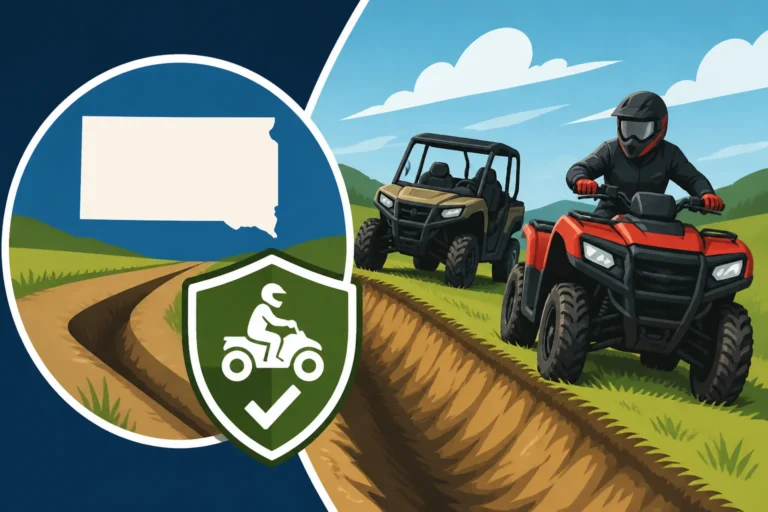
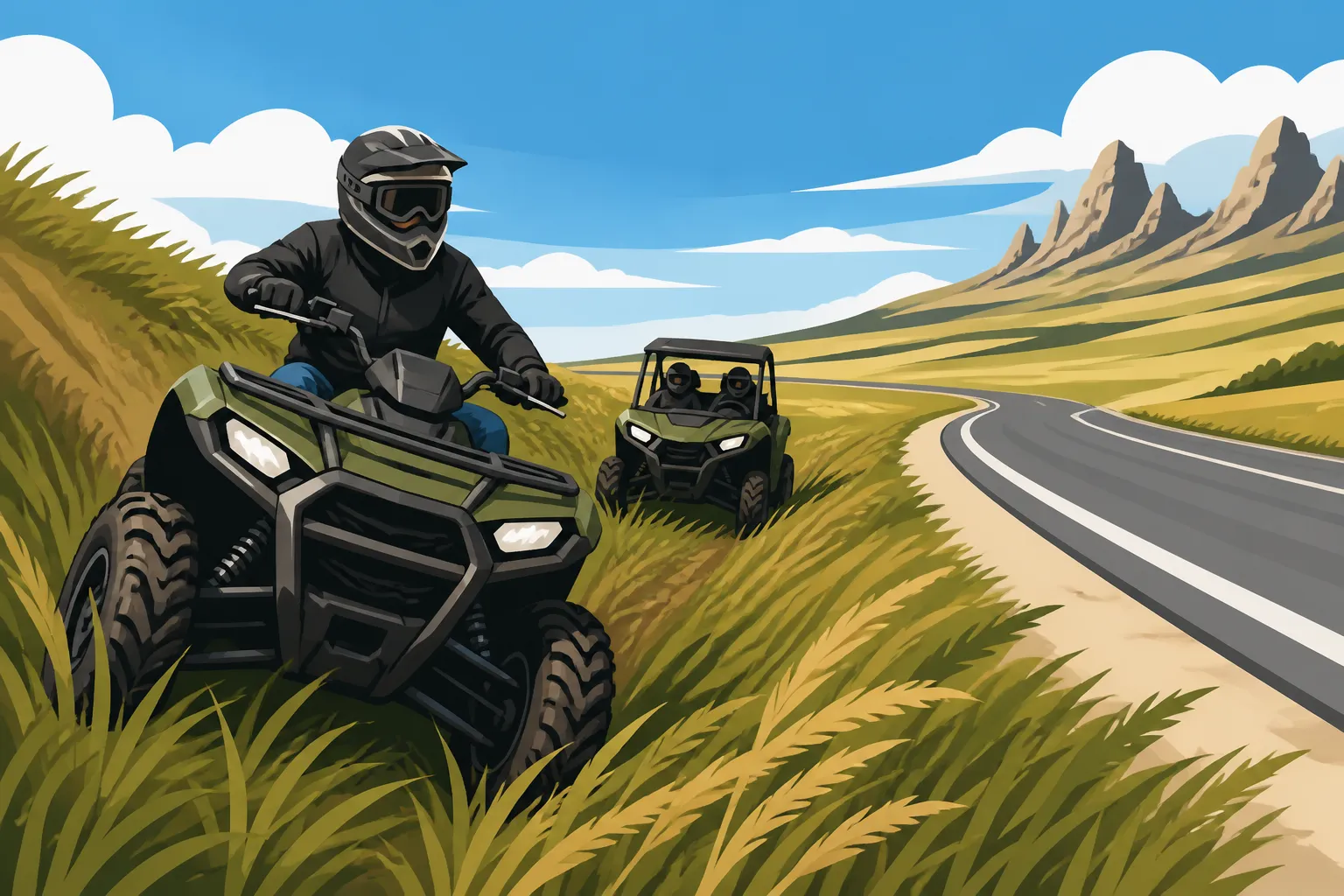
One of the most critical, yet often misunderstood, rules for ditch riding in South Dakota is the "outer edge" mandate. Simply put, the law requires you to operate your ATV or UTV as close as practicable to the outer edge of the ditch. What does "outer edge" mean in this context? It means the farthest point from the traveled portion of the highway, typically closer to the fence line or the property boundary. This isn't a suggestion; it's a legal requirement. The reason is pure common sense: safety. The further you are from the traffic roaring down the highway, the safer you are, and the less likely you are to become a hazard to motorists.
Imagine a ditch that slopes gently down from the road and then flattens out before meeting a fence. The "outer edge" isn't necessarily the very bottom of the slope where water might collect, but rather the area closest to that fence line, assuming it's still within the public right-of-way. This also implies you should generally ride along the back-slope of the ditch rather than hugging the edge closest to the asphalt or gravel. This isn't always the easiest path; sometimes the terrain is rougher, or there might be obstacles. But adhering to this rule is paramount. It demonstrates that you understand and respect the law, and that you're prioritizing safety for yourself and for others. This rule is especially important when you’re riding a Ditch Beside a State Route, where speeds and traffic volume are generally higher.
Ignoring the outer edge rule can put you squarely in a dangerous zone, not to mention risking a citation. If you're riding too close to the roadway, you increase the chance of a collision, either by swerving into traffic, or by distracting a motorist. It’s also often a visually jarring sight for drivers, who aren't expecting an ATV or UTV to be that close to their path of travel. So, make it a habit: when you drop into that ditch, always gravitate towards the outer boundary. Sometimes, though, nature throws a curveball, which brings us to our next point.
Navigating Obstacles and Necessary Deviations
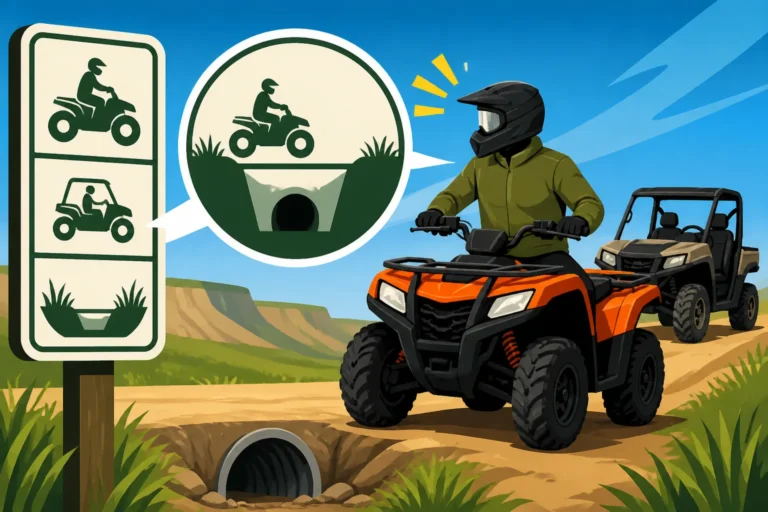
While the "outer edge" rule is firm, the law isn't completely unreasonable when faced with the realities of the natural world. South Dakota recognizes that ditches aren't always perfectly clear, smooth corridors. You might encounter culverts, deep washouts, standing water, large rocks, or even fallen trees that make riding the outer edge impossible or unsafe. In such situations, the law allows for a temporary, necessary deviation from the strict outer edge rule. However, and this is a critical "however," this deviation must be both necessary and as brief as possible, with the rider returning to the outer edge as soon as safely practicable.
This isn't an invitation to take the path of least resistance or to hop onto the shoulder because the ditch is a bit bumpy. The keyword here is "necessary." If there's a large culvert crossing the ditch, you might need to temporarily move closer to the road to safely navigate over it, or even make a quick, safe crossing of a driveway. But the moment that obstruction is cleared, you are expected to immediately return to riding as close to the outer edge as possible. This requires good judgment and a constant awareness of your surroundings, both in the ditch and on the highway. Think of it as a momentary detour within the ditch itself, not an excuse to leave the ditch entirely and ride on the road or shoulder.
If you find yourself having to constantly deviate because the ditch is too overgrown, too rough, or consistently impassable along the outer edge, it might be a sign that this particular ditch isn't suitable for riding. Pushing through truly impassable sections can lead to getting stuck, damaging your machine, or worse, putting yourself in a dangerous situation. Always assess the ditch condition ahead of you. Gear like heavy-duty skid plates or A-arm guards from SuperATV can help your machine handle rough terrain, but they aren't a license to ride through areas that are clearly unsafe or illegal.
Crossing State Routes: A Brief but Important Detour
Often, ditch riding is a means to an end – a way to get from one section of land to another, or to access a trail system that lies across a major highway. So, what about crossing a state route? This is a point of frequent confusion, especially with the patchwork of ditch riding rules. While counties can opt out of allowing ditch riding along their roads, a very important part of South Dakota law states that [Why No County Can Close a Highway Crossing]. This means that even if a county has banned riding in its ditches, it cannot prevent you from making a direct, perpendicular crossing of a highway to access legal riding areas on the other side.
However, "cannot prevent you from crossing" doesn't mean "cross however you like." When crossing any highway, especially a state route with higher speed limits and traffic volumes, you must exercise extreme caution. This means coming to a complete stop, looking both ways multiple times, and yielding to all oncoming traffic. Treat it exactly as you would pulling out onto a busy highway in your car. Your ATV or UTV accelerates slower and is less visible than a car, so give yourself plenty of time and space to cross safely. Signal your intentions if your machine has turn signals, or use hand signals clearly.
Remember, the permission to cross is for a direct crossing, not for riding on the highway for any appreciable distance before or after the crossing. It's a straight shot, from ditch to ditch, or from private land directly across to the ditch or another piece of private land. Any deviation, such as riding down the highway shoulder to find a "better" crossing point, is likely illegal and certainly dangerous. These crossings require your absolute full attention and conservative judgment to ensure everyone's safety.
Safety First: Mitigating Risks and Ensuring Visibility
Riding an ATV or UTV is inherently an activity that requires attention to safety, and when you add the dynamic environment of a state route ditch, those safety considerations only multiply. It’s not just about what the law says you can do, but what good sense dictates you should do to protect yourself and others. Many riders focus so much on the legal technicalities that they sometimes overlook the practical aspects of staying safe and visible.
Essential Safety Gear and Practices for Ditch Riders
While South Dakota has some fairly relaxed helmet laws compared to other states, particularly for adult riders, taking unnecessary risks is never a good idea. For anyone under 18, helmets are generally required, but for adults, the choice is often yours. However, when you're riding a ditch beside a state route, the potential for an accident increases due to proximity to high-speed traffic, unseen obstacles, or unpredictable terrain. For this reason, I strongly recommend wearing a helmet, regardless of your age. It's simply the smartest move you can make. [South Dakota Helmet Rules for ATV Riders] outline the specifics, but safety should always be your top priority.
Beyond a helmet, eye protection is non-negotiable. Dust, gravel, insects, and low-hanging branches are all common hazards in ditches, and a stray projectile could quickly impair your vision, leading to a loss of control. Goggles or a full-face helmet visor are essential. [South Dakota Eye Protection Rules for Riders] typically mandate some form of eye protection, so this isn't just good advice, it's often a legal requirement. Additionally, wearing long sleeves and pants, sturdy boots, and gloves will offer protection against scrapes, sunburn, and debris. Brightly colored clothing, especially blaze orange or fluorescent yellow, significantly increases your visibility to motorists on the highway, a critical factor when you’re riding in their periphery.
The Crucial Role of County Opt-Outs and Local Awareness
Remember that foundational rule we discussed: ditch riding is legal until a county opts out. This is where local awareness becomes absolutely paramount. Just because you rode ditches legally in Meade County yesterday doesn't mean you can do the same across the border in Lawrence County today. Each county has the authority to pass ordinances prohibiting ATV/UTV operation in its ditches. The responsibility falls squarely on the rider to know the local rules. Getting a citation for riding in a banned ditch is no fun, and it's entirely preventable.
So, how do you know if a county has opted out? Fortunately, the law dictates that if a county bans ditch riding, it must post regulatory signs at key entry points, such as where county roads intersect state routes, or at the county line. [Reading the Regulatory Sign at a Ditch Entrance] is your first clue. However, these signs can sometimes be missed, or they might not be at every single entry point. It's always a good idea to do a quick check before you head out. Call the county sheriff's office, check the county's website for ordinances, or consult local riding groups. Ignorance of the law is rarely an acceptable defense, especially when the information is generally available. Understanding [What Happens When a South Dakota County Bans Ditch Riding] is a good motivator to do your homework.
Sharing the Right-of-Way: Interacting with Vehicle Traffic
Even though you're in the ditch, you are still sharing the public right-of-way with highway traffic. This means you need to be constantly aware of the vehicles on the paved or gravel road beside you. Higher speeds on state routes mean less reaction time for both you and motorists. The dust created by passing vehicles can temporarily blind you, and the noise can mask the sound of other traffic or even the approach of a law enforcement vehicle. For this reason, vigilance is key.
Always assume that drivers on the main road don't see you, even if you're wearing bright colors. Maintain a safe following distance from other ditch riders, and be prepared to stop or slow down quickly if a vehicle ahead of you brakes or encounters an obstacle. If you're riding with a group, keep your formations tight but with enough space to react. When a large vehicle like a semi-truck or a farm implement passes, the wind blast can be significant, potentially affecting your balance and steering. These massive agricultural machines often have special allowances for road use, as discussed in [Farm Vehicles Exempted], so be especially mindful around them.
In dusty conditions, consider pulling over briefly if traffic is heavy, or allowing a large gap to form before you continue, giving the dust a chance to settle. Communication, whether through hand signals or a radio system, is vital if you're riding with others. Always yield to any vehicle that might need to enter or exit a driveway, even if it means slowing down or momentarily stopping your progress in the ditch. The goal is a smooth, predictable ride for you, and no surprises for anyone on the adjacent highway.
Avoiding Common Pitfalls and Preparing for Your Ride
No one wants their day of riding cut short by a citation, an accident, or a breakdown. Ditch riding, while often permissible, has its specific hazards and rules that, if ignored, can quickly turn a fun outing into a frustrating experience. A little preparation and a clear understanding of the "don'ts" can save you a lot of hassle and keep you on the right side of the law.
Why the Shoulder is Strictly Off-Limits
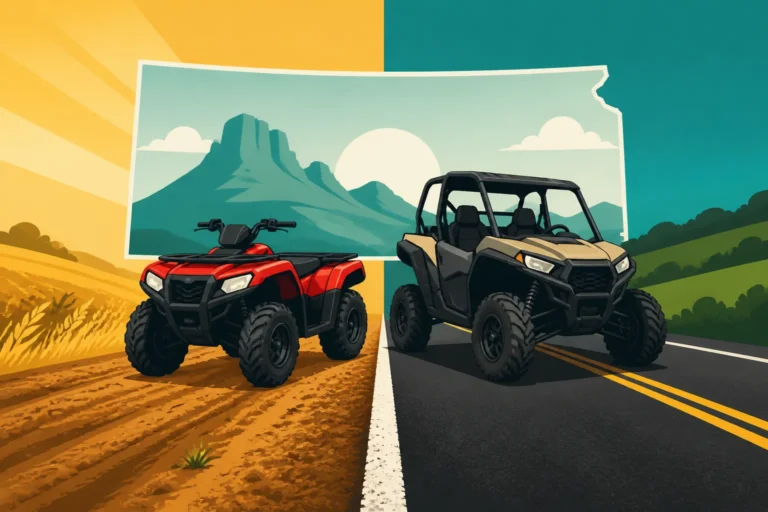
This is probably one of the biggest and most frequent mistakes riders make: confusing the ditch with the shoulder. Let's be unequivocally clear: in South Dakota, operating an ATV or UTV on the shoulder of a state route, or any public highway, is generally illegal. [South Dakota Rules for Riding a Highway Shoulder] are quite specific. The shoulder, while often unpaved, is considered part of the traveled roadway for emergency use, breakdowns, and temporary stops. It is not an extension of the ditch for ATV/UTV travel.
The temptation is real, especially if the ditch is rough, muddy, or full of tall grass. The shoulder often looks like a nice, smooth, clear path. But resist that urge! Riding the shoulder puts you in direct and immediate conflict with highway traffic. It's incredibly dangerous because vehicles on the highway might swerve onto the shoulder, or might simply not expect an ATV to be traveling there. Law enforcement officers are particularly vigilant about this violation, and for good reason. It's a significant safety hazard for everyone involved. If the ditch is truly impassable and you cannot safely navigate it, you should either turn around, find an alternative route, or load your machine onto a trailer. Do not, under any circumstances, resort to riding the shoulder as a convenience.
Understanding the Consequences of Rule Violations
Breaking the rules of ditch riding, or any ATV/UTV laws in South Dakota, can have tangible and unpleasant consequences. It's not just a slap on the wrist. Depending on the severity of the offense and local ordinances, violations can range from a simple fine to more serious charges. Often, illegal operation of an off-road vehicle can be classified as a Class 2 Misdemeanor. [What a Class 2 Misdemeanor Costs a Rider] can be substantial, including fines, court costs, and potentially even points on your driver's license if the offense is tied to your driving privileges.
Beyond the legal and financial penalties, there's the risk to your reputation and the future of ATV/UTV riding in South Dakota. When riders consistently disregard laws, it fuels public opposition and can lead to stricter regulations, county-wide bans, or even calls to repeal existing ditch riding allowances. Every time a rider acts irresponsibly, it puts the freedom of responsible riders at risk. So, the consequences extend far beyond your personal situation. Being a responsible rider is about protecting the privilege for everyone.
Pre-Ride Checklist: What to Know Before You Go
Before you even load your machine or pull out of the driveway, a thorough pre-ride checklist is essential for safe and legal ditch riding. This isn't just for long trail rides; it applies equally, if not more, to riding next to a state route where vigilance is key.
Here’s what you should consider:
| Check Item | Why It's Important | Action |
|---|---|---|
| Local Ordinances | Avoid fines; ensure legal access. | Check county websites, call local sheriff, look for regulatory signs. |
| Weather & Ditch Conditions | Mud, deep water, or ice can make ditches impassable or dangerous. | Check forecast; inspect ditch visually (if possible) for [Riding a Gravel Road in South Dakota After Rain] implications. |
| Machine Condition | Prevent breakdowns; ensure safe operation. | Check tires, brakes, lights, fluid levels; ensure spark arrester is fitted if going to public lands. |
| Fuel Level | Don't get stranded far from services. | Top off the tank; consider carrying an extra fuel can for longer rides. |
| Visibility Gear | Be seen by highway traffic. | Wear bright colors (blaze orange/yellow); ensure headlights/taillights work, even in daylight. |
| Emergency Kit | Be prepared for minor incidents or breakdowns. | Carry a first-aid kit, small tool kit, phone, water, snacks. |
Ensuring your machine is ready for anything the ditch throws at it is also crucial. Aftermarket parts like heavier tires or suspension upgrades from SuperATV can enhance your machine's capability to handle varied terrain, from muddy bottoms to rocky climbs. Having reliable equipment means you can focus more on navigating safely and less on worrying about your machine. Take the time to do these checks, and your ditch riding experience in South Dakota will be much safer and more enjoyable for everyone.
Disclaimer
This article is for general informational purposes only and does not constitute professional advice. Laws, prices and regulations vary by location and change over time. Consult a qualified professional for guidance on your specific situation.