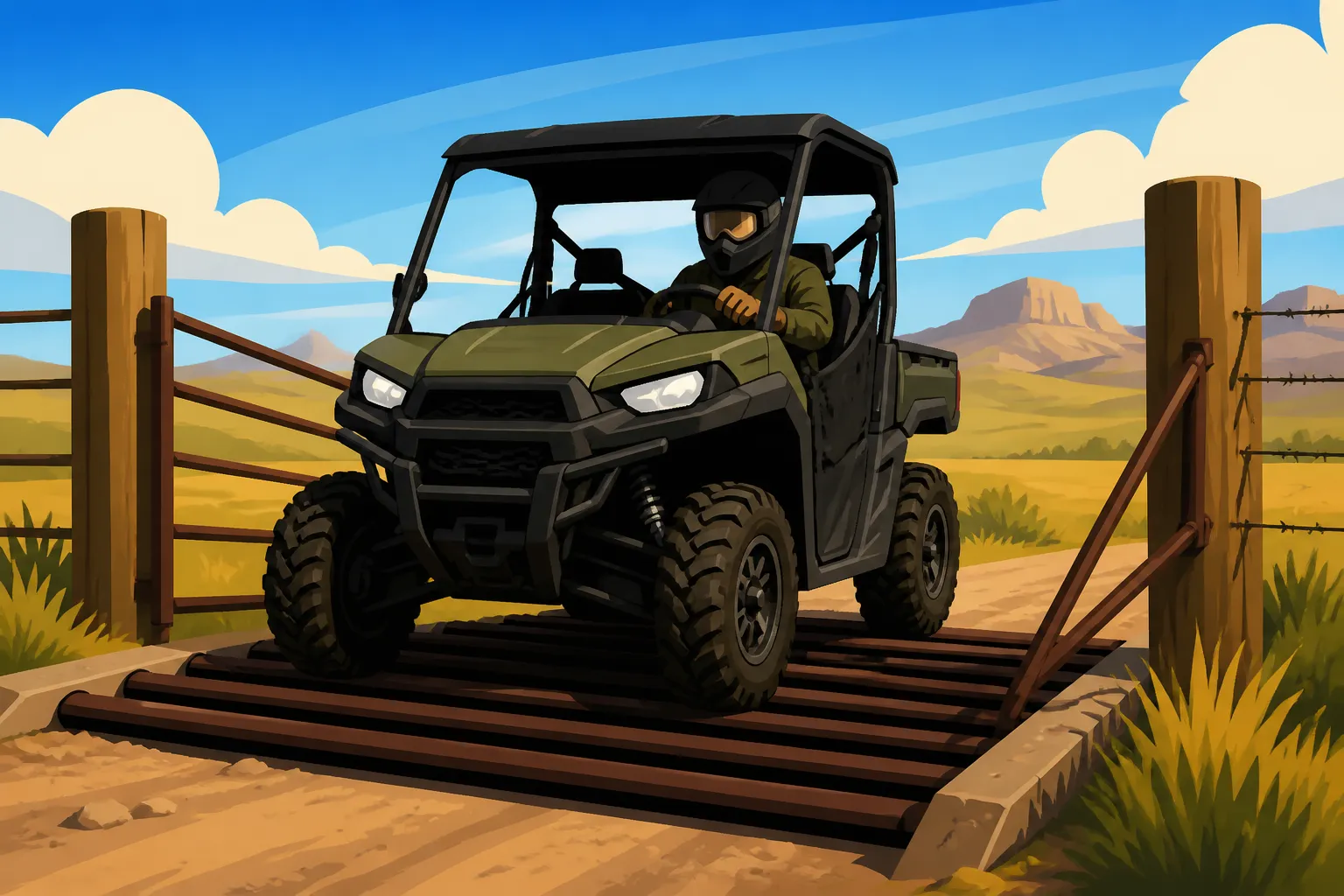
Crossing a Cattle Guard at a Ranch Boundary
Navigating South Dakota's vast and often rugged landscape on your ATV or UTV offers an unparalleled sense of freedom, but it also comes with its own set of unique challenges and etiquette. One of the most common, yet frequently misunderstood, features you'll encounter when exploring rural areas, especially around ranches, is the cattle guard. For many riders, these seemingly simple structures can be a source of anxiety – wondering if you're allowed to cross, how to do it safely, and what condition your machine will be in on the other side. This guide aims to demystify cattle guards, offering practical advice and insight into respectfully and safely crossing these ubiquitous ranch boundaries in South Dakota.
Understanding Cattle Guards and Their Purpose in South Dakota
South Dakota is ranch country, plain and simple. From the rolling prairies east of the Missouri to the rugged Black Hills, livestock operations are a cornerstone of the state's agricultural identity. With this comes the widespread use of cattle guards, which are essential for maintaining property lines and keeping animals contained without the constant hassle of opening and closing gates.
What Exactly is a Cattle Guard?
At its core, a cattle guard is a type of physical barrier designed to prevent livestock, like cattle, from crossing while allowing vehicles and people to pass freely. You'll typically see them where a fence line crosses a road or trail, eliminating the need for a gate that would constantly have to be opened and closed by vehicles. Most commonly, a cattle guard consists of a series of parallel, often round or rectangular, metal or concrete pipes or rails spaced a few inches apart, set over a shallow pit. The spacing and the instability of the footing prevent animals from walking across, as they instinctively fear getting their hooves caught or injured.
While the metal and concrete versions are the most common, you might occasionally encounter variations. Some older or less-trafficked ranch roads might have simpler designs, or even "virtual" cattle guards marked by painted lines, though these are more psychological barriers than physical ones for animals. For ATV and UTV riders, the physical variations are what matter most, as they directly impact how your machine will feel as you cross. The rattling of metal or the jolt from concrete can be unnerving if you're not prepared.
Why Cattle Guards Are Used on South Dakota Ranch Lands
The primary reason for cattle guards is livestock management. Ranches are sprawling operations, and fences define pastures, limit grazing areas, and keep different herds separate. Imagine the sheer amount of time and effort it would take for ranch hands to open and close dozens, if not hundreds, of gates every day just to move vehicles. Cattle guards solve this problem by providing a permanent vehicle crossing point that still functions as a livestock barrier. They maintain the integrity of a [South Dakota Landowner Permission Rules] and ensure that cattle aren't wandering off into adjacent properties or, worse, onto public roads.
For riders, this means a cattle guard usually signifies a transition. You might be moving from one pasture to another, crossing from public access land onto private property (with permission, of course!), or simply traversing a large ranch property on an established easement. Understanding their purpose helps you appreciate why they are there and why treating them with respect is crucial for maintaining good relationships with landowners.
The Legal Implications of Ranch Boundaries and Access
Encountering a cattle guard often means you are approaching or crossing a property boundary, which brings up important legal considerations, especially concerning private versus public land. In South Dakota, land ownership is a mix of private ranches, state lands, and federal lands like the Black Hills National Forest. While some roads that cross private land may be public easements, many others are strictly private access. [Riding Private Ground in South Dakota] is a privilege, not a right, and is almost always contingent on explicit permission from the landowner.
A cattle guard itself doesn't automatically imply public access. It merely facilitates vehicle passage. If you're riding on a trail or road that crosses private land and you come across a cattle guard, it's a good time to double-check your maps and confirm you have permission to be there. Unauthorized crossing, even over a cattle guard, can be considered trespassing. Always know where you are, and if in doubt, turn back. This respect for boundaries is key to ensuring continued access for responsible riders.
Safe and Respectful Practices for Crossing Cattle Guards on an ATV or UTV
Crossing a cattle guard might seem straightforward, but doing it safely and minimizing wear and tear on your machine, as well as being a good neighbor to landowners, involves a few key practices. Each cattle guard can present slightly different challenges, so being prepared is essential.
Approaching the Cattle Guard Safely
The first rule of thumb when approaching any cattle guard is to slow down. While your ATV or UTV is built for rugged terrain, hitting a cattle guard at speed can be jarring, not only for you but also for your machine's suspension and frame. Reduce your speed significantly as you get close, allowing you to assess the guard's condition.
Look for any signs of damage – bent or broken rails, large gaps, or uneven surfaces. Cattle guards, especially on less-maintained ranch roads, can sometimes be rough. Pay attention to the ground leading up to the guard; sometimes there are potholes or washouts right before it, which can throw you off balance. Always keep a firm grip on the handlebars and be prepared for your machine to shift and rattle as you cross. Being aware and proactive in your approach can prevent an unpleasant jolt or even potential damage.
Techniques for Crossing Various Types of Cattle Guards
Once you've slowed down and assessed the guard, the crossing technique is generally quite simple: maintain a slow, steady speed. Don't accelerate or brake suddenly while you're on the guard itself. A consistent, low speed allows your suspension to work as intended, absorbing the impact of each rail. Avoid swerving, as this can catch a tire between the rails or lead to an unexpected jolt.
- Metal Pipe Guards: These tend to be the most common and often the noisiest. They can feel very "bumpy" as each wheel hits a pipe. Keep your weight centered and let the machine's suspension do the work. If your ATV or UTV has heavy-duty components, perhaps from a brand like SuperATV, your machine might handle these with a bit more stability and less flex than a stock setup.
- Concrete Slab Guards: These can be wider and often feel more solid, but the gaps between the concrete sections can still be significant. They might produce more of a thud than a rattle. Again, a slow, steady pace is best.
- Wider/Rougher Guards: Some older or less-used cattle guards might have wider spacing between the rails or be in a general state of disrepair. These require even more caution. Consider stopping completely before starting your crossing if you're unsure. A slow crawl is your best friend here.
Regardless of the type, your goal is to cross smoothly without unnecessary stress on your machine or yourself. It's a quick event, but proper technique makes a big difference in comfort and safety.
What to Do if a Cattle Guard Appears Damaged or Unsafe
There will be times when you approach a cattle guard and it looks… well, less than ideal. Bent rails, exposed rebar, a crumbling foundation, or a particularly deep pit are all red flags. Your safety and the integrity of your machine are paramount.
- Do Not Take Risks: If a cattle guard looks unsafe to cross, do not attempt it. It's not worth the risk of a tire blowing out, suspension damage, or even a rollover.
- Look for Alternatives: Check if there's a gate nearby that you can safely open, pass through, and then close securely behind you. This is a critical point: always leave gates as you found them, or if you had to open one, make sure it's latched firmly. [Why Leaving a Ranch Gate Open Costs You Access] is a real consequence for everyone.
- Report It: If you believe you are on a public access road (or have permission on private land) and the cattle guard is clearly a hazard, consider reporting it. If it's on Forest Service land, contact the local ranger district. If it's on a county road, contact the county highway department. For private land, inform the landowner if possible. Providing details like location (GPS coordinates are incredibly helpful) and the nature of the damage can assist in getting it repaired.
When faced with a questionable cattle guard, remember that turning back and finding an alternative route is always the safest option.
Navigating South Dakota's Ranch Roads and Section Lines with Cattle Guards
The presence of cattle guards is intrinsically linked to riding in South Dakota's agricultural heartland and on the fringes of its wilder areas. Understanding where and why you'll find them helps you prepare for your ride.
The Importance of Landowner Permission
Let's be absolutely clear: [South Dakota Landowner Permission Rules] are not optional. Most ranch roads and section lines that pass through private property, even if they appear well-traveled, require explicit permission from the landowner to ride on them. Just because there's a cattle guard and no gate doesn't mean it's public access.
Before heading out, especially on a route you're not intimately familiar with, do your homework. Use mapping apps that show land ownership boundaries, and if you plan to cross private property, make the effort to contact the landowner. A polite phone call or visit can often secure permission, and it builds trust between riders and landowners. Trespassing, even unintentional, can lead to serious consequences, including fines and losing future access for yourself and other riders. Respecting private property is fundamental to responsible riding in South Dakota.
Common Scenarios: From Designated Trails to Unmarked Two-Tracks
Cattle guards can pop up in a variety of riding environments:
- Designated OHV Trails: On official motorized trails that might cross private easements or federal grazing allotments, cattle guards are usually well-maintained. Maps for these trails, such as those for the Black Hills National Forest, will generally indicate such features.
- Ranch Roads: These are the most common places to find cattle guards. When [Riding a Ranch Road] in South Dakota, expect to encounter multiple cattle guards as you move through different pastures. These roads vary greatly in quality, from well-graded gravel to rough, two-track paths.
- Section Lines: South Dakota has a vast network of section lines, many of which are public easements, even if they cross private land. However, just because a section line is a public right-of-way doesn't mean it's maintained or easily passable. You might find cattle guards, fences, or even just open pasture. [Can You Ride an Unopened South Dakota Section Line?] is a complex question with nuances regarding its condition and specific county rules. Be prepared for anything.
- Prairie Two-Tracks: When you're [Riding a Prairie Two-Track], especially in the expansive eastern part of the state, you'll inevitably encounter ranch boundaries marked by fences and, you guessed it, cattle guards. These often crisscross large private holdings, making landowner permission absolutely paramount.
The key takeaway is that cattle guards are an integral part of the rural South Dakota riding experience. Always anticipate them, and always ensure you have the legal right to be where you are.
How Cattle Guards Fit into South Dakota's Ditch Riding and Section Line Rules
South Dakota has some unique rules regarding [South Dakota Ditch Riding Rules], allowing ATVs and UTVs to operate in highway ditches in many areas, unless a county has opted out. Similarly, many section lines are considered public rights-of-way. So, how do cattle guards factor into this?
When you're riding a highway ditch and come to a fence line that crosses the road, you'll often find a cattle guard or a gate where the ditch is "fenced off." You typically have the right to cross these features if you are legally riding in the ditch. However, this doesn't extend to leaving the ditch and riding onto the private land beyond the cattle guard without permission.
On section lines, a cattle guard allows you to continue along the public right-of-way without needing to stop and open a gate. But remember, the cattle guard only pertains to the defined right-of-way, usually a narrow strip of land. [Riding Off a Route in the Hills] or prairies, even a few feet, can put you on private property where you shouldn't be. Always stay within the bounds of the legal right-of-way if you don't have landowner permission.
| Cattle Guard Type | Crossing Technique | Common Locations | Key Considerations |
|---|---|---|---|
| Metal Pipe | Slow, steady speed; centered weight | Ranch roads, designated trails | Noisy, bumpy, good suspension helpful. |
| Concrete Slab | Slow, steady speed; centered weight | Ranch roads, public easements | More solid feel, can have larger gaps, potential for "thud." |
| Damaged/Unsafe | Avoid crossing if possible | Less-maintained ranch roads, old section lines | Risk of damage to machine/rider. Seek alternate route or report to landowner/authorities. |
| Overgrown/Hidden | Very slow approach, high awareness | Unmarked two-tracks, forgotten easements | Easy to miss, can cause sudden jolts. |
Equipment and Preparation for Ranch Boundary Riding
Being well-prepared for a ride that involves crossing ranch boundaries and cattle guards can make all the difference in having a safe, enjoyable, and responsible experience.
Pre-Ride Checks for Your Machine
Before you even load up your ATV or UTV, conduct a thorough pre-ride inspection, especially focusing on components that will be stressed by cattle guards and rough ranch roads.
- Tires: Ensure proper tire pressure. Over-inflated tires can lead to a harsher ride over cattle guards, while under-inflated tires increase the risk of a pinch flat if a sharp edge is encountered. Check for any cuts or damage.
- Suspension: Inspect your shocks, springs, and A-arms for any signs of damage or excessive wear. Well-functioning suspension is your best friend when absorbing the impacts of a cattle guard. If you've upgraded your suspension or added aftermarket control arms (like those offered by SuperATV), you might find your machine handles the bumps with more stability.
- Frame and Undercarriage: Briefly check for any loose bolts, cracks in the frame, or damaged skid plates. A cattle guard can expose weaknesses here.
- Steering Components: Ensure your steering is tight and responsive. Loose tie rods or ball joints will make crossing a cattle guard feel much more uncontrolled.
- General Condition: Make sure all your lights, brakes, and fluids are in good working order. You never know when you'll need them, especially if you're exploring less-trafficked ranch lands.
A quick check before each ride can prevent a small issue from becoming a big problem out in the middle of nowhere.
Essential Gear for Navigating Ranch Lands
Beyond your machine's readiness, consider the gear you carry. Being self-sufficient is vital when riding in remote areas of South Dakota.
- Navigation: A reliable GPS device or a mapping app on your phone (with downloaded offline maps!) is non-negotiable. It helps you stay on track, identify property boundaries, and pinpoint your location if you need to report a hazard or seek help. A physical map of the area is also a good backup.
- Communication: Cell service can be spotty, especially in draws and canyons. Carry a satellite messenger or a two-way radio for emergencies.
- Repair Kit: Basic tools, a tire repair kit, a small air compressor, and zip ties can get you out of many minor predicaments.
- First-Aid Kit: Always, always, always carry a well-stocked first-aid kit.
- Water and Snacks: Dehydration and low blood sugar are real risks, particularly on longer rides.
- Appropriate Clothing: Dress for the weather and potential changes, including layers, rain gear, and sturdy riding boots.
- Respectful Extras: Carry trash bags to pack out anything you pack in (and maybe even a little extra). If you're going to be around livestock, consider leaving your drone at home; they can spook animals.
Remember to [Checking a Forest Notice Before You Load Up] for any fire restrictions or trail closures if you're riding near public lands, as conditions can change rapidly.
The Role of Responsible Riding Etiquette
Finally, being a responsible rider on South Dakota's ranch lands goes beyond just safety; it's about good etiquette and fostering positive relationships with the landowners who share this beautiful state.
- Respect Private Property: This cannot be stressed enough. Always have permission. If you don't know, don't go.
- Leave No Trace: Pack out everything you pack in. Do not litter. Stay on designated routes or established two-tracks.
- Gates and Fences: [Why Leaving a Ranch Gate Open Costs You Access] is a harsh lesson. If you open a gate to pass through, close it securely behind you. If it was closed, leave it closed. If it was open, leave it open. Always assume a gate or cattle guard is there for a reason related to livestock.
- Livestock: If you encounter cattle, horses, or other livestock, slow down and give them a wide berth. Do not harass or chase animals. Keep your distance and let them move at their own pace.
- Waving to Locals: A friendly wave to a passing rancher or local resident goes a long way in building goodwill. You're a guest on their landscape.
By following these guidelines, you not only ensure your own safety but also help preserve access for all ATV and UTV riders in South Dakota, ensuring that the privilege of exploring its stunning ranch lands and section lines remains for years to come.
Disclaimer
This article is for general informational purposes only and does not constitute professional advice. Laws, prices and regulations vary by location and change over time. Consult a qualified professional for guidance on your specific situation.