South Dakota’s Outer Edge Rule
There's nothing quite like the freedom of exploring South Dakota's wide-open spaces on your ATV or UTV, but the rules for riding outside designated trails can feel like navigating a maze. One of the most common points of confusion for riders, especially those new to the state or visiting, revolves around where you can legally operate your machine on the vast network of roads and rights-of-way. This guide will specifically break down South Dakota's "outer edge rule," helping you understand exactly where your tires are permitted to roll when you're not on a dedicated trail.
Understanding South Dakota's Ditch Riding Rules
For many ATV and UTV enthusiasts in South Dakota, the idea of "ditch riding" is as natural as the prairie grass itself. It’s a common practice, particularly in rural areas, for getting from point A to point B without having to trailer your machine everywhere. However, what sounds simple on the surface often comes with layers of regulations that can trip up even experienced riders. The freedom to ride these public rights-of-way isn't absolute, and misunderstanding the rules can lead to hefty fines and a ruined day of riding.
What is "Ditch Riding" in South Dakota?
When we talk about "ditch riding" in South Dakota, we're generally referring to operating an off-road vehicle (ORV) within the public right-of-way of a road or highway, but specifically outside the paved or graded travel lanes. Imagine driving down a highway; there's the main road, maybe a shoulder, and then the grassy, sloped area on either side before you hit the fence line or private property. That sloped, often unmaintained area, is typically what riders refer to as the "ditch" or "right-of-way."
The appeal of ditch riding is clear: it provides connectivity. You might use it to access a friend's property, get to a fishing spot, or simply link up various gravel roads without needing to put your machine on a trailer. For farmers, ranchers, and rural residents, it can be a vital part of daily life, offering a practical way to manage land or get around large properties. However, it’s this very ubiquity that sometimes leads to a relaxed attitude towards the rules, which is where problems often begin.
The General Rule: Ditch Riding is Permitted (Unless Banned)
Here’s a critical point that often surprises people: in South Dakota, riding an ORV in the ditch or right-of-way of a public highway is generally permitted. This isn't a free-for-all, of course, but it's the baseline assumption. The state law allows it, provided you adhere to specific conditions. The tricky part, and where the frustration often lies, is that individual counties have the authority to opt out of this general permission. This means that what's perfectly legal in one county could be completely prohibited just across the county line.
This creates a patchwork of regulations across the state, which can be incredibly confusing for riders. You might be riding legally for miles, cross into a new county, and suddenly be in violation without even realizing it. This is why understanding the "unless banned" clause and how to identify those areas is so crucial. It puts the onus on the rider to know local ordinances, which isn't always easy when you're just trying to enjoy a day out. For more on this, check out [Ditch Riding Is Legal Until a County Opts Out].
Unpacking South Dakota's "Outer Edge" Rule
The "outer edge rule" is the cornerstone of legal ditch riding in South Dakota. It defines the specific boundaries within the public right-of-way where your ORV is allowed to operate. Simply put, it tells you how far from the main travel lanes you need to stay to remain compliant with state law. Getting this wrong can quickly turn a casual ride into a costly citation. It’s not just about avoiding the paved road; it’s about understanding the invisible lines that demarcate your legal riding space.
Defining the Outer Edge of the Right-of-Way
To grasp the outer edge rule, you first need a clear picture of what constitutes the "right-of-way" itself. Imagine a typical rural highway. You have the paved surface where cars and trucks travel. Immediately adjacent to that, you usually have a gravel or dirt shoulder. Beyond the shoulder, the terrain typically slopes down into a ditch, which then usually slopes back up towards the fence line or the edge of private property. The entire area from the center of the road out to that fence line (or property boundary) is generally considered the "right-of-way."
The "outer edge" rule specifies that you must ride as far to the right as practicable within this right-of-way, and crucially, outside the main traveled portion of the road. This means you should be riding in the ditch, along the back slope, or as close to the property line as safely possible, without encroaching on private land. It's not about riding on the paved surface or even the immediate gravel shoulder unless absolutely necessary. Think of it as pushing your machine to the outermost permissible limit of the public ground, always keeping a respectful distance from vehicle traffic.
Where You Can Legally Ride Under the Rule
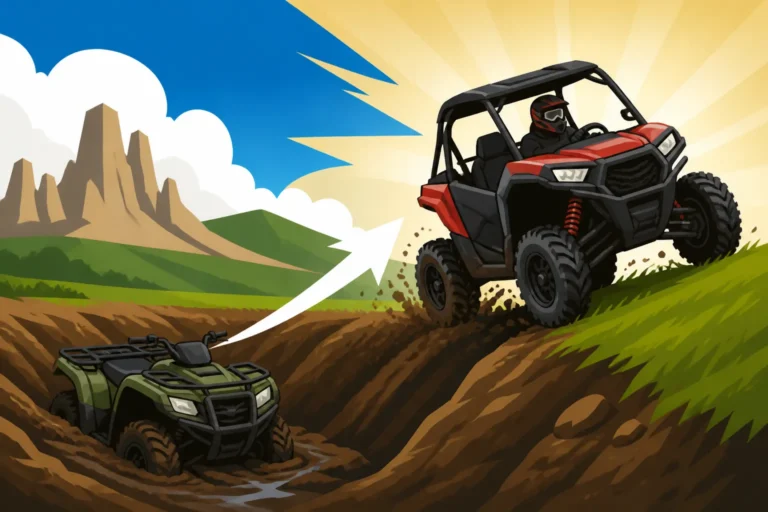
Under the outer edge rule, your primary riding zone is the ditch bottom and the back-slope of the ditch. This means you should be down in the depression or climbing the far side of it, closer to the fence line than to the road. The goal is to maximize your separation from high-speed vehicular traffic. Riding [Riding the Bottom of a Highway Ditch] means keeping your machine in the lowest part of the ditch, while [Riding the Back-Slope of a Ditch] allows you to be on the upward-sloping terrain just before the right-of-way ends.
This specific guidance is designed for safety, both for ORV riders and for drivers of traditional vehicles. By staying in the outer reaches of the right-of-way, you're less likely to be a hazard to cars, and they are less likely to be a hazard to you. It also keeps you out of the path of potential debris from the roadway and provides a buffer zone. It's a pragmatic approach to sharing the public space, allowing ORVs access while minimizing interference with primary road functions.
Avoiding the Paved Road and Shoulder
This is where many riders get into trouble. The outer edge rule explicitly states that you must operate your ORV outside the main traveled portion of the road. For paved highways, this unequivocally means staying off the asphalt. For gravel roads, it means staying off the main graded and maintained path where cars would typically drive. The shoulder, while sometimes unpaved, is also generally considered off-limits for continuous travel. Its purpose is for emergency stops and temporary parking, not for consistent ORV traffic.
However, there are limited exceptions. If you encounter an obstruction in the ditch – perhaps a large culvert, a washed-out section, or deep snow – you may be permitted to briefly move onto the shoulder to get around it. The key word here is briefly. This isn't an excuse to ride the shoulder for extended periods. As soon as the obstruction is cleared, you must return to the ditch or the outer edge of the right-of-way. Similarly, a quick, direct movement onto the shoulder might be necessary to avoid a collision or for immediate safety. Remember, these are exceptions, not the rule. [When the Shoulder Becomes Legal] or [When an Obstruction Lets You Leave the Ditch Bottom] are important considerations in these specific, limited circumstances.
Exceptions and Nuances to the Outer Edge Rule
While the outer edge rule provides a general framework, South Dakota law also recognizes specific situations and exemptions that modify how it applies. These nuances are important to understand, as they account for common riding scenarios and specific types of vehicles or operators. Ignoring these details can lead to confusion and unintended violations, even if you're trying to follow the spirit of the law.
Crossing Highways and Intersections
Even in counties that have opted to prohibit ditch riding, there's a crucial distinction made for crossing highways. South Dakota law generally allows ORVs to cross public highways at a ninety-degree angle, provided it's done safely and after yielding to all oncoming traffic. This is a fundamental right that counties cannot take away, even if they ban riding along the ditches. This provision is vital for connecting trails, accessing private property on the other side of a road, or simply getting from one section of a ditch to another.
When making such a crossing, safety is paramount. You must come to a complete stop, look both ways, and ensure the road is clear before proceeding. Treat it like crossing any major intersection in a car. Speed and recklessness are never acceptable. While you might be riding an ORV that falls under [What South Dakota Counts as an Off-Road Vehicle], you still share the responsibility for safe operation on public ways. For more detailed information, look into [Why No County May Bar a Crossing] – it's a testament to the state's recognition of the practical needs of ORV owners.
Agricultural and Utility Exemptions
South Dakota, being an agricultural state, has specific exemptions for vehicles used in farming and ranching operations. If your ATV or UTV is being used for legitimate agricultural purposes – for instance, checking fences, moving livestock, transporting tools to a field, or accessing irrigation equipment – it may be exempt from certain road-use restrictions, including some aspects of the outer edge rule. This is a recognition that these machines are essential tools for many residents.
Similarly, utility vehicles operated by public utility companies for maintenance, repair, or installation of services also often fall under specific exemptions. These crews might need to access areas within the right-of-way that would otherwise be off-limits to general ORV traffic. It's important to remember that these exemptions are specific to the purpose of the vehicle's operation and are not a blanket allowance for recreational use. Understanding [Agricultural and Utility Vehicles Exempted] can help clarify these distinctions.
Age Restrictions for Ditch Riding
Another important consideration, especially for families, involves the age of the operator. While adults might navigate these rules with relative ease, there are specific age requirements for riding ORVs in ditches in South Dakota. Generally, a person must be at least 12 years old to operate an ORV on public roadsides, including ditches. This isn't just a suggestion; it's a legal requirement designed to ensure a minimum level of maturity and skill for operating a potentially dangerous machine in proximity to traffic.
For younger riders, supervision is often required, even if they meet the minimum age. Parents and guardians bear the responsibility of ensuring that their children not only meet the age requirements but also possess the necessary skills and judgment to ride safely. Riding a machine like an ATV or UTV, even in a ditch, requires quick decision-making and awareness of surroundings. You can learn more about this by researching [Twelve Years Old in a South Dakota Ditch] or [Twelve Years Old in the Right of Way].
Practical Considerations for Riding the Outer Edge
Understanding the legal framework is one thing; putting it into practice safely and responsibly is another. Riding in the outer edge of the right-of-way requires constant vigilance, awareness of your surroundings, and adherence to common-sense safety practices. It’s about minimizing risks for yourself, your passengers, and other road users. Being prepared and informed makes all the difference for an enjoyable ride.
Reading Regulatory Signs
Given that South Dakota counties can opt out of ditch riding, it's absolutely crucial to be on the lookout for regulatory signs. If a county has banned ditch riding, they are legally required to post signs indicating this prohibition at all major points of entry and along the affected roadways. These signs are your primary indicator of local rules and must be heeded without question. Ignoring them, even unintentionally, can result in a citation.
Before embarking on a ride that involves ditch travel, it's a good idea to consult county maps or websites to identify any areas where bans are in place. However, even with prior research, always keep an eye out for physical signage. Conditions or regulations can change, and signs are the definitive marker on the ground. A quick glance at [Reading the Regulatory Sign at a Ditch Entrance] could save you a lot of grief.
Equipment and Safety for Ditch Riding
Safety should always be your top priority, especially when riding an ORV near public roads. Even though you're in the ditch, you're still in an environment where accidents can happen. Always wear appropriate safety gear. While South Dakota has specific helmet laws, adults aged 18 and over are generally exempt when operating ATVs, but wearing one is always a smart choice for maximum protection. For younger riders (under 18), helmets are typically mandatory. Eye protection, however, is a non-negotiable for all riders.
Beyond personal protective equipment, ensure your machine is in good working order. Check tires, brakes, lights, and steering before each ride. Good visibility is also key; consider wearing bright clothing or adding flags to your machine to make yourself more noticeable to passing motorists. Remember, even if you're riding in the outer edge, cars traveling at highway speeds can still pose a significant risk. For specifics, refer to [South Dakota Helmet Rules for ATV Riders] and [South Dakota Eye Protection Rules for Riders].
The Role of Accessories (SuperATV)
When it comes to enhancing safety and utility for your ATV or UTV, especially for situations like ditch riding or general off-road exploration, aftermarket accessories can play a significant role. Companies like SuperATV offer a wide range of products designed to make your machine more capable and safer. For instance, better lighting kits can vastly improve your visibility, both for you seeing obstacles and for others seeing you, particularly during dusk or dawn rides when natural light is low.
Heavy-duty bumpers and skid plates from SuperATV can offer increased protection for your machine against unexpected encounters with debris or uneven terrain in the ditch. Additionally, mirrors (which are required for street-legal machines and a good idea for all machines when operating near roads) can be crucial for being aware of traffic approaching from behind. While these accessories aren't explicitly mandated by the "outer edge rule," they contribute significantly to a safer and more confident riding experience when navigating varied terrain and public rights-of-way.
Ditch Riding Dos and Don'ts
To help you keep track of South Dakota's outer edge rule and general ditch riding guidelines, here's a quick reference table. This isn't exhaustive, but it covers the core principles you should always keep in mind.
| What to Do | What NOT to Do | Why It Matters |
|---|---|---|
| Do ride as far right as practicable. | Don't ride on the paved road or graded shoulder. | Maximizes separation from traffic, keeps you legal. |
| Do yield to all traffic when crossing. | Don't assume right-of-way at crossings. | Safety first; prevent collisions. |
| Do look for regulatory signs. | Don't assume ditch riding is always allowed. | Counties can ban it; signage is definitive. |
| Do wear appropriate safety gear (especially eye protection). | Don't ride without a helmet if under 18 or if it's generally safer for you. | Protect yourself from injury; it's mandatory for youth riders. |
| Do ensure your machine is well-maintained. | Don't ride an unsafe machine. | Prevents breakdowns and accidents, especially near active roads. |
| Do adhere to age restrictions (12+ for ditch riding). | Don't let underage riders operate illegally. | Legal requirement; ensures rider maturity and skill. |
| Do use enhanced lighting/visibility aids. | Don't assume drivers see you. | Reduces risk of being unseen by fast-moving vehicles. Products from SuperATV can help with this. |
| Do move back to the ditch after an obstruction. | Don't ride the shoulder for extended periods. | Shoulder is for emergencies, not regular travel. |
Conclusion
Navigating South Dakota's "outer edge rule" and the broader landscape of ditch riding regulations can feel a bit daunting at first. However, by understanding that the general rule allows for ditch riding (unless a county has opted out), staying disciplined about riding as far to the right as practicable within the right-of-way, and always prioritizing safety, you can confidently and legally enjoy the vast opportunities for exploration our state offers. Always be vigilant for regulatory signs, respect the age restrictions, and remember that shared roadways demand heightened awareness from all users. With the right knowledge and a commitment to safe practices, your South Dakota ATV and UTV adventures will be both thrilling and compliant.
Disclaimer
This article is for general informational purposes only and does not constitute professional advice. Laws, prices and regulations vary by location and change over time. Consult a qualified professional for guidance on your specific situation.