When the Shoulder Becomes Legal
Riding your ATV or UTV along the public roads in South Dakota can feel like navigating a minefield of regulations. One minute you're legally traversing a ditch, the next you're wondering if you're breaking the law by venturing just a few feet onto the shoulder. It's a common frustration for riders, especially when trying to connect trails or access private land. This guide will clarify the specific circumstances under which the shoulder becomes a legal, albeit temporary, path for your off-road vehicle in South Dakota.
Understanding South Dakota's Ditch Riding Rules for ATVs and UTVs
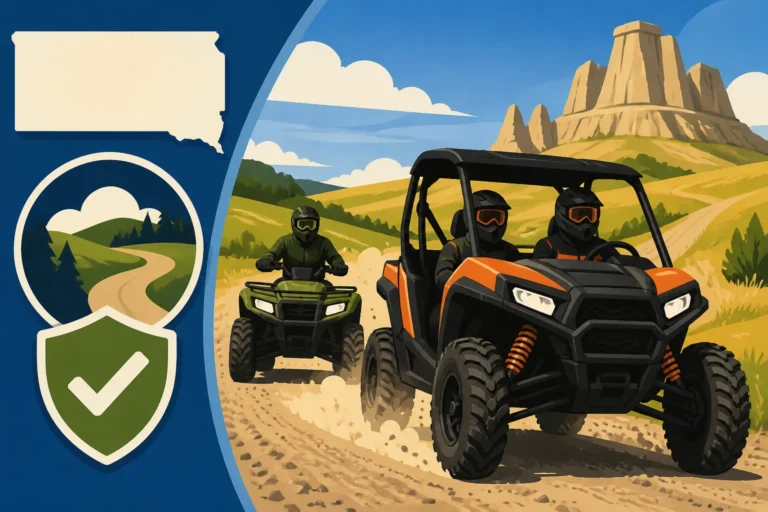
Before we dive into the nuances of shoulder use, it’s crucial to understand the foundational rules for riding off-road vehicles (ORVs) in South Dakota's highway rights-of-way. The state's approach is unique, generally permitting ditch riding unless a county has specifically opted out. This isn't about being fully "street legal" in the traditional sense, but rather a specific allowance for ORVs to operate in a very defined part of the road corridor.
The initial intent behind these laws was often to allow ranchers, farmers, and rural residents a practical way to travel short distances without having to trailer their machines everywhere. It’s not designed for joyriding down the highway shoulder for miles, which is a common misconception and a surefire way to get a citation. The law defines an ORV as a motorized vehicle designed to travel on land and which is fifty inches or less in width, has an unladen weight of 1,800 pounds or less, and travels on three or more tires, or a UTV, which is a motorized vehicle designed to travel on land that is not a golf cart, mini-truck, or ATV. This distinction is critical as it sets the stage for where and how these machines can operate. [What South Dakota Counts as an Off-Road Vehicle]
The Basic Rule: Stay in the Ditch Bottom
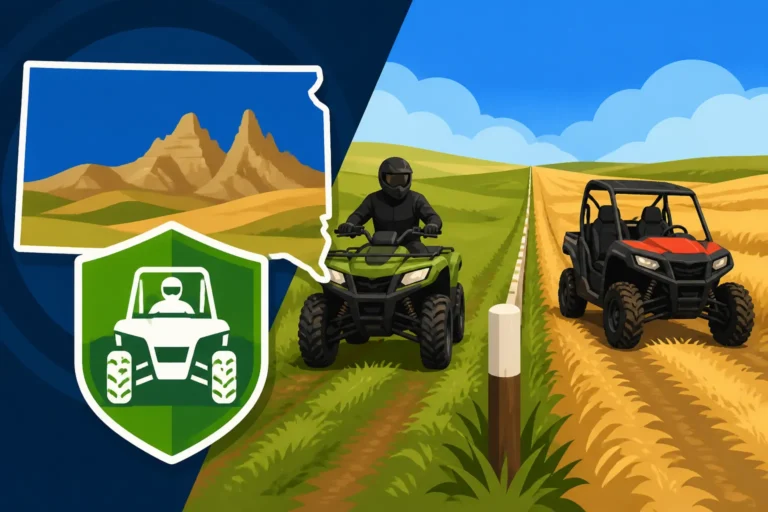
When you're riding your ATV or UTV in the right-of-way in South Dakota, the primary rule is to stick to the ditch bottom. Imagine the ditch as the designated pathway for your machine. This means staying as far from the traveled portion of the road as safely possible. You’re typically looking at the area between the fence line and the shoulder, usually where the grade slopes down from the road. This isn't just a suggestion; it's a legal requirement. Riders are expected to operate their machines parallel to the roadway, never driving towards oncoming traffic in the ditch itself, and always being mindful of existing culverts, fences, or other natural obstacles.
The expectation is that your machine will remain in the lowest part of the ditch, out of the flow of traffic and away from the maintained pavement or gravel of the actual road. This helps ensure safety for both the ORV rider and other motorists. It's a delicate balance, as ditches can vary wildly in terrain, from smooth grass to rocky, uneven ground. Always exercise caution and be prepared for changing conditions, as a ditch isn't designed as a smooth highway. [South Dakota Ditch Riding Rules]
Why Counties Can Opt Out of Ditch Riding
While the general state law allows ditch riding, South Dakota counties have the authority to opt out of this provision. This means that a county can pass an ordinance that prohibits ATVs and UTVs from operating in the ditches within its jurisdiction. It's a local control measure, often enacted in areas with higher population density, more traffic, or specific safety concerns. Imagine a county near a bustling tourist area; they might decide ditch riding poses too many risks. [South Dakota Counties That Ban Ditch Riding]
When a county opts out, they are required to post regulatory signs at key entry points, informing riders of the prohibition. These aren't subtle signs; they're meant to be clearly visible to anyone entering the county's road system. If you're planning a ride, it's always a good idea to check with the local county sheriff's office or the county website to see if any such ordinances are in place. Ignorance of the law is not an excuse, and a ticket for riding in a prohibited ditch can certainly put a damper on your adventure. Just because a ditch looks rideable doesn't mean it is, legally speaking.
When an ATV or UTV Can Legally Use the Shoulder in South Dakota
Now for the core of the matter: when does that strip of gravel or pavement next to the main road become a legal path for your ATV or UTV? South Dakota law is quite specific and doesn't grant free rein to cruise along the shoulder. Instead, it provides a very limited exception, focusing on safety and necessity rather than convenience. It's not a broad "shoulder is legal" rule, but rather a narrow allowance for specific situations.
The spirit of the law here is to prevent riders from getting stuck or into dangerous situations in the ditch itself while still keeping them off the main travel lanes. This is a common point of confusion for riders, many of whom assume that if ditch riding is allowed, then the shoulder must be too. This is not the case, and operating on the shoulder outside of these specific parameters can lead to fines and other penalties. It’s also crucial to remember that even when using the shoulder legally, you are still sharing the road with much larger, faster vehicles, so heightened awareness and caution are paramount.
Avoiding an Obstruction: A Temporary Reprieve
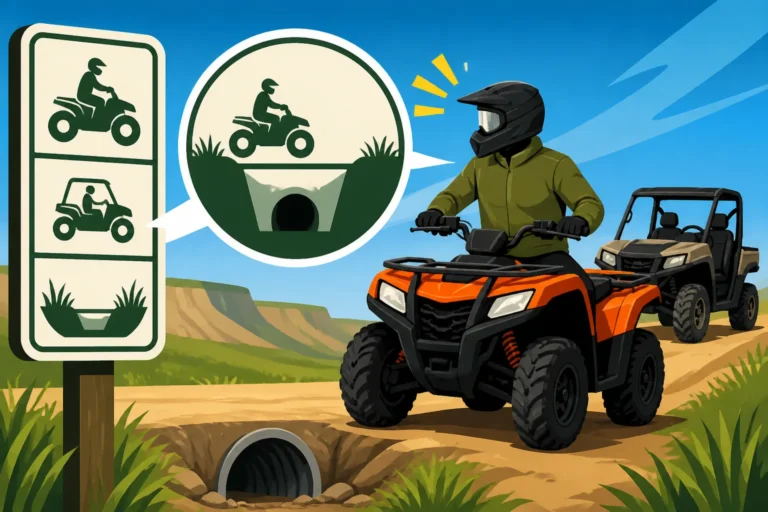
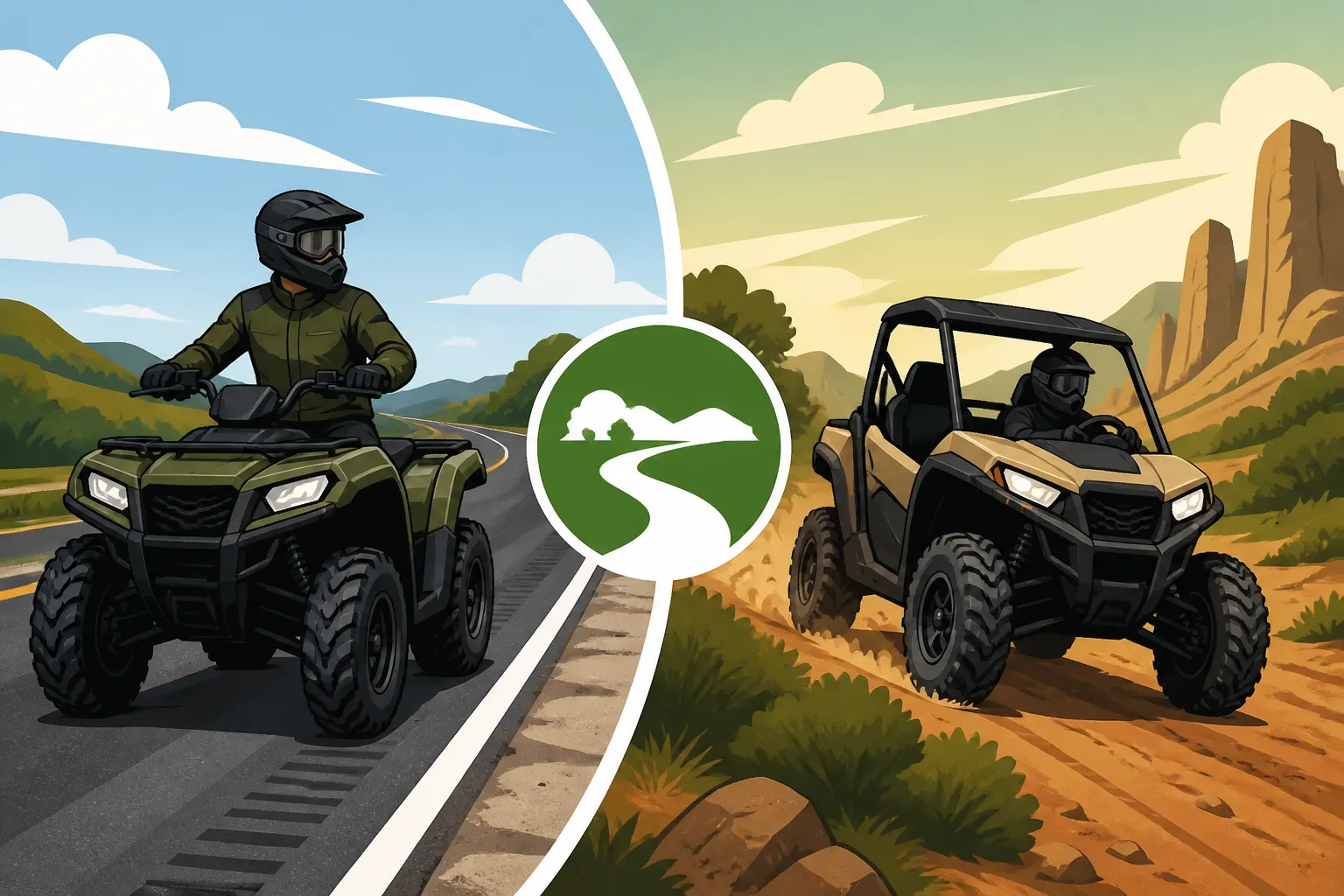
The main circumstance under which an ATV or UTV can legally move from the ditch bottom onto the shoulder in South Dakota is when it's necessary to avoid an obstruction in the ditch. An "obstruction" isn't just anything that slows you down. We're talking about something that makes continued progress in the ditch unsafe or impossible. This could include things like a large rock, a washed-out section, deep water, thick brush, a broken fence, or even a piece of farm equipment temporarily parked there. The key is that the obstruction must be unavoidable, and your use of the shoulder must be temporary and minimal.
Think of it this way: you're riding along, diligently sticking to the ditch bottom, and suddenly you encounter a culvert that's too deep or steep to cross safely in the ditch, or perhaps a section of the ditch is completely flooded after a heavy rain. In such a scenario, the law allows you to move onto the shoulder, pass the obstruction, and then immediately return to the ditch bottom once it's safe to do so. This is not an invitation to ride the shoulder because the ditch is "too bumpy" or "too slow." It's strictly for unavoidable impediments. [When an Obstruction Lets You Leave the Ditch Bottom]
It's also important to emphasize "temporary and minimal." You're not meant to ride the shoulder for extended periods or distances. The moment the obstruction is cleared, and you can safely re-enter the ditch, you are expected to do so. Law enforcement officers are well aware of this specific rule and will be looking for riders who seem to be taking advantage of it to ride the shoulder indefinitely. Your actions should clearly demonstrate that you are only on the shoulder out of necessity.
The Importance of Safe and Brief Shoulder Use
Even when legally on the shoulder to avoid an obstruction, safety must remain your absolute top priority. The shoulder is still part of the highway right-of-way and can be used by other vehicles, especially in emergencies, or by pedestrians and cyclists. Always operate your ATV or UTV in a manner that ensures your safety and the safety of others. This includes maintaining a reasonable speed, being highly visible, and being prepared to yield to all other traffic. A well-maintained machine with proper lighting, perhaps even some auxiliary lights from a brand like SuperATV, can significantly improve your visibility to other motorists.
Visibility is key, especially during dawn, dusk, or in inclement weather. While South Dakota doesn't mandate specific lighting for ditch riding, if you find yourself on the shoulder, standard vehicle lighting, including headlights and taillights, should be active. Consider adding bright, reflective gear to your riding outfit. The brief nature of this shoulder use also means you shouldn't be traveling at highway speeds. Your speed should be appropriate for the conditions and the limited space you have on the shoulder, allowing you to react quickly if needed. This isn't a race; it's a detour.
| Situation | Ditch Use | Shoulder Use Legal? | Conditions for Shoulder Use |
|---|---|---|---|
| No obstruction in ditch | Generally Yes | No | Stay in ditch bottom |
| Large rock in ditch | Generally Yes | Yes | Temporarily move around, return to ditch immediately |
| Washed-out ditch section | Generally Yes | Yes | Temporarily move around, return to ditch immediately |
| Deep water in ditch | Generally Yes | Yes | Temporarily move around, return to ditch immediately |
| Connecting trails | Generally Yes | No | Must remain in ditch if no obstruction |
| Ditch "too bumpy" | Generally Yes | No | Ditch conditions are not an "obstruction" |
| County has banned ditch riding | No | No | Neither ditch nor shoulder use allowed in that county |
Essential Equipment and Rider Conduct for Roadside Operation
Operating your ATV or UTV near public roadways, even if only in the ditch or briefly on the shoulder, carries specific responsibilities. It’s not just about knowing the rules; it’s about having the right equipment and exhibiting the correct conduct to ensure safety for everyone. While the focus here isn't on making your ATV or UTV fully "street legal" with a license plate for general road use, there are still baseline expectations for any machine operating in the right-of-way.
Many riders, especially those who primarily stick to private land or dedicated trail systems, might not give much thought to these requirements. However, once you venture into the public right-of-way, even for a short ditch ride, you are subject to certain rules. This is where investing in quality components, perhaps some robust mirrors or a reliable horn from SuperATV, can not only keep you compliant but also significantly enhance your safety. [Equipment a South Dakota Road Machine Needs]
Equipment Mandates for Road-Legal Operation
Although you’re not typically "street legal" when ditch riding, South Dakota law does have some baseline equipment mandates for any ORV operating in the highway right-of-way. These are primarily focused on visibility and basic communication. At a minimum, your ATV or UTV must be equipped with at least one headlight and one taillight, which must be illuminated during operation in the right-of-way, especially between sunset and sunrise or when visibility is limited. This is crucial for alerting other drivers to your presence, as a small ORV can be surprisingly difficult to spot, even in daylight.
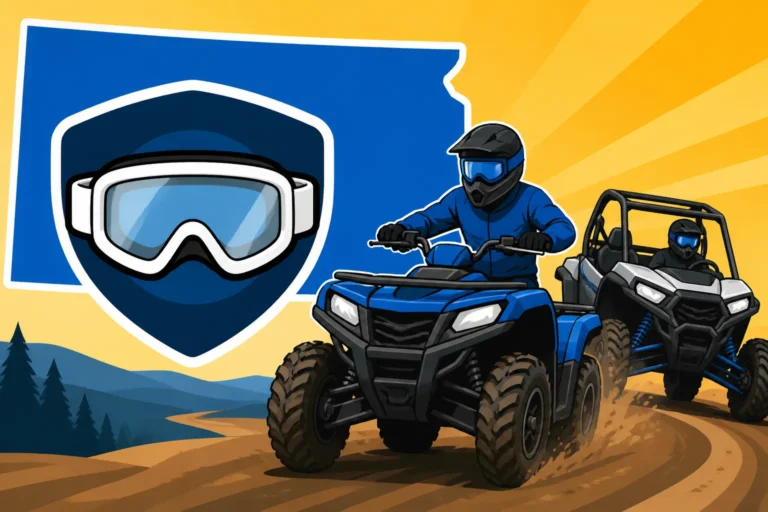
Additionally, your machine must have functional brakes and a muffler system that keeps noise within reasonable limits. While turn signals are not explicitly required for ditch riding, a working horn is a wise addition, if not already present, for communicating with other vehicles or pedestrians, particularly if you need to briefly use the shoulder. Riders are also expected to have eye protection. This isn’t just for comfort against dust or debris from the ditch; it’s a legal requirement to protect your vision. Whether it's goggles or a full-face shield, make sure your eyes are covered. [South Dakota Eye Protection Requirement]
Penalties for Improper Roadside Operation
Disregarding South Dakota's rules for ATV and UTV operation in the right-of-way can lead to serious consequences. Riding on the shoulder when not legally permitted, or failing to return to the ditch after avoiding an obstruction, can result in a citation. These violations are often classified as a Class 2 misdemeanor, which can carry fines and potentially other penalties. It's not just a slap on the wrist; these can be significant financial burdens that could have been easily avoided by understanding and following the regulations. [What a Class 2 Misdemeanor Costs a Rider]
Furthermore, reckless or unsafe operation of an ORV in the right-of-way, whether in the ditch or on the shoulder, can lead to more severe charges. This includes driving under the influence, excessive speed for conditions, or actions that endanger other motorists. A county treasurer's office will handle the initial titling, but law enforcement handles violations on the ground. Beyond legal penalties, there's the very real risk of accidents. Highways are dangerous places for ATVs and UTVs, which are not designed for high-speed road travel. An accident involving a highway vehicle can result in severe injury or even death, not to mention extensive property damage. Understanding that the shoulder is only legal in very specific, temporary situations is key to avoiding both legal trouble and dangerous situations. Always prioritize safety over convenience.
Disclaimer
This article is for general informational purposes only and does not constitute professional advice. Laws, prices and regulations vary by location and change over time. Consult a qualified professional for guidance on your specific situation.