South Dakota Lighting Requirements for ATVs
Trying to figure out exactly what kind of lights your ATV or UTV needs to be legal on South Dakota roads can feel like navigating a maze. It's not always as simple as slapping a headlight on and calling it a day, especially when you consider all the different types of roads and times of day you might be riding. This guide is here to untangle those regulations, helping you understand the specific lighting requirements for your machine so you can ride confidently and, most importantly, legally, on the state's public roads.
The Essentials of South Dakota ATV Lighting for Road Use
When you decide to take your ATV or UTV onto South Dakota's public roads, whether it's just to cross a highway or to cruise down a gravel section line, your machine suddenly steps into a different world of regulations. The lighting requirements aren't just suggestions; they are mandates designed to ensure your safety and the safety of everyone else on the road. Without proper illumination, you're not only putting yourself at risk but also inviting a conversation with local law enforcement about fines and compliance. The state wants to make sure that if you're going to share the asphalt or gravel with cars, trucks, and motorcycles, you're as visible and predictable as any other vehicle. It's about clear communication through light.
Headlights: Seeing and Being Seen
Your headlights are arguably the most crucial lighting component for road legality, especially if you plan on riding when the sun isn't shining its brightest. South Dakota law is pretty clear on this: if you're riding a plated ATV or UTV on public roads, you need at least one, but usually two, functioning headlights. These aren't just any lights; they need to be capable of illuminating the road ahead for a specific distance, typically around 500 feet, to give you adequate reaction time for obstacles, wildlife, or unexpected turns. Imagine you're on a long, straight stretch of gravel road outside of a town like Philip, and a deer suddenly jumps out from the ditch. Good headlights are the difference between a close call and a serious incident.
The color of these headlights is also non-negotiable: they must emit a white light. No fancy colored LEDs for your main forward illumination when on the road. Many modern ATVs and UTVs come equipped with powerful halogen or LED headlights from the factory, which often meet these requirements. However, if you've got an older machine or one originally designed purely for off-road use, you might need to upgrade. It’s also important that your headlights are aimed correctly. Too high, and you're blinding oncoming traffic; too low, and you're not getting the full benefit of their reach. Think about that common frustration of being blinded by an oncoming vehicle's high beams—you don't want to be that rider. Proper adjustment ensures maximum visibility for you without becoming a hazard for others.
Taillights and Brake Lights: Signalling Your Presence
Just as important as seeing what's ahead is making sure those behind you can see you. This is where your taillights and brake lights come into play. For a road-legal ATV or UTV in South Dakota, you'll need at least one, and commonly two, taillights that emit a red light visible from a distance of at least 500 feet to the rear. These lights are always on when your machine is running, providing a constant indicator of your presence to following traffic, particularly in low light conditions or when dust is kicked up on a dirt road. Picture yourself trailing a friend on a dusty prairie two-track; those taillights are your lifeline to knowing where they are.
Beyond the steady glow of the taillights, brake lights are a critical safety feature. These lights must also be red and significantly brighter than your taillights, activating automatically when you apply the brakes. This immediate, intense burst of red light alerts drivers behind you that you're slowing down or stopping, giving them vital seconds to react. It's not enough for them to just "light up"; they need to be noticeably different from your running taillights. If you're riding through a town like Hill City and suddenly have to stop for a pedestrian or traffic light, those brake lights are telling the driver behind you, possibly in a much larger vehicle, that they need to stop too. Make sure both your taillights and brake lights are clean and unobstructed, as mud or dust can significantly reduce their effectiveness.
Turn Signals: Communicating Your Intentions
Communicating your intentions clearly is paramount when sharing the road, and turn signals are the universal language for "I'm turning." For any ATV or UTV that's legally allowed on South Dakota public roads, fully functional turn signals are a must-have. This means you need both front and rear turn signals on each side of your machine. The front signals must emit an amber or white light, while the rear signals must be amber or red. They need to be clearly visible from a minimum distance of 500 feet in daylight.
Imagine you're trying to make a left turn onto a busy county road, or even just pulling off into a side trail. Without proper turn signals, drivers behind you, and potentially those coming towards you, have no idea what you're planning to do until you actually start turning. This creates uncertainty and can lead to dangerous situations. Good turn signals blink at a consistent rate and are bright enough to cut through sunlight or the glare of oncoming headlights. Many aftermarket kits, including those you might find from a company like SuperATV, offer robust LED turn signal options that are often brighter and more durable than factory halogen units, making them an excellent upgrade for road safety. Don't forget to use them every time you change lanes or turn—it's not just a legal requirement, it's a basic courtesy and a critical safety measure.
Beyond the Basics: Additional Lighting Considerations
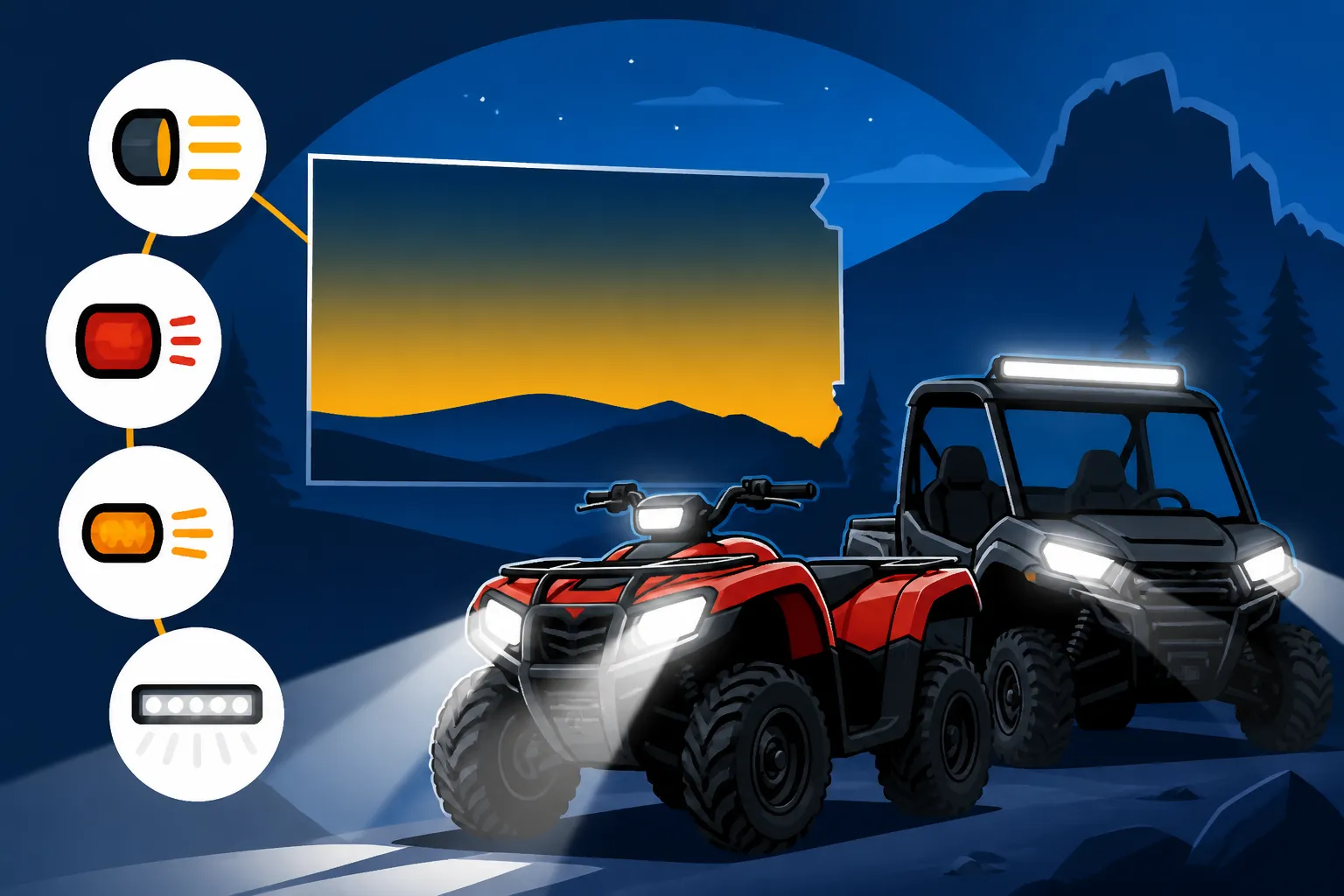
While headlights, taillights, brake lights, and turn signals form the core of your road-legal lighting setup, South Dakota's regulations for ATVs and UTVs venturing onto public ways often include other requirements designed to enhance visibility and safety. These might seem like minor details, but each plays a role in making your machine a predictable and easily identifiable presence to other drivers. Overlooking these smaller components can still lead to issues, so it's worth making sure your machine is fully equipped.
License Plate Illumination: Keeping Your Plate Visible
Once your ATV or UTV is titled and plated for road use in South Dakota, that license plate isn't just a piece of metal—it's a critical identifier, especially for law enforcement. To ensure it's always visible, even after the sun sets, South Dakota law requires a white light to illuminate your rear license plate. This light needs to be bright enough to make the numbers and letters on your plate legible from a distance of at least 50 feet. It's a small detail, but it's one that can lead to a stop if missed.
Think about pulling over for a quick chat with a game warden or a highway patrol officer after dark; they'll want to quickly and clearly verify your plate number. If your plate light is out, dim, or caked in mud, that simple verification becomes a challenge. Most factory setups will include this light, often integrated into the taillight assembly or as a small separate fixture mounted just above the plate. If you're modifying your rear fender or adding a custom plate mount, ensure this illumination requirement isn't forgotten. It's a non-negotiable part of being a legal vehicle on the road, just like having a visible [South Dakota Motorcycle Plate for an ATV].
Reflectors: Passive Safety on the Road
While active lights demand power, reflectors offer a passive yet effective layer of safety by bouncing back light from other vehicles. South Dakota regulations typically require red reflectors on the rear of your ATV or UTV, and sometimes amber reflectors on the sides. These aren't meant to replace your active lighting but to supplement it, especially if your electrical system fails or if you're parked on the side of the road.
Imagine your machine is stalled on a gravel road at dusk, and another vehicle approaches. Your active lights might be out, but those reflectors will catch the light from the oncoming vehicle's headlights, providing a crucial warning of your presence. Many ATVs and UTVs come with these integrated, usually small plastic pieces, but it's worth checking that they're clean, intact, and properly positioned. If you've ever purchased a universal fender kit or modified your machine's bodywork, you might need to add these back in. They're a simple, low-cost safety feature that can make a big difference in preventing an accident in unexpected situations.
Auxiliary Lighting and Off-Road Lights: What's Allowed and Not
This is where things can get a little tricky for ATV and UTV enthusiasts who love their light bars and powerful auxiliary floodlights for off-road adventures. While these extra lights are fantastic for illuminating a remote trail at night, South Dakota has strict rules about their use on public roads. Generally, any auxiliary lights that are not standard headlights, taillights, or turn signals must be covered or switched off when you're riding on public roads.
Why the restriction? Because many auxiliary lights, especially LED light bars from brands like SuperATV, are incredibly bright and designed to spread light widely. While this is perfect for the backcountry of the Black Hills National Forest, it can be blinding to oncoming traffic on a highway or even a quiet country road. Using them on the road is not only illegal but also extremely dangerous for other drivers. If you have a light bar or other auxiliary lights installed, make sure they have a separate switch from your main headlights and that you can easily cover them if necessary. Some riders even go so far as to install removable covers over their light bars for road-legal compliance. It's a small inconvenience for the peace of mind that you're not violating traffic laws or creating a hazard for others. Remember, the road environment demands a different lighting approach than the trail.
Ensuring Compliance: Checks and Upgrades
Navigating the various rules for riding your ATV or UTV on South Dakota roads means being proactive about your machine's setup. It's not enough to just install the right lights; you also need to ensure they're always working correctly and consider how you can enhance your visibility for maximum safety. A quick check before each ride and thoughtful upgrades can make all the difference, helping you avoid unnecessary trouble and ride with greater confidence.
Pre-Ride Checks: A Quick Inspection Routine
Before every ride that takes you onto public roads, adopting a simple pre-ride lighting check can save you a lot of hassle. It's like checking your oil before a long trip—a small investment of time that prevents big problems. Here’s a quick routine to run through:
- Headlights: Turn them on. Are both working? Are they bright and clear? Are they aimed correctly (not too high, not too low)?
- Taillights: Are they illuminated when the machine is running? Are they red and visible from behind?
- Brake Lights: Squeeze your brake lever or press your brake pedal. Do the brake lights illuminate brightly and distinctly from the taillights? Have a friend or a reflective surface confirm this.
- Turn Signals: Activate your left signal, then your right. Do all four (front left, rear left, front right, rear right) flash consistently? Is the indicator on your dash working?
- License Plate Light: If riding at dusk or night, is the small white light illuminating your license plate clearly visible?
- Reflectors: Are they clean and intact on the rear and sides?
This routine takes only a minute or two but can prevent a traffic stop, a fine, or even an accident. Imagine getting pulled over near Keystone for a burnt-out brake light, or worse, being rear-ended because no one saw you slowing down. These simple checks are your first line of defense. The [South Dakota Equipment List for Road Use] covers other items, but lighting is often the most dynamic and prone to issues.
Upgrading Your Lighting System: Enhancing Visibility and Safety
While factory lighting on many newer ATVs and UTVs meets legal requirements, there's always room for improvement, especially when it comes to enhancing visibility and durability. Upgrading your lighting system isn't just about making your machine look cool; it's about genuine safety enhancements.
One of the most popular upgrades is switching from traditional halogen bulbs to LED (Light Emitting Diode) lights. LEDs offer several advantages: they are significantly brighter, draw less power from your machine's electrical system, and typically last much longer than halogens. This means better visibility for you and less strain on your battery. For instance, replacing your stock brake lights with brighter LED units can make your stopping intentions much clearer to following vehicles. You can find excellent LED headlight bulbs, taillight assemblies, and turn signal kits from various aftermarket manufacturers. When considering upgrades, always look for products that are "DOT compliant" or specifically designed for road use to ensure they meet legal standards. Brands like SuperATV offer a wide range of road-legal lighting accessories that can drastically improve your machine's visibility.
Another practical upgrade is adding high-quality, weather-resistant wiring harnesses and connectors, especially if you're installing new lights. The harsh South Dakota riding environment, with its dust, mud, and moisture, can quickly degrade electrical connections, leading to intermittent failures. A robust wiring setup ensures your lights stay on when you need them most. Investing in quality components for your lighting system is an investment in your safety and compliance.
Legal Consequences of Non-Compliance
Ignoring South Dakota's lighting requirements for road-legal ATVs and UTVs isn't just a minor oversight; it can lead to tangible and unpleasant legal consequences. These aren't just theoretical scenarios; they are real possibilities that can quickly spoil a day of riding.
First and foremost, inadequate or non-functional lighting can result in a traffic citation. Depending on the specific violation, this could be a fine that varies in amount but is always an unwelcome expense. For example, getting caught at dusk with no functioning taillight can quickly lead to a ticket. Repeat offenses or more serious violations could escalate the penalties. Beyond the immediate financial cost, a citation can also mean points on your driving record, potentially affecting your insurance rates.
Furthermore, if you're involved in an accident and your machine's lighting is found to be non-compliant, you could face increased liability. Imagine a scenario where you're making a turn on a public road, and an accident occurs. If your turn signals weren't working, or weren't bright enough to be seen, that could be cited as a contributing factor, even if another driver was also at fault. This could lead to more significant legal and financial repercussions, including personal injury claims or property damage liabilities that your insurance might not fully cover if you were found to be operating an unsafe vehicle.
Ultimately, South Dakota's lighting laws are designed for safety. Adhering to them isn't just about avoiding a ticket; it's about protecting yourself and others. A properly lit ATV or UTV is a visible and predictable vehicle, reducing the risk of accidents and ensuring a smoother, more enjoyable experience on South Dakota's diverse roads. So, before you hit that gravel section line or cross that highway, take a moment to ensure your lights are shining brightly and legally.
| Component | Requirement | Color | Visibility Distance | Notes |
|---|---|---|---|---|
| Headlights | 1-2 required, constant beam, high/low optional | White | 500 feet forward | Must illuminate road adequately. |
| Taillights | 1-2 required, constant illumination | Red | 500 feet rear | Always on when machine is running. |
| Brake Lights | 1-2 required, brighter than taillights | Red | 500 feet rear | Activate upon brake application. |
| Turn Signals | Front & Rear, both sides | Amber/White | 500 feet (daylight) | Front: Amber or White; Rear: Amber or Red. |
| Plate Light | 1 required, illuminates license plate | White | 50 feet rear | Must make plate legible. |
| Reflectors | Rear: Red, Sides: Amber (if required) | Red/Amber | Varies | Passive safety, supplements active lights. |
| Auxiliary Lights | Must be covered or off on public roads | Varies | N/A | For off-road use only; can be blinding to oncoming traffic. |
Disclaimer
This article is for general informational purposes only and does not constitute professional advice. Laws, prices and regulations vary by location and change over time. Consult a qualified professional for guidance on your specific situation.