Riding a Single-Track on a Dirt Bike
A single-track ride in South Dakota can be a great change of pace from wider forest roads, but the narrow tread leaves little room for wrong turns, passing, or a machine that does not fit the route. This guide explains how to choose a dirt-bike-appropriate trail, check permits and seasonal access, prepare for Black Hills conditions, and avoid taking an ATV or UTV onto a route where it does not belong.
What single-track means for South Dakota riders
A narrow trail is not just a small forest road
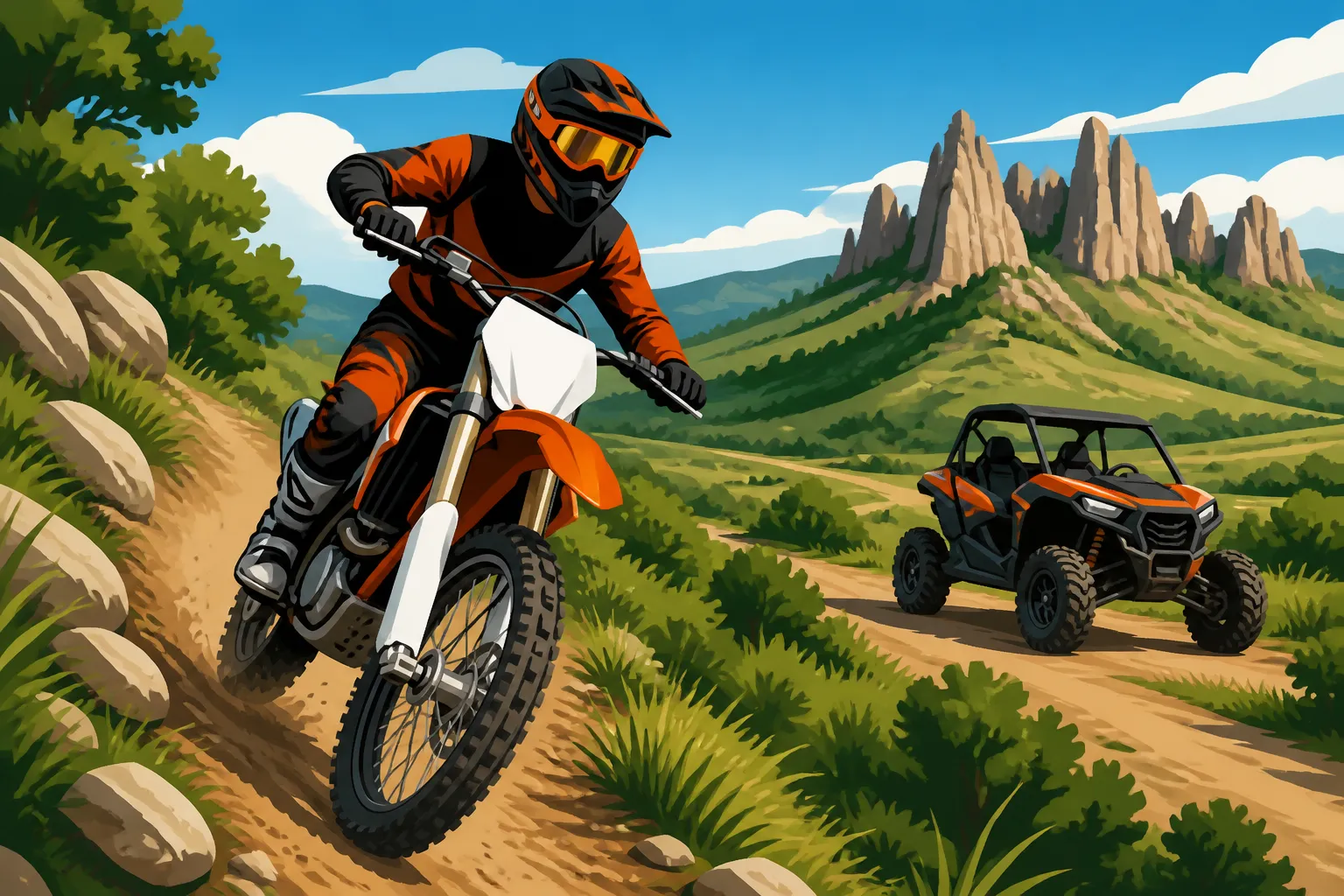
Single-track is a narrow route generally suited to motorcycles and other machines specifically allowed on that trail. It can wind through trees, cross uneven ground, and offer limited space to turn around or move aside. That makes it a different experience from a broad gravel road or a trail built for wider vehicles.
In the Black Hills, the main planning question is not simply whether your machine is motorized. It is whether the specific route is open to that kind of machine. The Black Hills National Forest has routes with different width limits and uses, including designated single-track. Start with the route designation rather than assuming a trail is open because you see tire tracks or because a nearby road permits motorized travel.
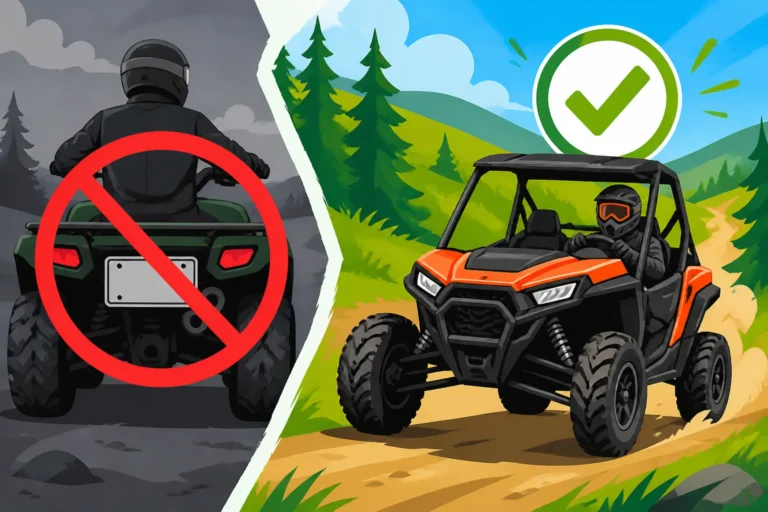
This distinction matters if your riding group includes different machines. A dirt bike may be appropriate for a narrow route while an ATV or side-by-side is not. A wide vehicle can damage trail edges, block the route, or leave its driver with no safe way to turn around. If the group wants to ride together, choose a route that accommodates every machine rather than asking the narrowest trail to accommodate the widest vehicle.
Check the route and machine fit before you unload
A trail’s label is only one part of the decision. Review the route on an official motorized travel map and check its allowed uses, width restrictions, seasonal dates, and closure notices. Width rules can be easy to misread, especially when riders compare a vehicle’s advertised width with a trail’s stated limit. See [How South Dakota Measures Trail Width] before relying on a measurement.
For a broader overview of narrow routes, [90 Miles of Single-Track] is a useful related topic. Treat mileage as context, not a promise that every segment is open on the day you arrive. Conditions, management decisions, and seasonal restrictions can affect access, so check the route details for the specific area you plan to ride.
If you use a digital map such as onX Offroad, treat it as a planning aid rather than the final authority on whether a route is open. Compare what you see there with current Forest Service maps, posted signs, and closure information. Download maps for offline use before leaving town; cell service can be unreliable in forested or remote stretches.
Permits, maps, and seasonal access
Confirm whether the route requires a trail permit
A South Dakota plate or registration does not automatically mean you can ride every motorized trail without another requirement. Trail access rules depend on where you are riding and what type of route you are using. Before setting out, check [South Dakota's Motorized Trail Permit] and [Why a Plate Does Not Replace a Trail Permit] so you understand how trail permits and plates apply to the route.
Plan for each machine in the group separately. A permit attached to one bike should not be assumed to cover a second machine, and a permit for one riding area may not answer the requirements for another. If you are renting, ask the outfitter whether the machine has the required permit for the routes you intend to use. Do not assume it is included simply because the rental is ready to ride.
Keep the permit and any required documents accessible, and follow the instructions for displaying the permit decal. If you are unsure whether a route requires a permit, resolve that before starting the ride rather than hoping a roadside sign or another rider will clarify it.
Check maps and closures close to your ride date
The motorized trail season in the Black Hills is seasonal. Some routes have different opening and closing dates, and weather, maintenance, fire risk, or other management concerns can lead to temporary closures. A route that was open on your last visit may not be open this time.
Use [South Dakota Trail Maps and MVUMs] to understand how official maps identify routes and restrictions. The Forest Service’s Motor Vehicle Use Map, often shortened to MVUM, is especially useful for checking which routes are designated for motorized travel. Pair it with [South Dakota Trail Conditions Before You Ride] and any current notices for the district you plan to visit.
Digital tools can make route planning easier. For example, onX Offroad can help you review mapped routes and plan a ride, but confirm access against official information before you travel. A good habit is to compare the map at home, check for updates before loading the bike, then read signs at the trailhead. If a sign conflicts with your saved route, follow the posted closure or restriction.
| Before the ride | What to confirm | Why it matters |
|---|---|---|
| Route selection | The route is designated for your machine type | A nearby road or ATV route does not make a single-track open to all vehicles |
| Width restriction | Your machine fits the route’s stated limit | Trail eligibility may depend on vehicle width |
| Permit | The required permit is valid for the riding area and machine | Registration alone may not satisfy trail requirements |
| Season and closures | The route is open on your ride date | Seasonal schedules and temporary closures can change access |
| Map access | You have an offline map and know the trailhead | Cell service may not be available when you need directions |
Preparing for a single-track ride
Set up your bike and carry practical essentials
Single-track can demand more attention than a wide road because there may be fewer places to stop, pass, or recover from a mistake. Check your bike before leaving the staging area: inspect tires, brakes, controls, chain, fuel level, and any parts that have been loose or troublesome on earlier rides. A small issue can become a much bigger problem if it appears far from the trailhead.
Pack for the ride you are actually doing, not the ride you hope to do. Bring water, weather-appropriate layers, basic tools, and a way to contact your group. A paper or offline map can be helpful when a phone battery runs down or service disappears. If you are riding with others, agree on a regrouping point and what to do if someone becomes separated.
A trail can feel very different after rain or a change in temperature. Loose rock, roots, ruts, mud, and steep grades can affect traction and fatigue. If a section feels beyond your ability or your bike’s setup, turn around where it is safe to do so. On narrow routes, pressing ahead to “see what is around the corner” can leave you with a difficult and awkward retreat.
Ride at a pace that leaves room to react
On single-track, the rider in front may not see what is coming around a bend, and the rider behind may not be able to stop as quickly as expected. Leave space between bikes and adjust your pace for visibility, trail surface, and your own experience. Keep to the established trail rather than making a new line around obstacles; widening a narrow route can damage surrounding ground and create a bigger maintenance problem.
Be considerate when meeting other trail users. Slow down, make your presence known calmly, and follow posted guidance about who should yield. Do not assume that another rider can easily step off the trail: a steep slope, loose ground, or brush may leave no safe place to move.
If your group includes a new rider, choose a route that suits that rider’s skills, not just the most experienced person’s appetite for challenge. A shorter ride with easy turnarounds can be more enjoyable than a long loop that becomes stressful halfway through. For general route-planning context, [South Dakota Trails Under 62 Inches] can help you compare narrow-route options with routes designed for wider machines.
Riding responsibly and choosing the right machine
Keep ATVs and UTVs off unsuitable single-track
A single-track route is not an invitation to test whether a four-wheeler or side-by-side can squeeze through. Even if a machine physically fits between trees, that does not mean the route is designated for it. Follow the specific route restrictions and do not ride around a barrier, closure sign, or posted limit.
This is especially important for mixed groups. If one rider is on a dirt bike and another is in a UTV, plan the day around routes that allow both machines, or split the group for part of the ride. Trying to force a wide machine onto a narrow trail can damage vegetation, erode the trail edge, and create an unsafe situation when there is no room to turn around.
When choosing a route, make sure the map and posted signs agree with your plan. The related guide [Starting at a Numbered Forest Trailhead] can help with understanding how to orient yourself before heading out. Also review [South Dakota Spark Arrester Rules] when preparing a dirt bike for forest riding, and follow any equipment requirements that apply to your machine and riding area.
Leave the route in good shape for the next rider
Stay on the designated tread, pack out everything you bring, and avoid disturbing wildlife or nearby property. Do not cut switchbacks or ride through closed areas to rejoin a route. If you encounter a damaged trail, fallen tree, or unclear sign, note the location and report it through the appropriate land manager rather than creating a new path around the problem.
A thoughtful single-track day is usually built on a few simple decisions: choose a route that fits the bike, confirm it is open, understand the permit rules, and ride within your ability. That preparation is especially worthwhile in the Black Hills, where conditions and access can vary between routes and trailheads. Check official maps and notices again before each trip, even if you know the area well.
Disclaimer
This article is for general informational purposes only and does not constitute professional advice. Laws, prices and regulations vary by location and change over time. Consult a qualified professional for guidance on your specific situation.