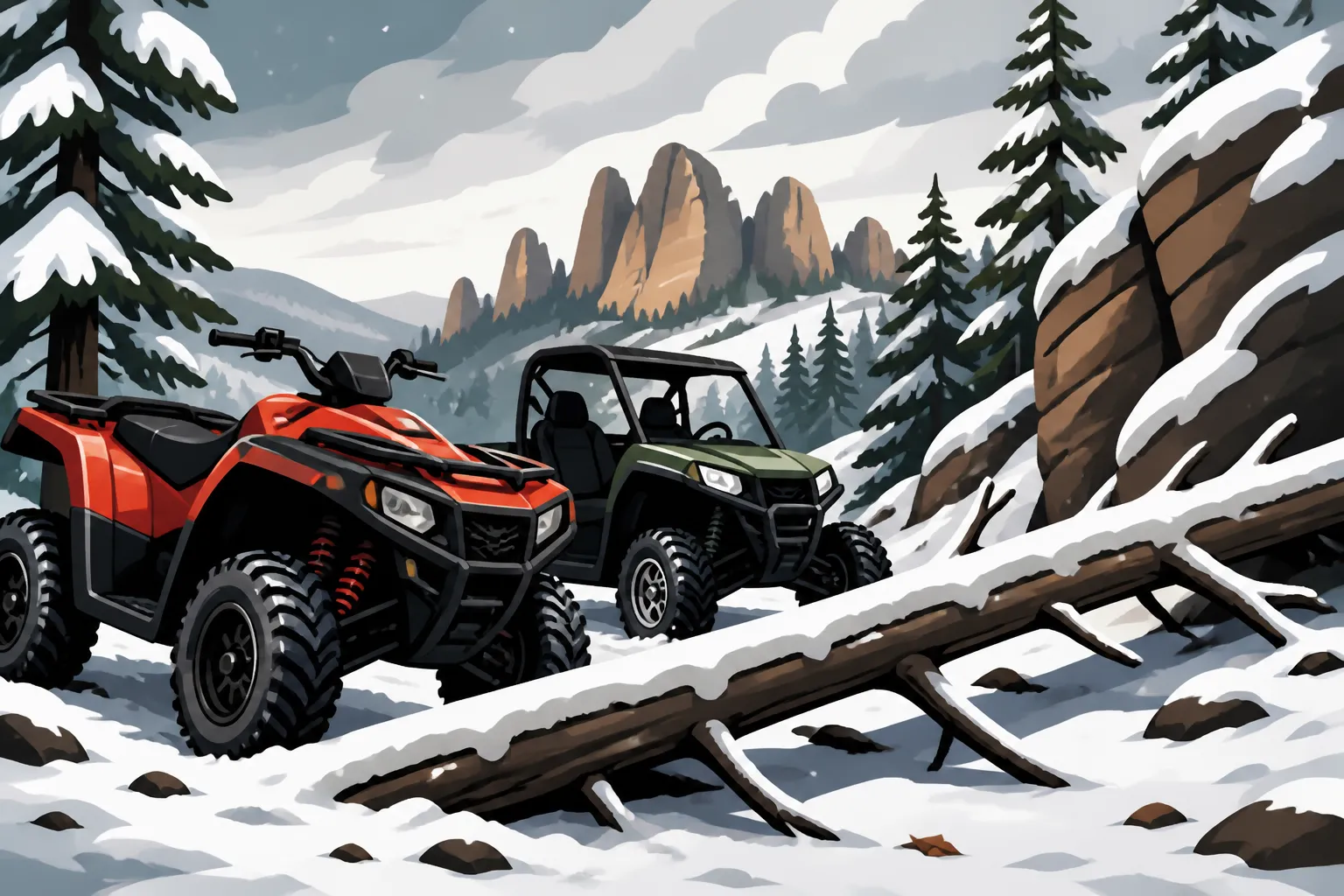
When an Early Snow Closes a Black Hills Trail
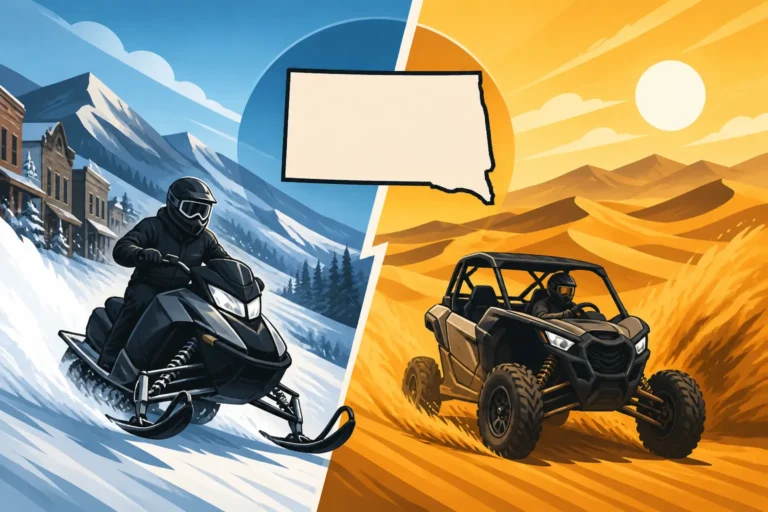
An early snowfall can turn a planned Black Hills ATV or UTV ride into a frustrating guessing game: the trail may look open on your map, while snow, ice, or a posted restriction makes it unsafe or unavailable. This guide explains how to check what has actually closed, decide whether to ride elsewhere, and avoid getting caught far from your trailer.
Why an early snowfall can change your ride
Snow does not automatically mean every trail is closed
A dusting of snow does not, by itself, tell you whether a particular route is open. Some trails may remain accessible while others become difficult or unsafe because of ice, drifting, mud beneath the snow, or poor visibility. Conditions can vary over short distances: a sunny road near Rapid City may feel very different from a shaded route at higher elevation near Hill City or Spearfish.
It also helps to separate a weather-related problem from a scheduled seasonal closure. Motorized routes in the Black Hills have established operating seasons, and some trails have different opening and closing dates. An early storm can arrive while a route is still within its normal season, but that does not guarantee the route is suitable—or officially open—on the day you plan to ride. Review [Trails Open May 15 to December 15](Trails Open May 15 to December 15) and [Trails Open August 15 to December 15](Trails Open August 15 to December 15) to understand why dates can differ by route.
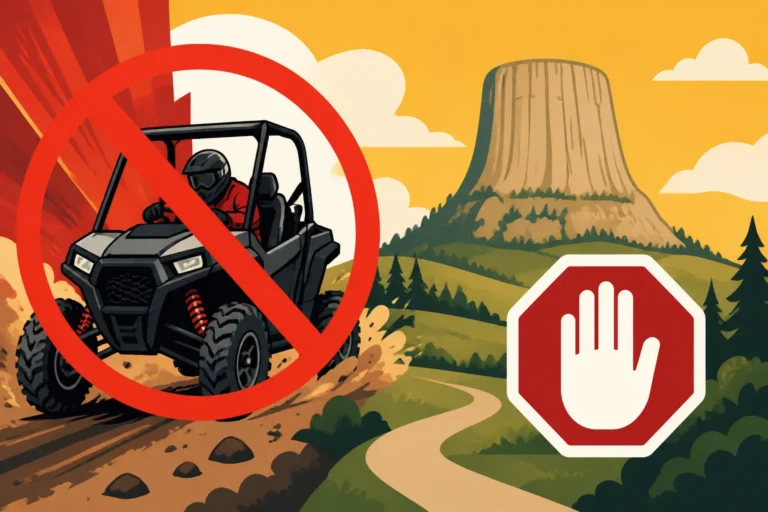
Before you set out, check whether the notice you find describes a temporary closure, a seasonal closure, a road restriction, or a general warning about conditions. Those are not interchangeable. A trail that is officially closed should not be treated as open just because the snow looks manageable from a nearby road.
Snow and ice can make an open route a poor choice
The bigger issue is often traction. Snow can hide rocks, ruts, washouts, branches, and uneven trail edges. Ice is especially difficult to spot in shaded hollows, on north-facing slopes, near water, and where packed snow has been warmed and refrozen. A route that was straightforward on dry ground may become slippery enough to challenge a stock machine or an inexperienced driver.
Black Hills weather can also change quickly with elevation and exposure. A sunny afternoon in town does not prove that a forest road higher up is clear. If you encounter fresh snow at a trailhead, assume the conditions farther along could be worse until you have reliable information. For practical examples of how changing conditions affect a ride, see [Why Weather Closes a Black Hills Trail] and [Ice on a North-Facing Forest Road].
How to check whether a Black Hills trail is closed
Start with official closure and route information
Check current notices from the land manager responsible for the route before loading your machine. For routes on National Forest land, look for Black Hills National Forest alerts, restrictions, and district information. Notices may apply to one road or trail, a particular area, or a broader set of routes. Read the full wording and note the date, route name, boundary, and any conditions for reopening.
A closure sign at a trail entrance or along the route matters, too. Do not ride around a barrier, continue past a closure notice, or assume a gate is closed only to full-sized vehicles. If you are unsure whether a restriction applies to your machine, pause and ask the responsible office rather than trying to interpret the sign from a distance.
Check more than one source when possible. A recreation map can help you identify the route, but it may not show a fresh weather closure. A posted notice may tell you about a restriction but not make it easy to understand exactly where the route begins and ends. The guide [South Dakota Trail Closures to Check] is a useful reminder to make closure checks part of trip planning, not an afterthought.
Use maps for navigation, not as proof of current access
A map can show where a route is, how it connects to other roads, and whether it may offer a practical alternative. It cannot necessarily tell you that a route is open today. That distinction matters when snow has fallen since a map or route layer was last updated.
Review [South Dakota Trail Maps and MVUMs] before you leave, and compare the map with current official notices. An MVUM, or Motor Vehicle Use Map, helps riders understand which routes are designated for motorized use. It is not a live report of snow, ice, or a temporary closure. Similarly, a route displayed in a navigation app should not override a gate, sign, or land-manager notice.
onX Offroad can be helpful for organizing a planned route and keeping track of where you intended to ride, but use it alongside official Forest Service information rather than as a substitute for it. Before relying on any digital map in the hills, make sure you can access the information you need without a dependable cell signal. Save relevant maps or route details ahead of time, and carry a second navigation option if you have one.
| What you need to know | Best place to check | What it helps answer |
|---|---|---|
| Whether a route is officially closed | Current land-manager notices and posted signs | Is riding prohibited on this route or in this area? |
| Whether the route is designated for motorized use | Motor Vehicle Use Map and official route information | Is this route open to the type of vehicle you are riding? |
| Whether snow or ice is affecting the ride | Recent local conditions and observations near the route | Is the route likely to be manageable for your group? |
| How to navigate if conditions change | A prepared map, downloaded information, and a backup | Can you turn around or find a safe way back? |
For a broader pre-ride checklist, see [South Dakota Trail Conditions Before You Ride].
What to do when snow closes your planned route
Make a safe decision before you reach the trail
If a current notice says the trail is closed, take it off your plan. Do not drive to the entrance hoping that the restriction has changed, and do not treat a nearby open road as permission to continue onto a closed route. If you cannot confirm that the trail is open, choose a different activity or route you can verify.
If there is no formal closure but conditions are poor, consider whether your whole group can manage the terrain safely. Think about rider experience, machine capability, tires, visibility, daylight, and the consequences of a breakdown. A route that might be reasonable for an experienced group with suitable equipment can be a bad choice for a family outing with new riders.
Be honest about the practical limits of your trip. Turning around early is not a failed ride. It is often the decision that keeps a minor delay from becoming a recovery problem on an icy road. The topic [Where to Ride When a Black Hills Trail Shuts] can help you think about alternatives, but verify any replacement route independently before heading there.
Have a backup plan that does not depend on one trail
Pick a primary route and at least one realistic alternative before leaving. Your backup should be in a different area or at a lower elevation only if you have confirmed that it is open and appropriate for your machine. Avoid assuming that a trail is a suitable substitute merely because it appears nearby on a map.
For example, a group planning to ride near Hill City could find that a shaded route is icy even while a lower, more exposed area looks clear. The answer is not to improvise onto an unverified road. It is to check current route status, select a known legal option, or change the day’s plan. Keep enough time in the schedule to make that decision without rushing.
An app such as onX Offroad may help you visualize route options, but check its information against official land-manager updates and the signs on the ground. If your phone loses service, you should still know where you are, how to retrace your route, and how to return to your staging area. Do not let a blue line on a screen persuade you to continue into worsening conditions.
Preparing your machine and group for a first-snow ride
Pack for a longer, colder day than you expect
Cold weather changes how quickly a routine ride becomes uncomfortable. Pack warm layers, gloves, eye protection, food, water, and a charged phone. Bring a first-aid kit and any basic tools your group knows how to use. Let someone outside the riding group know where you plan to go and when you expect to return.
Check your machine before loading it. Make sure the tires are in appropriate condition, the lights work, and the fuel level is adequate for the planned route and any necessary detour. Snow can make it harder to see obstacles and easier to lose track of a turn, so leave extra time rather than planning a tight loop that depends on everything going perfectly.
If you are riding with children or less experienced drivers, make the plan conservative. Agree on a turnaround point, establish how the group will communicate, and decide in advance what conditions mean the ride is over. A group that has made those decisions before starting is less likely to pressure someone into continuing once the weather deteriorates.
Treat the first snowfall as a reason to reassess, not a challenge
The first snow can make the Black Hills look inviting, but it can also conceal hazards and make routine route finding harder. Slow down when visibility or traction changes, keep generous space between machines, and avoid sudden steering or braking on slippery surfaces. If the route becomes difficult to read, turn back while you still have a clear way to do so.
onX Offroad can support your preparation by helping you keep planned routes and navigation information organized. Still, an app cannot tell you what traction feels like beneath your tires or whether a sign has been posted since your last map check. Let current conditions and official restrictions make the final call.
Before every late-season ride, review [How the Black Hills Motorized Trail Permit Works] and any route-specific requirements that apply to your trip. A permit or a familiar route does not mean a trail is open during a closure. If you have any doubt about access, stop and confirm before riding.
Disclaimer
This article is for general informational purposes only and does not constitute professional advice. Laws, prices and regulations vary by location and change over time. Consult a qualified professional for guidance on your specific situation.