Snowmobiles From Deadwood to Dumont
If you’re planning a winter ride from Deadwood toward Dumont, the first thing to know is that this is a snowmobile opportunity, not an ATV or UTV route. The designated winter use of this part of the George S. Mickelson Trail is limited and seasonal. This guide explains what to check before you go, how to plan the ride, and why summer riding rules are different.
What the Deadwood to Dumont route is
A winter snowmobile exception on part of the Mickelson Trail
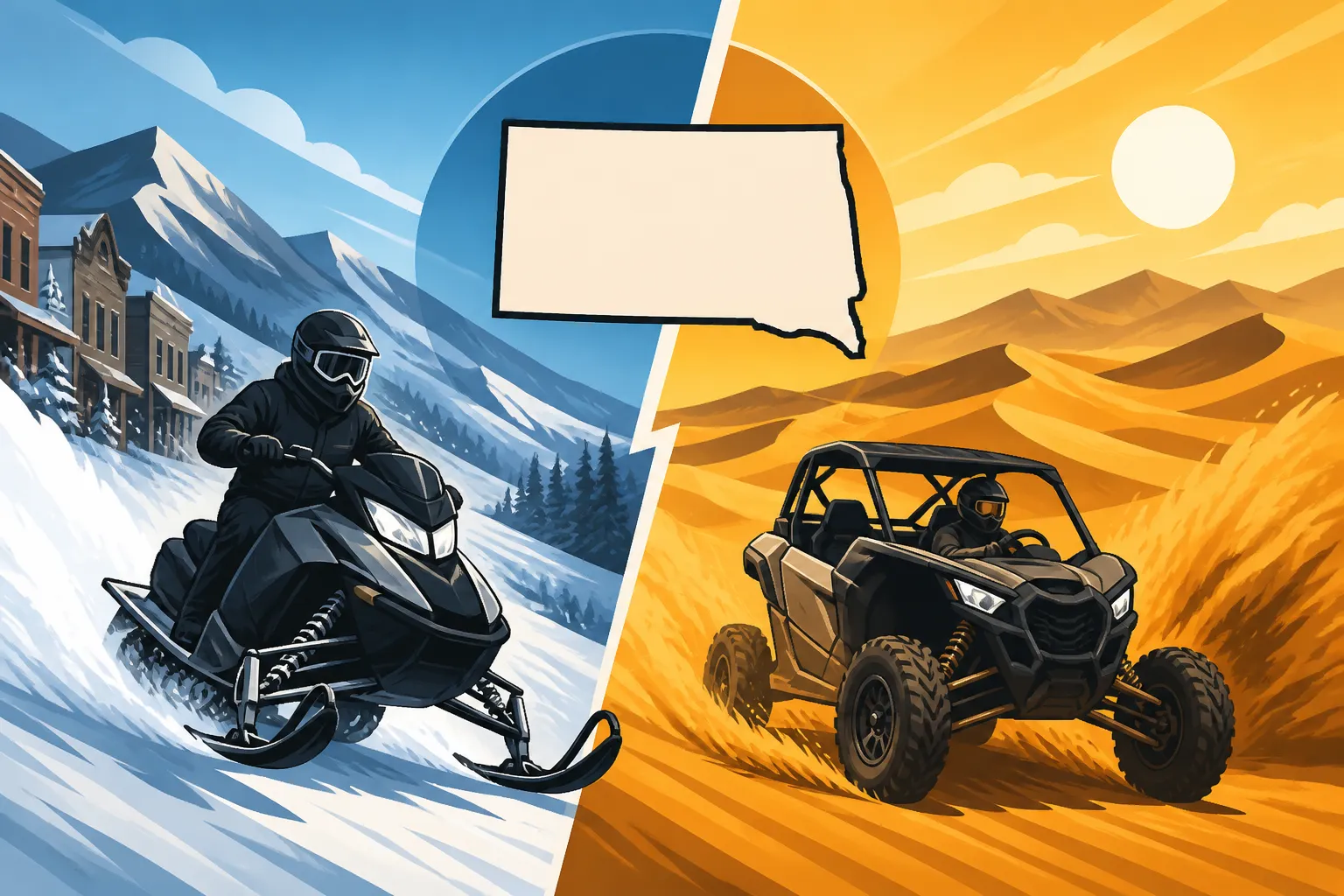
The George S. Mickelson Trail is a popular nonmotorized route through the Black Hills, but snowmobiles are allowed on a designated section between Deadwood and Dumont during the winter season when conditions and trail rules permit. That limited winter access is an exception, not a general invitation for motorized vehicles to use the full trail.
The distinction matters if you’re used to thinking of the Mickelson as one continuous route. Its usual use and its winter use are not the same. A snowmobile trip on the authorized segment does not mean that ATVs, UTVs, or dirt bikes may ride there, nor does it mean a snowmobile can continue onto every connected trail or road. For background on the seasonal exception, see [Why Snowmobiles Use Part of the Mickelson].
Dumont is a destination, not permission to keep going
A route described as running from Deadwood to Dumont gives you a useful point-to-point planning idea, but it doesn’t settle every access question along the way. The mapped trail, posted restrictions, snow conditions, and any closures determine where you may ride on a particular day. Treat Dumont as the end of the designated corridor unless current official information confirms a legal continuation.
This is especially important where routes meet roads, private land, or other recreation areas. A line that appears connected on a map may not be open to snowmobiles. Check signs at access points and follow posted directions rather than assuming that a trail continues because the ground looks rideable.
This is not an ATV or UTV route
ATV and UTV riders should not read this winter exception as an invitation to ride the Mickelson Trail. The rules for snowmobiles on a designated winter section are separate from the rules for wheeled off-road vehicles. In general, the Mickelson is not an ATV or UTV trail. For the broader vehicle restrictions, see [Why South Dakota's Mickelson Trail Bans Machines].
If your trip is planned around a side-by-side or quad, choose a riding area that specifically allows that type of machine. The Black Hills has motorized routes and riding areas, but access depends on the trail, vehicle width, season, and permit requirements. A route suitable for a snowmobile in winter may be unsuitable or closed to an ATV or UTV at other times.
How to plan the ride from Deadwood to Dumont
Confirm that the segment is open before loading up
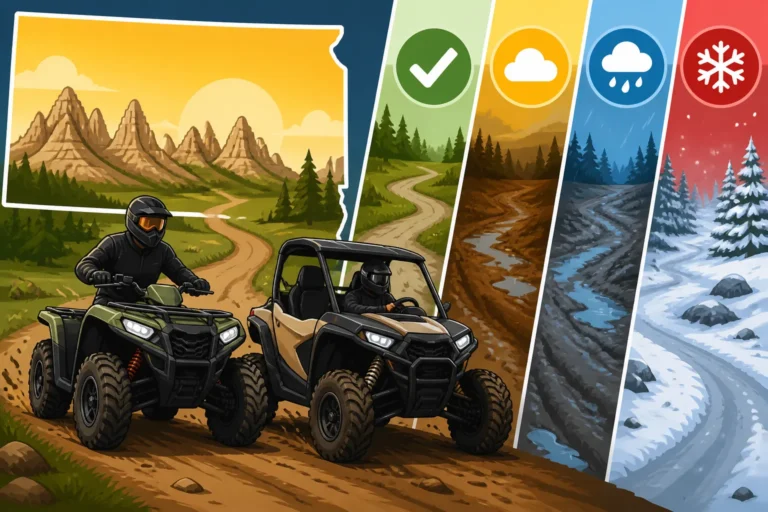
Winter access depends on more than the calendar. Snow cover, grooming, weather, maintenance, and temporary closures can affect whether a route is usable. Before leaving Deadwood, check the latest information from the relevant land manager or trail authority and look for notices about the specific Deadwood-to-Dumont section. If conditions are marginal, call or check again shortly before departure; a route that was rideable earlier in the week may not be a safe choice after a warm spell or storm.
Don’t rely on an old trip report, a social media post, or a line on a general recreation map as proof that the trail is open today. Use a mapping app such as onX Offroad to help orient yourself and compare route features, but treat official notices and signs as the authority on closures and permitted access. The same habit is useful on other winter routes; see [South Dakota Trail Closures to Check].
Plan the return, not just the ride out
A point-to-point outing can sound simple until you consider how you’ll get back. Decide in advance whether your group is riding both directions, arranging a legal shuttle, or meeting at a designated access point. Don’t assume you can leave a vehicle anywhere convenient in Deadwood or Dumont; parking availability, private property rules, and posted restrictions still apply.
Build extra time into the plan. Snow, visibility, cold, and changing trail conditions can make a familiar distance take longer than expected. Agree on a turnaround time with your group, and choose a plan that still works if someone gets tired, a machine has a problem, or the trail is slower than anticipated. A practical map review with onX Offroad can help your group discuss access points and route shape before departure, but it does not replace checking current closures.
Use the right map for the right activity
The Deadwood-to-Dumont winter corridor is easy to confuse with nearby motorized trails, roads, and other sections of the Mickelson. When comparing maps, confirm that you’re viewing the correct activity and season. A summer hiking or cycling map may show the corridor without clearly communicating winter snowmobile access, while an off-road map may show nearby routes that have different restrictions.
Look for details beyond the main line: trailheads, road crossings, access boundaries, and posted closures. Use onX Offroad as a planning aid if it helps you compare terrain and nearby connections, then cross-check those details with official winter trail information. Avoid planning a detour based solely on a mapped connection. The rules may change as soon as you leave the designated segment.
| Planning question | What to confirm |
|---|---|
| Is the Deadwood-to-Dumont section open? | Check current official notices and any posted closures |
| Is the snowmobile route usable? | Confirm snow and trail conditions before departure |
| Can you continue beyond Dumont? | Verify that any onward route is specifically open to snowmobiles |
| Are you planning an ATV or UTV outing? | Choose a route that expressly allows wheeled off-road vehicles |
| Where will you park or meet your group? | Check access-point rules and avoid blocking roads or private entrances |
Winter safety and access details to check
Prepare for Black Hills weather and changing trail conditions
Winter conditions can shift quickly in the Black Hills. Wind, drifting snow, icy stretches, and reduced visibility can make route-finding harder, even when the trail itself is familiar. Dress for time outdoors rather than just the temperature at the starting point, carry suitable cold-weather gear, and make sure every rider knows the group’s plan if someone becomes separated.
Before setting out, check the forecast for the route area rather than relying only on conditions in downtown Deadwood. The weather can differ between exposed sections and sheltered terrain. Let someone who is not riding know your general route and expected return, and don’t stretch a trip simply because the group has already traveled part of the way. If conditions deteriorate, turning back is a sound plan, not a failed outing.
Respect signs, crossings, and land boundaries
Stay on the designated route and obey signs at trailheads and crossings. A short-looking shortcut can take you onto a closed trail, private land, or a road with different rules. At road crossings, slow down, follow posted instructions, and make sure the whole group understands where it is safe and legal to cross.
The fact that a snowmobile is permitted on one part of the corridor does not transfer that permission to all nearby public land. Trail access can change at jurisdictional boundaries, and the same ground may have different rules for different vehicle types. Keep a map available, but let signs and current land-manager guidance settle questions about access. If you’re planning a separate ATV or UTV ride, review [South Dakota Rules for Riding Federal Land] and [South Dakota Rules for Riding a State Trail] rather than applying the snowmobile exception to a wheeled machine.
Understand that permits and rules may be activity-specific
Don’t assume an ATV or UTV permit applies to snowmobiling, or that a snowmobile authorization covers every motorized route nearby. Permit requirements are tied to the vehicle, location, and activity. If your trip includes more than one riding area, check the rules for each one rather than treating the day as a single continuous ride.
This is also a good time to confirm what is required for the machine and rider, including any applicable registration, trail authorization, and safety equipment. For general background on a different motorized trail system, see [South Dakota's Motorized Trail Permit]. The key is to check the requirements for the exact place and vehicle you plan to use.
If you’re visiting with an ATV or UTV
Choose a designated wheeled-vehicle riding area
If you brought an ATV or UTV to the Black Hills, plan a separate ride on routes that allow your machine. Check width limits, seasonal openings, permit requirements, trail conditions, and whether your vehicle is permitted on the specific road or trail. The Black Hills’ motorized routes are not interchangeable: a trail open to one machine may be closed to another because of width or other restrictions.
A mapping app, including onX Offroad, can help you compare routes and see how a planned ride fits together. Use it to prepare questions and identify areas to check, not as the final word on legality. Confirm access with official maps and current notices before you unload. For ideas about the area’s designated motorized riding options, explore [South Dakota ATV Trails Near Deadwood] and [South Dakota Trails Open in Winter]. Winter availability for wheeled vehicles can differ considerably from snowmobile access.
Keep the two plans separate
It’s common for a group to include people with different machines or interests. One group may want to snowmobile the designated winter section while another hopes to ride ATVs or UTVs. Make separate plans for each activity instead of assuming everyone can use the same trail. Confirm each group’s legal route, meeting point, parking plan, and return arrangement before anyone leaves.
This separation also prevents a frustrating surprise at the trailhead. If your group arrives expecting to ride a UTV on a snowmobile corridor, you may have to reorganize the day on the spot. A few minutes spent checking vehicle-specific rules can save a long drive, a rushed change of plans, or an accidental trip onto a closed route.
Build flexibility into a Black Hills winter outing
Have a backup plan in case the Deadwood-to-Dumont section is closed or conditions are poor. That could mean choosing a different activity, shortening the trip, or postponing the ride. Before setting out for another area, confirm that it is open to your vehicle and that you have the required authorization. Winter access is often more conditional than a map makes it appear.
The most reliable approach is straightforward: identify the route, verify that it is open to your machine today, follow the signs, and turn around if conditions or access become uncertain. For snowmobiles, the Deadwood-to-Dumont section is a specific winter exception on part of a trail better known for nonmotorized use. For ATVs and UTVs, it is a reminder to find a route designed for wheeled off-road riding rather than assuming that a winter snowmobile route works for every machine.
Disclaimer
This article is for general informational purposes only and does not constitute professional advice. Laws, prices and regulations vary by location and change over time. Consult a qualified professional for guidance on your specific situation.