Riding the Hills After a Wet Spring
A wet spring can turn a planned Black Hills ATV ride into a day of slick rock, deep ruts, and trails that are too soft to handle traffic without damage. This guide explains how to judge conditions, choose a safer ride plan, prepare your machine, and respond when a route is muddy or closed—before a small patch of standing water becomes a much bigger problem.
Why wet spring conditions change a Black Hills ride
Mud is more than a traction problem
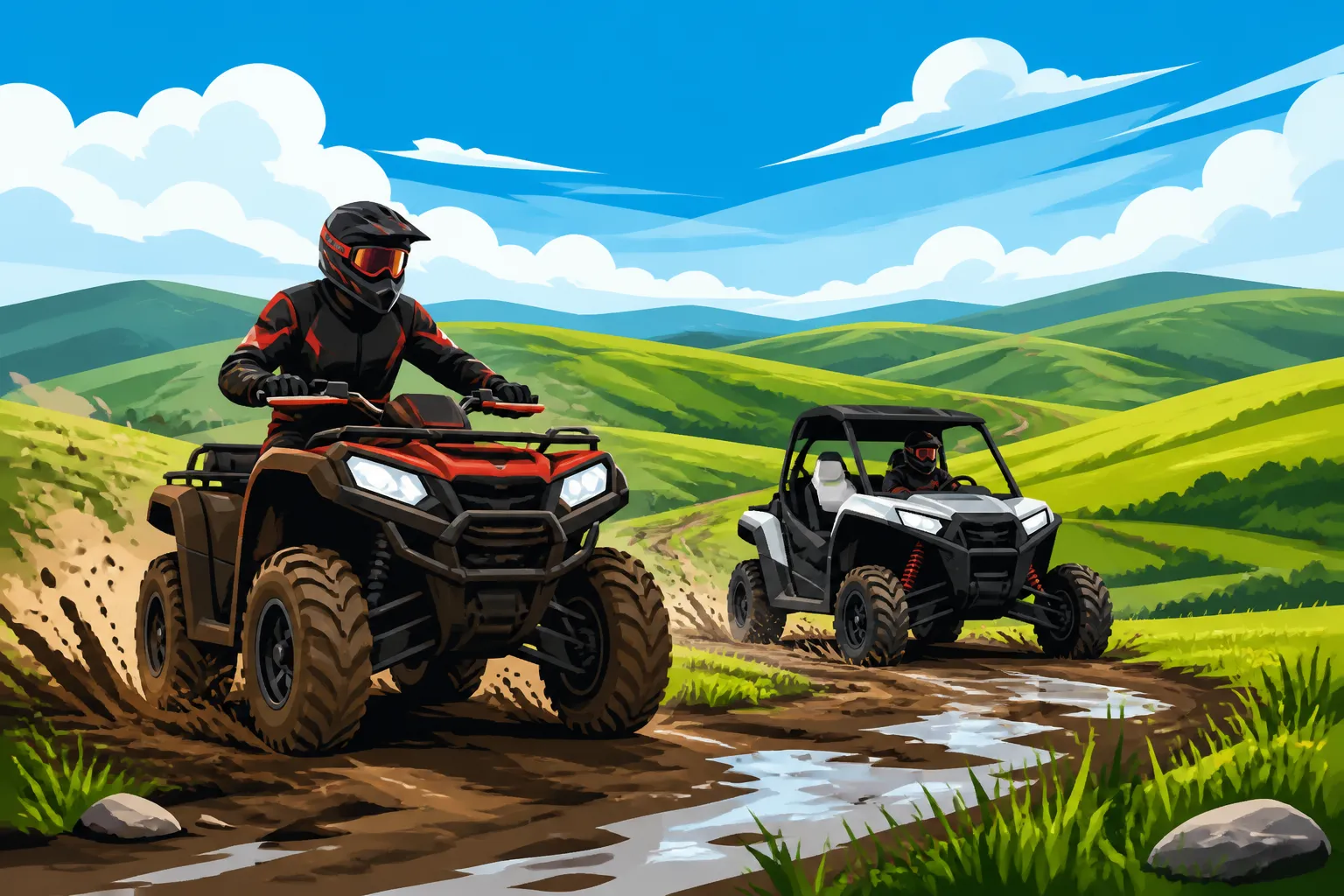
In the Black Hills, a trail can shift from firm gravel to slick mud in a short distance. Rain and snowmelt may soften shaded sections, low spots, and areas where water runs across the route. A machine that feels steady on dry rock can slide sideways on a muddy slope or lose traction while climbing out of a rut.
The damage risk matters, too. Tires can cut into wet ground, widen existing ruts, and push mud into drainage channels. A rider may think they are only leaving a few tracks, but repeated passes can turn a soft section into a larger erosion problem. If your tires sink or the surface moves under them, turning around is often the more responsible choice.
Wet ground also makes recovery harder. A UTV that gets bogged down may need a winch, another vehicle, or help from someone who knows the area. That can mean more traffic and more disturbance on an already vulnerable trail. Before setting out, consider whether your group has the experience and equipment to handle a recovery without damaging the route or putting anyone at risk.
Conditions vary from one route to the next
A rainy morning in Rapid City does not tell you exactly what you will find near Lead, Hill City, or Spearfish. Elevation, shade, exposure, drainage, and recent weather all affect how quickly a route dries. One section may be firm while another remains slick or waterlogged, especially where the route passes through a low area or stays shaded.
That variation makes a broad “the trails are fine” report less useful than a recent, route-specific update. Check [South Dakota Trail Conditions Before You Ride] and [South Dakota Trail Closures to Check First] before leaving. Look for information from the relevant land manager or ranger district, and pay attention to the date and location of any report. A post from a week ago may not describe what you will encounter after another round of rain.
A map can help you understand where your planned route goes, but it cannot tell you whether the ground is currently firm. You can use onX Offroad to review and organize your route alongside current land-manager information. Treat the map as a planning aid, not proof that a trail is open or dry.
A quick way to decide whether to ride
There is no single mud-depth measurement that works for every surface and every machine. Instead, pause and assess what the ground is doing. If your tires are cutting deep tracks, the vehicle is sliding unpredictably, or water is flowing across the trail, continuing may increase both the risk to your group and the damage to the route.
| What you notice | What it may mean | A sensible response |
|---|---|---|
| Firm surface with shallow tire marks | The route may be holding up, though conditions can change ahead | Ride cautiously and reassess at the next soft section |
| Tires sink or leave deep ruts | The soil may be too soft for continued traffic | Turn around before the damage worsens |
| Standing water hides the trail surface | You cannot easily judge depth or obstacles | Do not charge through; choose a known alternative |
| Water runs along or across the route | The route may be draining poorly or vulnerable to erosion | Avoid riding through the flow and check for a closure |
| A closure sign or barrier is present | The route is not available to riders | Turn back and do not go around the barrier |
| A machine is stuck or needs repeated attempts | Recovery may cause more damage or create a safety hazard | Stop, reassess, and use a careful recovery plan |
When you are unsure, it is reasonable to shorten the day. A disappointing turnaround is usually easier to live with than a damaged machine, a difficult recovery, or a trail scar that could have been avoided.
Plan a route that can change with the weather
Check maps and closures before you leave
Before a spring ride, identify your intended route, nearby turnarounds, and a backup plan. Review [South Dakota Trail Maps and MVUMs] and the relevant travel information from the land manager. On Black Hills National Forest ground, confirm that the specific route is open to your kind of vehicle and that no temporary closure affects your plan. A line shown on a map is not a guarantee that you may ride it today.
This matters when a group is eager to get moving. It is tempting to make a quick decision at the trailhead based on what other riders are doing, but another group’s direction does not confirm that a route is open or suitable. Check signs at the entrance and follow posted restrictions even if the trail looks passable.
onX Offroad can be useful for saving a planned route and reviewing your general location, especially when cell coverage is unreliable. Still, compare your plan with current official maps and notices. A navigation app cannot override a closure, and a route displayed on a screen should never be treated as permission to ride it.
If you are choosing between destinations, consider how exposed the route is, how easy it will be to turn back, and whether your group has the right experience for changing conditions. A shorter outing near a familiar staging area may be a better spring choice than a long loop that leaves few simple options if the ground gets worse.
Build in a turnaround plan
Decide in advance what conditions will make your group turn around. For example, agree that nobody will push through a section if the machine is leaving deep ruts or if the trail surface is too soft to assess. Making that decision before anyone is stuck can prevent the common group dynamic of one rider continuing because everyone else has already gone ahead.
Choose a stopping point where you can safely pull over without blocking the trail or driving onto fragile ground. If you reach a soft section, do not fan out through vegetation while searching for a firmer line. Going around a muddy spot can widen the route and create additional damage. If the established route is no longer suitable, return the way you came when it is safe to do so.
Keep your map available offline if your device supports it, and carry a backup navigation method. onX Offroad may help you follow your saved route, but batteries can run down and screens can become difficult to use in rain, cold, or glare. Tell someone who is not riding with you where you plan to go and when you expect to return.
A route plan should also include a realistic exit. Before leaving, consider whether you can return to your trailer or road crossing without relying on a single low-lying section that may be muddy. That small bit of planning can make a spring ride feel much less stressful when conditions change during the day.
Know when the plan needs to change
A route that starts firm can become slick after a passing shower. Conversely, a trail that looks wet at the entrance may have firmer sections farther along—but do not use that possibility as a reason to cross a closure, push into deep mud, or test an unfamiliar slope. Reassess as you ride and make decisions based on the actual surface in front of you.
If a storm arrives, pause somewhere safe and check for signs of worsening weather. Rain can reduce visibility and make rock, roots, and slopes more difficult to read. If thunder, strong wind, or fast-moving water becomes a concern, prioritize getting your group to a safe place and returning by a suitable route.
If your original destination is no longer appropriate, use the backup plan you chose before leaving. [Where to Ride When a Black Hills Trail Shuts] is a useful related topic to review when planning alternatives. The right backup is not simply another nearby route; it needs to be open, appropriate for your machine, and in conditions that your group can handle.
Prepare your machine and group for mud and slick ground
Check the machine before riding
Wet conditions put extra demands on tires, brakes, steering, and drivetrain components. Before heading out, check that tires are in good condition and inflated according to the manufacturer’s guidance. A tire that is damaged or poorly suited to the route can make a slick climb or uneven descent more difficult to manage. For broader terrain considerations, review [Tire Choice for Hills Rock and Gravel].
Inspect the brakes and controls, and make sure the lights work if your ride could extend into low-light conditions. Pack basic tools and recovery equipment suited to your machine and group. If you carry a winch or recovery strap, know how to use it safely and choose suitable anchor points; never improvise around a tree, vehicle, or person in a way that could cause injury.
Mud and water can conceal rocks, holes, branches, and changes in depth. Avoid entering standing water at speed. If you cannot see the surface and do not know the crossing, do not assume it is shallow. A cautious walk-around may help in some situations, but it is not a reason to step into fast-moving or unsafe water.
Match the ride to the least experienced rider
A spring ride is a poor time to pressure a new rider into following a faster group over slippery ground. Talk through the route, expected conditions, spacing, and turnaround rules before starting. Keep the group together enough that riders can communicate, but leave room between machines so one sudden stop does not lead to a collision.
If someone in the group is uncomfortable, take that seriously. A rider who is tense or uncertain may have trouble controlling the machine on a slick slope. Slow down, choose a safer route, or turn back rather than treating hesitation as something to overcome. This is especially important when children or inexperienced passengers are part of the outing.
Agree that no one will race through mud or use another rider’s tracks as an invitation to accelerate. The safest pace is the one that allows each rider to respond to changing ground without abrupt braking or steering. [South Dakota Trail Etiquette With Tourists] offers related guidance on sharing routes considerately, and the same courtesy applies within your own group.
Pack for a slower, messier day
A spring outing can take longer than expected because of cautious riding, a turnaround, or a minor recovery. Bring weather-appropriate layers, water, food, and a way to communicate if your group becomes separated. A spare pair of gloves or dry layer can make a cold, muddy return much more manageable.
Protect items that should stay dry, including phones, maps, and any personal medication. Carry a small first-aid kit and know who in the group has it. If you use onX Offroad for navigation, charge your device before leaving and consider how you will navigate if the battery fails. A downloaded route can be helpful, but it should complement—not replace—good preparation and attention to signs.
Plan for cleanup before you leave home. Mud can cling to tires, wheel wells, and the underside of a machine, then spread when you load or unload it. [Washing Off Before You Load in the Black Hills] is worth reviewing so cleanup does not become an afterthought at the end of a long ride.
Ride responsibly and choose a better day when needed
Protect trails by staying on the established route
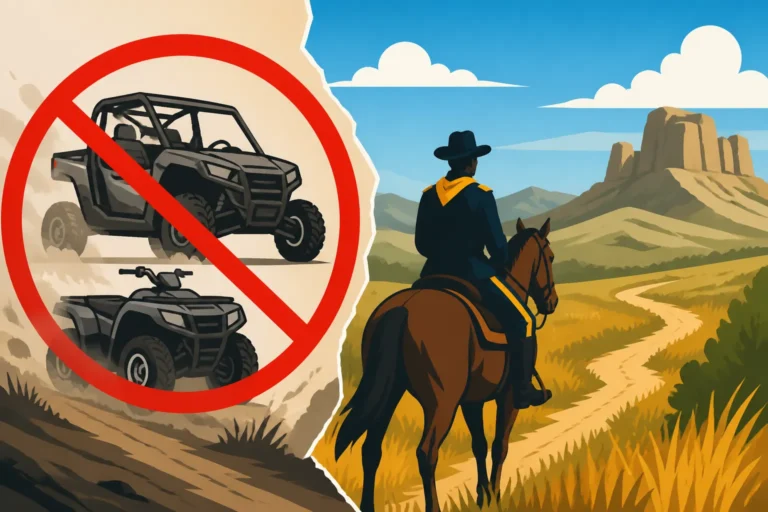
When a section is wet, riding around it through grass, brush, or forest floor can create a second trail. Stay on the designated route and follow any posted closure or restriction. Do not bypass a gate or sign because the ground on the other side looks inviting. Closures can protect riders as well as the land, and a route that is closed is not an acceptable detour.
Avoid spinning the tires to get through a soft spot. Repeated acceleration often makes a rut deeper and can leave a vehicle harder to control. If you cannot pass without causing damage, stop and turn around when safe. Keep the machine’s weight and momentum under control, especially on slopes where a sideways slide could put riders, trees, or other trail users at risk.
Respect other users who may be walking, biking, or riding at a slower pace. Mud can reduce sightlines and make stopping distances less predictable. Approach blind corners cautiously, keep noise and speed reasonable, and leave space for others to pass where the route allows it.
Be willing to postpone
Sometimes the best spring riding decision is not to ride that day. If local reports describe saturated ground, if rain is continuing, or if an area is temporarily closed, postponing protects your machine and the route. That can feel frustrating after loading the trailer and arranging a group outing, but it is less frustrating than turning a recreational day into a recovery operation.
Check conditions again before your next attempt. A few dry days may improve some routes, while shaded or low-lying areas may remain soft. Do not assume that one dry afternoon has made every trail suitable. Use recent local information, confirm access, and be ready to adjust when you arrive.
The Black Hills are worth riding at a pace that leaves the routes in good condition for the next visit. A careful spring plan—one that checks closures, avoids saturated ground, and treats turning around as a normal option—helps make that possible.
Disclaimer
This article is for general informational purposes only and does not constitute professional advice. Laws, prices and regulations vary by location and change over time. Consult a qualified professional for guidance on your specific situation.